seamus dubhghaill

Promoting Irish Culture and History from Little Rock, Arkansas, USA


Leave a comment

Birth of J. B. Malone, Hillwalking Enthusiast

John James Bernard (J. B.) Malone, an Irish hillwalking enthusiast who popularises the pastime through his television programmes and books, is born on December 13, 1913, in Leeds, West Yorkshire, England. He is responsible for the establishment of the Wicklow Way as a recognised walking trail, having first proposed it in 1966.

Malone is born to James Bernard Malone and his wife, Agnes (née Kenny), both from Dublin. He is raised mainly in England and completes his secondary education at the Marist Brothers College, Grove Ferry, Kent.

Malone moves to Ireland in 1931 where he finds employment in a builders’ providers firm and an insurance company before joining the Irish Army in 1940. There he becomes a cartographer in the intelligence section. In 1947, having left the army, he goes to work at the Department of Posts and Telegraphs as a draughtsman. He remains employed in the Irish civil service until his retirement in 1979. Also in 1947, he marries Margaret Garry, and they have three children.

Malone starts hillwalking in 1931 when he climbs Montpelier Hill to visit the ruins of the Hell Fire Club. Later, while on leave during his military career, he develops a detailed knowledge of walking routes throughout the hills of County Wicklow. He sits on the Board of An Taisce in Ireland from 1970 to 1974.

Following his retirement from the civil service, Malone is appointed as a field officer with the Long-Distance Walking Routes Committee of Cospóir, the Irish Sports Council. There, he negotiates rights of way with landowners to enable his vision of the Wicklow Way to become a reality. He first proposes a guided walking route through the Wicklow hills in 1966, although he had first raised the idea as early as 1942.

From 1938 to 1975 Malone contributes a regular column to the Evening Herald entitled Over the Hills. Between 1967 and 1968 he writes the column Know your Dublin, illustrated by Liam C. Martin. The column features information on a Dublin landmark and is later compiled into a book published in 1969.

During the 1960s, Malone presents a television documentary series on RTÉ entitled Mountain and Meadow, in which, accompanied by a cameraman, he introduces viewers to a variety of hill walks in Wicklow and surrounding counties. In 1980, he presents a one-hour TV programme on the newly opened Wicklow Way.

From 1950 to 1988, Malone writes several books on hillwalking in the Dublin Mountains and the Wicklow Mountains.

In 1980, Malone is made an honorary life member of An Óige, the Irish Youth Hostel Association (IYHA), in recognition of his contribution to promoting the Irish countryside.

Malone dies at the age of 75 on October 17, 1989, at St. James’s Hospital in Dublin. He is buried in Bohernabreena Cemetery, Tallaght, County Dublin.

Following his death in 1989, Malone’s contribution to hillwalking in Ireland is marked by the erection of the J.B. Malone Memorial Stone plaque in his honour on a section of the Wicklow Way overlooking Lough Tay.

In October 2014, on the 25th anniversary of Malone’s death, the South Dublin Libraries hold an exhibition on his life and work.

(Pictured: The John James Bernard Malone memorial, on the Wicklow Way overlooking Lough Tay and Luggala)

Leave a comment

Maurice Ahern is Elected Lord Mayor of Dublin

Maurice Ahern, Fianna Fáil politician and brother of Taoiseach Bertie Ahern, is elected Lord Mayor of Dublin on July 3, 2000. Fine Gael’s P. J. Hourican, a native of County Longford, is elected Lord Mayor of Cork.

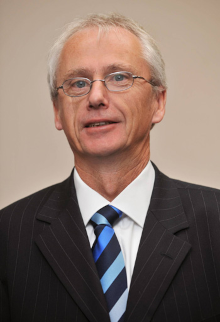
Ahern is born in Dublin in 1938. He is a member of Dublin City Council for the Cabra–Glasnevin local electoral area from 1999 to 2009. He is first elected at the 1999 Irish local elections, topping the poll. He is re-elected at the 2004 Irish local elections. Prior to his election as the Lord Mayor of Dublin in 2000, he is the former Leader of the Fianna Fáil group on the council. He is a member of the Irish Sports Council.

Ahern is married to Moira Murray, and they have five sons and one daughter. His eldest son, Dylan Ahern, is found dead in his apartment on November 22, 2009.

Ahern is the elder brother of Bertie and Noel Ahern, both of whom serve as Fianna Fáil TDs, with Bertie serving as Taoiseach from 1997 to 2008.

Ahern is the Fianna Fáil candidate in the Dublin Central by-election which is held on June 5, 2009. He loses that election being beaten into 5th place. On the same day, he also loses his council seat in the 2009 Irish local elections.


Leave a comment

Birth of John Treacy, Olympian & Former Athlete

John Treacy, Irish Olympian and former athlete, now a sporting administrator, is born in Villierstown, County Waterford, on June 4, 1957.

Treacy attends St. Anne’s Post-Primary School in Cappoquin, County Waterford, running more than seven miles to school every morning. He graduates from Providence College in Providence, Rhode Island. In 1978 and 1979 he wins the IAAF World Cross Country Championships in Glasgow, Scotland and Limerick respectively.

Treacy is known as a tenacious runner who does not have an especially sharp final kick in track races. In the 1978 European Athletics Championships in Prague, he places 11th in the fast 10,000-metre race and fourth in the slow and tactical 5,000-metre race, losing to Italy‘s Venanzio Ortis by just three tenths of a second. In the 5,000-metre final, he lingers behind Great Britain‘s Nick Rose on the final back straight just after Rose drops from the lead group.

In the 1980 Summer Olympics in Moscow, Treacy collapses in his 10,000-metre heat with only 200 metres left, a victim of heat paralysis and dehydration. Because he was running in fourth place when he collapses and because only the top four runners qualify directly for the final from the three heats, his collapse allows Finnish four-time Olympic champion Lasse Virén, who had been trailing him, to qualify directly for the final. Having recovered from his heat-induced collapse, Treacy places seventh in the 5,000-metre final of those Olympics.

In the 1983 World Championships in Athletics in Helsinki, Finland, Treacy is eliminated in the 10,000-metre heats.

In the 1984 Summer Olympics in Los Angeles, California, Treacy places ninth in the 10,000-metre final before crowning his athletics career with a silver medal in the men’s marathon. Winner Carlos Lopes of Portugal is largely unchallenged for much of the race, with Treacy down the field until entering the top six around the 20-kilometre mark. He continues to work his way up the rankings until entering Los Angeles Memorial Coliseum just behind second-place English athlete Charlie Spedding. He overtakes Spedding with 150m to go, during which the Irish television commentary of Jimmy Magee lists the previous Irish Olympic medal winners up to that time, before culminating, “And for the 13th time, an Olympic medal goes to John Treacy from Villierstown in Waterford, the little man with the big heart.” His silver medal places Ireland 33rd on the medals table.

After the Los Angeles Olympics, Treacy runs competitively until 1995, retiring following a road race held in his honour in Waterford, attended by the other two medalists from the 1984 Olympic marathon, Carlos Lopes and Charlie Spedding. While he does not win any more major international championships medals, he does win the 1992 Los Angeles Marathon. At the 1986 European Athletics Championships in Stuttgart, he places sixth in the 10,000-metre race. In the 1987 World Championships in Athletics in Rome, he places twenty-sixth in the 10,000-metre race and thirteenth in the 5,000-metre final. He fails to finish the marathon at the 1988 Summer Olympics in Seoul and places 51st in his final Olympic games, the 1992 Summer Olympics in Barcelona in 1992. He wins the 1993 Dublin Marathon.

Treacy is currently chief executive of Sport Ireland, a statutory authority that oversees, and partly funds, the development of sport within Ireland . He is married to Fionnuala and they have four children: Caoimhe, Deirdre, Sean, and Conor.


Leave a comment

Birth of Joss Lynam, Civil Engineer & Mountaineer

Joss Lynam, Irish civil engineer who is well known as a mountaineer, hillwalker, orienteer, writer and sports administrator, is born James Perry O’Flaherty Lynam in London on June 29, 1924. He is one of Ireland’s most influential figures in outdoor activities.

Lynam is born to Irish parents Edward and Martha (née Perry), both Galway natives. He and his older sister, Biddy, are both raised in London where his father works as curator of maps in the British Museum. This is where he is first introduced to orienteering and cartography. The family frequently returns to the west coast of Ireland to holiday. Here he finds his love for mountaineering and climbs his first mountain, Knocknarea in County Sligo, with his aunt.

At 18, Lynam joins the British Army and trains as an officer. He is deployed to India in 1944 under the Corps of Royal Engineers where he spends the remainder of World War II. While there, he participates in his first of many Himalayan expeditions, climbing Kolahoi Peak. When he returns in 1947, he immediately moves to Dublin and enrolls in Trinity College Dublin, after encouragement from his parents, where he begins to study engineering. He graduates and receives his degree with Upper Second Class (2.1) Honours.

Lynam is a civil engineer by profession but devotes most of his life developing the sport of mountaineering in Ireland. He climbs extensively in Ireland, Great Britain, the Alps and in India. He is leader, or deputy leader, of expeditions to Greenland, the Andes, Kashmir, Tian Shan, Garhwal, Tibet and India, including the 1987 expedition to Changtse, that is the forerunner to the successful first Irish ascent of Mount Everest in 1993.

With his involvement in developing adventure sport in Ireland Lynam is active in promoting access and developing waymarked trails. He is involved in the creation and administration of the Federation of Mountaineering Clubs in Ireland (now Mountaineering Ireland), the Association for Adventure Sports, Bord Oiliúint Sléibhte (Irish Mountain Training Board), Tiglin (National Outdoor Training Centre), Outdoor Education Ireland, and Cospóir (now Sport Ireland) and the National Waymarked Ways Advisory Committee (part of Sport Ireland).

Lynam is a founder member of the Irish Mountaineering Club (IMC) serving as president from 1982-1984. He is also a founder member of both the Irish Orienteers and Three Rock Orienteering club. He is president of the Union Internationale des Associations d’Alpinisme‘s expeditions commission in the 1990s.

Lynam writes and edits many guide books on walking and climbing in Ireland and helps create and is editor of The Mountain Log (the journal of Mountaineering Ireland).

In 2001, Lynam is awarded an honorary degree from Trinity College Dublin in acknowledgment of his volunteer work and remarkable achievements. He celebrates his 80th birthday by climbing the Paradise Lost Route and then goes on to abseil down Winder’s Slab for his 82nd birthday, both routes in Dalkey Quarry. Both climbs are to raise funds for cancer research, as he had been undergoing chemotherapy for Hodgkin’s Disease.

As a result of a short illness, which is being treated at St. Vincent’s University Hospital Dublin, Lynam dies on the January 9, 2011, aged 86. His funeral is held in the Church of St. Therésè, Mount Merrion, Dublin and then continues to Mount Jerome Cemetery and Crematorium.

After Lynam’s death, his two daughters, Clodagh and Ruth, donate his papers to his alma mater, Trinity College Dublin. These papers cover a vast range of topics such as his life and career, family, childhood, experience of war, his involvement with different mountaineering clubs, and his many writings. The collection also contains photos and slides that he captures himself of landscapes and mountaineering, and consists of maps that are collected by him and his father. There is so much material in the collection that it takes a year for the collection to be catalogued by an archivist.

Lynam’s ashes are scattered by his daughters over the Knocknarea Mountain on the February 12, 2011, being the first mountain he climbed. The Lynam Lecture is introduced in 2011 by Mountaineering Ireland in his memory and his achievements in climbing, hillwalking and mountaineering in Ireland and around the world. Every December the Lynam Lecture is held by leading national and international mountaineers and discusses the development and future of mountaineering in Ireland. Past speakers include Ines Papert, Frank Nugent and Paddy O’Leary.