
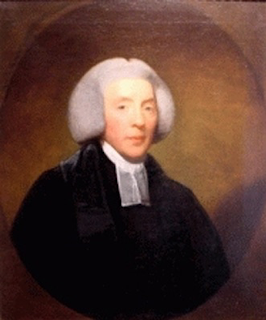
Hugh Hamilton FRS, mathematician, natural philosopher (scientist) and professor at Trinity College Dublin (TCD), and later a Church of Ireland bishop, Bishop of Clonfert and Kilmacduagh and then Bishop of Ossory, is born at Knock, near Balrothery in Fingal, County Dublin, on March 26, 1729.
Hamilton is the eldest son of Alexander and Isabella Hamilton. His father is a solicitor and politician who represents the Killyleagh constituency in the Irish House of Commons from 1739 to 1759. Alexander’s great-grandfather Hugh Hamilton migrates from Scotland to County Down in the early 17th century. The Scottish architect James Hamilton of Finnart is an ancestor. Isabella Hamilton is born Isabella Maxwell, the daughter of Robert Maxwell of Finnebrogue, Downpatrick. Hugh’s siblings include George Hamilton, Baron of the Court of Exchequer (Ireland) and Charles, father of the wealthy Canadian lumber merchant and politician George Hamilton.
Hamilton enters Trinity College Dublin on November 17, 1742, at the age of 13 with Thomas McDonnell as his tutor. He graduates Bachelor of Arts (BA) in 1747 and Trinity Master of Arts (MA Dubl) in 1750. He takes the competitive examination for a vacant fellowship of the college in 1750, but the position is secured instead by his friend Richard Murray, who is a few years older. Two fellowships become vacant the following year and Hamilton is elected to one of them at the age of 22. He is appointed Erasmus Smith’s Professor of Natural and Experimental Philosophy at Trinity College Dublin in 1759 and that same year graduates Bachelor of Divinity (BD). He is elected a Fellow of the Royal Society on February 19, 1761, and graduates Doctor of Divinity (DD) in 1762.
Trinity College presents him to the rectory of Kilmacrennan in the diocese of Raphoe, County Donegal, in 1764. This is a small benefice in the gift of the college, for which he resigns his fellowship. He retains the Erasmus Smith’s chair, however, being succeeded in that by Thomas Wilson in 1769. He resigns from Kilmacrenan in 1767 and becomes vicar of St. Ann’s Church in Dublin.
Hamilton then becomes Dean of Armagh, the chief resident cleric of St. Patrick’s Cathedral in Armagh, County Armagh, from April 1768 to 1796. Finding the existing dean’s house inconvenient and poorly situated, he has a new one built in a better location just off Portadown Road, now known as Dean’s Hill. The house, of three stories and a semi-basement, is built in 1772–74. The house is later sold by the church and the present owners provide bed and breakfast accommodation in it. While dean he also acts as treasurer for the infirmary or county hospital, he establishes Sunday schools in the districts of the parish, and he founds a charitable loan for poor tradesmen. He is also instrumental in planning a piped water supply for the town, which is later put into effect. He is one of the 38 original members of the Royal Irish Academy when it is founded in 1785. Gilbert Stuart paints his portrait in about 1790 (pictured above).
Hamilton is promoted to Bishop of Clonfert and Kilmacduagh on January 20, 1796, without seeking it. On January 24, 1799, he is translated to Ossory, where he is bishop until 1805. He dies of a fever at Kilkenny, County Kilkenny, on December 1, 1805. He is buried in the graveyard of St. Canice’s Cathedral at Kilkenny, and there is a memorial to him inside the cathedral.
Hamilton writes a mathematical treatise on conic sections called De Sectionibus Conicis: Tractatus Geometricus, published in 1758. In this book he “was the first to deduce the properties of the conic section from the properties of the cone, by demonstrations which were general, unencumbered by lemmas, and proceeding in a more natural and perspicuous order,” according to writer James Wills in 1847. The work is acclaimed for its lucidity and Leonhard Euler describes it as a perfect book. It is “soon adopted in all the British universities” and is translated from Latin into English as A Geometrical Treatise of the Conic Sections in 1773.
Hamilton also writes Philosophical Essays on Vapours (1767), Four Introductory Lectures on Natural Philosophy (1774), and An Essay on the Existence and Attributes of the Supreme Being (1784). His principal works are collected and republished, with a memoir, as The Works of the Right Rev. Hugh Hamilton by his eldest son, Alexander Hamilton, in two volumes in 1809.
Hamilton marries Isabella, daughter of Hans Widman Wood of Rosmead, County Westmeath, in 1772. Isabella’s mother Frances is the twin sister of Edward King, 1st Earl of Kingston. They have five sons and two daughters. They are Alexander, who was a barrister; Frances; Hans, who is rector of Knocktopher, County Kilkenny, and associated with the Carrickshock incident of 1831; Isabella; Henry; George, who is a biblical scholar; and Hugh, who marries Elizabeth Staples, a daughter of John Staples, a Member of Parliament. The younger Hugh is the great-grandfather of Clive Staples Lewis, better known as C. S. Lewis. Bishop Hugh Hamilton is a great-great-great-grandfather of the mathematicians John Lighton Synge and his brother Edward Hutchinson Synge. Dodgson Hamilton Madden, the High Court judge and noted scholar, is Hamilton’s great-grandson.
(Pictured: “Hugh Hamilton,” oil on canvas by Gilbert Stuart)

 seamus dubhghaill