seamus dubhghaill

Promoting Irish Culture and History from Little Rock, Arkansas, USA


Leave a comment

Birth of Arthur William Conway, UCD President

arthur-william-conway

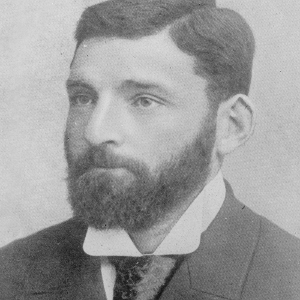
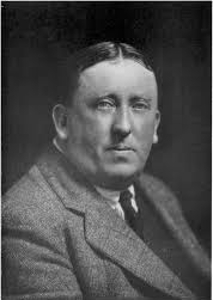
Arthur William Conway FRS, President of University College Dublin between 1940 and 1947, is born in Wexford, County Wexford, on October 2, 1875.

Conway receives his early education at St. Peter’s College, Wexford and proceeds to enter old University College, Dublin in 1892. He receives his BA degree from the Royal University of Ireland in 1896 with honours in Latin, English, Mathematics, and Natural Philosophy. In 1897, he receives his MA degree with highest honours in mathematics and proceeds to Corpus Christi College, Oxford, becoming University Scholar there in 1901. Also in 1901, he is appointed to the professorship of Mathematical Physics in the old University College and holds the Chair until the creation of the new college in 1909. He also teaches for a short time at St. Patrick’s College, Maynooth.

Conway marries Agnes Christina Bingham on August 19, 1903. They have three daughters and one son.

One of Conway’s students is Éamon de Valera, whom he introduces to quaternions which originate in Ireland. De Valera warms to the subject and engages in research of this novelty of abstract algebra. Later, when de Valera becomes Taoiseach, he calls upon Conway while forming the Dublin Institute for Advanced Studies.

Conway is remembered for his application of biquaternion algebra to the special theory of relativity. He publishes an article in 1911, and in 1912 asserts priority over Ludwik Silberstein, who also applies biquaternions to relativity. This claim is backed up by George Temple in his book 100 Years of Mathematics. In 1947 Conway puts quaternions to use with rotations in hyperbolic space. The next year he publishes quantum mechanics applications which are referred to in a PhD thesis by Joachim Lambek in 1950.

In 1918, Conway is the Irish Parliamentary Party candidate in South Londonderry and in the National University of Ireland, coming in second in both.

Conway continues his scholarship in the field of mathematics and theoretical physics and makes a special study of William Rowan Hamilton. With John Lighton Synge, he edits the first volume of Hamilton’s mathematical papers, and, with A. J. McConnell, he edits the second volume of Hamilton’s mathematical papers. Conway is also active in college life, being appointed Registrar, a position he occupies until his election as president in 1940. He retires in 1947 from the presidency of UCD. In 1953, some of his writings are edited by J. McConnell for publication by the Dublin Institute for Advanced Studies.

He is elected President of the Royal Irish Academy from 1937 to 1940.

Leave a comment

Birth of Fianna Fáil Politician Ray Burke

ray-burke

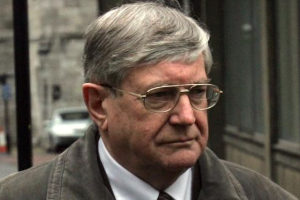
Raphael Patrick “Ray” Burke, disgraced former Fianna Fáil politician, is born on September 30, 1943, in Dublin. He is a former Teachta Dála and government minister who is convicted and imprisoned on charges arising from political corruption in office. Burke is also highly influential in decisions made by Dublin County Council.

Burke’s political career commences when he is elected to Dublin County Council for Fianna Fáil in 1967. He serves as chairman of the council from 1985 to 1987.

Burke is elected to Dáil Éireann at the 1973 general election for the Dublin County North constituency, succeeding his father Patrick J. Burke, who has held the seat for 29 years. Ray Burke represents this constituency and its successor Dublin North until his resignation almost twenty-five years later.

After Fianna Fáil’s landslide victory at the 1977 general election, Burke is appointed Minister of State at the Department of Industry and Commerce. In October 1980 Burke is promoted to Minister for the Environment, a position he holds until June 1981 and again in the short-lived Fianna Fáil government of 1982. After Fianna Fáil returns to power at the 1987 general election, Burke serves as Minister for Energy, where he makes controversial changes to the legislation governing oil and gas exploration. In 1988, he is appointed Minister for Industry, Commerce and Communications.

Following the formation of the Fianna Fáil–Progressive Democrats Coalition in 1989, he becomes Minister for Justice and Minister for Communications. When Albert Reynolds comes to power in 1992, he does not re-appoint Burke to the Cabinet. Following the 1997 general election, Fianna Fáil is back in power, and Burke is appointed Minister for Foreign Affairs by new Taoiseach Bertie Ahern.

Within months of his appointment as Minister for Foreign Affairs, allegations resurface that Burke has received IR£80,000 from a property developer regarding the former Dublin County Council. Burke denies the allegations but resigns from the Cabinet and from the Dáil on October 7, 1997, after just four months in office.

Having claimed since 1989 that Raidió Teilifís Éireann (RTÉ) is biased against him, Burke is responsible for controversial legislation that severely limits RTÉ’s ability to collect advertising revenue and allows for the establishment of a series of local radio stations and one independent national radio station, Century Radio. RTÉ is ordered to provide a national transmission service for Century Radio at a price that RTÉ complains is far below the economic cost of providing such a service. Nevertheless, Century Radio fails to gain significant audience share and closes in 1991.

In July 2004 Burke pleads guilty to making false tax returns. The charges arise from his failure to declare for tax purposes the payments that he has received from the backers of Century Radio. On January 24, 2005, he is sentenced to six months in prison for these offences, making him one of the most senior Irish politicians to serve time in prison. He is released in June 2005 after four and a half months, earning a 25% remission of sentence because of good behaviour. He serves his time in Arbour Hill Prison in Dublin.


Leave a comment

Ireland Reacts to Terrorist Attacks in U.S.

tricolour-at-ground-zero

President Mary McAleese goes on RTÉ Radio on September 11, 2001, to express her shock and horror at the terrorist attacks in the United States.

The President says that these atrocities are “crimes against the very foundations of our humanity.” She comments that “it is unbearable and almost unbelievable for the rest of the world to be witnessing such wanton destruction of human life in front of our eyes.”

President McAleese speaks by telephone with the United States Ambassador to Ireland, Richard Egan, and asks him to convey to President George W. Bush the heartfelt sympathies of the Irish people in this hour of great tragedy for the people of America, a nation which Ireland holds so dear.

The Irish government names more than a dozen of its natives among the dead in New York City, Washington, D.C., and Pennsylvania. Based on family names and individual stories, there are many hundreds of American dead with Irish heritage, including Americans who through parents or grandparents have become Irish citizens.

The website www.IrishTribute.com, set up in reaction to the September 11 attacks, estimates that perhaps one-sixth of the dead are in some way “Irish.” The website claims that “September 11, 2001 may well go down as the bloodiest day in the history of the Irish people. An estimated 1,000 people who were of Irish descent or of Irish birth were lost in the violent events on that day.”

A National Day of Mourning is held in Ireland on September 14 and a remembrance mass is held on September 12, 2001. Ireland is one of the few countries to hold a service day. Taoiseach Bertie Ahern and President McAleese are both in attendance.

Families in Limerick take in American tourists grounded at Shannon Airport after all flights into and out of the United States are cancelled.

The only flag, other than the U.S. flag, to fly at the Ground Zero site is the Irish tricolour, which is put in place by the Carpenters Union #608 and FDNY Command Post.

In the wake of the attacks, the Irish government immediately begins reviewing security arrangements.


Leave a comment

Death of Éamon de Valera

eamon-de-valera-dead

Éamon de Valera, prominent politician in twentieth-century Ireland, dies at the age of 92 in Linden Convalescent Home, Blackrock, County Dublin on August 29, 1975. His wife, Sinéad de Valera, four years his senior, had died the previous January, on the eve of their 65th wedding anniversary.

De Valera’s political career spans over half a century, from 1917 to 1973. He serves several terms as head of government and head of state. He also leads the introduction of the Constitution of Ireland.

De Valera is a leader in the Irish War of Independence and of the anti-Treaty opposition in the ensuing Irish Civil War (1922–1923). After leaving Sinn Féin in 1926 due to its policy of abstentionism, he founds Fianna Fáil, and is head of government from 1932 to 1948, 1951 to 1954, and 1957 to 1959, serving as President of the Executive Council and later Taoiseach. He resigns after being elected President of Ireland. His political creed evolves from militant republicanism to social and cultural conservatism.

Assessments of de Valera’s career are varied. He has often been characterised as a stern, unbending, devious, and divisive Irish politician. Biographer Tim Pat Coogan sees his time in power as being characterised by economic and cultural stagnation, while Diarmaid Ferriter argues that the stereotype of de Valera as an austere, cold and even backward figure is largely manufactured in the 1960s and is misguided.

On September 2, 1975, Éamon de Valera makes his final journey through the streets of Dublin to his final resting place at Glasnevin Cemetery. De Valera’s body is taken from St. Patrick’s Hall in Dublin Castle, where it has lain in state, to the the St. Mary’s Pro-Cathedral, where a requiem Mass is celebrated by his grandson, Father Seán Ó Cuív, and then on to Glasnevin Cemetery.

On a day of national mourning, over 200,000 people pay tribute to the statesman along the three-mile funeral route from Dublin city centre to Glasnevin. The Army No. 1 Band plays Wrap the Green Flag Round Me as de Valera is carried into Glasnevin Cemetery.

In attendance at the funeral are family, friends, colleagues, politicians, dignitaries, diplomats, veterans of the 1916 Easter Rising, and citizens who want to pay their respect. The final prayers are recited at the graveside by Father Ó Cuív. The firing party of young cadets from the Curragh fire a final volley in tribute over the grave.


Leave a comment

IRA Announces End of 36-Year Armed Campaign

ira-ends-armed-campaignThe Irish Republican Army (IRA) issues a statement on July 28, 2005, announcing the end of its 36-year armed campaign and its resumption of disarmament. The campaign of armed conflict has a cost 3,500 lives, 1,800 of them at the hands of the Provisionals.

The IRA says its members have been ordered to pursue peaceful means and not to “engage in any other activities whatsoever” – a reference to the low-level paramilitary activities which have angered not just unionists, but the London and Dublin governments. The IRA gives no indication that it will disband.

Sinn Féin president Gerry Adams calls it an “emotional day” and, flanked by senior members of Sinn Féin, speaks directly to IRA volunteers by saying, “National liberation struggles have different phases – a time for struggle, a time for war, and also a time to engage, to put the war behind us all – this is that time.” He declares the IRA statement means the group is now committed to “purely peaceful and democratic methods” and calls it “a direct challenge to the Democratic Unionist Party (DUP) to decide if they want to put the past behind them and make peace with the rest of the people of the island.”

The DUP reserves judgment, although an initial “holding statement” on their website from the party leader, Rev. Ian Paisley, criticises the failure to declare clearly they will end all criminal activity.

Taoiseach Bertie Ahern says the British and Irish governments have worked for 11 years for this outcome. He says, “The war is over, the IRA’s armed campaign is over, paramilitarism is over and I believe that we can look to the future of peace and prosperity based on mutual trust and reconciliation and a final end to violence.”

Praising the “clarity” of the IRA statement, British Prime Minister Tony Blair says, “This may be the day when finally, after all the false dawns and dashed hope, peace replaces war, politics replaces terror on the island of Ireland.”

The IRA statement follows the release the previous night of IRA bomber Sean Kelly by the British government “on the expectation” of a move by the terrorist group.


Leave a comment

Six Irish Students Killed in Berkeley Balcony Collapse

berkeley-balcony-collapse

Five Irish J-1 visa students and one Irish American die and seven others are injured in Berkeley, California, on June 16, 2015, after a fourth-floor balcony on which they are standing collapses. Thirteen people fall from the balcony and four are pronounced dead at the scene while two die later at the hospital.

One of the six killed is a dual Irish American citizen, Ashley Donohoe, 22, of Rohnert Park, California. The other five are Olivia Burke (Donohue’s cousin), Eoghan Culligan, Niccolai ‘Nick’ Schuster, Lorcán Miller, and Eimear Walsh, all aged 21 and from Dublin.

In June 2015, Berkeley Mayor Tom Bates promises a broad and wide-ranging investigation into the cause of the accident with the likely cause being that the balcony of the building had not been constructed properly leading to the development of dry rot, leading to the balcony becoming structurally compromised. Overwhelming evidence points to dry rot as the cause of the collapse, and not the weight of the 13 students on it at the time.

The New York Times publishes an article reporting the deaths and suggesting the deceased are to blame for the collapse. The paper states that Irish students coming to the U.S. on J-1 visas are an “embarrassment to Ireland.” Taoiseach Enda Kenny and former President Mary McAleese criticise the newspaper for “being insensitive and inaccurate” in its handling of the story. The newspaper subsequently apologizes, although the article remains available at its website.

Alameda County prosecutors open up a criminal investigation on the accident on June 25. They state that involuntary manslaughter charges could be filed. Berkeley District Attorney Nancy O’Malley denies that pressure from the Irish community have led to the collapse inquiry.

On July 3, 2015, the Alameda County Superior Court rejects a restraining order bid against the examination of evidence by construction company Segue Builders. D.A. O’Malley had argued that the granting of a restraining order would amount to an interference in her duty to investigate the tragedy.

In December 2015, a court is told that the collapse happened because contractors cut corners to save costs. It is alleged that Greystar, the management company for the building, ignored a “red flag” when students who rented the apartment complained about the presence of mushrooms growing on the balcony. Legal cases by some of the victims are set to be combined and heard together sometime in 2016.

A joint funeral service for Olivia Burke and her cousin Ashley Donohoe takes place on June 20, four days after the collapse, in a church in Cotati, California. Funeral services are held in Dublin for the remaining victims.


Leave a comment

The 1996 Manchester Bombing

manchester-bombing-1996

The Provisional Irish Republican Army (IRA) detonates a powerful 3,300-pound truck bomb on Corporation Street in the centre of Manchester, England, at 11:17 AM on June 15, 1996. The biggest bomb detonated in Great Britain since World War II, it targets the city’s infrastructure and economy and causes widespread damage, estimated by insurers at £700 million.

The IRA sends telephone warnings about 90 minutes before the bomb is detonated. The area is evacuated but the bomb squad, using a remote-controlled device, is unable to defuse the bomb in time. More than 200 people are injured, but there are no fatalities. At the time, England is hosting the UEFA Euro ’96 football championships and a match between Russia and Germany is to take place in Manchester the following day.

The Marks & Spencer store, the sky bridge connecting it with the Arndale Centre, and neighbouring buildings are destroyed. The blast creates a mushroom cloud which rises 1,000 feet into the sky. Glass and masonry are thrown into the air and people are showered by falling debris behind the police cordon a half mile away. A search of the area for casualties is confused by mannequins blasted from shop windows, which are sometimes mistaken for bodies.

Since 1970 the Provisional IRA has been waging a campaign aimed at forcing the British government to negotiate a withdrawal from Northern Ireland. Although Manchester has been the target of IRA bombs before 1996, it has not been subjected to an attack of this scale. The IRA had ended its seventeen-month ceasefire in February 1996 with a similarly large truck bomb attack on the London Docklands.

The bombing is condemned by John Major‘s government, the opposition, and by individual members of parliament (MPs) as a “sickening”, “callous,” and “barbaric” terrorist attack. Early on, Major states that, “This explosion looks like the work of the IRA. It is the work of a few fanatics and…causes absolute revulsion in Ireland as it does here.” Sinn Féin is criticised by Taoiseach John Bruton for being “struck mute” on the issue in the immediate aftermath. The President of the United States, Bill Clinton, states he is “deeply outraged by the bomb explosion” and joins Bruton and Major in “utterly condemning this brutal and cowardly act of terrorism.” On June 20, 1996, the IRA claims responsibility for the bombing and states that it “sincerely regretted” causing injury to civilians.

Several buildings near the explosion are damaged beyond repair and have to be demolished, while many more are closed for months for structural repairs. Most of the rebuilding work is completed by the end of 1999, at a cost of £1.2 billion, although redevelopment continues until 2005. The perpetrators of the attack have not been caught and Greater Manchester Police concede it is unlikely that anyone will ever be charged in connection with the bombing.


Leave a comment

German Bombing of North Strand, Dublin

north-strand-bombing

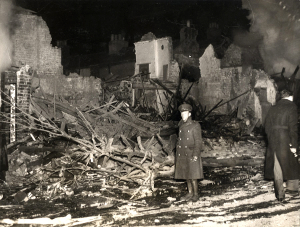
Four German bombs are dropped on north Dublin at approximately 2:00 AM on May 31, 1941. One bomb falls in the Ballybough area, demolishing the two houses at 43 and 44 Summerhill Park, injuring many but with no loss of life. A second bomb falls at the Dog Pond pumping works near the zoo in Phoenix Park, again with no casualties but damaging Áras an Uachtaráin, the official residence of the Irish President. A third bomb makes a large crater in the North Circular Road near Summerhill, again causing no injuries. A fourth bomb falls in North Strand destroying seventeen houses and severely damaging about fifty others, the worst damage occurring in the area between Seville Place and Newcomen Bridge. The raid claims the lives of 28 people, injures 90, destroys or damages approximately 300 houses, and leaves 400 people homeless.

The first bombing of Dublin during World War II occurs early on the morning of January 2, 1941, when German bombs are dropped on the Terenure area of south Dublin. This is followed, early on the following morning of January 3, 1941, by further German bombing of houses on Donore Terrace in the South Circular Road area of south Dublin. A number of people are injured, but no one is killed in these bombings.

After the war, what becomes West Germany accepts responsibility for the raid, and by 1958 it has paid compensation of £327,000. Over 2,000 claims for compensation are processed by the Irish government, eventually costing £344,000. East Germany and Austria, which are both part of Nazi Germany in 1941, make no contribution. The amounts are fixed after the 1953 London Agreement on German External Debts, allowing maximum compensation.

Several reasons for the raid have been asserted over time. German Radio, operated by the Ministry of Public Enlightenment and Propaganda, broadcasts that “it is impossible that the Germans bombed Dublin intentionally.” Irish airspace has been violated repeatedly, and both Allied and German airmen are being interned at the Curragh Camp. A possible cause is a navigational error or a mistaken target, as one of the pathfinders on the raid later recounts. Numerous large cities in the United Kingdom are targeted for bombing, including Belfast, which like Dublin, is across the Irish Sea from Great Britain. War-time Germany’s acceptance of responsibility and post-war Germany’s payment of compensation are cited as further indications that the causation is error on the part of the Luftwaffe pilots.

Another possible reason is that in April 1941, Germany has launched the Belfast blitz, which results in Belfast being heavily bombed. In response, Ireland sends rescue, fire, and emergency personnel to Belfast to assist the city. Éamon de Valera, the Taoiseach, formally protests the bombing to the German government, as well as making his famous “they are our people” speech. Some contend that the raid serves as a warning to Ireland to keep out of the war. This contention is given added credibility when Colonel Edward Flynn, second cousin of Ireland’s Minister for Coordination of Defensive Measures, recalls that Lord Haw Haw has warned Ireland that Dublin’s Amiens Street Railway Station, where a stream of refugees from Belfast is arriving, will be bombed. The station, now called Connolly Station, stands a few hundred metres from North Strand Road, where the bombing damage is heaviest. Flynn similarly contends that the German bombing of Dundalk on July 4 is also a pre-warning by Lord Haw Haw as a punishment for Dundalk being the point of shipment of Irish cattle sold to the United Kingdom.


Leave a comment

Death of Seán Francis Lemass, Taoiseach (1959-1966)

sean-francis-lemass

Seán Francis Lemass, one of the most prominent Irish politicians of the 20th century and Taoiseach from 1959 until 1966, dies at Mater Misericordiae University Hospital in Dublin on May 11, 1971, at the age of 71.

John Francis Lemass is born in Ballybrack, County Dublin before his family moves to Capel Street in Dublin city centre. He is the second of seven children born to John and Frances Lemass. Within the family his name soon changes to Jack and eventually, after 1916, he himself prefers to be called Seán. He is educated at O’Connell School where he was described as studious, with his two best subjects being history and mathematics.

As early as the age of sixteen, Lemass becomes a freedom fighter in the streets of Dublin, engaging in the 1916 Easter Rising, the Irish War of Independence, and the Irish Civil War, landing in jail again and again. He opposes the establishment of the Irish Free State as a dominion under the Anglo-Irish Treaty of 1921 and becomes a member of the headquarters staff of the Irish Republican Army in the civil war of 1922–1923.

Lemass is first elected as a Sinn Féin Teachta Dála (TD) for the Dublin South constituency in a by-election on November 18, 1924, and is returned at each election until the constituency is abolished in 1948, when he is re-elected for Dublin South–Central until his retirement in 1969.

He plays a key role in persuading Éamon de Valera to found a new republican party, Fianna Fáil, in 1926. After de Valera rises to the premiership in 1932, Lemass holds portfolios in all his cabinets for 21 of the next 27 years, notably as Minister for Industry and Commerce, Minister for Supplies, and Tánaiste (deputy prime minister).

When de Valera becomes President of Ireland in 1959, Lemass inherits the office of Taoiseach, serving in this position until 1966. Under him the country takes a more outward-looking approach, and he especially presses for Ireland’s entry into the European Economic Community (EEC), now the European Community embedded in the European Union, and for reconciliation with Northern Ireland.

Ill health forces Lemass to relinquish the leadership of his party in 1966 and he withdraws from politics altogether in 1969. He has been a heavy pipe smoker all his life, smoking almost a pound of tobacco a week in later life. At the time of his retirement, it is suspected that Lemass has cancer, but this is later disproved. In February 1971, while attending a rugby game at Lansdowne Road, he becomes ill, is rushed to hospital, and is told by his doctor that one of his lungs is about to collapse.

On Tuesday, May 11, 1971, Seán Lemass dies in Dublin’s Mater Misericordiae University Hospital. He is afforded a state funeral and is buried in Dean’s Grange Cemetery.

Lemass is widely regarded as the father of modern Ireland, primarily due to his efforts in facilitating industrial growth, bringing foreign direct investment into the country, and forging permanent links between Ireland and the European community. His greatest legacy, Ireland’s membership in the EEC, is not secured until 1973, after his death.


Leave a comment

Execution of Thomas Kent

thomas-kent

Irish nationalist Thomas Kent is executed at Cork Detention Barracks on May 9, 1916. Kent’s story is one of the stranger episodes that happens after the rebellion in Dublin has been quelled. Unlike the Dublin rebels, Kent does not go out to fight. Rather the British come to him looking for trouble.

Kent is part of a prominent nationalist family who lives at Bawnard House, Castlelyons, County Cork. After spending some time in Boston, he returns to Ireland because of poor health. He is active in the Land League, Sinn Féin, and the Irish Republican Brotherhood. With the launch of the Irish Volunteers in 1913, he is prominent with another legendary Cork man, Terence MacSwiney, in organizing and training recruits.

The Kent family is prepared to take part in the Easter Rising but when the mobilisation order is countermanded by Eoin MacNeill, commander of the Irish Volunteers, on April 22, they stay at home. The rising nevertheless goes ahead in Dublin on Easter Monday. The Royal Irish Constabulary (RIC) is dispatched to arrest well-known sympathizers throughout the country including, but not limited to, known members of the Irish Republican Brotherhood, Sinn Féin, and the Irish Volunteers.

When the Kent residence is raided at 3:45 AM on May 2, the RIC is met with resistance from Thomas and his brothers Richard, David, and William. A gunfight lasts for four hours, during which RIC officer Head Constable William Rowe is killed and David Kent is seriously wounded. Eventually the Kents are forced to surrender, although Richard makes a last-minute dash for freedom and is fatally wounded.

Thomas and William are tried by court martial on May 4 on a charge of “armed rebellion.” William, who is not political, is found innocent, but Thomas is found guilty in the death of Constable Rowe and is sentenced to death. Before being led out for his execution, Kent says, “I have done my duty as a soldier of Ireland and in a few moments, I hope to see the face of God.” He is executed by firing squad in Cork in the early morning hours of May 9. David Kent is brought to Dublin where he is charged with the same offence, found guilty, and sentenced to death, but the sentence is commuted, and he is sentenced to five years penal servitude.

Apart from the singular case of Roger Casement, Thomas Kent is the only person outside of Dublin to be executed for his role in the events surrounding Easter Week. He is buried on the grounds of Cork Prison, formerly the Military Detention Barracks at the rear of Collins Barracks, Cork. The former army married quarters at the rear of Collins Barracks are named in his honour.

Taoiseach Enda Kenny offers a state funeral to the Kent family early in 2015 which they accept. Kent’s remains are exhumed from Cork prison in June 2015 after being buried for 99 years. The state funeral is held on September 18, 2015, at St. Nicholas’ Church in Castlelyons. Kent lay in state at Collins Barracks in Cork the day before. The requiem mass is attended by President Michael D. Higgins, with Enda Kenny delivering the graveside oration.