seamus dubhghaill

Promoting Irish Culture and History from Little Rock, Arkansas, USA


Leave a comment

Death of Edward Hutchinson Synge, Irish Physicist

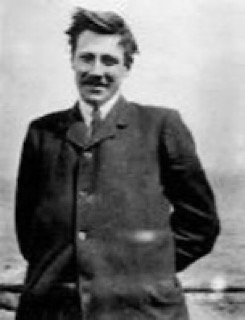
Irish physicist Edward Hutchinson Synge dies in a Dublin nursing home on May 26, 1957. He publishes a complete theoretical description of the near-field scanning optical microscope, an instrument used in nanotechnology, several decades before it is experimentally developed. He never completes university yet does significant original research in both microscopy and telescopy. He is the first to apply the principle of scanning in imaging, which later becomes important in a wide range of technologies including television, radar, and scanning electron microscopy.

Synge is born on June 1, 1890, in south Dublin, to Edward Synge and Ellen Frances Price. He is familiarly known as “Hutchie.” He is the nephew of playwright John Millington Synge and the older brother of distinguished mathematician and theoretical physicist John Lighton Synge who edits the collected works of Sir William Rowan Hamilton at Synge’s urging. He and brother John are great-great-great-grandsons of Irish bishop Hugh Hamilton. He is also the uncle of the mathematician Cathleen Synge Morawetz. Throughout his life he is very physically active, pursuing walking, cycling, swimming and sailing. In his later life, he takes up painting and is quite good at it.

In 1908, Synge enters Trinity College Dublin (TCD) to study Mathematics and Old Irish. For three years he is a brilliant student and wins several prizes and a Foundation Scholarship in mathematics in 1910. At the end of his third year, he comes into an inheritance from his uncle John Millington Synge, and in 1913 he drops out of university.

Starting in 1928, with encouragement from Albert Einstein, Synge launches on a period of intense productivity during which he lays the foundation for new kinds of microscopes and telescopes. Nobody, including his famous brother John, appreciates his achievements at the time. His work is overlooked for decades, but is now better-known thanks to the book The Life and Works of Edward Hutchinson Synge published by Living Edition in 2012.

On April 22, 1928, Synge writes to Einstein about an idea he has for a new microscopic imaging method in which an optical field scattered from a tiny gold particle can be used as a radically new light source. Einstein replies that although Synge’s method appears essentially unworkable, the basic ideas seem correct and he should publish his research.

There follows a remarkable period from 1928 to 1932 in which Synge produces all of his key works which he publishes in the Dublin Philosophical Magazine and Journal of Science. Remarkably, he does all of this work alone, without a laboratory, and while living at his home in Dundrum in the suburbs of Dublin. By 1932 he has laid out the theory of the near-field microscope and his description is incredibly accurate.

The idea is ahead of its time. In 1956, a similar theory is developed by John A. O’Keefe and in 1972, Eric Ash gives the first experimental demonstration of the technique using electromagnetic radiation. It is not until Synge’s original papers re-emerge in the 1980s that his priority is finally recognised.

Synge proposes a design for very large astronomical telescopes, based on multiple mirrors, an idea realised much later in Tucson, Arizona, and elsewhere. He also invents a new kind of remote sensing technique using searchlights. Today this is known as Lidar and uses pulsed lasers.

According to the people who know him best, Synge suffers from what today would be called Asperger syndrome. Becoming increasingly socially isolated, he drops out of university in 1913 and works alone without any support from the academic community until all work stops in 1932. In 1936, he has a mental breakdown and is committed to a Dublin nursing home where he remains until his death on May 26, 1957. He is buried with his parents in Dublin’s Mount Jerome Cemetery, with only a few relatives attending. It is much later that his niece, Cathleen Synge Morawetz, arranges to have “Scientist and Inventor” inscribed on the gravestone.
Leave a comment

Birth of Mary Field Parsons, Countess of Rosse

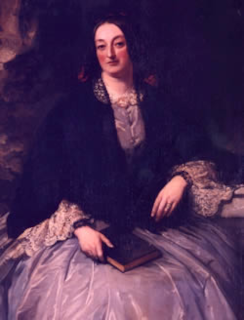
Mary Parsons (née Field), Countess of Rosse, Anglo-Irish amateur astronomer, architect, furniture designer, and pioneering photographer, is born on April 14, 1813, at Heaton Hall, Heaton, Bradford, West Yorkshire, England. Often known simply as Mary Rosse, she is one of the early practitioners of making photographs from waxed-paper negatives.

Field is the daughter of John Wilmer Field, a wealthy estate owner. She has a sister, Delia, and they are educated at home by Susan Lawson, a governess who encourages her creativity and broad interests, including astronomy. The sisters are joint heirs to their father’s fortune.

Through her family Field meets William Parsons, then Lord Oxmantown and the future 3rd Earl of Rosse, an Anglo-Irish astronomer and naturalist, and they are married on April 14, 1836, her 23rd birthday. In February 1841, Lord Oxmantown succeeds his father in the family peerage to become the 3rd Earl of Rosse. She, Baroness Oxmantown since her marriage, thus now becomes the Countess of Rosse.

In the early 1840s the couple becomes interested in astronomy, and the Countess of Rosse helps her husband build a number of giant telescopes, including the so-called Leviathan of Parsonstown, that is considered a technical marvel in its time. The author, Henrietta Heald, contends that she is not only a financial support to the building of the telescope, but is also involved in a practical and intellectual capacity. The Leviathan of Parsontown is completed in 1845 and holds the record as the world’s largest telescope for over 70 years. It is mentioned in Jules Verne’s science fiction novel, From the Earth to the Moon.

The Countess of Rosse is an accomplished blacksmith, which is very unusual for higher class women of the time, and she may have constructed some of the iron work that supports the telescope. Other metal cast items around the castle grounds are designed by her, including bronze gates.

During the Great Famine of 1845–47 in Ireland, the Countess of Rosse is responsible for keeping over five hundred men employed in work in and around Birr Castle, where she and her husband live.

The Countess of Rosse creates a huge dining room at Birr Castle in which to entertain scientific guests, which becomes increasingly used when Lord Rosse becomes President of the Royal Society of London in 1848. Guests include mathematician William Rowan Hamilton, who writes her a sonnet about his experience of gazing through the Leviathan.

In 1842, Lord Rosse begins experimenting in daguerreotype photography, possibly learning some of the art from his acquaintance William Henry Fox Talbot. In 1854, he writes to Fox Talbot saying that the Countess too has just commenced photography and sends some examples of her work. Fox Talbot replies that some of her photographs of the telescope “are all that can be desired.”

The Countess of Rosse becomes a member of the Dublin Photographic Society, and in 1859 she receives a silver medal for “best paper negative” from the Photographic Society of Ireland. Many examples of her photography are in the Birr Castle Archives. Much of the topography of Birr Castle that she portrayed has changed very little, and it is possible to compare many of her photographs with the actual places. She records the Leviathan in her photographs including one image showing her three sons, Clere, Randal and Charles along with her sister-in-law, Jane Knox, standing upright at the mouth of the telescope.

The Countess of Rosse gives birth to eleven children, but only four survive to adulthood:

Mary, Dowager Countess of Rosse, dies in 1885.


Leave a comment

Birth of Astronomer William Parsons, 3rd Earl of Rosse

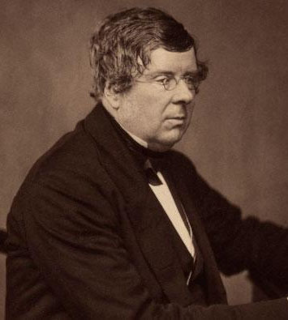
William Parsons, 3rd Earl of Rosse, Anglo-Irish astronomer, naturalist, and engineer, is born in York, England on June 17, 1800. He is President of the Royal Society (UK), the most important association of naturalists in the world in the nineteenth century. He builds several giant telescopes. His 72-inch telescope, built in 1845 and colloquially known as the “Leviathan of Parsonstown,” is the world’s largest telescope, in terms of aperture size, until the early 20th century. From April 1807 until February 1841, he is styled as Baron Oxmantown.

Parsons is the son of Lawrence Parsons, 2nd Earl of Rosse, and Alice Lloyd. He is educated at Trinity College, Dublin and Magdalen College, Oxford, graduating with first-class honours in mathematics in 1822. He inherits an earldom and a large estate in King’s County (now County Offaly) in Ireland when his father dies in February 1841.

Parsons marries Mary Field, daughter of John Wilmer Field, on April 14, 1836. They have thirteen children, of which four sons survive to adulthood: Lawrence, 4th Earl of Rosse, Rev. Randal Parsons, the Hon. Richard Clere Parsons, and the Hon. Sir Charles Algernon Parsons.

In addition to his astronomical interests, Parsons serves as a Member of Parliament (MP) for King’s County from 1821 to 1834, president of the British Science Association in 1843–1844, an Irish representative peer after 1845, president of the Royal Society (1848–1854), and chancellor of Trinity College, Dublin (1862–1867).

During the 1840s, Parsons has the Leviathan of Parsonstown built, a 72-inch telescope at Birr Castle, Parsonstown, County Offaly. He has to invent many of the techniques he uses for constructing the Leviathan, both because its size is without precedent and because earlier telescope builders had guarded their secrets or had not published their methods. Details of the metal, casting, grinding and polishing of the 3-ton ‘speculum’ are presented in 1844 at the Belfast Natural History Society. His telescope is considered a marvelous technical and architectural achievement, and images of it are circulated widely within the British commonwealth. Building of the Leviathan begins in 1842, and it is first used in 1845, with regular use waiting another two years due to the Great Famine. Using this telescope, he sees and catalogues a large number of nebulae, including a number that would later be recognised as galaxies.

Parsons performs astronomical studies and discovers the spiral nature of some nebulas, today known to be spiral galaxies. His telescope Leviathan is the first to reveal the spiral structure of M51, a galaxy nicknamed later as the “Whirlpool Galaxy,” and his drawings of it closely resemble modern photographs.

Parsons dies at the age of 67 on October 31, 1867, at Monkstown, County Dublin.

Parsons’s son publishes his father’s findings, including the discovery of 226 New General Catalogue of Nebulae and Clusters of Stars (NGC) objects in the publication Observations of Nebulae and Clusters of Stars Made With the Six-foot and Three-foot Reflectors at Birr Castle From the Year 1848 up to the Year 1878, Scientific Transactions of the Royal Dublin Society Vol. II, 1878.