seamus dubhghaill

Promoting Irish Culture and History from Little Rock, Arkansas, USA


Leave a comment

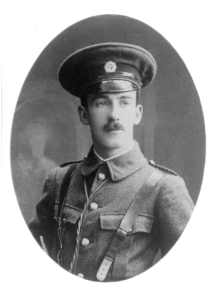
Birth of Michael Joseph O’Rahilly, Republican & Nationalist

Michael Joseph O’Rahilly, Irish republican and nationalist known as The O’Rahilly, is born in BallylongfordCounty Kerry, on April 22, 1875.

O’Rahilly is educated in Clongowes Wood College. As an adult, he becomes a republican and a language enthusiast. He joins the Gaelic League and becomes a member of An Coiste Gnotha, its governing body. He is well travelled, spending at least a decade in the United States and in Europe before settling in Dublin.

O’Rahilly is a founding member of the Irish Volunteers in 1913, which is organized to work for Irish independence and resist the proposed Home Rule. He serves as the IV Director of Arms. He personally directs the first major arming of the Irish Volunteers, the landing of 900 Mausers at the Howth gun-running on July 26, 1914.

O’Rahilly is not party to the plans for the Easter Rising, nor is he a member of the Irish Republican Brotherhood (IRB), but he is one of the main people who train the Irish Volunteers for the coming fight. The planners of the Rising go to great lengths to prevent those leaders of the Volunteers who are opposed to unprovoked, unilateral action from learning that a rising is imminent, including its Chief-of-Staff Eoin MacNeillBulmer Hobson, and O’Rahilly. When Hobson discovers that an insurrection is planned, he is kidnapped by the Military Council leadership.

Learning this, O’Rahilly goes to Patrick Pearse‘s school, Scoil Éanna, on Good Friday. He barges into Pearse’s study, brandishing his revolver as he announces, “Whoever kidnaps me will have to be a quicker shot!” Pearse calms O’Rahilly, assuring him that Hobson is unharmed, and will be released after the rising begins.

O’Rahilly takes instructions from MacNeill and spends the night driving throughout the country, informing Volunteer leaders in CorkKerryTipperary, and Limerick that they are not to mobilise their forces for planned manoeuvres on Sunday.

Arriving home, O’Rahilly learns that the Rising is about to begin in Dublin on the next day, Easter Monday, April 24, 1916. Despite his efforts to prevent such action which he feels can only lead to defeat, he sets out to Liberty Hall to join Pearse, James ConnollyThomas MacDonaghTom ClarkeJoseph PlunkettCountess MarkieviczSeán Mac DiarmadaEamonn Ceannt and their Irish Volunteers and Irish Citizen Army troops. Arriving in his De Dion-Bouton motorcar, he gives one of the most quoted lines of the rising, “Well, I’ve helped to wind up the clock — I might as well hear it strike!”

O’Rahilly fights with the General Post Office (GPO) garrison during Easter Week. On Friday, April 28, with the GPO on fire, O’Rahilly volunteers to lead a party of men along a route to Williams and Woods, a factory on Great Britain Street, now Parnell Street. A British machine-gun at the intersection of Great Britain and Moore streets cuts him and several of the others down. Wounded and bleeding badly, O’Rahilly slumps into a doorway on Moore Street, but hearing the English marking his position, makes a dash across the road to find shelter in Sackville Lane, now O’Rahilly Parade. He is wounded diagonally from shoulder to hip by sustained fire from the machine-gunner.

The specific timing of O’Rahilly’s death is very difficult to pin down but understanding can be gained from his final thoughts. Despite his obvious pain, he takes the time to write a message to his wife on the back of a letter he received from his son in the GPO. It is this last message to Nancy that artist Shane Cullen etches into his limestone and bronze sculpture. The text reads:

Written after I was shot. Darling Nancy I was shot leading a rush up Moore Street and took refuge in a doorway. While I was there, I heard the men pointing out where I was and made a bolt for the laneway I am in now. I got more [than] one bullet, I think. Tons and tons of love dearie to you and the boys and to Nell and Anna. It was a good fight anyhow. Please deliver this to Nannie O’ Rahilly, 40 Herbert Park, Dublin. Goodbye Darling.

Leave a comment

Birth of Irish Nationalist Joseph Mary Plunkett

joseph-mary-plunkett

Joseph Mary Plunkett, Irish nationalist, poet, journalist, and a leader of the 1916 Easter Rising, is born at 26 Upper Fitzwilliam Street in Dublin on November 21, 1887.

Both his parents come from wealthy backgrounds, and his father, George Noble Plunkett, has been made a papal count. Despite being born into a life of privilege, young Joe Plunkett does not have an easy childhood.

Plunkett contracts tuberculosis at a young age. This is to be a lifelong burden. His mother is unwilling to believe his health is as bad as it is. He spends part of his youth in the warmer climates of the Mediterranean and North Africa. He spends time in Algiers where he studies Arabic literature and language and composes poetry in Arabic. He is educated at the Catholic University School and by the Jesuits at Belvedere College in Dublin and later at Stonyhurst College, in Lancashire, England, where he acquires some military knowledge from the Officers’ Training Corps. Throughout his life, Plunkett takes an active interest in Irish heritage and the Irish language and also studies Esperanto. He is one of the founders of the Irish Esperanto League. He joins the Gaelic League and begins studying with Thomas MacDonagh, with whom he forms a lifelong friendship. The two are both poets with an interest in theatre, and both are early members of the Irish Volunteers, joining their provisional committee. Plunkett’s interest in Irish nationalism spreads throughout his family, notably to his younger brothers George and John, as well as his father, who allows his property in Kimmage, south Dublin, to be used as a training camp for young men who wish to escape conscription in Britain during the First World War. Men there are instead trained to fight for Ireland.

Sometime in 1915 Plunkett joins the Irish Republican Brotherhood (IRB) and soon after is sent to Germany to meet with Roger Casement, who is negotiating with the German government on behalf of Ireland. Casement’s role as emissary is self-appointed, and, as he is not a member of the IRB, the organisation’s leadership wishes to have one of their own contact Germany to negotiate German aid for an uprising the following year. Plunkett is seeking, but not limiting himself to, a shipment of arms. Casement, on the other hand, spends most of his energies recruiting Irish prisoners of war in Germany to form a brigade to fight instead for Ireland. Some nationalists in Ireland see this as a fruitless endeavour, and prefer to seek weapons. Plunkett successfully gets a promise of a German arms shipment to coincide with the rising.

Plunkett is one of the original members of the IRB Military Committee that is responsible for planning the Easter Rising, and it is largely his plan that is followed. Shortly before the rising is to begin, Plunkett is hospitalised following a turn for the worse in his health. He has an operation on his neck glands days before Easter and has to struggle out of bed to take part in what is to follow. Still bandaged, he takes his place in the General Post Office with several other of the rising’s leaders, including Patrick Pearse and Tom Clarke, though his health prevents him from being terribly active. His energetic aide-de-camp is Michael Collins.

Following the surrender Plunkett is held in Kilmainham Gaol, and faces a court-martial. Seven hours before his execution by firing squad at the age of 28, he is married in the prison chapel to his sweetheart Grace Gifford, a Protestant convert to Catholicism, whose sister, Muriel, had years before also converted and married his best friend Thomas MacDonagh, who is also executed for his role in the Easter Rising. Plunkett is executed by firing squad on May 4, 1916, and is the fourth and youngest signatory of the Proclamation of the Irish Republic to be executed.

Plunkett’s brothers, George Oliver Plunkett and Jack Plunkett, join him in the Easter Rising and later become important Irish Republican Army (IRA) men. His father’s cousin, Horace Plunkett, is a Protestant and unionist who seeks to reconcile unionists and nationalists. Horace Plunkett’s home is burned down by the Anti-Treaty IRA during the Irish Civil War.

The main railway station in Waterford City is named after Plunkett as is Joseph Plunkett Tower in Ballymun. Plunkett barracks in the Curragh Camp, County Kildare is also named after him.


Leave a comment

Reopening of General Post Office, Dublin

general-post-office

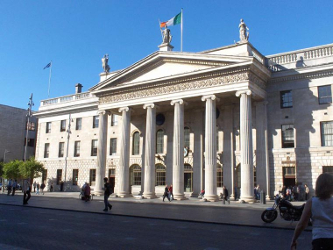
The restored General Post Office, Dublin, which had been destroyed during the 1916 Easter Rising, is opened by President W. T. Cosgrave on July 11, 1929.

The General Post Office (GPO) is the headquarters of the Irish postal service. The offices are first located at College Green, but in August 1814, construction of a purpose-built headquarters begins. The building on Sackville Street is completed in January 1818 at a cost of £50,000.

According to An Post “The statues on the roof are of Hibernia, a classical representation in female form of the island of Ireland, with Fidelity to one side and Mercury, the messenger of the gods, to the other.”

Five members of the Provisional GovernmentPatrick Pearse, James Connolly, Tom Clarke, Seán MacDiarmada, and Joseph Plunkett — are located at the GPO during the Easter Rising in a 350-strong garrison which also includes Cumann na mBan and Irish Citizen Army members. James Connolly is in charge of the defence of the GPO and directs operations. The GPO garrison barricades surrounding streets and occupies adjoining buildings.

On Monday afternoon the garrison repulses a cavalry attack while, with the breakdown of law and order, many of the stores in Sackville Street are looted. From Wednesday, the GPO and other buildings in Sackville Street come under artillery fire, mostly from the Helga gunboat at anchor in the River Liffey. Connolly believes the British will not use artillery in city areas. By Friday night the GPO is on fire, at which point it is evacuated.

At a Dublin Corporation meeting in 1884 a motion is called to change the name of Sackville Street to O’Connell Street. After forty years of argument, it is changed to O’Connell Street in May 1924.


2 Comments

Michael Collins Made President of the IRB

michael-collins

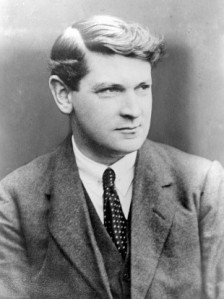
Michael Collins, who is also a leader in the Irish Republican Army, is made president of the Irish Republican Brotherhood (IRB) on June 28, 1919.

At the start of the 20th century, the IRB is a stagnating organisation, concerned more with Dublin municipal politics than the establishment of a republic. A younger generation of Ulster republicans aim to change this and, in 1905, Denis McCullough and Bulmer Hobson found the Dungannon Clubs, whose purpose is to discourage enlistment into the British Army and encourage enlistment into the IRB.

In 1909, Michael Collins is introduced to the brotherhood by Sam Maguire. By 1914, the Supreme Council is largely purged of its older, tired leadership, and is dominated by enthusiastic men such as Hobson, McCullough, Patrick McCartan, John MacBride, Seán Mac Diarmada, and Tom Clarke. The latter two are to become the primary instigators of the Easter Rising in 1916.

Following the Rising some republicans, notably Éamon de Valera and Cathal Brugha, leave the organization as they view it as no longer necessary since the Irish Volunteers now perform its function. The IRB, during the War of Independence (1919-1921), is under the control of Michael Collins, who initially is secretary and subsequently, on June 28, 1919, is made president of the Supreme Council.

When the Anglo-Irish Treaty is signed on December 6, 1921, it is debated by the Supreme Council, which votes to accept it by an 11-4 vote. Those who oppose the Treaty include former leader Harry Boland, Austin Stack, and Liam Lynch. Anti-Treaty republicans like Ernie O’Malley, who fought during the Civil War against the Treaty, see the IRB as being used to undermine the Irish Republic.

The IRB becomes quiescent during the Irish Civil War, which ends in May 1923, but it emerges again later that year as a faction within the National Army. It supports Minister for Defence Richard Mulcahy against the “Old IRA,” which fights against the recruitment of ex-British Army personnel and the demobilization of old IRA men. This comes to a head with the Army Mutiny of 1924, in the wake of which Mulcahy resigns and other IRB members of the army are dismissed by acting President of the Executive Council Kevin O’Higgins. The IRB subsequently dissolves itself, although it is not known whether a formal decision is made, or it simply ceases to function.


Leave a comment

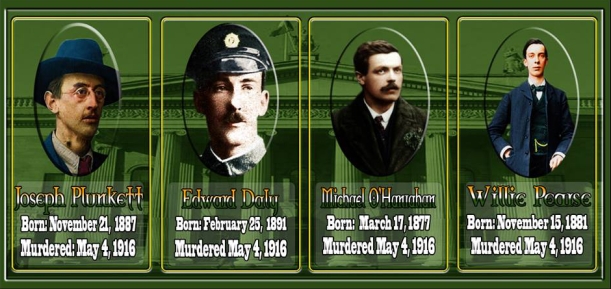
Executions of Edward Daly, Michael O’Hanrahan, Joseph Mary Plunkett, & William Pearse

plunkett-daly-ohanrahan-pearse

The executions of leaders and participants of the 1916 Easter Rising by the British continue as Edward Daly, Michael O’Hanrahan, Joseph Mary Plunkett, and William Pearse are executed by firing squad in the Stonebreakers Yard at Kilmainham Gaol in Dublin on May 4, 1916.

Edward Daly is born in Limerick in 1891 to a family that has a history of republican activity. His uncle, John Daly, had taken part in the rebellion of 1867. Edward Daly leads the First Battalion during the 1916 Easter Rising, which raids the Bridewell and Linenhall Barracks, eventually seizing control of the Four Courts. A close friend of Tom Clarke, their ties are made even stronger by the marriage of Clarke to Daly’s sister.

Michael O’Hanrahan is born in Wexford in 1877. As a young man, O’Hanrahan shows great promise as a writer, becoming heavily involved in the promotion of the Irish language. He founds the first Carlow branch of the Gaelic League, and publishes two novels, A Swordsman of the Brigade and When the Norman Came. Like many of the other executed leaders, he joins the Irish Volunteers from their inception and is second in command to Thomas MacDonagh at Jacob’s Biscuit Factory during the Rising, although this position is largely usurped by the arrival of John MacBride.

Joseph Mary Plunkett is born in Dublin in 1887, the son of a papal count. Plunkett is initially educated in England, though he returns to Ireland and graduates from University College Dublin in 1909. After his graduation, Plunkett spends two years traveling due to ill health, returning to Dublin in 1911. Plunkett shares Thomas MacDonagh’s enthusiasm for literature and is an editor of the Irish Review. Along with MacDonagh and Edward Martyn, he helps to establish an Irish national theatre. He joins the Irish Volunteers in 1913, subsequently gaining membership of the Irish Republican Brotherhood in 1914. Plunkett travels to Germany to meet Roger Casement in 1915. During the planning of the Rising, Plunkett is appointed Director of Military Operations, with overall responsibility for military strategy. Plunkett is stationed in the General Post Office during the Rising. Seven hours prior to his execution, Plunkett marries his sweetheart, Grace Gifford, in the prison chapel.

William “Willie” Pearse, the younger brother of Patrick, is born in Dublin in 1881. Willie shares his brother’s passion for an independent Ireland. He assists Patrick in running St. Enda’s School. The two brothers are extremely close and fight alongside each other in the General Post Office. He is not one of the planners of the revolt, nor is he one of its commanders. Willie is merely one of the soldiers involved with the Dublin actions. No other participant in Dublin whose actions or responsibilities are similar to Willie’s is executed in the days following the Rising, save perhaps John MacBride, whose earlier service with the Boers probably marks him for death. It seems likely that the sole reason Willie is executed by the British government is for the crime of being Patrick’s brother. It is repugnant British excesses such as this that soon reverse the Irish people’s initially negative opinion of the 1916 Easter Rising.


Leave a comment

Birth of Irish Revolutionary Leader Seán Mac Diarmada

sean-mac-diarmada

Seán Mac Diarmada, Irish political activist and revolutionary leader also known as Seán MacDermott, is born in Corranmore, near Kiltyclogher in County Leitrim on February 28, 1883. He is one of the seven leaders of the Easter Rising of 1916 and a signatory of the Proclamation of the Irish Republic.

Mac Diarmada is educated by the Irish Christian Brothers. He moves to Dublin in 1908, by which time he already has a long involvement in several Irish separatist and cultural organisations, including Sinn Féin, the Irish Republican Brotherhood (IRB), the Ancient Order of Hibernians, and the Gaelic League. He is soon promoted to the Supreme Council of the IRB and is eventually elected secretary.

In 1910, he becomes manager of the radical newspaper Irish Freedom, which he founds along with Bulmer Hobson and Denis McCullough. He also becomes a national organiser for the IRB and is taken under the wing of veteran Fenian Tom Clarke and the two become nearly inseparable. Shortly afterward, Mac Diarmada is stricken with polio and is forced to walk with a cane.

In November 1913, Mac Diarmada is one of the original members of the Irish Volunteers and continues to work to bring the organisation under IRB control. Mac Diarmada is arrested in Tuam, County Galway, in May 1915 under the Defense of the Realm Act 1914 for giving a speech against enlisting into the British Army.

Following his release in September 1915, Mac Diarmada joins the secret Military Committee of the IRB, which is responsible for planning the rising.

Due to his disability, Mac Diarmada has little participation in the fighting of Easter week but is stationed at the headquarters in the General Post Office (GPO), as one of the Provisional Republican Government. Following the surrender on April 29, 1916, he nearly escapes execution by blending in with the large body of prisoners but is eventually identified by Daniel Hoey of G Division. Following a May 9 court-martial, Mac Diarmada, at the age of 33, is executed by firing squad in Kilmainham Gaol. Before his execution, Mac Diarmada writes, “I feel happiness the like of which I have never experienced. I die that the Irish nation might live!”

In September 1919, Hoey is shot dead by Michael Collins‘s Squad. Likewise, the British Officer who ordered Mac Diarmada to be shot rather than imprisoned, is also killed in Cork on Collins’s order during the Irish War of Independence.

Seán MacDermott Street in Dublin, Sligo Mac Diarmada railway station in Sligo, and Páirc Seán Mac Diarmada, the Gaelic Athletic Association stadium in Carrick-on-Shannon, County Leitrim, are named in his honour. Sean MacDermott tower in Ballymun, demolished in 2005, is also named after him. In his hometown of Kiltyclogher a statue inscribed with his final written words is erected in the village centre and his childhood home has become a national monument.

Mac Diarmada will be portrayed by actor Colin Morgan in the 2016 Irish historical biopic drama film, The Rising, written by Kevin McCann and Colin Broderick.


Leave a comment

Birth of Edward “Ned” Daly in Limerick

edward-ned-daly

Edward “Ned” Daly, commandant of Dublin’s 1st battalion during the Easter Rising of 1916, is born on February 25, 1891, at 26 Frederick Street in Limerick.

Daly is the only son among the ten children born to Edward and Catherine Daly (née O’Mara). He is the younger brother of Kathleen Clarke whose husband, Tom Clarke, an active member of the Irish Republican Brotherhood. Daly’s father, Edward, a Fenian, dies five months before his son’s birth at the age of forty-one. His uncle, John Daly, is a prominent republican who had taken part in the Fenian Rising. It is through John Daly that Clarke meets his future wife.

Daly is educated by the Presentation Sisters at Sexton Street, the Congregation of Christian Brothers at Roxboro Road, and at Leamy’s commercial college. He spends a short time as an apprentice baker in Glasgow before returning to Limerick to work in Spaight’s timber yard. He later moves to Dublin where he eventually takes up a position with a wholesale chemist. He lives in Fairview with Kathleen and Tom Clarke.

Daly joins the membership of the Irish Republican Brotherhood, although the exact date is not known. In November 1913, Daly joins the newly founded Irish Volunteers and soon reaches the rank of captain. He is assiduous in his study of military manuals and the professionalism of his company gains the admiration of senior officers in actions such as the Howth gun-running of 1914. In March 1915, he is promoted to the rank of commandant of the 1st Battalion.

During the Easter Rising of 1916, Daly’s battalion is stationed in the Four Courts and areas to the west and north of the centre of Dublin. His battalion sees the most intense fighting of the rising. He surrenders his battalion on Saturday, April 29 after Patrick Pearse orders the surrender. He is held at Kilmainham Gaol.

Daly is given the same quick sham court-martial at Richmond Barracks as the other leaders of the Rising. In his trial, he claims that he was just following orders. Daly is convicted and is executed by firing squad on May 4, 1916, at the age of 25.

Bray railway station was renamed Bray Daly railway station in his honour in 1966.


Leave a comment

Birth of Revolutionary Leader Thomas MacDonagh

thomas-macdonagh

Thomas MacDonagh, political activist, poet, playwright, educationalist, revolutionary leader, and one of the seven leaders of the Easter Rising of 1916, is born in Cloughjordan, County Tipperary, on February 1, 1878.

MacDonagh grows up in a household filled with music, poetry, and learning and is instilled with a love of both English and Irish culture from a young age. He attends Rockwell College and spends several years in preparation for a missionary career but soon realizes that it isn’t the life for him and leaves the college. He teaches briefly at St. Kieran’s College in Kilkenny and, from 1903, is employed as a professor of French, English, and Latin at St. Colman’s College, Fermoy, County Cork, where he forms a branch of the Gaelic League. He moves to Dublin and establishes strong friendships with such men as Eoin MacNeill and Patrick Pearse.

In Dublin, MacDonagh joins the staff St. Enda’s School upon its establishment in 1908, as a French and English teacher and Assistant Headmaster. In January 1912 he marries Muriel Gifford and takes the position of lecturer in English at the National University, while continuing to support St Enda’s. MacDonagh remains devoted to the Irish language and, in 1910, he becomes tutor to a younger member of the Gaelic League, Joseph Plunkett.

In 1913, MacDonagh and Plunkett attend the inaugural meeting of the Irish Volunteers and join its Provisional Committee. MacDonagh is later appointed Commandant of Dublin’s 2nd battalion and eventually made commandant of the entire Dublin Brigade. MacDonagh develops strong republican beliefs and joins the Irish Republican Brotherhood (IRB) in the summer of 1915. Around this time, Tom Clarke asks MacDonagh to plan the grandiose funeral of Jeremiah O’Donovan Rossa, which is a resounding propaganda success largely due to the graveside oration delivered by Pearse.

MacDonagh joins the secret Military Council that is planning the rising in April 1916, just weeks before the rising takes place. Although joining the Council during the late stages of the planning process, MacDonagh is, nevertheless, a signatory of the Proclamation of the Irish Republic.

During the rising, MacDonagh’s battalion is stationed at the massive Jacob’s Biscuit Factory complex. On the way to this destination the battalion encounters veteran Fenian John MacBride, who joins the battalion as second-in-command.

Although MacDonagh’s battalion is one of the strongest, they see little fighting as the British Army avoids the factory and establishes positions in central Dublin. MacDonagh receives the order to surrender on April 30, although his entire battalion is fully prepared to continue the engagement. Following the surrender, MacDonagh is court martialled and executed by firing squad at Kilmainham Gaol in Dublin on May 3, 1916, at the age of thirty-eight.