seamus dubhghaill

Promoting Irish Culture and History from Little Rock, Arkansas, USA


Leave a comment

Birth of Donal Donnelly, Theatre & Film Actor

Donal Donnelly, Irish theatre and film actor, is born to Irish parents in BradfordWest YorkshireEngland, on July 6, 1931. Perhaps best known for his work in the plays of Brian Friel, he has a long and varied career in film, on television and in the theatre. He lives in Ireland, the United Kingdom and the United States at various times, and his travels lead him to describe himself as “an itinerant Irish actor.”

Donnelly’s father, James, is a doctor from County Tyrone, and his mother, Nora O’Connor, is a teacher from County Kerry.

Donnelly is raised in Dublin where he attends Synge Street CBS, where he acts in school plays with Milo O’SheaEamonn AndrewsJack MacGowran, Bernard Frawley (Seattle Repertory Co.) and Jimmy Fitzsimons (brother of Maureen O’Hara), under the direction of elocution teacher, Ena Burke.

Donnelly gets his start in an amateur group calling itself the Globe Theatre Players. It is organised and run by Jim Fitzgerald and Monica Brophy. He then later tours with Anew McMaster‘s Irish repertory company before moving to England where he stars with Rita Tushingham in the film The Knack …and How to Get It.

Donnelly’s breakthrough role comes when he is cast as Gar Private in the world premiere of Brian Friel’s Philadelphia, Here I Come! directed by Hilton Edwards for the Gate Theatre at the Dublin Theatre Festival in 1964. The production subsequently transfers to Broadway where it plays for over 300 performances and establishes Donnelly and Patrick Bedford, who plays his alter-ego Gar Public, as formidable new talents to be reckoned with. They are jointly nominated for the Tony Award for Best Performance by a Leading Actor in a Play in 1966.

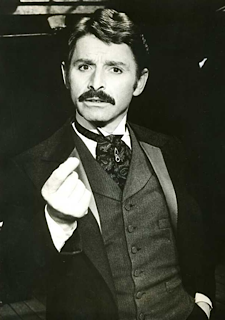
Donnelly returns to Broadway a number of times, replacing Albert Finney in A Day in the Death of Joe Egg in 1968, playing Milo Tindle in Anthony Shaffer‘s Sleuth and appearing as Frederick Treves opposite David Bowie as The Elephant Man. He also renews his relationship with Brian Friel, appearing in the world premieres of Volunteers at the Abbey Theatre in 1975 and Faith Healer with James Mason at the Longacre Theatre in New York City in 1979, as well as the Broadway premieres of Dancing at Lughnasa in 1991 and Translations in 1995.

For many years, Donnelly tours a one-man performance of the writings of George Bernard Shaw, adapted and directed by Michael Voysey and entitled My Astonishing Self.

Donnelly’s film roles include Archbishop Gilday in The Godfather Part III and as Freddy Malins in John Huston‘s final work, The Dead, based on the short story by James Joyce, where he gains particular acclaim for his performance.

On television, Donnelly plays the lead role of Matthew Browne in the 1970s ITV sitcom Yes, Honestly, opposite Liza Goddard. But from the late 1950s onwards, he often appears in such British TV programs as The AvengersZ-Cars and The Wednesday Play.

Donnelly is an acclaimed audiobook reader whose catalogue includes PinocchioPeter PanVoltaire‘s Philosophical Dictionary, and several audio versions of the works of James Joyce.

In 1968, Donnelly records an album of Irish songs, Take the Name of Donnelly, which is arranged, produced and conducted by Tony Meehan formerly of the Shadows.

Donnelly, who is a heavy smoker all his life, dies from cancer at the age of 78 in Chicago, Illinois, on January 4, 2010. He is survived by his wife, Patricia ‘Patsy’ Porter, a former dancer he met working on Finian’s Rainbow, and two sons, Jonathan and Damian. Their only daughter, Maryanne, predeceases him after being killed in a riding accident. A brother, Michael Donnelly, is a Fianna Fáil senator and councillor, and Lord Mayor of Dublin(1990–91).

(Pictured: Publicity still of Donal Donnelly as Frederick Treves in the Broadway’s play The Elephant Man)

Leave a comment

Birth of Patrick Bedford, Stage & Television Actor

Patrick Alexander Bedford, Irish stage and television actor, is born in Dublin on May 30, 1932.

Bedford begins his career in the 1950s at the Gate Theatre in Dublin then under the direction of Hilton Edwards and Micheál Mac Liammóir, including productions of Anton Chekhov, George Bernard Shaw and William Shakespeare. He later works on the stage and in television in England. In London, he appears on stage and television in Edgar Wallace Mysteries and in several plays adapted for television.

Bedford is in the original stage production of Brian Friel‘s Philadelphia, Here I Come! at the Gaiety Theatre in Dublin in September 1964, in the London West End transfer at the Criterion Theatre, and in the Broadway New York City transfer. His performance earns him a 1965 Tony Award for Best Actor in a Play nomination, along with Donal Donnelly, and an Outer Critics Circle Award.

Bedford is a key figure in episode four, “A Death in England,” of the ABC Weekend TV sci-fi drama Undermind on UK television in 1965. He has a small part in Orson Welles‘s film Chimes at Midnight (1965) and a starring role with Sandy Dennis in the 1967 film Up the Down Staircase about life in a New York City high school and is in The Next Man (1976).

Bedford then mainly works in theatre in the United States, on both coasts, but mainly in New York City both on and off Broadway. He is in the premiere of Tennessee Williams‘s last play Small Craft Warnings at the New Theatre in New York in 1972. Other stage appearances include Brian Friel’s The Mundy Scheme in New York in 1969 and as John Adams in the nationwide tour of the musical 1776. He appears in over 200 stage productions throughout his career.

Bedford dies at the age of 67 on November 20, 1999, in Manhattan, New York City, of cancer six weeks after entering the hospital.


Leave a comment

“Stones in His Pockets” Receives Three Tony Award Nominations

On May 7, 2001, the Broadway play Stones in His Pockets by Belfast playwright Marie Jones receives three nominations for the theatre world’s top honour, the Tony Awards, in New York. Conleth Hill and Sean Campion are nominated in the Leading Actor category and Ian McElhinney is nominated for Best Director. It is a two-hander written in 1996 by Jones for the DubbleJoint Theatre Company in Dublin.

The play is a tragicomedy about a small rural town in Ireland where many of the townspeople are extras in a Hollywood film. The story centres on Charlie Conlon and Jake Quinn, who, like much of the town, are employed as extras for the filming. The key point in the play is when a local teenager commits suicide, by drowning himself with stones in his pockets, after he is humiliated by one of the film stars. The script calls upon the cast of two to perform all 15 characters (men and women), often switching gender and voice swiftly and with minimal costume change. Comedy also derives from the efforts of the production crew to create the proper “Irish feel” – a romanticised ideal that often conflicts with the reality of daily life.

The play is first shown as a DubbleJoint Production premiering in West Belfast in August 1996. The set design, by Jack Kirwan, is simple – a backcloth depicting the cloudy sky above the Blasket Islands, a row of shoes (symbolising the myriad characters) and a trunk, a box, and two tiny stools. The lighting design is originally by James C. McFetridge and this design is used in both the London West End and the Broadway versions of the show.

The show moves to the Edinburgh Festival Fringe in 1999. It then returns to Ireland and has a brief run in Dublin before moving to London‘s Tricycle Theatre. It then transfers to the New Ambassadors Theatre in London’s West End. The show, however, proves so successful, its run is extended and moves to the Duke of York’s Theatre up the road, where it remains for three years.

The original cast of Hill and Campion take the show to Broadway and, as its West End run continues to play to packed houses, actors line up to play Charlie and Jake, most notably Bronson Pinchot, Rupert Degas and Simon Delaney.

The play wins the Irish Times/ESB Irish Theatre Award for Best Production in 1999, wins two Laurence Olivier Awards in 2001 for Best New Comedy and Best Actor (Conleth Hill) and is also nominated for three Tony Awards in 2001.

Gothenburg English Studio Theatre makes a production of Stones in His Pockets in 2009. It is directed by Malachi Bogdanov with Mike Rogers and Gary Whitaker.

The play is translated to Finnish and has been on repertoire since 2002 at Helsinki City Theatre in Finland.

The play is revived at London’s Tricycle Theatre in 2011, with Jamie Beamish as Charlie and Owen McDonnell as Jake, and at the Tron Theatre, Glasgow in 2012 performed by Robbie Jack and Keith Fleming.

For the 20th anniversary of the first production, The Dukes in Lancaster and The Theatre Chipping Norton co-produce a touring production which opens at The Dukes on February 25, 2016, and tours 35 venues between then and May 28, 2016. Charlie de Bromhead plays Jake and Conan Sweeny plays Charlie.

The original version of the play is created in collaboration with theatre director Pam Brighton, who later sues Marie Jones for co-authorship rights. Brighton loses the case in the high court, and subsequently becomes bankrupt.


3 Comments

Death of Donal Donnelly, Irish Theatre & Film Actor

Donal Donnelly, Irish theatre and film actor, dies in Chicago, Illinois, on January 4, 2010. Perhaps best known for his work in the plays of Brian Friel, he has a long and varied career in film, on television and in the theatre. He lives in Ireland, the United Kingdom and the United States at various times, and his travels lead him to describe himself as “an itinerant Irish actor.”

Donnelly is born to Irish parents in Bradford, West Yorkshire, England, on July 6, 1931. His father James is a doctor from County Tyrone, and his mother Nora O’Connor is a teacher from County Kerry.

Donnelly is raised in Dublin where he attends Synge Street CBS, where he acts in school plays with Milo O’Shea, Eamonn Andrews, Jack MacGowran, Bernard Frawley (Seattle Repertory Co.) and Jimmy Fitzsimons (brother of Maureen O’Hara), under the direction of elocution teacher, Ena Burke.

Donnelly gets his start in an amateur group calling itself the Globe Theatre Players. It is organised and run by Jim Fitzgerald and Monica Brophy. He then later tours with Anew McMaster‘s Irish repertory company before moving to England where he stars with Rita Tushingham in the film The Knack …and How to Get It.

Donnelly’s breakthrough role comes when he is cast as Gar Private in the world premiere of Brian Friel’s Philadelphia, Here I Come! directed by Hilton Edwards for the Gate Theatre at the Dublin Theatre Festival in 1964. The production subsequently transfers to Broadway where it plays for over 300 performances and establishes Donnelly and Patrick Bedford, who plays his alter-ego Gar Public, as formidable new talents to be reckoned with. They are jointly nominated for the Tony Award for Best Performance by a Leading Actor in a Play in 1966.

Donnelly returns to Broadway a number of times, replacing Albert Finney in A Day in the Death of Joe Egg in 1968, playing Milo Tindle in Anthony Shaffer‘s Sleuth and appearing as Frederick Treves opposite David Bowie as The Elephant Man. He also renews his relationship with Brian Friel, appearing in the world premieres of Volunteers at the Abbey Theatre in 1975 and Faith Healer with James Mason at the Longacre Theatre in New York City in 1979, as well as the Broadway premieres of Dancing at Lughnasa in 1991 and Translations in 1995.

For many years, Donnelly tours a one-man performance of the writings of George Bernard Shaw, adapted and directed by Michael Voysey and entitled My Astonishing Self.

Donnelly’s film roles include Archbishop Gilday in The Godfather Part III and as Freddy Malins in John Huston‘s final work, The Dead, based on the short story by James Joyce, where he gains particular acclaim for his performance.

On television, Donnelly plays the lead role of Matthew Browne in the 1970s ITV sitcom Yes, Honestly, opposite Liza Goddard. But from the late 1950s onwards, he often appears in such British TV programs as The Avengers, Z-Cars and The Wednesday Play.

Donnelly is an acclaimed audiobook reader whose catalogue includes Pinocchio, Peter Pan, Voltaire‘s Philosophical Dictionary, and several audio versions of the works of James Joyce.

In 1968, Donnelly records an album of Irish songs, Take the Name of Donnelly, which is arranged, produced and conducted by Tony Meehan formerly of the Shadows.

Donnelly, who is a heavy smoker all his life, dies from cancer at the age of 78 in Chicago, Illinois, on January 4, 2010. He is survived by his wife, Patricia ‘Patsy’ Porter, a former dancer he met working on Finian’s Rainbow, and two sons, Jonathan and Damian. Their only daughter, Maryanne, predeceases him after being killed in a riding accident. A brother, Michael Donnelly, is a Fianna Fáil senator and councillor, and Lord Mayor of Dublin (1990–91).


Leave a comment

Birth of Tony Award Nominated Actor Milo O’Shea

Milo Donal O’Shea, Irish actor twice nominated for the Tony Award for Best Actor in a Play for his performances in Staircase (1968) and Mass Appeal (1982), is born in Dublin on June 2, 1926.

O’Shea is raised in Dublin and educated by the Christian Brothers at Synge Street CBS, along with his friend Donal Donnelly. His father is a singer and his mother a ballet teacher. Because he is bilingual, he performs in English-speaking theatres and in Irish in the Abbey Theatre Company. At age 12, he appears in George Bernard Shaw‘s Caesar and Cleopatra at the Gate Theatre. He later studies music and drama at the Guildhall School of Music and Drama in London and is a skilled pianist.

O’Shea is discovered in the 1950s by Harry Dillon, who runs the 37 Theatre Club on the top floor of his shop, the Swiss Gem Company, 51 Lower O’Connell Street, Dublin. Early in his career he tours with the theatrical company of Anew McMaster.

O’Shea begins acting on the stage, then moves into film in the 1960s. He becomes popular in the United Kingdom, as a result of starring in the BBC sitcom Me Mammy alongside Yootha Joyce. In 1967–68 he appears in the drama Staircase, co-starring Eli Wallach and directed by Barry Morse, which stands as Broadway‘s first depiction of homosexual men in a serious light. For his role in that drama, he is nominated for the Tony Award for Best Actor in a Play in 1968.

O’Shea stars as Leopold Bloom in Joseph Strick‘s 1967 film version of Ulysses. Among his other memorable film roles in the 1960s are the well-intentioned Friar Laurence in Franco Zeffirelli‘s Romeo and Juliet (1968) and the villainous Dr. Durand Durand in Roger Vadim‘s counterculture classic Barbarella (1968). In 1984, he reprises his role as Dr. Durand Durand, credited as Dr. Duran Duran, for the 1985 Duran Duran concert film Arena (An Absurd Notion), since his character inspired the band’s name. He plays Inspector Boot in the 1973 Vincent Price horror/comedy film Theatre of Blood.

O’Shea is active in American films and television, such as his memorable supporting role as the trial judge in the Sidney Lumet-directed movie The Verdict (1982) with Paul Newman, an episode of The Golden Girls in 1987, and portraying Chief Justice of the United States Roy Ashland in the television series The West Wing. In 1992, he guest stars in the season 10 finale of the sitcom Cheers, and, in 1995, in an episode of the show’s spin-off Frasier. He appears in the pilot episode of Early Edition as Sherman.

Other stage appearances include Mass Appeal (1981) in which he originates the role of Father Tim Farley, for which he is nominated for the Tony Award for Best Actor in a Play in 1982, the musical Dear World in which he plays the Sewer Man opposite Angela Lansbury as Countess Aurelia, Corpse! (1986) and a 1994 Broadway revival of Philadelphia, Here I Come!.

O’Shea receives an honorary degree from Quinnipiac University in 2010.

O’Shea’s first wife is Maureen Toal, an Irish actress, with whom he has two sons, Colm and Steven. They divorce in 1974. His second wife is Irish actress Kitty Sullivan, whom he meets in Italy, where he is filming Barbarella and she is auditioning for Man of La Mancha. The couple occasionally act together, such as in a 1981 Broadway revival of My Fair Lady. O’Shea and Sullivan have no children together. They both adopt United States citizenship and reside in New York City, where they both live from 1976.

O’Shea dies on April 2, 2013, in New York City following a short illness at the age of 86. He is buried at Deans Grange Cemetery.