seamus dubhghaill

Promoting Irish Culture and History from Little Rock, Arkansas, USA


Leave a comment

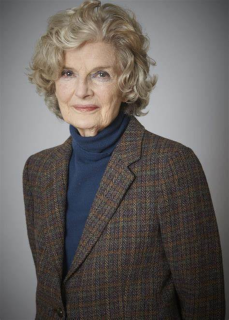
Birth of Julia O’Faolain, Novelist & Short Story Writer

Julia O’Faolain, Irish novelist and short story writer, is born in London on June 6, 1932. She works as a writer, language teacher, editor and translator and lives in France, Italy, and the United States.

Although born in England when her father, Irish writer Seán Ó Faoláin, is lecturing at the Catholic college, St. Mary’s College, at Strawberry Hill, London, O’Faolain grows up in Ireland. The family returns to Ireland when she is just one year old. They live first in Killough House in County Wicklow, where future Taoiseach Garret FitzGerald is a playmate, artist Paul Henry a neighbour and Cork writer Frank O’Connor a regular visitor. The family then moves to Knockaderry House in Killiney, County Dublin, where her father publishes the literary journal The Bell from an outhouse at the bottom of the garden. Writers, poets and intellectuals such as Patrick Kavanagh, Brendan Behan and Conor Cruise O’Brien are regular visitors and often have to entertain her while waiting to speak with her father.

O’Faolain does not begin school until she is eight years old as her mother, Irish writer and teacher Eileen Gould, has little time for nuns. Following her schooling, she completes an arts degree at University College Dublin (UCD) and then further studies at the Sapienza University of Rome and the Sorbonne in Paris. A formidable student and strikingly beautiful, she makes a strong impression on those who meet her.

In search of love, literature and freedom from 1950s Ireland, the young O’Faolain remains abroad working variously as a translator, language teacher, editor and writer in London. She makes lifelong friends who speak highly of her generosity, loyalty and kindness. As well as maintaining a strong interest in politics throughout her life, she attains a black belt in karate and attends karate classes until her early 70s.

In her 2013 memoir, O’Faolain recounts a number of her adult loves before she meets and marries Lauro Martines in Florence in 1957. The couple lives in Florence for a year while Martines completes a travelling fellowship from Harvard University. They then move to Portland, Oregon, where their son Lucien is born in 1959. While in the United States, she teaches French at Reed College in Portland. The family returns to live in Florence from 1962-66 while her husband carries out research. When he is offered a professorship at the University of California, Los Angeles in 1966, they move back to the United States. However, not keen to live full-time in the United States, they purchase a house in Hampstead in 1970 and later in central London where she spends a good deal of time. From the 1990s onwards, she and Lauro spend more and more time in London, and they visit Ireland more during these years. Lucian, a painter and picture repairer, lives in London.

O’Faolain’s novels include No Country for Young Men, which is nominated for the Booker Prize in 1980, Women in the Wall (1975), The Obedient Wife (1982) and The Judas Cloth (1992) which is set in 19th-century Italy. Her first collection of short stories, We Might See Sights and Other Stories, is published in 1968, followed by Man in the Cellar (1974), Melancholy Baby (1978) and Daughters of Passion (1982). And with her husband, she edits Not in God’s Image: Women in History from the Greeks to the Victorians (1973).

O’Faolain’s writings are suffused with themes of clerical intrigue, women’s role in society, power, faith and sexuality. She says once that she is more detached from her characters than her father was. “He was fond of his characters whereas I was more impatient of mine… The fact that he often forgave their foolishness showed that he was fond of Ireland itself, where he lived for the most of his life. I instead left it and found I was happier elsewhere.”

As a writer, O’Faolain is not particularly well-known in Ireland. Following the publication of her memoir in 2013, she is asked by The Irish Times journalist Arminta Wallace if it bothers her that her name does not often figure in lists of famous Irish writers, perhaps because she did not live here. She replies, “Not only do I not live here but when my last book came out someone wrote an article naming me as a ‘forgotten writer’… which was not a cheerful read. It wasn’t in any way offensive, but it wasn’t very comforting…I suppose I didn’t write enough. You mustn’t let too many years go by between books – and I did that.”

O’Faolain dies at the age of 88 in London on October 27, 2020, following a long illness. Her papers, which include manuscripts of her writing and a significant correspondence between her and her father, are donated to UCD in 2018. At the time, archivists expect them to be available to researchers by 2022.


Leave a comment

Birth of Raymond Crotty, Economist, Writer, Academic & Farmer

Raymond Dominick Crotty, economist, writer, academic and farmer who is known for his opposition to Ireland’s membership of the European Union, is born in Kilkenny, County Kilkenny on January 22, 1925.

Crotty grows up in Kilkenny and, while a student at St. Kieran’s College, Kilkenny, he begins breeding pigs in his spare time. Rather than move on to university, he pursues his interest in agriculture by going to work for a farmer relative in 1942. A year later he undertakes a 12-month course at the Albert Agricultural College in Glasnevin, Dublin. In 1945, he purchases a 204-acre farm in Dunbell, not far from Kilkenny, and spends the next two decades putting into practice his developing knowledge of agricultural production.

In 1956, while still a farmer, Crotty enrolls as a distance-learning student at the University of London, obtaining a BSc (Econ.) degree in 1959. He spends two further years studying for a MSc (Econ.) degree at the London School of Economics. In 1961, he obtains a post as lecturer in Agricultural Economics at University of Wales, Aberystwyth. During the 1960s, he sells his farm and becomes an economic adviser to various development agencies, including the World Bank. His work brings him to various parts of the developing world, including Latin America, India, and Africa. In 1976, he receives a fellowship at the University of Sussex. In 1982, he becomes a lecturer in statistics at Trinity College, Dublin.

Crotty’s knowledge and experience of agricultural economics shapes his attitude to Ireland’s participation in the European Economic Community. His years as a farmer teaches him that Irish agriculture is structured so as to discourage efficient use of the land.

Crotty grows to believe that agricultural efficiency can best be achieved by the imposition of an annual land tax. This would allow taxes on inputs and outputs to be removed or reduced and would encourage only those prepared to maximise the potential of their land to remain in farming. In putting forward this proposal, he is reflecting the influence of American economist Henry George, who held that land owned by private individuals should be subject to a tax on the land because of the advantage bestowed on the owner. He believes that Irish agriculture would be damaged if Ireland joined the European Economic Community (EEC) as, instead of becoming more efficient, farmers would grow to depend on external subsidies under the Common Agricultural Policy (CAP).

Furthermore, Crotty maintains that Ireland’s status as an ex-colony makes it unsuited for membership of a bloc of nations that include former colonial powers. In 1962, in the early stages of the public debate on whether Ireland should join the EEC, he expresses his concerns about the possible loss of Ireland’s national identity within what he termed a “European super state.”

In 1972, Crotty joins Trinity College academic Anthony Coughlan in opposing Ireland’s accession to the EEC. Over the next twenty years he campaigns against further integration of Ireland into the EEC, most notably during the attempts to ratify the Single European Act in the mid-1980s. He stands for election in the 1989 European Parliament election as a candidate in the Dublin constituency. He receives 25,525 votes (5.69% of the valid votes cast), not enough to elect him. In 1992, he once again allies himself with Coughlan in urging Irish voters to reject the Maastricht Treaty in the referendum held on June 18.

Despite failing to win majority support for his views in elections and referendums, Crotty continues until the end of his life his campaign against Ireland’s membership of the European Union.

Crotty is a prolific writer, producing books, pamphlets, articles, and letters on subjects such as economics, history, and Ireland’s involvement with Europe. His final work, When Histories Collide: The Development and Impact of Individualistic Capitalism, is edited by his son Raymond and published posthumously in 2001. It is an economic history of mankind from the earliest stages of human development to the present day. Reviewing it on behalf of the American Sociological Association, Professor Michael Mann of University of California, Los Angeles (UCLA) describes it as “an extraordinary book by an extraordinary man” and “a must-read.”

Raymond Crotty dies at St. Vincent’s Hospital, Dublin, at the age of 68, on January 1, 1994, and is buried in Tulla Cemetery outside Kilkenny.


Leave a comment

First Performance of Oscar Wilde’s “Lady Windermere’s Fan”

lady-windermeres-fanOscar Wilde‘s four-act comedy Lady Windermere’s Fan, A Play About a Good Woman is first produced on February 22, 1892 at the St. James’s Theatre in London. The play is first published in 1893. Like many of Wilde’s comedies, it bitingly satirizes the morals of society.

The story concerns Lady Windermere, who suspects that her husband is having an affair with another woman. She confronts him with it but although he denies it, he invites the other woman, Mrs. Erlynne, to his wife’s birthday ball. Angered by her husband’s supposed unfaithfulness, Lady Windermere decides to leave her husband for another lover. After discovering what has transpired, Mrs. Erlynne follows Lady Windermere and attempts to persuade her to return to her husband and in the course of this, Mrs. Erlynne is discovered in a compromising position. It is then revealed Mrs. Erlynne is Lady Windermere’s mother, who abandoned her family twenty years before the time the play is set. Mrs. Erlynne sacrifices herself and her reputation to save her daughter’s marriage.

By the summer of 1891 Wilde has already written three plays, Vera; or, The Nihilists and The Duchess of Padua find little success, and Salome is censored. Unperturbed, he decides to write another play but turns from tragedy to comedy. He goes to the Lake District in the north of England, where he stays with a friend and later meets Robert Ross. Numerous characters in the play appear to draw their names from the north of England: Lady Windermere from the lake and nearby town Windermere (though Wilde had used “Windermere” earlier in Lord Arthur Saville’s Crime), the Duchess of Berwick from Berwick-upon-Tweed, Lord Darlington from Darlington. Wilde begins writing the play at the prodding of Sir George Alexander, the actor manager of St. James’s Theatre. The play is finished by October 1891. Alexander likes the play, and offers him an advance of £1,000 for it. Wilde, impressed by his confidence, opts to take a percentage instead, from which he earns £7,000 in the first year alone.

Alexander is a meticulous manager and he and Wilde begin exhaustive revisions and rehearsals of the play. Both are talented artists with strong ideas about their art. Wilde, for instance, emphasises attention to aesthetic minutiae rather than realism. He resists Alexander’s suggested broad stage movements, quipping that “Details are of no importance in life, but in art details are vital.” These continue after the opening night, when at the suggestion of both friends and Alexander, Wilde makes changes to reveal Mrs. Erylnne’s relationship with Lady Windermere gradually throughout the play, rather than reserving the secret for the final act. Despite these artistic differences, both are professional and their collaboration is a fruitful one.

There exists an extant manuscript of the play and it is held in the William Andrews Clark Memorial Library at the University of California in Los Angeles.