
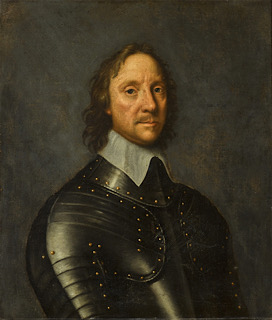
Oliver Cromwell, the English statesman and military leader who leads Parliamentarian forces in the English Civil War and serves as Lord Protector of the Commonwealth of England, Scotland, and Ireland from 1653 until his death, dies on September 3, 1658, in Westminster, London. He is 59 years old at the time. He is probably the most reviled man in Irish history following his scorched earth policy of destruction and death during his campaign in Ireland.
Cromwell’s death is the result of a painful urinary tract infection that leads to blood poisoning. He has been in declining health for some time, and his final days are marked by illness and discomfort. His death comes just over nine years after the Siege of Drogheda in Ireland, which begins in August 1649 and becomes one of the most infamous episodes of his military career.
The Siege of Drogheda, in which Cromwell’s forces execute thousands of Irish defenders, remains a major point of controversy in his legacy. His death in 1658 is met with celebration by many in England, as it paves the way for the restoration of the monarchy under Charles II in 1660. After his death, his body is exhumed in 1661 and publicly hanged in chains before being thrown into a pit to ensure he is dead.
Cromwell is remembered as a decisive military leader who helps restore England’s status as a leading European power, but also as a controversial figure whose actions in Ireland leave a lasting scar on Anglo-Irish relations. His death on September 3, 1658, thus marks both the end of his political and military influence and a turning point in the post-Civil War period in Britain.

