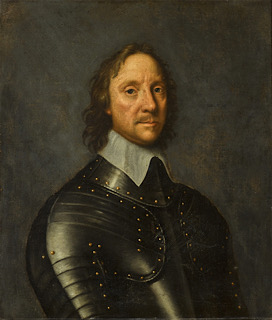
Cromwell’s death is the result of a painful urinary tract infection that leads to blood poisoning. He has been in declining health for some time, and his final days are marked by illness and discomfort. His death comes just over nine years after the Siege of Drogheda in Ireland, which begins in August 1649 and becomes one of the most infamous episodes of his military career.
The Siege of Drogheda, in which Cromwell’s forces execute thousands of Irish defenders, remains a major point of controversy in his legacy. His death in 1658 is met with celebration by many in England, as it paves the way for the restoration of the monarchy under Charles II in 1660. After his death, his body is exhumed in 1661 and publicly hanged in chains before being thrown into a pit to ensure he is dead.
Cromwell is remembered as a decisive military leader who helps restore England’s status as a leading European power, but also as a controversial figure whose actions in Ireland leave a lasting scar on Anglo-Irish relations. His death on September 3, 1658, thus marks both the end of his political and military influence and a turning point in the post-Civil War period in Britain.
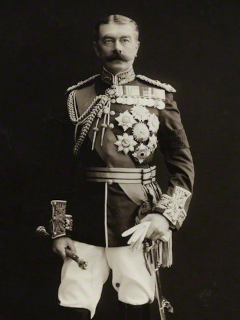
Kitchener is credited in 1898 for winning the Battle of Omdurman and securing control of the Sudan for which he is made Baron Kitchener of Khartoum. As Chief of Staff (1900–1902) in the Second Boer War he plays a key role in Lord Roberts’ conquest of the Boer Republics, then succeeds Roberts as commander-in-chief, by which time Boer forces have taken to guerrilla warfare and British forces imprison Boer civilians in concentration camps. His term as Commander-in-Chief (1902–09) of the Army in India sees him quarrel with another eminent proconsul, the Viceroy Lord Curzon, who eventually resigns. He then returns to Egypt as British Agent and Consul General.
In 1914, at the start of World War I, Kitchener becomes Secretary of State for War, a Cabinet Minister. One of the few to foresee a long war, lasting for at least three years, and with the authority to act effectively on that perception, he organises the largest volunteer army that Britain had ever seen, and oversees a significant expansion of materials production to fight on the Western Front. Despite having warned of the difficulty of provisioning for a long war, he is blamed for the shortage of shells in the spring of 1915, one of the events leading to the formation of a coalition government and is stripped of his control over munitions and strategy.
On June 5, 1916, Kitchener is making his way to Russia on HMS Hampshire to attend negotiations with Tsar Nicholas II. At the last minute, Admiral Sir John Jellicoe changes the HMS Hampshire‘s route on the basis of a misreading of the weather forecast and ignoring (or not being aware of) recent intelligence and sightings of GermanU-boat activity in the vicinity of the amended route. Shortly before 7:30 PM the same day, steaming for the Russian port of Arkhangelsk during a Force 9 gale, HMS Hampshire strikes a mine laid by the newly launched German U-boat U-75 and sinks 1.5 miles west of the Orkney. Only twelve men survive. Amongst the dead are Kitchener and all ten members of his entourage. He is seen standing on the quarterdeck during the approximately twenty minutes that it takes the ship to sink. His body is never recovered.
Sheridan is the third child of six by John and Mary Meenagh Sheridan, immigrants from the parish of Killinkere, County Cavan. Fully grown, he reaches only 5 feet 5 inches in height, a stature that leads to the nickname “Little Phil.” Abraham Lincoln describes his appearance in a famous anecdote, “A brown, chunky little chap, with a long body, short legs, not enough neck to hang him, and such long arms that if his ankles itch, he can scratch them without stooping.”
Sheridan’s career is noted for his rapid rise to major general and his close association with General-in-chiefUlysses S. Grant, who transfers Sheridan from command of an infantry division in the Western Theater to lead the Cavalry Corps of the Army of the Potomac in the East. In 1864, he defeats Confederate forces in the Shenandoah Valley and his destruction of the economic infrastructure of the Valley, called “The Burning” by residents, is one of the first uses of scorched earth tactics in the war. In 1865, his cavalry pursues General Robert E. Lee and is instrumental in forcing his surrender at Appomattox Court House.
In later years, Sheridan fights in the Indian Wars of the Great Plains. Comanche Chief Tosahwi reputedly tells Sheridan in 1869, “Me, Tosahwi; me good Injun,” to which Sheridan supposedly replies, “The only good Indians I ever saw were dead.” Sheridan denies he had ever made the statement. Biographer Roy Morris Jr. states that, nevertheless, popular history credits Sheridan with saying “The only good Indian is a dead Indian.” This variation “has been used by friends and enemies ever since to characterize and castigate his Indian-fighting career.” In Bury My Heart at Wounded Knee, Dee Brown attributes the quote to Sheridan but does not provide documentation to support his contention, so the quote may be more apocryphal than real.
Both as a soldier and private citizen, Sheridan is instrumental in the development and protection of Yellowstone National Park. The protection of the Yellowstone area is Sheridan’s personal crusade. He authorizes Lieutenant Gustavus Doane to escort the Washburn Expedition in 1870 and for Captain John W. Barlow to escort the Hayden Expedition in 1871. Barlow names Mount Sheridan, a peak overlooking Heart Lake in Yellowstone, for the general in 1871. As early as 1875, Sheridan promotes military control of the area to prevent the destruction of natural formations and wildlife.
In 1883, Sheridan is appointed general-in-chief of the U.S. Army, and in 1888 he is promoted to the rank of General of the Army during the term of President Grover Cleveland. Sheridan serves as the ninth president of the National Rifle Association.
Sheridan suffers a series of massive heart attacks two months after sending his memoirs to the publisher. After his first heart attack, the U.S. Congress quickly passes legislation to promote him to general and he receives the news from a congressional delegation with joy, despite his pain. His family moves him from the heat of Washington, D.C. and he dies of heart failure in his summer cottage in the Nonquitt section of Dartmouth, Massachusetts on August 5, 1888.
His body is returned to Washington, and he is buried on a hillside facing the capital city near Arlington House in Arlington National Cemetery. The burial helps elevate Arlington to national prominence.