seamus dubhghaill

Promoting Irish Culture and History from Little Rock, Arkansas, USA


Leave a comment

Founding of the Irish Reform Association

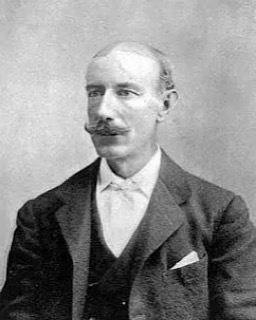
Windham Thomas Wyndham-Quin, 4th Earl of Dunraven and Mount-Earl, an Anglo-Irish Conservative politician, journalist, and landowner, founds the Irish Reform Association on August 26, 1904. This initiative is part of his broader political engagement in Ireland during a period of significant constitutional and social change.

The Irish Reform Association is established in the early 20th century, a time when Ireland is under British rule and political reform movements are gaining momentum. Lord Dunraven, known for his role in the 1902 Land Conference and his advocacy for Irish interests, seeks to promote reformist policies that will address land tenure, political representation, and constitutional rights for Ireland.

The association aims to support legislative reforms benefiting Irish tenants and landowners, encourage greater political participation and representation for Irish voices in the Parliament of the United Kingdom, and counterbalance more radical nationalist or unionist positions with a moderate, reformist platform.

Lord Dunraven has a long career in British politics, serving as Under-Secretary of State for the Colonies under Robert Gascoyne-Cecil, 3rd Marquess of Salisbury, in the 1880s and later as a Senator of the Irish Free State from 1922 to 1926. His background as a journalist, soldier, and sportsman give him a broad public profile, and his formation of the Irish Reform Association reflects his interest in bridging political divides and advancing pragmatic reform.

While the Irish Reform Association does not achieve the same long-term prominence as other reform movements, its creation marks Lord Dunraven’s active role in shaping Irish political discourse at a critical juncture. It aligns with his broader efforts to influence Irish policy through both legislative engagement and public advocacy.

In summary, the founding of the Irish Reform Association on August 26, 1904, is a deliberate political move by Lord Dunraven to advance reformist causes in Ireland, reflecting his commitment to balanced, constructive change within the constitutional framework of the time.

Leave a comment

Land Purchase (Ireland) Act 1903 Enacted

The Land Purchase (Ireland) Act 1903, also known as the Wyndham Land Act, is enacted on August 14, 1903, and allows for entire estates to be purchased by the occupying tenantry, subsidized by the state.

Under pressure from both government, United Irish League (UIL) and Irish Parliamentary Party (IPP), the Chief Secretary for IrelandGeorge Wyndham, gives his backing to a Land Conference in December 1902, comprising four moderate landlord representatives led by Windham Wyndham-Quin, 4th Earl of Dunraven and Mount-Earl and four tenant representatives led by William O’Brien, the others John RedmondT. W. Russell (who speaks for Ulster tenant farmers) and Timothy Harrington. They work out a new scheme for tenant land purchase, in which sale is to be made not compulsory, but attractive to both parties, based on the government paying the difference between the price offered by tenants and that demanded by landlords. This is the basis of the “Wyndham Act” – the Land Purchase (Ireland) Act 1903 – which O’Brien orchestrates through Parliament.

It differs from earlier legislation which initially advanced to tenants the sum necessary to purchase their holdings, repayable over a period of years on terms determined by an independent commission, while the Wyndham Act finishes off absentee landlords‘ control over tenants and makes it easier for tenants to purchase land, facilitating the transfer of about 9 million acres (36,000 km2) up to 1914. By then, 75% of occupiers are buying out their landlords under the 1903 Act and the later Irish Land Act 1909 of Augustine Birrell, which extends the 1903 act by allowing for the compulsory purchase of tenanted farmland by the Land Commission, but falls far short in its financial provisions. In all, under these pre-1921 Land Acts over 316,000 tenants purchase their holdings amounting to 11.5 million acres (47,000 km2) out of a total of 20 million acres (81,000 km2) in the country.

The Acts provide Irish tenant farmers with more rights than tenant farmers in the rest of the United KingdomMunster tenants avail of land purchase in exceptionally high numbers, encouraged by their Irish Land and Labour Association‘s leader D. D. Sheehan after he and O’Brien establish an Advisory Committee to mediate between landlords and tenants on purchase terms which produce a higher take-up of land purchase than in any other province.

Historian Robert K. Webb gives most of the credit for the Wyndham Act to Conservative leader Arthur Balfour. He says the Act is “a complete success. By the time the Irish Free State was created in 1922, the system of peasant proprietorship had become universal… A land problem more than a century old had been solved, though it had taken more than 30 years of educating Parliament and landlords to do it. The scheme was intended as well to ‘kill Home Rule by kindness.’”