seamus dubhghaill

Promoting Irish Culture and History from Little Rock, Arkansas, USA


Leave a comment

Founding of the Irish Reform Association

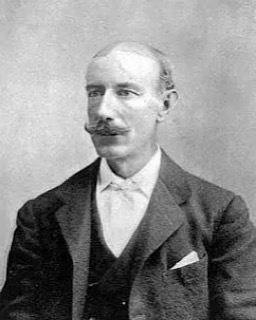
Windham Thomas Wyndham-Quin, 4th Earl of Dunraven and Mount-Earl, an Anglo-Irish Conservative politician, journalist, and landowner, founds the Irish Reform Association on August 26, 1904. This initiative is part of his broader political engagement in Ireland during a period of significant constitutional and social change.

The Irish Reform Association is established in the early 20th century, a time when Ireland is under British rule and political reform movements are gaining momentum. Lord Dunraven, known for his role in the 1902 Land Conference and his advocacy for Irish interests, seeks to promote reformist policies that will address land tenure, political representation, and constitutional rights for Ireland.

The association aims to support legislative reforms benefiting Irish tenants and landowners, encourage greater political participation and representation for Irish voices in the Parliament of the United Kingdom, and counterbalance more radical nationalist or unionist positions with a moderate, reformist platform.

Lord Dunraven has a long career in British politics, serving as Under-Secretary of State for the Colonies under Robert Gascoyne-Cecil, 3rd Marquess of Salisbury, in the 1880s and later as a Senator of the Irish Free State from 1922 to 1926. His background as a journalist, soldier, and sportsman give him a broad public profile, and his formation of the Irish Reform Association reflects his interest in bridging political divides and advancing pragmatic reform.

While the Irish Reform Association does not achieve the same long-term prominence as other reform movements, its creation marks Lord Dunraven’s active role in shaping Irish political discourse at a critical juncture. It aligns with his broader efforts to influence Irish policy through both legislative engagement and public advocacy.

In summary, the founding of the Irish Reform Association on August 26, 1904, is a deliberate political move by Lord Dunraven to advance reformist causes in Ireland, reflecting his commitment to balanced, constructive change within the constitutional framework of the time.


Leave a comment

The Debut of “The Late Late Show”

Created with GIMP

The Late Late Show, the Irish talk show, airs on RTÉ One for the first time on July 6, 1962. It is the world’s second longest-running late-night talk show, following The Tonight Show in the United States. Perceived as the official flagship television programme of Ireland’s public service broadcaster Raidió Teilifís Éireann (RTÉ), it is regarded as an Irish television institution and is broadcast live across two hours plus in front of a studio audience on Friday nights between September and May.

Having maintained the same name and format continuously, The Late Late Show is first broadcast on Friday, July 6, 1962 and in colour from 1976. Originating as temporary summer filler for a niche Saturday night audience, it later moves to its current home on Friday night schedules. The format has remained largely the same throughout — dialogue, sketch comedy, musical performances, discourse on topical issues. It has influenced attitudes of the populace towards approval or disapproval of its chosen topics, directed social change and helped shape Irish societal norms. It averages 650,000 viewers per episode and has consistently achieved RTÉ’s highest ratings.

For much of its early life, RTÉ Television Centre‘s Studio 1 in Donnybrook, Dublin is its home. This original studio accommodates a small audience of about 120. In 1995, The Late Late Show transfers to the more spacious Studio 4, adapted specifically to cater for this and Kenny Live. Three external broadcasts have aired, most recently from the Wexford Opera House on September 5, 2008.

Original host Gay Byrne presents the show until May 21, 1999. Pat Kenny is Byrne’s successor hosting the show for 10 years between 1999 and 2009. Ryan Tubridy is the current presenter, having succeeded Kenny in September 2009. Under Tubridy, first QUINN Group and then Sky Broadband add sponsorship deals. Tubridy’s arrival coincides with a marked increase in audience ratings with some early statistics comparing him to the Byrne era. On February 1, 2013, Pat Kenny returns to host that night’s edition following the death of Tubridy’s father.