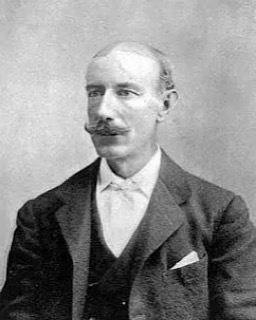
The Irish Reform Association is established in the early 20th century, a time when Ireland is under British rule and political reform movements are gaining momentum. Lord Dunraven, known for his role in the 1902 Land Conference and his advocacy for Irish interests, seeks to promote reformist policies that will address land tenure, political representation, and constitutional rights for Ireland.
The association aims to support legislative reforms benefiting Irish tenants and landowners, encourage greater political participation and representation for Irish voices in the Parliament of the United Kingdom, and counterbalance more radical nationalist or unionist positions with a moderate, reformist platform.
Lord Dunraven has a long career in British politics, serving as Under-Secretary of State for the Colonies under Robert Gascoyne-Cecil, 3rd Marquess of Salisbury, in the 1880s and later as a Senator of the Irish Free State from 1922 to 1926. His background as a journalist, soldier, and sportsman give him a broad public profile, and his formation of the Irish Reform Association reflects his interest in bridging political divides and advancing pragmatic reform.
While the Irish Reform Association does not achieve the same long-term prominence as other reform movements, its creation marks Lord Dunraven’s active role in shaping Irish political discourse at a critical juncture. It aligns with his broader efforts to influence Irish policy through both legislative engagement and public advocacy.
In summary, the founding of the Irish Reform Association on August 26, 1904, is a deliberate political move by Lord Dunraven to advance reformist causes in Ireland, reflecting his commitment to balanced, constructive change within the constitutional framework of the time.
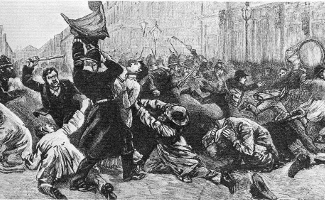
Bloody Sunday takes place in London on November 13, 1887, when a march against unemployment and coercion in Ireland, as well as demanding the release of Member of Parliament (MP) William O’Brien, is attacked by the Metropolitan Police Service and the British Army. The demonstration is organised by the Social Democratic Federation (SDF) and the Irish National League. Violent clashes take place between the police and demonstrators, many “armed with iron bars, knives, pokers and gas pipes.” A contemporary report notes that 400 are arrested and 75 persons are badly injured, including many police, two policemen being stabbed, and one protester bayonetted.
The Long Depression, starting in 1873 and lasting almost to the end of the century, creates difficult social conditions in Britain, similar to the economic problems that drive rural agitation in Ireland. Falling food prices create rural unemployment, which results in both emigration and internal migration. Workers move to the towns and cities in thousands, eroding employment, wages and working conditions. By November 1887, unemployed workers’ demonstrations from the East End of London have been building up for more than two years. There have already been clashes with the police and with the members of upper-class clubs. Trafalgar Square is seen symbolically as the point at which the working-class East End meets the upper-class West End of London, a focus of class conflict and an obvious flashpoint.
This attracts the attention of the small but growing socialist movement – the Marxists of both the Social Democratic Federation and Socialist League, and the reformist socialists of the Fabian Society. Police and government attempt to suppress or divert the demonstrations also bring in the radical wing of the Liberal Party and free speech activists from the National Secular Society.
Some 30,000 persons encircle Trafalgar Square as at least 10,000 protesters march in from several different directions, led by Elizabeth Reynolds, John Burns, William Morris, Annie Besant and Robert Bontine Cunninghame Graham, who are primarily leaders of the Social Democratic Federation. Also marching are the Fabian playwright George Bernard Shaw and Charlotte Wilson. Two thousand police and 400 troops are deployed to halt the demonstration. Burns and Cunninghame Graham are arrested and imprisoned for six weeks. Annie Besant, who is a Marxist, Fabian and secularist, speaks at the rally and offers herself for arrest, but the police decline to do so. Of the 400 arrested, 50 are detained in custody.
In the fighting, many rioters are injured by police truncheons and under the hooves of police horses. There are both infantry and cavalry present. Although the infantry is marched into position with bayonets fixed, they are not ordered to open fire and the cavalry are not ordered to draw their swords.
The following Sunday, November 20, sees another demonstration and more casualties. According to a report in the partisan Socialist Review, among them is a young clerk named Alfred Linnell, who is run down by a police horse, dying in hospital a fortnight later from complications of a shattered thigh.
The funeral of Linnell on December 18 provides another focus for the unemployed and Irish movements. William Morris, leader of the Socialist League, gives the main speech and advocates a holy war to prevent London from being turned into a huge prison. A smaller but similar event marks the burial of another of those killed, W. B. Curner, which takes place in January. The release of those imprisoned is celebrated on February 20, 1888, with a large public meeting. Henry Hyndman, leader of the SDF, violently denounces the Liberal Party and the Radicals who are present.
(Pictured: Bloody Sunday, 1887. This engraving from The Illustrated London News depicts a policeman being clubbed by a demonstrator as he wrests a banner from a female protester.)