seamus dubhghaill

Promoting Irish Culture and History from Little Rock, Arkansas, USA


Leave a comment

British Release of Fenian Prisoners

cuba-five

The British, in a general amnesty, release 33 Fenian prisoners on January 5, 1871. Most of these prisoners are men who have either been swept up by the British in 1865, when they suppressed the Fenian newspaper The Irish People for taking part in the Fenian Rising of March 1867, or had been rounded up after the “Smashing of the Van” rescue of Thomas J. Kelly and Timothy Deasy in September 1867.

The British penal system of the period is brutal under normal circumstances, and the Fenians receive much harsher treatment than that received by the normal inmates. Those Fenians still on the outside agitate constantly for the release of their comrades. The man most responsible for the release of 1871 is John “Amnesty” Nolan, who thus earns his sobriquet.

The names of many of the men released by William Ewart Gladstone’s government are well known to those who have studied the Irish republican movement. One of them is Jeremiah O’Donovan Rossa, as steadfast an enemy of English rule in Ireland as any who has ever lived. After Rossa’s death in the United States, his body is returned to Ireland for burial, and his funeral in 1915 includes the famous eulogy by Patrick Pearse, one of the seminal moments in the renewal of armed struggle for Irish freedom. Another Fenian released that day is John Devoy, who perhaps more than any other man keeps the struggle for Irish freedom alive among Irish exiles in America.

The British government releases the Fenians on condition that they exile themselves to the country of their choice and not return until their sentences have expired. Many chose to go to Australia, but Rossa, Devoy, John McClure, Henry Mulleda, and Charles Underwood O’Connell, who have all been imprisoned together, chose to go to the United States and ship together from Liverpool on board the Cuba. The so-called Cuba Five arrive in New York City to a hero’s welcome from the city’s large Irish community and even receive a resolution of welcome from the United States House of Representatives.

(Pictured: “The Cuba Five” – John Devoy, Jeremiah O’Donovan Rossa, Charles Underwood O’Connell, Henry Mulleda and John McClure)
Leave a comment

Publication of the First Issue of the “Northern Star”

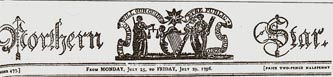
northern-star

The first issue of the Northern Star, the newspaper of the Society of United Irishmen, is published in Belfast on January 4, 1792. It is published from 1792 until its suppression by the British army in May 1797.

The publication of an Irish newspaper that reflects and disseminates liberal views is an early goal of Irish republicans in the late 18th century. By the founding of the Society of United Irishmen in October 1791, the project is well underway, and the first edition of the Northern Star appears in Belfast in January 1792. Like the United Irishmen, the first financial backers of the Northern Star are Presbyterian and one of the United Irish leadership, Samuel Neilson, is made editor.

Political content dominates the Northern Star but its publication of local news, as opposed to the focus on British and international affairs of other Irish newspapers of the time, brings it wide popularity. Leading members of the United Irishmen are regular contributors and mixed direct political analyses with cutting political satire. William Orr is among those who contributed to its content and his letters lead to his eventual arrest and execution under the Insurrection Act of 1797. The newspaper also enjoys an excellent voluntary distribution network as its penetration follows rapidly wherever the United Irishmen set up new branches. It was estimated that for each copy of the Northern Star sold there are at least five readers, as the reading aloud of articles from the paper is a regular feature of United Irish meetings.

The newspaper is initially protected from the authorities due to the support of well-connected liberals but following the outbreak of war between Great Britain and Revolutionary France in 1793 and the subsequent banning of the United Irishmen as a seditious body it begins to draw increasing attention. The massive popularity of the newspaper protects it from serious harassment until January 1797 when the establishment goes into a state of panic following the French invasion scare at Bantry Bay. The paper is alleged to be behind the Dublin-based Union Star, a militant, low-circulation newssheet, often posted in public places, which specializes in naming informers, “notorious Orangemen,” and other enemies of the United Irishmen, being regarded by Dublin Castle as a republican hitlist.

The extensive distribution network and potency of the Northern Star in spreading United Irish opinion alarms the authorities and possession of a copy comes to be regarded as an admission of seditious intent. The end finally comes with the uncovering of supposed United Irish infiltration of the Monaghan militia in Belfast, which results in the execution of four soldiers. General Gerard Lake, 1st Viscount Lake, already engaged in a brutal counter-insurgency campaign, is quick to put much of the blame on the Northern Star and requests permission to suppress the paper.

As it turns out, official suppression is not necessary as on May 19, 1797, three days after the execution of their ex-comrades, a mob of Monaghan militiamen anxious to prove their loyalty attack the offices of the Northern Star and destroy not only the printing presses but the building itself. The attack results in the demise of the Northern Star to the undoubted satisfaction of the authorities as no action is taken against those involved in the destruction. The Chartist movement later pays tribute to the Northern Star by using the same name for their newspaper that is founded in 1837 by Feargus O’Connor.


Leave a comment

Death of Boxer Jerry “Irish” Quarry

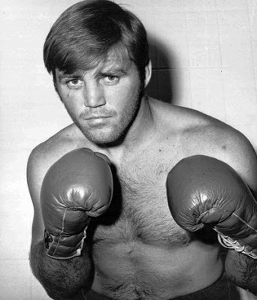
jerry-quarry

Jerry Quarry, American heavyweight boxer nicknamed “Irish” or “The Bellflower Bomber,” dies on January 3, 1999, in Templeton, California. He is the most visible member of a significant Irish American boxing family, which includes three other pro boxers, his father and two brothers.

Quarry is born on May 15, 1945, in Bakersfield, California and first puts on a pair of boxing gloves when he is three years old. By the time he is eight, he has won the Junior Golden Gloves at the 45 lb. class. He continues to fight as an amateur until 1964 when he culminates a great amateur career by winning the National Golden Gloves Heavyweight Championship and is the tournament’s most outstanding fighter. He sets a record that is still standing today. He wins the title by knocking out all five opponents over a three-day span.

Under the watchful eyes of his co-managers, his dad and veteran fight manager Johnnie Flores, Quarry turns professional in May 1965. He runs off twelve wins in a row before running into Tony Doyle and is held to his first draw. He also has two draws with Tony Alongi. His first loss comes in his 21st pro bout, against the tough veteran Eddie Machen. His loss is attributed to poor conditioning and at the time Jerry promises that poor conditioning will never cost him another bout. He defeats Joey Orbillo, Alex Miteff, Billy Daniels, Floyd Patterson, Buster Mathis, Brian London, Jack Bodell, Mac Foster, Ron Lyle, and Thad Spencer just to name a few.

Quarry loses a disputed 15-round decision to Jimmy Ellis for the World Boxing Association version of the Heavyweight title that had been stripped away from Muhammad Ali.

Boxing Illustrated names Quarry the most popular professional boxer in the world in 1968, 1969 and in 1970 is tied with Muhammad Ali to share the honor. He fights Muhammad Ali in what is billed as the return of the champ. Quarry gets cut early in the fight and receives eighteen stitches as a result of the loss.

Quarry comes along in a boxing era that many consider to be the best of all time. In the middle 1970’s he manages himself and is trained by Gil Clancy. He continues to fight on occasion until 1992. His record over his 28-year career is 53-9-4 with 32 knockouts. He is inducted into the World Boxing Hall of Fame in 1995.

Within a few years of his final bout, Quarry is diagnosed with dementia and is soon unable to feed or dress himself and has to be cared for by relatives, primarily his brother James, the only one of the four Quarry brothers not to box professionally. He is hospitalized with pneumonia on December 28, 1998, and then suffers cardiac arrest. He never regains consciousness and dies on January 3, 1999. He is interred at Shafter Cemetery in Shafter, California. A foundation is established in his honor to battle boxing-related dementia, a condition that has afflicted many boxers and brought Quarry’s life to an early end.


Leave a comment

Death of Novelist & Translator Patrick O’Brian

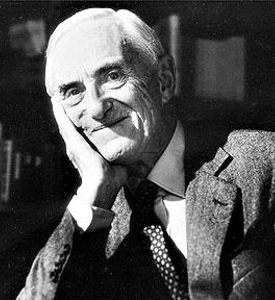
Patrick O'Brian

Patrick O’Brian, English novelist and translator, dies in Dublin on January 2, 2000.

O’Brian is born Richard Patrick Russ, in Chalfont St. Peter, Buckinghamshire, to Charles Russ, an English physician of German descent, and Jessie Russ (née Goddard), an English woman of Irish descent. His literary career begins in his childhood with the publishing of his earliest works, including several short stories, the book Hussein, An Entertainment, and the short story collection Beasts Royal. The latter two bring him considerable critical praise especially considering his youth. He publishes his first novel, Caesar: The Life Story of a Panda Leopard, at the age of 15 with help from his father.

O’Brian is best known for his Aubrey–Maturin series of sea novels set in the Royal Navy during the Napoleonic Wars, and centered on the friendship of the English naval captain Jack Aubrey and the Irish–Catalan physician Stephen Maturin. The 20-novel series, the first of which is Master and Commander, is known for its well-researched and highly detailed portrayal of early 19th-century life, as well as its authentic and evocative language. A partially finished 21st novel in the series is published posthumously containing facing pages of handwriting and typescript.

O’Brian write a number of other novels and short stories, most of which were published before he achieves success with the Aubrey–Maturin series. He also translates works from French to English, and writes two biographies.

O’Brian’s major success as a writer comes late in life, when the Aubrey-Maturin series catches the eye of an American publisher. The series draws more readers and favourable reviews when the author is in his seventies. Near the end of his life, and in the same year he loses his beloved wife, British media reveals details of O’Brian’s early life, first marriage, and post-war change of name, causing distress to the very private author and to many of his readers at that time.

Between 1946 and 1949 O’Brian and his wife Mary live in Cwm Croesor, a remote valley in north Wales, where they initially rent a cottage from Clough Williams-Ellis. In 1949 they move to Collioure, a Catalan town in southern France. He and Mary remain together in Collioure until her death in 1998.

O’Brian dies on January 2, 2000 at Trinity College, Dublin where he had been living and working on his next book. His body is returned to Collioure, where he is buried next to his wife.


Leave a comment

Death of Actor Peter Caffrey

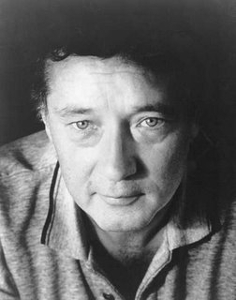
peter-caffrey

Peter Caffrey, Irish actor best known for playing Padraig O’Kelly on Series 1-4 of Ballykissangel, dies in Shrewsbury, England, on January 1, 2008.

Caffrey is also well regarded for his role as a transvestite in the film Night Train, and for his role as an unlikely protagonist in I Went Down. He is also known for playing the role of the judge in the Irish comedy Father Ted on the episode A Song For Europe and for voicing a popular Christmas radio advertisement for Barry’s Tea in 1994.

Caffrey is born in Dublin on April 18, 1949. He studies at a seminary for two years before switching to an English degree. He works for a year as a primary school teacher, before becoming involved with Dublin’s Project Theatre. He appears in nearly thirty television and film roles, and also has a solid theatre career in both Dublin and London. After moving to London in 1983 he becomes a familiar face on UK television, with minor roles in Casualty, The Bill and Peak Practice. His success in Ballykissangel comes after overcoming oral cancer for which he is diagnosed in 1990, and, despite suffering a stroke in 2000 which leaves him paralysed on the right side, he manages to play a similarly afflicted character in the unreleased film Sweet Dancer in 2005.

Caffrey never fully recovers from the stroke and dies at the age of 58 on January 1, 2008, in Shrewsbury. His body is returned to Ireland for cremation in Mount Jerome Cemetery and Crematorium, Dublin, on January 8, 2008. Caffrey is survived by three sisters, Linda, Carol, and Sheila. His brother David pre-deceases him in July 2007.

Caffrey marries Brenda Banks in 1980 but the marriage ends in divorce in 1990.