
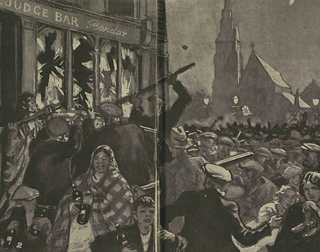
On July 21, 1920, the Belfast Shipyard Expulsions take place as thousands of Catholic workers and socialists in Belfast’s shipyards are attacked and driven from their jobs following Edward Carson’s speech on the Twelfth at Finaghy during the annual industrial holiday. This day marks the first day back at work after the holiday, and the violence erupts in the shipyards, particularly in the Harland & Wolff yards.
The disturbances are part of a wider Belfast pogrom in 1920, rooted in sectarian tensions between unionist and nationalist communities. The Twelfth of July celebrations in Finaghy have been a focal point for nationalist and socialist mobilisation, and Carson’s speech is seen by many Catholic workers as inflammatory, stoking fears of reprisals.
The targeted groups of the expulsions include Catholic workers, trade unionists, and socialist activists, many of whom are from the working class “plebeian” strata. Reports describe beatings, assaults, and intimidation in the shipyards, with workers being pushed out of their posts or forced to leave premises. The expulsions disrupt shipbuilding operations, as skilled labour is removed from the workforce overnight. The events reinforce sectarian divisions, with unionist groups and some employers using the violence to assert control over the workforce.
By July 1920, newspapers are the main source of news, with current affairs often appearing on later pages. Coverage in papers such as the Belfast News Letter, Belfast Telegraph, The Irish Times, and Freeman’s Journal describe the expulsions as part of a broader outbreak of violence, but without the front-page headlines typical of later conflicts. The absence of radio broadcasts means that news is spread through print, handbills, and word of mouth.
The July 21, 1920, expulsions are a turning point in the sectarian conflict in Belfast, marking a shift from political mobilisation to direct, violent confrontation in the industrial heart of the city. They reflect the deep entrenchment of sectarianism in the shipbuilding industry and foreshadow further violence in the years leading up to the Irish Civil War.


