The band enjoys moderate success with a couple of single releases, but a projected album flounders because of record company politics. After achieving his musical goals with Juniper, Rice becomes frustrated with the artistic compromises required by the record label and he leaves the band in 1998. The remaining members of Juniper go on to become Bell X1.
After leaving the band Rice works as a farmer in Tuscany and busks throughout Europe before returning to Ireland in 2001 and beginning a solo musical career. He gives a demo recording to his second cousin, music producer David Arnold, who then gives Rice a mobile studio. Over the next year he continues to record his album and then embarks on a tour of Ireland with vocalist Lisa Hannigan, New York drummer Tom Osander, cellist Vyvienne Long, guitarist Mark Kelly and Dublin bassist Shane Fitzsimons.
In 2002 Rice’s debut album, O, reachs No. 8 on the UK Albums Chart and remains on the chart for 97 weeks. It also wins the Shortlist Music Prize and generates three top-30 singles in the UK. He releases his second album, 9, in 2006 and his songs have appeared in numerous films and television episodes. After eight years of various collaborations, he releases his third studio album My Favourite Faded Fantasy on October 31, 2014.
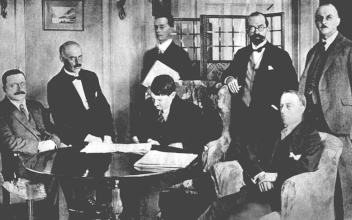
The Anglo-Irish Treaty, commonly known as The Treaty and officially the Articles of Agreement for a Treaty Between Great Britain and Ireland, is signed in the early morning hours of December 6, 1921 by representatives of the Irish government appointed by PresidentÉamon de Valera and those negotiating for the government of the United Kingdom of Great Britain and Ireland, ending the Irish War of Independence against Great Britain. It is then, and remains, one of the most debated moments in Irish history.
The Treaty provides for the establishment of the Irish Free State within a year as a self-governing dominion within the “community of nations known as the British Empire“, a status “the same as that of the Dominion of Canada.” It also provides Northern Ireland, which had been created by the Government of Ireland Act 1920, an option to opt out of the Irish Free State, which it exercises.
The agreement is signed in London by representatives of the British government, which includes Winston Churchill and Prime MinisterDavid Lloyd George, who are old masters at the game of politics, and by representatives of the Irish Republic including Michael Collins and Arthur Griffith, who have nowhere near the political acumen of the British delegation. De Valera, a shrewd, experienced politician, may have been the only man in all of Ireland who might have matched them, but he refuses to join the negotiations.
The Irish representatives have plenipotentiary status acting on behalf of the Irish Republic, though the British government declines to recognise that status. As required by its terms, the Treaty is approved by “a meeting” of the members elected to sit in the House of Commons of Southern Ireland and separately by the British Parliament. In reality, Dáil Éireann, the legislative assembly for the de facto Irish Republic, first debates then approves the treaty. Members then proceed with the “meeting.” Though the Treaty is narrowly approved, the split leads to the Irish Civil War, which is won by the pro-treaty side.
The Irish Free State as contemplated by the Treaty comes into existence when its constitution becomes law on December 6, 1922 by a royal proclamation.
(Pictured: Michael Collins signs the Anglo-Irish Treaty on December 6, 1921)
Anthony Malone, Irish lawyer and politician, is born on December 5, 1700, the eldest son of Richard Malone of Baronston, County Westmeath, and Marcella, daughter of Redmond Molady. Edmund Malone is his nephew, and a younger brother, Richard Malone (1706–1759), is MP for Fore from 1741.
Malone makes a successful career as a lawyer. From 1727 to 1760, and again from 1769 to 1776, he represents the county of Westmeath, and from 1761 to 1768 the borough of Castlemartyr, in the Irish parliament. In 1740 he is appointed Serjeant-at-law, but is dismissed from office in 1754 for opposing the claim of the crown to dispose of unappropriated revenue. In 1757 he is made Chancellor of the Exchequer of Ireland, but his attitude in council in regard to the Money Bill of 1761 leads to his again being removed from office. His treatment is regarded as too severe by William Pitt, 1st Earl of Chatham, and Malone, who draws a distinction between advice offered in council and his conduct in parliament, introduces the measure as chairman of the committee of supply. He is shortly afterwards granted a patent of precedence at the bar, but is charged with having sold his political principles for money.
Malone supports John Monck Mason‘s bill for enabling Roman Catholics to invest money in mortgages on land. In 1762 he is appointed, with Sir Richard Aston, to try the Whiteboys of Munster. They agree in ascribing the rural violence to local and individual grievances.
Malone dies at the age of 75 on May 8, 1776. At one time, a marble bust of him adorned Baronston House. By his will, made in July 1774, he leaves all his estates in the counties of Westmeath, Roscommon, Longford, Cavan, and Dublin to his nephew, Richard Malone, 1st Baron Sunderlin as he became, eldest son of his brother Edmund. On his death in 1816 the right of succession is disputed.
Carney is educated at St. Patrick’s Christian Brothers School in Donegall Street in Belfast, later teaching at the school. She enrolls at Hughes Commercial Academy around 1910, where she qualifies as a secretary and shorthand typist, one of the first women in Belfast to do so. However, from the start she is looking towards doing more than just secretarial work.
In 1912 Carney is in charge of the women’s section of the Northern Ireland Textile Workers’ Union in Belfast, which she founds with Delia Larkin in 1912. During this period, she meets James Connolly and becomes his personal secretary. She becomes Connolly’s friend and confidant as they work together to improve the conditions for female labourers in Belfast. Carney then joins Cumann na mBan, the women’s auxiliary of the Irish Volunteers, and attends its first meeting in 1914.
Carney is present with Connolly in Dublin‘s General Post Office (GPO) during the Easter Rising in 1916. She is the only woman present during the initial occupation of the building. While not a combatant, she is given the rank of adjutant and is among the final group to leave the GPO. After Connolly is wounded, she refuses to leave his side despite direct orders from Patrick Pearse and Connolly. She leaves the GPO with the rest of the rebels when the building becomes engulfed in flames. They make their new headquarters in nearby Moore Street before Pearse surrenders.
After her capture, Carney is held in Kilmainham Gaol before being moved to Mountjoy Prison and finally to an English prison. By August 1916 she is imprisoned in HM Prison Aylesbury alongside Nell Ryan and Helena Molony. The three request that their internee status be revoked so that they could be held as normal prisoners with Countess Markievicz. Their request is denied, however Carney and Molony are released two days before Christmas 1916.
Following the Irish Civil War, Carney becomes much more disillusioned with politics. She is very critical and outspoken of Éamon de Valera and his governments.
In 1928 she marries George McBride, a Protestant Orangeman and former member of the Ulster Volunteers. Ironically, the formation of the Ulster Volunteers prompts the formation of the Irish Volunteers, of which Carney was a member. She alienates anyone in her life that does not support her marriage to McBride.
A number of serious health problems limit Carney’s political activities in the late 1930s. She dies in Belfast on November 21, 1943, and is buried in Milltown Cemetery. Her resting place is located years later, and a headstone is erected by the National Graves Association, Belfast. Because she married a Protestant and former Orangeman, she is not allowed to have his name on her gravestone due to the religious differences.
In 2013, the Seventieth Anniversary of Carney’s death is remembered by the Socialist Republican Party. Almost one hundred people attend as a short parade follows, marking and commemorating the work she did for the cause. She is placed in high esteem among the other hundreds of radical women, who stand up for what they believe in, regardless of the consequences they face.
Born in what is now Northern Ireland in 1831 to Scotch-Irish parents, Fair immigrates with his family to the United States when he is a boy and grows up on a farm in Illinois. Following the 1849 California Gold Rush, he travels to California. He earns a reputation for understanding ore bodies, inspiring his eventual employment as superintendent of various mines.
The 1859 discovery of the Comstock Lode in Nevada provides Fair with new opportunities. In 1865, he becomes superintendent of the prestigious Ophir Mine. Two years later, the Hale and Norcross Mine in Virginia City hire him as assistant superintendent, but the owners dismiss him within a year for unclear reasons.
While at the Hale and Norcross, Fair meets John William Mackay, whose success at the Kentuck Mine made him a millionaire. The two Irish immigrants recognize common interests and form an alliance. Mackay gives Fair the position of superintendent of the Rising Star Mine in Idaho, a property he had recently acquired. The venture proves unsuccessful, but it solidifies a working relationship between the two.
Fair works quietly with Mackay and investors James C. Flood and William S. O’Brien to obtain control of the Hale and Norcross Mine. Fair turns it to profit with better management. He and Mackay combine their expertise to acquire and explore other claims. In 1873, largely through Fair’s persistent search in the Consolidated California and Virginia Mine, the partnership discovers the famed Big Bonanza, one of the richest ore bodies in history. Fair and the others become extremely wealthy. He uses his assets to defeat the incumbent William Sharon for a seat in the United States Senate, which he holds in an undistinguished way from 1881-1887 as a Democrat.
Fair develops real estate in San Francisco and acquires mining property outside Nevada. Theresa Fair, his wife, is respected in Virginia City for donations to causes including those of the Catholic Church and the Daughters of Charity. When she divorces her husband in 1883 for habitual adultery, national public opinion turns against the senator. During his bid for reelection, he finds little support. Even Mackay fails to come to his aid, and he easily loses his seat to William Morris Stewart in 1887. He then moves back to San Francisco.
Henry Flood, Anglo-Irishstatesman and founder of the Patriot movement that in 1782 wins legislative independence for Ireland, dies on December 2, 1791.
Flood enters the Irish Parliament in 1759 as member for Kilkenny County. Irish Protestants are becoming impatient with the British Parliament’s right to legislate for Ireland over the wishes of the Irish Parliament. Moreover, the British government controls a majority in Ireland’s House of Commons through the distribution of crown patronage by the owners of parliamentary boroughs.
Flood’s outstanding oratorical powers soon enable him to create a small but effective opposition inside the Irish Parliament that agitates for political reforms. They demand provisions for new Irish parliamentary elections every eight years, instead of merely at the start of a new British king’s reign. Their long-range goal is legislative independence. In 1768 his Patriots engineer passage of a bill limiting the duration of Parliament to eight years, and in 1769 and 1771 they defeat measures to grant funds for the British administration in Ireland.
Although Flood had become the first independent Irish statesman, he sacrifices this position in 1775 by accepting the office of vice treasurer under the British viceroy, Lord Simon Harcourt, 1st Earl Harcourt. Henry Grattan, an even greater orator than Flood and who describes Flood as a man “with a metaphor in his mouth and a bribe in his pocket,” replaces him as leader of the Patriots.
Flood, however, leaves the Patriot cause at the wrong time. The movement grows rapidly as more and more Irish people are influenced by the North American colonists who are rebelling against the British in the American Revolution. In 1779 he rejoins his old party, and two years later he is officially dismissed from his government post. Although he has lost his following, he helps Grattan force the British government to renounce its restrictions on Irish trade (1779) and grant legislative independence to Ireland (1782).
Flood then decides to challenge Grattan’s leadership. Charging that Grattan has not gone far enough in his reforms, he obtains passage of a measure requiring the British Parliament to renounce all claims to control of Irish legislation. Nevertheless, his newly acquired popularity is destroyed upon the defeat of his attempt to reform the Irish Parliament in 1784.
Flood is a member of both the British and Irish parliaments from 1783 until he loses his seat in both parliaments in 1790, although in England he fails to achieve the kind of political successes that characterize his Irish parliamentary career.
Following the loss of his seats in parliament, Flood retires to Farmley, his residence in County Kilkenny, where he remains until his death on December 2, 1791. He and his wife Lady Frances Beresford, daughter of Marcus Beresford, 1st Earl of Tyrone, who survives until 1815, have no children, and his property passes to a cousin, John Flood. A large bequest to Trinity College Dublin is declared invalid.
(Pictured: Portrait of Henry Flood (1732 – 1791) by Bartholomew Stoker (1763-1788). John Comerford later makes a sketch of the portrait, from which James Heath makes an engraving.)
Hayes is first elected to Dáil Éireann as a Sinn Féin TD for the National University of Ireland constituency at the 1921 Irish elections. At the 1922 general election he is elected as a Pro-Treaty Sinn Féin TD. He serves as Minister for Education from January to September 1922, as part of the Dail Aireacht ministry as opposed to the Provisional Government. He has special responsibility for secondary education. He is also acting Minister for Foreign Affairs from August to September 1922. He supports the Anglo-Irish Treaty during the crucial debates in 1922. That same year he is elected Ceann Comhairle of the First Dáil of the Irish Free State. He holds that post for ten years until 1932.
Hayes loses his Dáil seat at the 1933 general election but is elected to Seanad Éireann in 1938 for Fine Gael. He remains a Senator until 1965, acting as leader of government and opposition there.
Hayes becomes Professor of Irish at University College Dublin in 1951.
Michael Hayes dies at the age of 86 on July 11, 1976, in Dublin.
Wilde is born on October 16, 1854, at 21 Westland Row, Dublin (now home of the Oscar Wilde Centre, Trinity College), the second of three children born to Anglo-Irish Sir William Wilde and Jane Wilde, two years behind his brother William. His parents are successful Anglo-Irish intellectuals in Dublin. He learns to speak fluent French and German. At university, he reads Greats. He demonstrates himself to be an exceptional classicist, first at Trinity College Dublin, then at Magdalen College, Oxford. He becomes associated with the emerging philosophy of aestheticism, led by two of his tutors, Walter Pater and John Ruskin. After university, he moves to London into fashionable cultural and social circles.
As a spokesman for aestheticism, Wilde tries his hand at various literary activities: he publishes a book of poems, lectures in the United States and Canada on the new “English Renaissance in Art” and interior decoration, and then returns to London where he works prolifically as a journalist. Known for his biting wit, flamboyant dress and glittering conversational skill, he becomes one of the best-known personalities of his day.
At the turn of the 1890s, Wilde refines his ideas about the supremacy of art in a series of dialogues and essays, and incorporates themes of decadence, duplicity, and beauty into what would be his only novel, The Picture of Dorian Gray (1890). The opportunity to construct aesthetic details precisely, and combine them with larger social themes, draw him to write drama. He writes Salome (1891) in French while in Paris, but it is refused a licence for England due to an absolute prohibition on the portrayal of Biblical subjects on the English stage. Unperturbed, he produces four society comedies in the early 1890s, which make him one of the most successful playwrights of late-Victorian London.
At the height of his fame and success, while The Importance of Being Earnest (1895) is still being performed in London, Wilde has John Douglas, 9th Marquess of Queensberry prosecuted for criminal libel. The Marquess is the father of Wilde’s lover, Lord Alfred Douglas. The libel trial unearths evidence that causes him to drop his charges and leads to his own arrest and trial for gross indecency with men. After two more trials he is convicted and sentenced to two years of hard labour, the maximum penalty, and is jailed from 1895 to 1897. During his last year in prison, he writes De Profundis, published posthumously in 1905, a long letter which discusses his spiritual journey through his trials, forming a dark counterpoint to his earlier philosophy of pleasure. On his release, he leaves immediately for France, never to return to Ireland or Britain. There he writes his last work, The Ballad of Reading Gaol (1898), a long poem commemorating the harsh rhythms of prison life.
By November 25, 1900, Wilde has developed meningitis, then called “cerebral meningitis”. On November 29, he is conditionally baptised into the Catholic Church by Fr. Cuthbert Dunne, a Passionist priest from Dublin. He dies of meningitis on November 30, 1900. Different opinions are given as to the cause of the disease. Richard Ellmann claims it is syphilitic. Merlin Holland, Wilde’s grandson, believes this to be a misconception, noting that Wilde’s meningitis followed a surgical intervention, perhaps a mastoidectomy. Wilde’s physicians, Dr. Paul Cleiss and A’Court Tucker, report that the condition stems from an old suppuration of the right ear treated for several years and makes no allusion to syphilis.
Wilde is initially buried in the Cimetière parisien de Bagneux outside Paris. In 1909 his remains are disinterred and transferred to Père Lachaise Cemetery, inside the city. In 2011, the tomb is cleaned of the many lipstick marks left there by admirers and a glass barrier is installed to prevent further marks or damage.
In 2017, Wilde is among an estimated 50,000 men who are pardoned for homosexual acts that are no longer considered offences under the Policing and Crime Act 2017. The Act is known informally as the Alan Turing law.
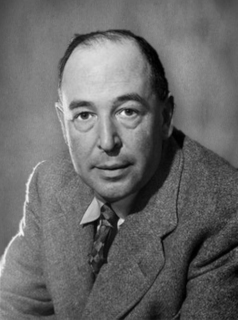
Lewis is schooled by private tutors until age nine when his mother dies in 1908 from cancer. His father then sends him to live and study at Wynyard School in Watford, Hertfordshire. After the school is closed soon afterward, he attends Campbell College in the east of Belfast about a mile from his home, but leaves after a few months due to respiratory problems. He is then sent to the health-resort town of Malvern, Worcestershire, where he attends the preparatory school Cherbourg House. It is during this time that he abandons his childhood Christian faith and becomes an atheist. In September 1913, he enrolls at Malvern College. After leaving Malvern, he studies privately with William T. Kirkpatrick, his father’s old tutor and former headmaster of Lurgan College.
Lewis and fellow novelist J. R. R. Tolkien are close friends. They both serve on the English faculty at Oxford University and are active in the informal Oxford literary group known as the Inklings. He returns to Anglicanism at the age of 32, owing to the influence of Tolkien and other friends, and he becomes an “ordinary layman of the Church of England.” His faith profoundly affects his work, and his wartime radio broadcasts on the subject of Christianity bring him wide acclaim.
Lewis writes more than 30 books which have been translated into more than 30 languages and have sold millions of copies. The books that make up The Chronicles of Narnia have sold the most and have been popularised on stage, television, radio and cinema. His philosophical writings are widely cited by Christian apologists from many denominations.
In early June 1961, Lewis begins suffering from nephritis, which results in blood poisoning. He recovers but on July 15 of that year he falls ill and is admitted to the hospital where he suffers a heart attack the following day, lapses into a coma and awakens the next day. After he is discharged from the hospital his condition continues to decline. He is diagnosed with end-stage renal failure in mid-November. He collapses and dies in his bedroom on November 22. He is buried in the churchyard of Holy Trinity Church, Headington, Oxford.
Media coverage of Lewis’s death is almost completely overshadowed by news of the assassination of United States PresidentJohn F. Kennedy, which takes place approximately 55 minutes after Lewis’s collapse.
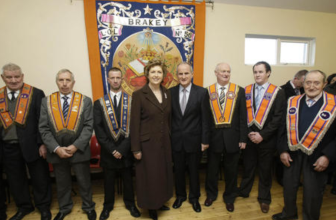
Brakey Orange Hall had been destroyed in an arson attack on July 13, 2000, but had since been rebuilt and reopened in 2004. Further extensions and improvements have been made since, with the latest recently completed in time for the occasion.
Approximately 50 local people, many of the men in their orange lapels and other regalia, pack the little hall to honour their guest. Placing the visit in a wider context, McAleese says the “journey of peace-building and peace-making” since the signing of the Belfast Agreement ten years earlier must continue, and calls for a new culture of tolerance and acceptance in both parts of Ireland.
McAleese is welcomed by Cavan County Grand Master Henry Latimer, who praises the financial support for Orange halls in Border counties provided by the Government. He outlines to the President and her husband, Dr. Martin McAleese, the close bond between local communities and Orange halls and the facilities provided for meetings, classes and social events. “Given the widespread nature of such activity, it demonstrates why when halls are damaged, attacked, destroyed or [placed] beyond use for periods of time, the community activity of its related hinterland suffers and is curtailed,” he adds.
McAleese hails the occasion as an example of fresh understanding in relationships between different traditions. “We have taken the first important steps towards ending the bitter culture of ‘either-or,’ of them versus us,” she says. She calls on Irish people everywhere “to build a new culture . . . each accepting that there are different perspectives and practices.”
McAleese praises Latimer as a good Cavan man, a good Irishman and a good Orangeman. The burning of Orange halls, she says, are “intemperate acts of vandalism” which are “a throw-back to another time.”
Appealing for an end to attacks on Orange halls and GAA clubs by arsonists McAleese adds, “I invite them all to stop and think how wonderfully transformed all our lives would be if we were all made as welcome in each other’s homes as I have been made welcome here.”
McAleese receives a bouquet of flowers and a piece of Cavan crystal to mark her visit. She later attends other engagements throughout Cavan.
(From: “President makes first official visit by Irish head of state to an Orange hall” by Dan Keenan, The Irish Times, November 28, 2008)


 The
The 


 seamus dubhghaill