seamus dubhghaill

Promoting Irish Culture and History from Little Rock, Arkansas, USA


Leave a comment

Death of Richard Robert Madden, Abolitionist & United Irishmen Historian

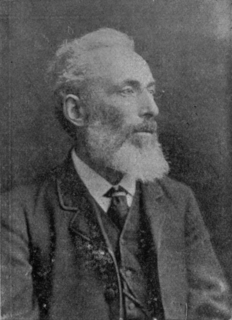
Richard Robert Madden, Irish doctor, writer, abolitionist and historian of the United Irishmen, dies at his home in Booterstown, a coastal suburb of Dublin, on February 5, 1886. He takes an active role in trying to impose anti-slavery rules in Jamaica on behalf of the British government.

Madden is born at Wormwood Gate, Dublin, on August 22, 1798, to Edward Madden, a silk manufacturer, and his wife Elizabeth (née Corey). His father marries twice and fathers twenty-one children.

Madden attends private schools and is found a medical apprenticeship in Athboy, County Meath. He studies medicine in Paris, Italy, and St. George’s Hospital, London. While in Naples he becomes acquainted with Marguerite Gardiner, Countess of Blessington, and her circle. From 1824 to 1827 he is in the Levant as a journalist and later publishes accounts of his travels.

In 1828, Madden marries Harriet Elmslie, daughter of John Elmslie of Jamaica, a slave-owner. He then practises medicine in Mayfair, London, for the next five years.

Madden becomes a recruit to the abolitionist cause. The transatlantic slave trade has been illegal in the British Empire since 1807, but slavery itself remains legal.

From 1833, Madden is employed in the British civil service, first as a justice of the peace in Jamaica, where he is one of six Special Magistrates sent to oversee the eventual liberation of Jamaica’s slave population, according to the terms of the Slavery Abolition Act 1833. From 1835 he is Superintendent of the freed Africans in Havana, Cuba. In 1839 he leaves Cuba for New York, where he provides important evidence for the defense of the former slaves who had taken over the slave ship La Amistad.

In 1840 Madden becomes Her Majesty’s Special Commissioner of Inquiry into the British Settlements on the West Coast of Africa. His task is to investigate how the slave trade is continuing to operate on the west coast of Africa, despite the shipping of African slaves across the Atlantic Ocean now being illegal. He finds that London-based merchants (including Whig MP Matthew Forster) are actively helping the slave traders, and that crudely disguised forms of slavery exist in all the coast settlements. He particularly condemns the actions of George Maclean, the Governor of Gold Coast.

In 1847 Madden becomes the Colonial Secretary of Western Australia and arrives in the colony in 1848. After receiving news of their oldest son’s death back in Ireland, he and Harriet return to Dublin in 1849. In 1850 he is named secretary of the Office for Loan Funds in Dublin.

Madden also campaigns against slavery in Cuba, speaking to the General Anti-Slavery Convention in London on the topic of slavery in Cuba.

Madden dies at his home in Booterstown, just south of Dublin, on February 5, 1886, and is interred in Donnybrook Cemetery.

Besides several travel diaries (Travels in Turkey, Egypt etc. in 1824–27, 1829, and others (1833)), his works include the historically significant book The United Irishmen, their lives and times (1842-1860, 11 Vols.), which contains numerous details on the Irish Rebellion of 1798, including testimonies collected from veteran rebels and from family members of deceased United Irishmen.

2 Comments

Death of Richard Davis Webb, Publisher & Abolitionist

Richard Davis Webb, Irish publisher and abolitionist, dies on July 14, 1872.

Webb is born in 1805 in the Cornmarket, Dublin, the eldest of seven sons of James Webb and Deborah Webb (née Sparrow), who own a linen business. He is educated in Quaker schools at Mountmellick, County Laois, and at Ballitore, County Kildare, where he becomes friendly with Mary Leadbeater, sister of the influential schoolmaster Abraham Shackleton. Schoolfellows include James Haughton and Jonathan Pim.

In 1837, Webb is one of three founding members, with James Haughton and Richard Allen, of the Hibernian Antislavery Association. This is not the first antislavery association, but it is acknowledged to be the most active and considered the most ardent abolitionists in Europe. Allen serves as the secretary of this association.

Webb marries Hannah Waring, and they have four children: Alfred, Richard, Deborah and Anne. He and his two sons, Alfred and Richard, are regular correspondents with the American abolitionist William Lloyd Garrison.

Webb is one of the few Irish delegates at the 1840 World Anti-Slavery Convention in London which attracts hundreds from the United States. The Irish delegation includes Webb, Richard Allen and Daniel O’Connell. In 1846, he attends another world convention in London. This time the subject is temperance, and his fellow delegate Richard Allen is one of the speakers. He meets the American delegates Wendell Phillips and his wife Ann, with Ann reporting how they are particularly impressed by Webb.

When the famous Black abolitionist Frederick Douglass visits Ireland it is Webb who is responsible for setting up his speaking engagements and also organising the printing of Douglass’s book, The Narrative of the Life of Frederick Douglass, an American Slave. Douglass is one of the many visitors who stay in Webb’s Dublin home.

Webb was notable in Douglass’s regard for the arguments that he and Webb have. Douglass feels that white abolitionists would prefer to be hypocritical than be racist and would try not to disagree with him face to face. Webb shows no such false regard, and they argue as equals in a way that Douglass hopes would be a precursor of the relationships that might exist across the races when slavery ends in the United States. Webb, however, quickly comes to distrust and dislike Douglass and his associates.

In 1852 Webb prints and publishs the elaborate Transactions of the Central Relief Committee, compiled by Jonathan Pim. This deals with the relief operations in Ireland in which Quakers had been involved throughout the Great Famine of the 1840s, and also includes statistics and recommendations for reforms. He helps Quaker efforts to provide food for the poor in Ireland, and in April and May 1847 he travels on fact-finding missions in Connacht for the Yearly Meeting. His contributions to Quaker historiography include his edition of Mary Leadbetter’s The Leadbetter Papers, which he prints, and which is published in London (1862). Also, in 1862 he publishes Betsy Shackleton’s Ballitore Seventy Years Ago. He frequently publishes comments on Irish conditions and politics in The Manchester Guardian and elsewhere.

Webb’s commitment to the causes in which he believes so strongly end only with his death on July 14, 1872. He is buried in Temple Hill graveyard, Blackrock, County Dublin.


Leave a comment

Birth of Alfred John Webb, Politician & Member of Parliament

Alfred John Webb, Irish Quaker from a family of activist printers, is born in Dublin on June 10, 1834. He becomes an Irish Parliamentary Party (IPP) politician and Member of Parliament (MP), as well as a participant in nationalist movements around the world. He supports Isaac Butt‘s Home Government Association and the United Irish League. At Madras in 1894, he becomes the third non-Indian (after George Yule and William Wedderburn) to preside over the Indian National Congress.

Webb is the first child and only son of the three children of Richard Davis Webb (1805-1872) and Hannah Waring Webb (1810-1862). The family runs a printing shop in Dublin and belongs to a Quaker group that supports reforms such as suffrage, the abolition of slavery and anti-imperialism. The family press prints booklets for many of these causes and, in turn, their regular customers grow to include other similar organisations, including the Irish Protestant Home Rule Association and the Ladies’ Land League, an organisation founded by Fanny and Anna Parnell in 1880 that advocates on behalf of poor tenant farmers.

Webb is interested in literature and history and begins to write A Compendium of Irish Biography. In 1865, he begins to take a more active interest in Irish politics. He is inspired by the Fenians, although he believes in non-violence and the Fenians of that time believe that Ireland can only gain independence through an armed revolution. He is first elected to the House of Commons of the United Kingdom on February 24, 1890, when he wins a by-election for the West Waterford constituency. He is again returned for West Waterford in the 1892 United Kingdom general election, this time as an anti-Parnellite MP. In December 1883, he resigns from the position of Land League treasurer, complaining of Parnell’s “autocratic management of funds.”

Webb’s family takes an interest in the welfare of British colonies and are outspoken opponents of the opium traffic into China. He is a close friend of Dadabhai Naoroji, a key member of the Indian National Congress, who is also a friend of other Irish nationalists including Michael Davitt and Frank Hugh O’Donnell. Naoroji is elected, as a member of the Liberal Party, in 1892, the year of the Liberal landslide to the Finsbury Central Westminster seat. While O’Donnell attempts to involve Naoroji in Irish politics, Webb is invited by Naoroji to preside over the Indian National Congress in 1894.

Webb is a supporter of Anti-Caste, Britain’s first anti-racism journal which fellow Quaker activist Catherine Impey founds in 1888. He is able to rally subscribers and activists for the journal around the world. For example, although he is not a regular subscriber, he and Dadabhai Naoroji co-sign a letter with others to request support for a new association, The Society for the Furtherance of Human Brotherhood.

Webb dies on July 30, 1908, and is laid to rest in the Quaker Friends Burial Ground in Temple Hill, Blackrock, Dublin.