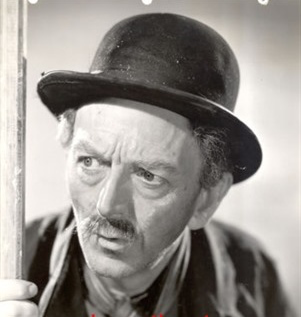
F. J. McCormick (real name Peter Christopher Judge), an Irish actor who becomes known for his work at Dublin‘s Abbey Theatre, is born in Skerries, County Dublin, on June 1, 1890. He acquires the stage name “F.J. McCormick” to disguise his identity from his current and future employers, and to avoid parental disapproval. He joins the Abbey at age 19, and acts in some 500 productions there. He is especially remembered for his work in the plays of Seán O’Casey.
After living in Skerries in his early years, at age ten McCormick moves to Dublin and proceeds to live there for the majority of the duration of his life. He is educated locally in Skerries. His father, Michael Judge, is a maltser and later becomes a brewery manager. He is of medium height, with “expressive eyes” and thick brown hair. As a young man, he begins writing by contributing articles to the press. He works briefly as a post office clerk in London but returns to Dublin to work as a junior clerk in the Civil Service. He resigns from his public service career in 1918 and decides to embrace acting as a full-time career as a member of the Abbey Theatre at age 19.
McCormick’s mother dies when he is 2 years old. He and his family move to Dublin when he is 10 or 12 years old. He is raised in Skerries and attends the Holy Faith Convent for primary education. He describes his childhood in Skerries “as a very happy one.” He marries Eileen Crowe on December 2, 1925, in Rathdown. They meet at the Abbey where Crowe is also an actor. In describing their performances together, Seamus De Burca writes, “F. J. McCormick and Eileen Crowe lived a life together of perfect bliss.” The couple has two children, a son, David, and a daughter, Marie.
After moving briefly to London, McCormick returns to Dublin, where he works in the Civil Service. He also takes acting roles in the Workmen’s Club on York Street, and for the first time under the pseudonym by which he becomes known for roles with the Queen’s Theatre, Dublin. By May 1919, he has a leading role in an independent production of The Curate of St. Chad’s by Constance Powell Anderson at the Abbey Theatre. An attack on Irish acting by Edward Martyn is answered by McCormick in the pages of the journal Banba in June 1921.
McCormick acts in over 500 plays at the Abbey Theatre, becoming particularly associated with the plays of Sean O’Casey staged there. From 1923 to 1925, he is also stage manager at the Abbey. Of his performance as Seumus Sheilds in The Shadow of a Gunman, O’Casey says that the actor created a character greater than that which he had written. He plays Capt. Brennan in the filmed version of O’Casey’s The Plough and the Stars but it is his return to film in Carol Reed‘s Odd Man Out (1947) that sees him singled out for praise in contemporaneous reviews. The Irish Times writes that “the acting of the Irish players was unremittingly professional, and, in the case of F. J. McCormick, as Shell, a weak-minded and elderly corner-boy, quite outstanding.” The Times of London finds “it is Mr. F. J. McCormick as a sly, bird-like creature, who stops just the right side of informing, who catches most surely at the imagination.”
In their review of the film Hungry Hill (1947), The New York Times writes, “As the butler who served John Brodrick, his sons, and their sons in turn, the late F. J. McCormick is truly magnificent, giving an even more subtle portrayal of Irish character than he did as the wily tramp in Odd Man Out.”
In the last five years of McCormick’s life he continues to work in the Abbey where he acts in over 70 plays before his death. He only stars in one play in the theatre in the final year of his life, the play They Got What They Wanted playing the role of Bartley Murnaghan. He secures more leading roles in the film industry. He dies in Dublin at the age of 56 from a brain tumour on April 24, 1947. He is buried in Dean’s Grange Cemetery, Deansgrange, County Dublin. He continues to work right up until his death.
It is said that people regarded McCormick as one of the greatest actors in his era. This comes from his work in 500 plays and 4 films over his career. A year after his death, Barry Fitzgerald says he only knew of two actors with the gift that McCormick had and they were Charles Laughton and Charlie Chaplin.
There are many popular plays and films that McCormick is part of which are still remembered to this day by many, some of them include the original The Plough and the Stars in 1926 where he originates the role of Commandant Jack Clitheroe. He also plays the role of Captain Brennan in the John Ford film version of the play in 1936. In his appreciation for McCormick, Gabriel Fallon remembers him as both a great actor and a great man.
It is said that McCormick was one of the most versatile actors of his generation, his early death was a huge loss to the Irish arts and more specifically the Abbey Theatre where he carried most of his work.
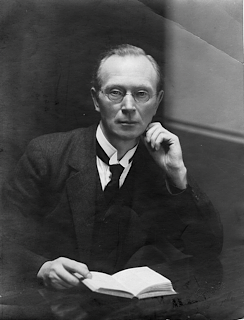
MacNeill is one of five children born to Archibald McNeill, a Roman Catholic working-class baker, sailor and merchant, and his wife, Rosetta McNeill (née McAuley), also a Catholic. He is raised in Glenarm, an area which “still retained some Irish-language traditions.” His niece is nationalist and teacher, Máirín Beaumont.
MacNeill marries Agnes Moore on April 19, 1898. The couple has eight children, four sons and four daughters (though the 1911 census entry for MacNeill notes eleven children, seven of whom are still alive).
The Gaelic League is from the start strictly non-political, but in 1915, a proposal is put forward to abandon that policy and become a semi-political organisation. MacNeill strongly supports this and rallies to his side a majority of delegates at the 1915 Oireachtas. Douglas Hyde, a non-political Protestant, who had co-founded the League and been its president for 22 years, resigns immediately afterward.
Through the Gaelic League, MacNeill meets members of Sinn Féin, the Irish Republican Brotherhood (IRB), and other nationalists and republicans. One such colleague, The O’Rahilly, runs the league’s newspaper An Claidheamh Soluis, and in October 1913 asks MacNeill to write an editorial for it on a subject broader than Irish language issues. He submits a piece called “The North Began,” encouraging the formation of a nationalist volunteer force committed to Irish Home Rule, much as the unionists had done earlier in the year with the Ulster Volunteers to thwart Home Rule in Ireland. In July 1915, he comments on the threat that the unarmed nationalists in Ulster might face: “…a demented…English driven Orange Army would be let loose upon the helpless Catholic people of Ulster, who would be driven out of the province or massacred where they stood.”
Bulmer Hobson, a member of the IRB, approaches MacNeill about bringing the idea to fruition, and, through a series of meetings, MacNeill becomes chair of the council that forms the Irish Volunteers, later becoming its chief of staff. Unlike the IRB, he is opposed to the idea of an armed rebellion, except in resisting any suppression of the Volunteers, seeing little hope of success in open battle against the British army.
The Irish Volunteers have been infiltrated by the Irish Republican Brotherhood, which plan on using the organisation to stage an armed rebellion, to separate Ireland from the United Kingdom and establishing an Irish Republic. The entry of the UK into World War I is, in their view, a perfect opportunity to do that. With the cooperation of James Connolly and the Irish Citizen Army, a secret council of IRB officials plan a general rising at Easter 1916. On the Wednesday before Easter, they present MacNeill with a letter, allegedly stolen from high-ranking British staff in Dublin Castle, indicating that the British are going to arrest him and all the other nationalist leaders. Unbeknownst to MacNeill, the letter—called the Castle Document—is a forgery.
When MacNeill learns about the IRB’s plans, and when he is informed that Roger Casement is about to land in County Kerry with a shipment of German arms, he is reluctantly persuaded to go along with them, believing British action is now imminent and that mobilization of the Irish Volunteers will be justified as a defensive act. However, after learning that the German arms shipment has been intercepted and Casement arrested, and having confronted Patrick Pearse, who refuses to relent, MacNeill countermands the order for the Rising by sending written messages to leaders around the country, and placing a notice in the Sunday Independent cancelling the planned “manoeuvres.” This greatly reduces the number of volunteers who report for duty on the day of the Easter Rising.
Pearse, Connolly and the others agree that the uprising will go ahead anyway, but it begins one day later than originally intended to ensure that the authorities are taken by surprise. Beginning on Easter Monday, April 24, 1916, the Rising lasts less than a week. After the surrender of the rebels, MacNeill is arrested although he has taken no part in the insurrection. The rebel leader Tom Clarke, according to his wife Kathleen, warns her on the day before his execution, “I want you to see to it that our people know of his treachery to us. He must never be allowed back into the National life of this country, for so sure as he is, so sure will he act treacherously in a crisis. He is a weak man, but I know every effort will be made to whitewash him.”
In 1923, MacNeill, a committed internationalist, is also a key member of the diplomatic team that oversees Ireland’s entry to the League of Nations.
MacNeill’s family is split on the treaty issue. One son, Brian, takes the anti-Treaty side and is killed in disputed circumstances near Sligo by Free State troops during the Irish Civil War in September 1922. Two other sons, Niall and Turloch, as well as nephew Hugo MacNeill, serve as officers in the Free State Army. One of his brothers, James McNeill, is the second and penultimate Governor-General of the Irish Free State.
In 1924, the three-man Irish Boundary Commission is set up to settle the border between Northern Ireland and the Irish Free State. MacNeill represents the Irish Free State. He is the only member of the Commission without legal training and has been described as being “pathetically out of his depth.” However, each of the Commissioners is selected out of political expediency rather than for any established competence or insight into boundary making. On November 7, 1925, a conservative British newspaper, The Morning Post, publishes a leaked map showing a part of eastern County Donegal (mainly The Laggan district) that is to be transferred to Northern Ireland, the opposite of the main aims of the commission. Perhaps embarrassed by that, especially since he said that it had declined to respect the terms of the Treaty, MacNeill resigns from the commission on November 20. Hus performance in the Boundary Commission has been deemed highly negative in a 2025 study The Root of All Evil: The Irish Boundary Commission.
On November 24, 1925, MacNeill also resign as Minister for Education, a position unrelated to his work on the commission.
On December 3, 1925, the Free State government agrees with the governments in London and Belfast to end its onerous treaty requirement to pay its share of the United Kingdom’s “imperial debt” and, in exchange, agrees that the 1920 boundary will remain as it is, overriding the commission. This angers many nationalists and MacNeill is the subject of much criticism, but in reality, he and the commission have been sidestepped by the intergovernmental debt renegotiation. In any case, despite his resignations, the intergovernmental boundary deal is approved by a Dáil vote of 71–20 on December 10, 1925, and MacNeill is listed as voting with the majority in favour. He loses his Dáil seat at the June 1927 Irish general election.
MacNeill is an important scholar of Irish history and among the first to study Early Irish law, offering both his interpretations, which at times are coloured by his nationalism, and translations into English. He is also the first to uncover the nature of succession in Irish kingship, and his theories are the foundation for modern ideas on the subject.
MacNeill is a contributor to the Royal Irish Academy‘s Clare Island Survey, recording the Irish place names of the island. His disagreements and disputes with Goddard Henry Orpen, particularly over the latter’s book Ireland under the Normans, generate controversy.
MacNeill retires from politics completely and becomes Chair of the Irish Manuscripts Commission. In his later years he devotes his life to scholarship and publishes several books on Irish history. He dies in Dublin of natural causes, aged 78, on October 15, 1945. He is buried in Kilbarrack Cemetery.
Madden is born at Wormwood Gate, Dublin, on August 22, 1798, to Edward Madden, a silk manufacturer, and his wife Elizabeth (née Corey). His father marries twice and fathers twenty-one children.
In 1828, Madden marries Harriet Elmslie, daughter of John Elmslie of Jamaica, a slave-owner. He then practises medicine in Mayfair, London, for the next five years.
Madden becomes a recruit to the abolitionist cause. The transatlantic slave trade has been illegal in the British Empire since 1807, but slavery itself remains legal.
From 1833, Madden is employed in the British civil service, first as a justice of the peace in Jamaica, where he is one of six Special Magistrates sent to oversee the eventual liberation of Jamaica’s slave population, according to the terms of the Slavery Abolition Act 1833. From 1835 he is Superintendent of the freed Africans in Havana, Cuba. In 1839 he leaves Cuba for New York, where he provides important evidence for the defense of the former slaves who had taken over the slave ship La Amistad.
In 1840 Madden becomes Her Majesty’s Special Commissioner of Inquiry into the British Settlements on the West Coast of Africa. His task is to investigate how the slave trade is continuing to operate on the west coast of Africa, despite the shipping of African slaves across the Atlantic Ocean now being illegal. He finds that London-based merchants (including WhigMPMatthew Forster) are actively helping the slave traders, and that crudely disguised forms of slavery exist in all the coast settlements. He particularly condemns the actions of George Maclean, the Governor of Gold Coast.
In 1847 Madden becomes the Colonial Secretary of Western Australia and arrives in the colony in 1848. After receiving news of their oldest son’s death back in Ireland, he and Harriet return to Dublin in 1849. In 1850 he is named secretary of the Office for Loan Funds in Dublin.
Madden also campaigns against slavery in Cuba, speaking to the General Anti-Slavery Convention in London on the topic of slavery in Cuba.
Madden dies at his home in Booterstown, just south of Dublin, on February 5, 1886, and is interred in Donnybrook Cemetery.
Besides several travel diaries (Travels in Turkey, Egypt etc. in 1824–27, 1829, and others (1833)), his works include the historically significant book The United Irishmen, their lives and times (1842-1860, 11 Vols.), which contains numerous details on the Irish Rebellion of 1798, including testimonies collected from veteran rebels and from family members of deceased United Irishmen.