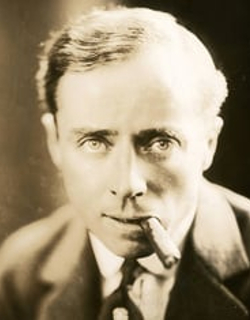
In 1911 Brenon is hired as a writer by Carl Laemmle, directing his first short the following year. Signed by William Fox in 1915, he graduates to feature films. With Paramount Pictures from 1923, he directs several spectacular productions with British themes, including the silent version of Beau Geste (1926). He regards sound pictures with a measure of apprehension.
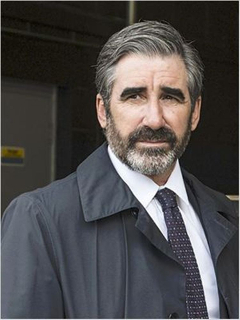
Lynch is the eldest of five children of an Irish father and an Italian mother from Trivento in the Province of Campobasso. His younger sister Susan and his nephew Thomas Finnegan are also actors. He attends St. Colman’s College, Newry and begins acting in Irish language-medium plays at school during the early years of the conflict in Northern Ireland.
Lynch plays the part of football legend George Best in the 2000 film Best. He plays the lead in the Australian feature Angel Baby, winning the Australian Film Institute award for best leading actor and the Australian Film Critics Association award for best actor of 1995. He is nominated for a Satellite Film Award for the film Moll Flanders in 1996. He works with acclaimed Belgian director Marion Hänsel on her adaptation of Booker-nominated author Damon Galgut‘s novel, The Quarry (1998), which wins Best Film at the Montreal World Film Festival. He wins Best Actor for the lead role in Best at the Fort Lauderdale Film Festival in 2000.
Lynch is also a novelist. His first novel, Torn Water, is published in November 2005 by the 4th Estate, a literary imprint of HarperCollins Publishers LLC, and his second, Falling Out of Heaven, is published on May 13, 2010, by the same publisher.
Maureen Toal, stage and television actress whose professional career lasts for more than sixty years, dies on August 24, 2012.
Toal is born in Fairview, Dublin on September 7, 1930. She begins performing at the Abbey Theatre in Dublin in 1946, when she is just sixteen years old. She becomes a fixture at the theater, portraying some of the strongest roles on the stage including Bessie Burgess in The Plough and the Stars and the Widow Quinn in The Playboy of the Western World. She also appears in several one woman shows, including Baglady, which is written by Irish playwrightFrank McGuinness.
In 1952, Toal marries fellow Irish actor Milo O’Shea. They divorce in 1974.
Playwright John B. Keane writes the role of Mame Fadden in his play The Change in Mame Fadden specifically for Toal. Hugh Leonard also pens characters in his plays A Life and Great Big Blonde with the intention of casting Toal in the roles. Toal is best known to Irish television audiences for her role as Teasy McDaid on RTÉ One‘s Glenroe during the 1990s.
In 2010, Toal is awarded an honorary doctorate in literature at University College Dublin for which McGuinness delivers the citation, describing her as “our greatest actress.” He also praises her performances including Maggie in Arthur Miller‘s After the Fall and particularly her lead roles in his own plays, The Factory Girls and Baglady, where, he says, she tells the toughest of stories with devastating honesty. “Hers is the look out of which were fashioned the masks of comedy and tragedy.”
Maureen Toal dies in her sleep at her home in Sandycove, Dublin, on August 24, 2012, two weeks before her 82nd birthday. She is survived by her son, Colm O’Shea, two sisters, one brother, and three grandchildren.
He starts as a stand-up comedian in San Francisco and Los Angeles in the mid-1970s. He is credited with leading San Francisco’s comedy renaissance. After rising to fame as an alien called Mork in the TV sci-fi sitcom series Mork & Mindy, he establishes a career in both stand-up comedy and feature film acting. He is known for his improvisational skills.
On August 11, 2014, Williams commits suicide at his home in Paradise Cay, California, at the age of 63. His wife attributes his suicide to his struggle with diffuse Lewy body dementia. His body is cremated at Montes Chapel of the Hills in San Anselmo and his ashes are scattered in San Francisco Bay on August 21.
Williams’s death instantly becomes global news. The entertainment world, friends, and fans respond to his death through social and other media outlets. U.S. PresidentBarack Obama said of Williams, “He was one of a kind. He arrived in our lives as an alien—but he ended up touching every element of the human spirit.”
Cousins produces several books of poetry while in Ireland as well as acting in the first production of Cathleen ní Houlihan, under the stage name of H. Sproule, with the famous Irish revolutionary and beauty Maud Gonne in the title role. His plays are produced in the first years of the twentieth century in the Abbey Theatre, the most famous being “the Racing Lug”. After a dispute with W.B. Yeats, who objects to “too much Cousins,” the Irish National Theatre movement splits with two-thirds of the actors and writers siding with Cousins against Yeats.
Cousins also writes widely on the subject of Theosophy and in 1915 travels to India with the voyage fees paid for by Annie Besant, the President of the Theosophical Society. He spends most of the rest of his life in the sub-continent, apart from a year as Professor of English Literature at Keio University in Tokyo and another lecturing in New York. Toward the end of his life, he converts to Hinduism. At the core of Cousins’s engagement with Indian culture is a firm belief in the “shared sensibilities between Celtic and Oriental peoples.”
In his The Future PoetrySri Aurobindo acclaims Cousins’ New Ways in English Literature as “literary criticism, which is of the first order, at once discerning and suggestive, criticism which forces us both to see and think.” He also acknowledges that he learned to intuit deeper being alerted by Cousins’ criticisms of his poems. In 1920 Cousins comes to Pondicherry to meet the Mother and Sri Aurobindo.
In the early years of his career Olcott sings in minstrel shows, before studying singing in London during the 1880s. Lillian Russell plays a major role in helping make him a Broadway star. When the producer Augustus Pitou approaches him in 1893 to succeed William J. Scanlan as the leading tenor in sentimental operettas on Irish themes, Olcott accepts and performs pseudo-Irish roles for the remainder of his career.
Olcott combines the roles of tenor, actor, lyricist and composer in many productions. He writes the complete scores to Irish musicals such as Sweet Inniscara (1897), A Romance of Athlone (1899), Garrett O’Magh (1901), and Old Limerick Town (1902). For other productions he collaborates with Ernest Ball and George Graff, Jr. in works such as The Irish Artist (1894), Barry of Ballymore (1910), Macushla (1912), and The Isle o’ Dreams (1913). There are some twenty such works between 1894 and 1920.
Olcott is a good songwriter who captures the mood of his Irish American audience by combining melodic and rhythmic phrases from traditional Irish music with melancholy sentiment. Some numbers from his musicals become very popular, such as “My Wild Irish Rose” from A Romance of Athlone, “Mother Machree” from Barry of Ballymore, and “When Irish Eyes Are Smiling” from The Isle o’ Dreams. Sometimes he uses tunes from others, such as that of the title song from Macushla from Irish composer Dermot Macmurrough (pseudonym of Harold R. White) or Too Ra Loo Ra Loo Ral (Irish Lullaby) by James Royce Shannon for his production Shameen Dhu (1914).
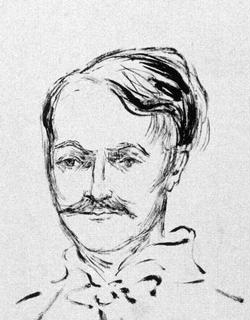
At the age of 21, he makes his stage debut in a Cincinnati production of Dion Boucicault‘s The Colleen Bawn (1867). Also in 1867, he has a minor part in Edwin Forrest‘s production of Virginius, and then joins a travelling repertory company. By the age of 24 he has already established a reputation among theater managers as a box-office draw, particularly with the ladies. But he is also working doggedly at his craft, ridding himself of all vestiges of brogue and learning to pitch his voice resonantly. He is considered a promising actor, quickly working his way up the ranks to become a matinée idol.
On June 14, 1877, while in New York City, O’Neill marries Mary Ellen Quinlan, daughter of Thomas and Bridget Quinlan. In the fall of 1877, three months after his marriage, a woman by the name of Nettie Walsh sues O’Neill, claiming that he had married her five years earlier, when she was only 15, and that he is the father of her three-year-old son. Nettie Walsh loses her case and the publicity, although it wounds his bride, enhances his reputation as a romantic leading man.
As early as 1875, while a stock star at Hooley’s Theatre in Chicago, O’Neill plays the title role in a stage adaptation of Alexandre Dumas‘ The Count of Monte Cristo. In early 1883 he takes over the lead role in Monte Cristo at Booth’s Theater in New York, after Charles R. Towne dies suddenly in the wings after his first performance. O’Neill’s interpretation of the part caused a sensation with the theater-going public.
O’Neill soon tires of the Count and his lines come out by rote and his performances become lackadaisical. Monte Cristo remains a popular favorite, so he continues the role on tour as regular as clockwork. He goes on to play this role over 6,000 times.





 seamus dubhghaill