seamus dubhghaill

Promoting Irish Culture and History from Little Rock, Arkansas, USA


Leave a comment

Murder of Nicholas Walsh, Church of Ireland Bishop of Ossory

Nicholas Walsh, (Irish: Nicolás Bhailis), Church of Ireland Bishop of Ossory and a pioneer of printing in Irish type, is murdered on December 14, 1585, by James Dullerde, against whom he had proceeded in his court for adultery.

Walsh is born in Waterford, County Waterford, in or before 1538. He is the son of Patrick Walsh, Bishop of Waterford and Lismore (d. 1578). The identity of his mother is unknown. She was Patrick’s concubine for many years and they apparently married only after 1558, meaning their son was born outside marriage. About 1551 Walsh leaves Ireland to study at the universities of Paris, Oxford, and Cambridge, eventually graduating BA at Cambridge in 1562 or 1563. He receives the MA from Cambridge in 1567. He is appointed chancellor of St. Patrick’s Cathedral, Dublin, in 1571.

As a fluent Irish speaker, Walsh is deeply committed to the propagation of the Protestant faith through the medium of the Irish language. In 1571 he helps to secure the publication in Dublin of a catechism written in Irish by John Kearney (Irish: Seán Ó Cearnaigh), whom he has known since his time at Cambridge. He then procures a government order for printing the Book of Common Prayer in Irish, and for the liturgy and a sermon to be communicated in Irish in a church in each large town. In practice this order has no effect. From about 1573 he and Kearney begin work on an Irish translation of the New Testament. This project is finally completed and published in 1602 or 1603. He also writes a collection of sermons in Latin.

In 1572 Walsh is offered the bishopric of Kilmacduagh in Connacht but declines as this diocese lay in a dangerous part of the country. In February 1578 he becomes Bishop of Ossory, upon which he resigns his chancellorship at St. Patrick’s Cathedral and presumably sets aside his translation of the New Testament. Through his family he has links with the area of his diocese, and he is assured of the protection of the dominant magnate, Thomas Butler, Earl of Ormond. However, Catholicism is very strong in Ossory, particularly in the diocesan capital of Kilkenny. His arrival at Kilkenny is ignored by the citizens, and he finds himself presiding over an empty St. Canice’s Cathedral during Sunday services. In November 1578 he writes for support to the Lord Justice of Ireland, Sir William Drury, who empowers Walsh to fine recusants. That month Drury comes to Kilkenny and heavily fines a number of prominent citizens of Kilkenny for recusancy. However, these punitive efforts have little long-term impact and only increased Walsh’s unpopularity.

Walsh is further hampered by a lack of revenues from his diocese, which leads him in April 1581 to seek additional benefices that he can hold in commendam. in July 1582 he seeks a licence to solicit charitable donations in England. He also initiates legal proceedings to recover church property. At a time when the Church of Ireland episcopate is characterised by venality, cynicism, and crypto-Catholicism, he stands head and shoulders above his colleagues owing to his dedication, ability, and evangelising zeal. At the installation of the Bishop of Meath in 1584 he criticises his fellow bishops for neglecting their spiritual duties for political concerns. He is married to an Englishwoman and has four children.

Walsh’s life comes to a violent end on December 14, 1585, when he is stabbed to death in his own house at Kilkenny by James Dullerde, whom he had cited for adultery in his consistory court. He is buried in a tomb in St. Canice’s Cathedral, Kilkenny. Dullerde is caught and beheaded by Domhnall Spanaigh Kavanagh MacMurrough and his brother Cahir Carroughe.

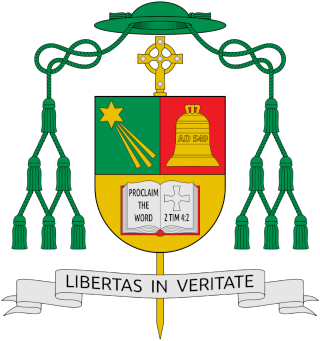
(From: “Walsh, Nicholas (Nicolás Bhailis)” by Anthony M. McCormack and Terry Clavin, Dictionary of Irish Biography, http://www.dib.ie, October 2009 | Pictured: Coat of arms of the Bishop of Ossory)

Leave a comment

Birth of James Graham Fair, Mining Tycoon & U.S. Senator

james-graham-fair

James Graham Fair, banker, mining tycoon, and United States Senator from Nevada, is born in Clogher, County Tyrone on December 3, 1831. He is credited with discovering the Big Bonanza, one of the richest pockets of gold and silver on the Comstock Lode.

Born in what is now Northern Ireland in 1831 to Scotch-Irish parents, Fair immigrates with his family to the United States when he is a boy and grows up on a farm in Illinois. Following the 1849 California Gold Rush, he travels to California. He earns a reputation for understanding ore bodies, inspiring his eventual employment as superintendent of various mines.

The 1859 discovery of the Comstock Lode in Nevada provides Fair with new opportunities. In 1865, he becomes superintendent of the prestigious Ophir Mine. Two years later, the Hale and Norcross Mine in Virginia City hire him as assistant superintendent, but the owners dismiss him within a year for unclear reasons.

While at the Hale and Norcross, Fair meets John William Mackay, whose success at the Kentuck Mine made him a millionaire. The two Irish immigrants recognize common interests and form an alliance. Mackay gives Fair the position of superintendent of the Rising Star Mine in Idaho, a property he had recently acquired. The venture proves unsuccessful, but it solidifies a working relationship between the two.

Fair works quietly with Mackay and investors James C. Flood and William S. O’Brien to obtain control of the Hale and Norcross Mine. Fair turns it to profit with better management. He and Mackay combine their expertise to acquire and explore other claims. In 1873, largely through Fair’s persistent search in the Consolidated California and Virginia Mine, the partnership discovers the famed Big Bonanza, one of the richest ore bodies in history. Fair and the others become extremely wealthy. He uses his assets to defeat the incumbent William Sharon for a seat in the United States Senate, which he holds in an undistinguished way from 1881-1887 as a Democrat.

Fair develops real estate in San Francisco and acquires mining property outside Nevada. Theresa Fair, his wife, is respected in Virginia City for donations to causes including those of the Catholic Church and the Daughters of Charity. When she divorces her husband in 1883 for habitual adultery, national public opinion turns against the senator. During his bid for reelection, he finds little support. Even Mackay fails to come to his aid, and he easily loses his seat to William Morris Stewart in 1887. He then moves back to San Francisco.

James Fair dies on December 28, 1894 in San Francisco of diabetes mellitus at the age of 63. He is buried in Holy Cross Cemetery in Colma, California.


Leave a comment

Birth of Katharine O’Shea Parnell

katharine-oshea

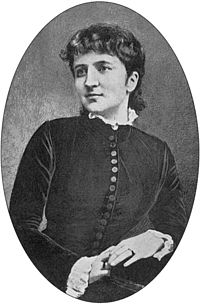
Katharine O’Shea (née Wood), English woman of aristocratic background, whose decade-long secret adultery with Charles Stewart Parnell leads to a widely publicized divorce in 1890 and his political downfall, is born in Braintree, Essex on January 30, 1846.

Katharine is the daughter of Sir John Page Wood, 2nd Baronet (1796–1866), and granddaughter of Sir Matthew Wood, a former Lord Mayor of London. She has an elder brother who becomes Field Marshal Sir Henry Evelyn Wood and is also the niece of both Western Wood MP (1804–1863) and Lord William Wood, William Ewart Gladstone‘s first Liberal Lord Chancellor.

Katharine marries Captain William O’Shea in 1867, a Catholic Nationalist MP for Clare from whom she separates around 1875. She first meets Parnell in 1880 and begins a relationship with him. Three of her children are fathered by Parnell. Although Captain O’Shea keeps publicly quiet for several years, he is aware of the relationship. He challenges Parnell to a duel in 1881 and initially forbids his estranged wife to see him, although she says that he encouraged her in the relationship. Although their relationship is a subject of gossip in London political circles from 1881, later public knowledge of the affair in an England governed by “Victorian morality” with a “nonconformist conscience” creates a huge scandal, as adultery is prohibited by the Ten Commandments.

Out of her family connection to the Liberal Party, Katharine acts as liaison between Parnell and Gladstone during negotiations prior to the introduction of the First Irish Home Rule Bill in April 1886. Parnell moves to her home in Eltham, close to the London-Kent border, that summer.

Captain O’Shea files for divorce in 1889 and his reasons are a matter for speculation. Some say he may have political motives. Alternatively, it is claimed that he has been hoping for an inheritance from Katharine’s rich aunt whom he had expected to die earlier, but when she dies in 1889 her money is left in trust to cousins. After the divorce the court awards custody of Katharine O’Shea and C.S. Parnell’s two surviving daughters to her ex-husband.

Katharine’s November divorce proceedings from Captain O’Shea, in which Parnell is named as co-respondent, leads to Parnell’s being deserted by a majority of his own Irish Parliamentary Party and to his downfall as its leader in December 1890. Catholic Ireland feels a profound sense of shock when Katharine breaks the vows of her previous Catholic marriage by marrying Parnell on June 25, 1891. With his political life and his health essentially ruined, Parnell dies at the age of 45 in Hove on October 6, 1891 in her arms, less than four months after their marriage. The cause is stomach cancer, possibly complicated by coronary artery disease inherited from his grandfather and father, who also died prematurely.

Though to her friends Katharine is known as Katie O’Shea, Parnell’s enemies, in order to damage him personally, call her “Kitty O’Shea” because at that time “kitty,” as well as being an Hiberno-English version of Catherine/Katherine/Katharine, is also a slang term for a prostitute. She lives the rest of her life in relative obscurity. She dies on February 5, 1921, at the age of 75, and is buried in Littlehampton, Sussex, England, apparently never once setting foot on Irish soil.

Captain Henry Harrison, MP, who had acted as Parnell’s bodyguard and aide-de-camp, devotes himself after Parnell’s death to the service of his widow. From her he hears a completely different version of the events surrounding the divorce issue from that which had appeared in the press, and this is to form the seed of his later two books defending Parnell published in 1931 and 1938. They have a major impact on Irish historiography, leading to a more favourable view of Parnell’s role in the O’Shea affair.