On July 26, 1914, Erskine Childers sails his yacht Asgard into the port of Howth, Dublin, carrying 900 Mauser Model 1871 rifles and 29,000 rounds of black powder ammunition. This daring operation, known as the Howth gun-running, is a pivotal moment in Ireland’s struggle for Home Rule and independence.
By 1914, Ireland is politically tense. The Larne gun-running in April had seen Ulster Volunteers smuggle 25,000 rifles into Ireland, while the Curragh mutiny in March had shown the British Army’s reluctance to enforce Home Rule. The Irish Volunteers, though committed to defending Home Rule, are poorly funded and lack arms. A group of wealthy Anglo-Irish supporters — including Sir Roger Casement, Erskine Childers, Mary Spring Rice, Darrell Figgis, Molly Childers, and Alice Stopford Green — form a committee to arm them.
On May 28, 1914, Childers and Figgis travel to Hamburg, Germany, to buy 1,500 Mauser rifles and 49,000 rounds from arms dealer Moritz Magnus, Jr. The rifles, though obsolete, are still serviceable and fire a high-caliber round. To transport them, Childers offers his yacht Asgard to carry 900 rifles, while Conor O’Brien takes the rest on the Kelpie.
The Asgard, a 50-foot gaff ketch built by Colin Archer, leaves Conwy, North Wales, on July 3. The outward journey is uneventful, but the return is stormy, with the rifles filling the cabin and crew sleeping on them. On July 12, the yacht meets the German tug Gladiator at the mouth of the Scheldt, loading the arms.
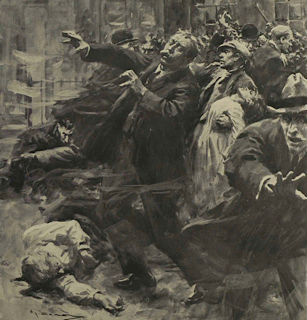
On July 26, the Asgard reaches Howth. The unloading in daylight draws a crowd, prompting police and military intervention. A riot erupts, and the King’s Own Scottish Borderers are ambushed at Bachelor’s Walk, resulting in the Bachelor’s Walk massacre — four civilians killed and at least 38 wounded. Despite the violence, the guns are secured.
The Howth gun-running is the first major military operation in Ireland’s 20th-century independence movement. The rifles are later used in the Easter Rising of 1916, including at the General Post Office. The event underscores the role of Anglo-Irish republicans in arming the Volunteers and foreshadows the armed struggle that follows.
In short, July 26, 1914, marks the arrival of a critical arms shipment in Howth, a bold act of defiance against British control and a direct response to Ulster’s gun-running, with lasting consequences for Irish history.
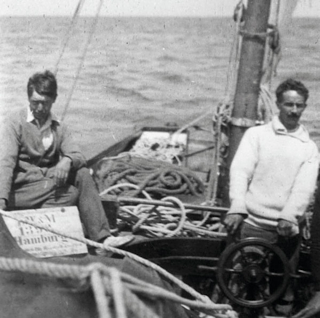
(Pictured: Erskine Childers at Asgard’s wheel on her 1914 gun-running voyage)