On May 28, 1914, Childers and Figgis travel to Hamburg, Germany, to buy 1,500 Mauser rifles and 49,000 rounds from arms dealer Moritz Magnus, Jr. The rifles, though obsolete, are still serviceable and fire a high-caliber round. To transport them, Childers offers his yacht Asgard to carry 900 rifles, while Conor O’Brien takes the rest on the Kelpie.
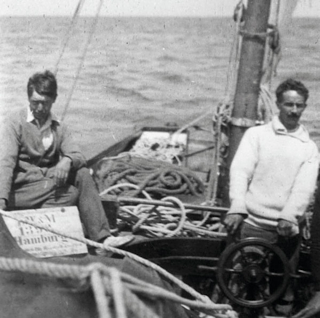
The Asgard, a 50-foot gaff ketch built by Colin Archer, leaves Conwy, North Wales, on July 3. The outward journey is uneventful, but the return is stormy, with the rifles filling the cabin and crew sleeping on them. On July 12, the yacht meets the German tug Gladiator at the mouth of the Scheldt, loading the arms.
On July 26, the Asgard reaches Howth. The unloading in daylight draws a crowd, prompting police and military intervention. A riot erupts, and the King’s Own Scottish Borderers are ambushed at Bachelor’s Walk, resulting in the Bachelor’s Walk massacre — four civilians killed and at least 38 wounded. Despite the violence, the guns are secured.
The Howth gun-running is the first major military operation in Ireland’s 20th-century independence movement. The rifles are later used in the Easter Rising of 1916, including at the General Post Office. The event underscores the role of Anglo-Irish republicans in arming the Volunteers and foreshadows the armed struggle that follows.
In short, July 26, 1914, marks the arrival of a critical arms shipment in Howth, a bold act of defiance against British control and a direct response to Ulster’s gun-running, with lasting consequences for Irish history.
(Pictured: Erskine Childers at Asgard’s wheel on her 1914 gun-running voyage)
O’Brien is born Ellen Lucy O’Brien on June 4, 1864, at Cahirmoyle, County Limerick. She is the eldest child of Edward William O’Brien and Mary O’Brien (née Spring Rice). Her siblings are Lucy and Dermod, with Dermod also becoming an artist. Her father is a landowner, and her mother is a sculptor and painter and sister of Thomas Spring Rice. Her grandfather is William Smith O’Brien.
While a young child, O’Brien spends two years living on the French Riviera from 1866 to 1868. Her mother later dies of tuberculosis, and the three children are raised by their aunt, the writer and nationalist, Charlotte Grace O’Brien. Their father remarries in 1880, to Julia Marshall, with whom he has two sons and two daughters.
O’Brien attends school in England from 1879, and later enrolls to study painting at the Slade School of Fine Art. She meets Walter Osborne through her brother Dermod, and considers herself engaged to him, but Osborne dies on April 24, 1903. A portrait of O’Brien by Osborne is held in the Hugh Lane Gallery.
O’Brien returns to Ireland and begins to paint miniatures on ivory using a magnifying glass. She also paints watercolour landscapes. Her first exhibition with the Royal Hibernian Academy (RHA) is in 1896, where she shows three works including Sketch near Malahide. She exhibits with the RHA on and off until 1922. During some of her time in Dublin, she lives with her half-brother, Edward Conor Marshall O’Brien, on Mount Street.
As part of an exhibition of Irish painters, O’Brien exhibits a number of portrait miniatures at the London Guildhall in 1904. The 1906 Oireachtas na Gaeilge features a number of her paintings, and in the same year she becomes honorary secretary of a newly established art committee. At the Munster–Connacht exhibition in Limerick of 1906, she exhibits a miniature of William Smith O’Brien amongst her 12 works on show. She produces many portraits, including one of Douglas Hyde, which is exhibited by the RHA in 1916.
O’Brien is an early member of the Gaelic League, being present at its first Oireachtas na Gaeilge in 1897 and founding the Craobh na gCúig gCúigí (Branch of the Five Provinces). In 1905, she writes a long letter in defence of Douglas Hyde and the Gaelic League in The Church of Ireland Gazette. She holds meetings of Craobh na gCúig gCúigí in her flat at 7 St. Stephen’s Green every Saturday night in 1907. In 1911, she founds Coláiste Eoghain Uí Chomhraí (O’Curry Irish College) in Carrigaholt, County Clare, which is named in honour of Eugene O’Curry, with the help of her cousin and friend Mary Spring Rice.
One of her ultimate goals is to create a national Irish church, which would unite Protestants and Catholics through the Irish language. To this end, she establishes the Irish Guild of the Church with Seoirse de Rút in 1914. The aim of the organisation is to provide a communal union for members of the Church of Ireland who are dedicated to “Irish Ireland” ideals.
Acting as a representative for the Gaelic League, she travels to the United States with Fionan MacColuim in 1914 to 1915, to fund raise and promote Irish art and industries. At Coláiste Eoghain Uí Chomhraí, she stresses the importance of the Irish language in the home, as well as the skills of housewives and those in domestic service in strengthening the language and Irish culture.
O’Brien notes that she initially thought that the 1916 Easter Rising was “in the nature a demonstration against conscription as it had been announced that the volunteers would resist disarmament.” She is staying with the Hydes at 1 Earlsfort Place during the Rising, as her flat at College Park Chambers had been destroyed. She protests the conscription bill in Ireland as a mass meeting of women at the Mansion House in 1918. She launches the Gaelic Churchman in 1919 as the official publication of the Irish Guild of the Church. In one article entitled A plea for the Irish services, she promotes her campaign for Irish language services in Protestant churches. In her capacity of vice-president of the guild, she invites Éamon de Valera to attend one of their meetings in 1921.
O’Brien dies suddenly on April 1, 1925, while visiting Dermod at 66 Elm Park Gardens, London. She is buried at the family plot in Cahirmoyle.
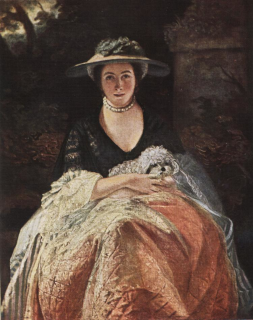
(Pictured: Nelly O’Brien by Sir Joshua Reynolds, 1723-1792)
The Gaelic League (Irish: Conradh na Gaeilge), a social and cultural organisation which promotes the Irish language in Ireland and worldwide is founded in Dublin on July 31, 1893.
The League encourages female participation from the start and a number of women play a prominent role. They are not restricted to subordinate roles, but play an active part in leadership, although males are in the overwhelming majority. Local notables, such as Lady Gregory in Galway, Lady Esmonde in County Wexford, and Mary Spring Rice in County Limerick, and others such as Norma Borthwick, found and lead branches in their communities. At the annual national convention in 1906 women are elected to seven of the forty-five positions on the Gaelic League executive. Executive members include Máire Ní Chinnéide, Úna Ní Fhaircheallaigh (who writes pamphlets on behalf of the League), Bean an Doc Uí Choisdealbha, Máire Ní hAodáin, Máire de Buitléir, Nellie O’Brien, Eibhlín Ní Dhonnabháin, and Eibhlín Nic Néill.
Though apolitical, the organisation attracts many Irish nationalists of different persuasions, much like the Gaelic Athletic Association. It is through the League that many future political leaders and rebels first meet, laying the foundation for groups such as the Irish Volunteers. However, Conradh na Gaeilge does not commit itself entirely to the national movement until 1915, causing the resignation of Douglas Hyde, who feels that the culture of language should be above politics. Most of the signatories of the 1916 Proclamation are members. It still continues to attract many Irish Republicans. Seán Mac Stíofáin, the first chief of staff of the Provisional IRA was a prominent member in his later life.
After the foundation of the Irish Free State in 1922, the organisation has a less prominent role in public life as Irish is made a compulsory subject in state-funded schools. It does unexpectedly bad in the Irish Seanad election of 1925, when all the candidates it endorses are defeated, including Hyde.