seamus dubhghaill

Promoting Irish Culture and History from Little Rock, Arkansas, USA


Leave a comment

The Battle of Ballinamuck

The Battle of Ballinamuck takes place at Ballinamuck, County Longford, on September 8, 1798, marking the defeat of the main force of the French incursion during the Irish Rebellion of 1798.

The victory of General Jean Joseph Amable Humbert at the Battle of Castlebar, despite gaining him around 5,000 extra Irish recruits, did not lead to a renewed outbreak of the rebellion in other areas as hoped. The defeat of the earlier revolt devastated the Irish republican movement to the extent that few are willing to renew the struggle. A massive British force of 26,000 men is assembled under Charles Cornwallis, 1st Marquess Cornwallis, the new Lord Lieutenant of Ireland, and is steadily moving west. Humbert abandons Castlebar and moves toward Ulster, with the apparent intention of igniting an uprising there. He defeats a blocking force of government troops at Collooney in County Sligo. Following reports that rebellions have broken out in County Westmeath and County Longford, he alters course.

Humbert crosses the River Shannon at Ballintra Bridge on September 7, destroying it behind them, and continues to Drumshanbo where they spend the night – halfway between his landing-point and Dublin. News reaches him of the defeat of the Westmeath and Longford rebels at Wilson’s Hospital School at Multyfarmham and Granard from the trickle of rebels who have survived the slaughter and reached his camp. With Cornwallis’ huge force blocking the road to Dublin, facing constant harassment of his rearguard and the pending arrival of General Gerard Lake‘s command, Humbert decides to make a stand the next day at the townland of Ballinamuck on the Longford/Leitrim county border.

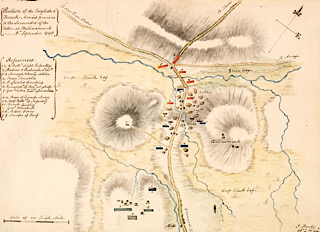
Humbert faces over 12,000 Irishmen and English forces. General Lake is close behind with 14,000 men, and Cornwallis is on his right at Carrick-on-Shannon with 15,000. The battle begins with a short artillery duel followed by a dragoon charge on exposed Irish rebels. There is a brief struggle when French lines are breached which only ceases when Humbert signals his intention to surrender and his officers order their men to lay down their muskets. The battle lasts little more than an hour.

While the French surrender is being taken, the 1,000 or so Irish allies of the French under Colonel Bartholomew Teeling, an Irish officer in the French army, hold onto their arms without signaling the intention to surrender or being offered terms. An attack by infantry followed by a dragoon charge breaks and scatters the Irish who are pursued into a bog where they are either bayoneted or drowned.

A total of 96 French officers and 746 men are taken prisoner. British losses are initially reported as 3 killed and 16 wounded or missing, but the number of killed alone is later reported as twelve. Approximately 500 French and Irish lay dead on the field. Two hundred Irish prisoners are taken in the mopping-up operations, almost all of whom are later hanged, including Matthew Tone, brother of Wolfe Tone. The prisoners are moved to the Carrick-on-Shannon Gaol. The French are given prisoner or war status however the Irish are not and some are hanged and buried in St. Johnstown, today known as Ballinalee, where most are executed in a field that is known locally as Bully’s Acre.

Humbert and his men are transported by canal to Dublin and exchanged for British prisoners of war. Government forces subsequently slowly spread out into the rebel-held “Irish Republic,” engaging in numerous skirmishes with rebel holdouts. These sweeps reach their climax on September 23 when Killala is captured by government forces. During these sweeps, suspected rebels are frequently summarily executed while many houses thought to be housing rebels are burned. French prisoners of war are swiftly repatriated, while United Irishmen rebels are executed. Numerous rebels take to the countryside and continue guerrilla operations, which take government forces some months to suppress. The defeat at Ballinamuck leaves a strong imprint on Irish social memory and features strongly in local folklore. Numerous oral traditions are later collected about the battle, principally in the 1930’s by historian Richard Hayes and the Irish Folklore Commission.

(Pictured: Watercolour plan by an I. Hardy of the Battle of Ballinamuck in County Longford on September 8, 1798, showing position of the English & French Armies previous to the surrender of the latter at Balinamuck)

Leave a comment

Death of Sir Denis Pack, British Army General

Sir Denis Pack, British Army major general who serves in the French Revolutionary and Napoleonic Wars, dies in London on July 24, 1823.

Pack is born on October 7, 1775 in Kilkenny, County Kilkenny, the younger son of Rev. Thomas Pack, Dean of Ossory, and Catherine Pack (née Sullivan), of St. Andrew’s parish, Dublin. In June 1790, he enters Trinity College Dublin (TCD), aged 15, but does not take his degree. His elder brother, Thomas Pack, previously attends TCD, but dies in December 1786.

Pack enters the army in November 1791, being commissioned as a cornet in the 14th Light Dragoons, and serves with this regiment in Flanders in 1794 as part of Francis Rawdon-Hastings‘s expedition. Transferring to the 8th Light Dragoons, he is promoted to lieutenant In March 1795 and takes part in the expedition to Quiberon Bay. He is promoted to captain in February 1796 and serves with the 5th Dragoon Guards in Ireland during the Irish Rebellion of 1798. Promoted to major In August 1798, he is attached to the 4th Royal Irish Dragoon Guards, and after the surrender of the French expeditionary force at Ballinamuck, County Longford, on September 8, 1798 he commands the troops that escort General Jean Joseph Amable Humbert and the other French officers to Dublin.

Promoted to lieutenant colonel in December 1800, Pack commands the 71st (Highland) Regiment of Foot and takes part in the expedition to the Cape of Good Hope in 1806. He then takes part in General John Whitelocke‘s expedition to South America and is captured after an unsuccessful attack on Montevideo. His fellow-prisoner is William Carr Beresford, later 1st Viscount Beresford, and the two men remain friends for the rest of their lives. Refusing to give their parole to General Santiago de Liniers, they escape from La Plata in a boat, meeting a British cruiser at sea. Pack later takes part in the successful attack on Montevideo on February 9, 1807.

Pack is posted to Portugal in 1808 and is present at the Battle of Roliça on August 17 and the Battle of Vimeiro on August 21. In 1809, he takes part in the Walcheren Campaign and, promoted to colonel in July 1810, he is made aide-de-camp to George III. Returning to Portugal in 1810, he serves under Beresford, commanding a Portuguese brigade, and takes part in the Battle of Bussaco on September 27, 1810. Promoted to brigadier general in January 1812, he takes part in the Siege of Ciudad Rodrigo and is present at the Battle of Salamanca on July 22, 1812. In June 1813, he is promoted to major general and later is present at the battles of Vitoria (June 21, 1813), Nivelle (November 10, 1813), Nive (December 10-13, 1813), Orthez (February 27, 1814) and the final French defeat at Toulouse (April 10, 1814). In January 1815, he is made a Knight Commander of the Order of the Bath (KCB) in recognition of his services in the Peninsula.

During the Waterloo campaign of 1815, Pack commands one of the brigades in General Sir Thomas Picton‘s division. Present at the Battle of Quatre Bras (June 16, 1815), he plays a prominent part in the Battle of Waterloo, bringing his brigade forward at a crucial moment to stop the advance of the French 3rd Division under General Pierre-Louis Binet de Marcognet. During the course of his career he is wounded several times and is awarded numerous honours including the Peninsular Gold Cross (with seven clasps), the Military Order of the Tower and Sword (Portugal) and the Order of Saint Vladimir (Russia). In 1819, he is appointed Lieutenant-Governor of Plymouth, and is later made honorary colonel of the 84th (York and Lancaster) Regiment of Foot in 1822.

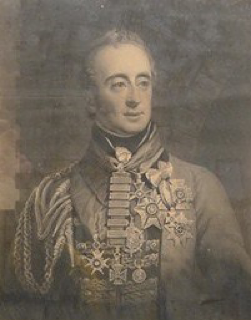
In July 1816, Pack marries Lady Elizabeth Louisa de la Poer Beresford, daughter of George Beresford, 1st Marquess of Waterford. They have two sons and two daughters. His descendants adopted “Pack-Beresford” as their family name. He dies on July 24, 1823, at Lord Beresford’s house in Upper Wimpole Street, London. A monument to him is later erected in St. Canice’s Cathedral, Kilkenny. A portrait by G. L. Saunders is in family possession; another by Charles Turner, showing Pack wearing his numerous orders and decorations, is in the National Portrait Gallery, London. A collection of his papers is held by the University of Southampton.


Leave a comment

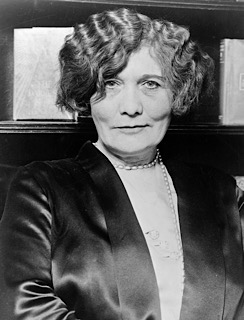
Death of Chicago May

Chicago May, the nickname of Mary Anne Duignan, an Irish-born criminal who becomes notorious in the United StatesUnited Kingdom and France, dies in Philadelphia, Pennsylvania, on May 30, 1929. She refers to herself as the “queen of crooks” and sometimes uses the name May Churchill.

Duignan is born in Edenmore, BallinamuckCounty Longford, on December 26, 1871. In 1890, at the age of 19, she steals the proceeds earned by her parents from a recent cattle fair and runs away to Liverpool, England where she buys new clothes and books a ticket to America. Upon arrival in New York City she supports herself by prostitution and picking pockets.

She moves to Chicago to take advantage of the large influx of visitors at the 1893 World’s Columbian Exposition. She teams up with another prostitute. One robs customers while the other is having sex with them. She returns to New York City, where she works as a dancer, but is soon arrested for stealing a wallet, earning her first jail sentence. She briefly marries friend Jim Sharpe but the couple soon separates. After this, she calls herself May Churchill Sharpe. She soon establishes herself with the local criminal underworld, becoming involved in various crimes, mostly of a petty nature, including fraud, assault, brawling, drunk and disorderly behaviour, beggary and pickpocketing.

Duignan has various criminal lovers, but she graduates from petty criminality to major crime when she meets Eddie Guerin, who organises a robbery of the American Express office in Paris. She is imprisoned for her role in the crime. She operates her schemes on four continents and in nine countries. She reaches the height of her career in England when she is taken up by aristocrat Sir Sidney Hamilton Gore, who supposedly proposes marriage to her, shortly before he shoots himself.

After Guerin escapes from a French prison island, he makes his way to London where he meets Duignan again, but the relationship turns sour. She takes up with a burglar named Charley Smith. In 1907, during an altercation with Guerin, Smith shoots him, wounding him in the foot. Smith and Duignan are both accused of attempted murder. She is convicted and sentenced to 15 years. She is released in 1917, and returns to the United States.

By the 1920s, Duignan is living in Detroit and has become destitute. No longer young, she is reduced to propositioning men on the streets and is repeatedly arrested for soliciting and common prostitution. She hopes to make money from her former notoriety by writing magazine articles and an autobiography with the help of a journalist, which is published in 1928 as Chicago May, Her Story, by the Queen of Crooks. Her former lover Guerin publishes his own life story at the same time, under the title I Was a Bandit. She dies at the age of 58 in Philadelphia on May 30, 1929.


Leave a comment

The Clonfin Ambush

The Clonfin Ambush is carried out by the Irish Republican Army (IRA) on February 2, 1921, during the Irish War of Independence. It takes place in the townland of Clonfin between Ballinalee and Granard in County Longford. The IRA ambushes two lorries carrying members of the British Auxiliary Division, sparking a lengthy gun battle in which four Auxiliaries are killed and eight wounded. The Auxiliaries eventually surrender, and their weapons are seized. The IRA commander, Seán Mac Eoin, wins some praise for helping the wounded Auxiliaries. Following the ambush, British forces burn a number of houses and farms in the area, and shoot dead an elderly farmer.

The IRA’s North Longford Flying Column, twenty-one strong and led by Seán Mac Eoin, is formed in late 1920. In that year they kill four Royal Irish Constabulary (RIC) constables. In November, a company of the Auxiliary Division – a paramilitary police force made up of ex-military officers – has been stationed in the county to put down the local IRA and are reinforced in January 1921. Whereas previously the IRA had tried to operate in relatively large numbers, often attacking police barracks, from this point forward, their GHQ in Dublin orders smaller but more frequent attacks to be made.

The ambush site, on the road between Granard and Ballinalee, is well chosen. Mac Eoin selects a position where the ambushers have excellent cover and are barely visible to the British. The plan is to explode a mine as the lorries pass. The British assessment is that “the ambush was most cleverly laid.”

The IRA detonates the roadside improvised explosive device (IED) as two British lorries are passing a bridge, killing the driver of the first lorry instantly. The IRA unit then opens fire on the lorries, triggering a firefight lasting two hours. One of the Auxiliaries gets away and manages to summon reinforcements.

During the fighting, four members of the IRA party work their way around the flank of the Auxiliaries, killing their commander, Lt. Commander Francis Craven. After his death, the remaining policemen surrender. A total of four Auxiliaries are killed and eight wounded.

MacEoin’s treatment of his prisoners is humane. He congratulates them on the fight they had put up and prevents his fighters from assaulting the Auxiliaries. He also has water brought from nearby houses for the British wounded. When he is later captured by the British, three Auxiliaries testify at his court-martial to his generous treatment of them at Clonfin. Mac Eoin’s humane treatment reportedly delays the IRA’s getaway, and they are almost caught by 14 lorries of British reinforcements as they escape across Clonfin Wood. The IRA had captured 18 rifles, 20 revolvers ammunition, a Lewis gun and 800 rounds of ammunition.

In the aftermath of the ambush, British forces raid the nearby towns of Killoe, Ballinamuck, Drumlish, Ballinalee, Edgeworthstown, Granard and Ardagh. A number of houses and farms are burned. They shoot dead an elderly farmer, Michael Farrell, in reprisal for the ambush.

The IRA flying column lays low after the ambush and does not attempt any more attacks until the end of the month. MacEoin, the Longford IRA leader, is captured at Mullingar railway station in early March and charged with the murder of RIC DI MGrath. He is released in July under the terms of the Truce which ends hostilities. In his absence, the Longford IRA are not able to sustain the intensity of their campaign.

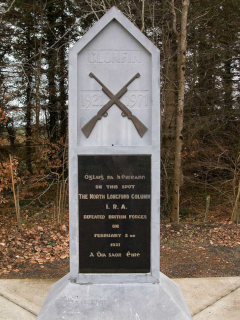
A stone monument is erected at the site of the ambush in 1971 to mark the 50th anniversary of the event. The IRA combatants are MacEoin (Ballinalee), Sean Duffy (Ballinalee), James J. Brady (Ballinamuck), Tom Brady (Cartronmarkey), Paddy Callaghan (Clonbroney), Seamus Conway (Clonbroney), Pat Cooke (Tubber), Seamus Farrelly (Purth), Paddy Finnegan (Molly), Larry Geraghty (Ballymore), Mick Gormley (Killoe), Hugh Hourican (Clonbroney), Jack Hughes (Scrabby), Mick Kenny (Clonbroney), Paddy Lynch (Colmcille), John McDowell (Clonbroney), Jack Moore (Streete), Mick Mulligan (Willsbrook), Michael F. Reynolds (Killoe), Sean Sexton (Ballinalee) and Jim Sheeran (Killoe).

(Pictured: The stone monument located at Clonfin, near the village of Ballinalee, County Longford, marking the site of the ambush. Erected in 1971 to mark the 50th anniversary of the event, the limestone monument features strong military, anti-British language and symbolism.)