seamus dubhghaill

Promoting Irish Culture and History from Little Rock, Arkansas, USA


Leave a comment

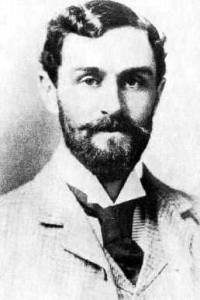
Roger Casement’s Efforts to Gain German Military Aid Ends

During World War I, Roger Casement makes efforts to gain German military aid for the 1916 Easter Rising. His journey on the German submarine SM U-19 comes to an end on April 21, 1916.

In April 1916, Germany offers the Irish 20,000 Mosin–Nagant 1891 rifles, ten machine guns and accompanying ammunition, but no German officers. It is a fraction of the quantity of the arms Casement had hoped for, with no military expertise on offer. The weapons leave Germany bound for Ireland on a German cargo vessel named the SS Libau, disguised as a Norwegian vessel, Aud-Norge.

Casement confides his personal papers to Dr. Charles Curry, with whom he has stayed at Riederau on the Ammersee, before leaving Germany. He departs with Robert Monteith and Sergeant Daniel Beverley (Bailey) of the Irish Brigade in a submarine, initially the SM U-20, which develops engine trouble, and then the SM U-19, shortly after the Aud sails. According to Monteith, Casement believes the Germans are toying with him from the start and providing inadequate aid that will doom a rising to failure. He wants to reach Ireland before the shipment of arms and to convince Eoin MacNeill, who he believes is still in control, to cancel the rising.

Casement sends John McGoey, a recently arrived Irish American, through Denmark to Dublin, ostensibly to advise what military aid is coming from Germany and when, but with Casement’s orders “to get the Heads in Ireland to call off the rising and merely try to land the arms and distribute them.” McGoey does not reach Dublin, nor does his message. His fate is unknown until recently. Evidently abandoning the Irish Nationalist cause, he joins the Royal Navy in 1916, survives the war, and later returns to the United States, where he dies in an accident on a building site in 1925.

About 2:00 a.m. on the morning of April 21, 1916, three days before the rising begins, Robert Monteith, Daniel Bailey (calling himself Beverly), and Casement climb into a small boat for the trip to shore at Banna Strand in Tralee Bay, County Kerry. Their boat, now in the Imperial War Museum in London, capsizes before they reach shore.

Monteith helps an exhausted Casement to safety on shore. Casement is convinced that the Rising cannot be successful without a large number of German troops, and the best he has been able to obtain is one boatload of arms. Suffering from a recurrence of the malaria that had plagued him since his days in the Congo, and too weak to travel, Monteith and Bailey leave Casement at the ruins of McKenna’s Fort, an ancient ring fort in Rahoneen, Ardfert, now renamed Casement’s Fort, and head for Tralee.

About 1:30 p.m., Casement is discovered by two Royal Irish Constabulary (RIC) officers. He nearly talks his way out of being arrested, but a 12-year-old boy at the scene points out a piece of paper Casement had tossed away as the police approach. On that paper is a German code list. He is arrested on charges of high treason, sabotage and espionage against the Crown. He manages to send word to Dublin about the inadequate German assistance.

The Kerry Brigade of the Irish Volunteers might have tried to rescue Casement over the next three days, but its leadership in Dublin holds that not a shot is to be fired in Ireland before the Easter Rising is in train and therefore orders the Brigade to “do nothing.” A subsequent internal inquiry attaches “no blame whatsoever” to the local Volunteers for failing to attempt a rescue. Casement is taken to Brixton Prison and placed under special observation for fear of an attempt of suicide as there is no staff at the Tower of London to guard suicidal cases.

Casement’s trial at bar opens at the Royal Courts of Justice on June 26, 1916, before the Lord Chief Justice (Viscount Reading), Justice Horace Avory, and Justice Thomas Horridge. Refusing to agree to a “guilty but insane” plea, he is subsequently found guilty and sentenced to be hanged. He unsuccessfully appeals against his conviction and death sentence.

On the day of his execution by hanging at Pentonville Prison, August 3, 1916, Casement is received into the Catholic Church at his request. He is attended by two Catholic priests, Dean Timothy Ring and Father James Carey, from the East London parish of SS Mary and Michael. The latter, also known as James McCarroll, says of Casement that he was “a saint … we should be praying to him [Casement] instead of for him.” At the time of his death he is 51 years old.

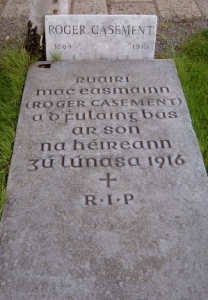
Casement’s body is buried in quicklime in the prison cemetery at the rear of Pentonville Prison, though his last wish was to be buried at Murlough Bay on the north coast of County Antrim, in present-day Northern Ireland. Finally, in 1965, his remains are repatriated to Ireland. His remains lay in state at the Garrison Church, Arbour Hill (now Arbour Hill Prison) in Dublin for five days, close to the graves of other leaders of the 1916 Easter Rising, although he would not be buried beside them. After a state funeral, the remains are buried with full military honours in the republican plot in Glasnevin Cemetery in Dublin, alongside other Irish republicans and nationalists. The President of Ireland, Éamon de Valera, who is then in his mid-eighties and the last surviving leader of the Easter Rising, attends the ceremony, along with an estimated 30,000 others.
Leave a comment

Birth of Con Collins, Sinn Féin Politician

Cornelius Collins (Irish: Conchobhar Ó Coileáin), Irish Sinn Féin politician known as Con Collins, is born in Arranagh, Monagea, Newcastle West, County Limerick, on November 13, 1881.

Collins has joined the Gaelic League by 1910 when working in London for the civil service, as had Michael Collins the previous year. He is a member of the Irish Volunteers and the Irish Republican Brotherhood (IRB). He and Austin Stack are on their way to meet Sir Roger Casement at Banna Strand in County Kerry in 1916 during a failed attempt to land arms for Irish Republicans from the German vessel Aud, when they are arrested by the British authorities on Easter Saturday. They spend Easter Week in Tralee Barracks and in solitary confinement on Spike Island, County Cork. They are then held with Terence MacSwiney, Arthur Griffith and others in Richmond Barracks before being sentenced to penal servitude for life. He is deported to Frongoch internment camp in Wales where he spends the rest of the year and much of 1917.

Collins is elected as a Sinn Féin MP for West Limerick at the 1918 Irish general election. In January 1919, Sinn Féin MPs who had been elected in the Westminster elections of 1918 refuse to recognise the Parliament of the United Kingdom and instead assemble at the Mansion House in Dublin as a revolutionary parliament called Dáil Éireann. At the 1921 Irish elections he is elected for the constituency of Kerry–Limerick West. He opposes the Anglo-Irish Treaty and votes against it.

Collins refuses an offer of the Ministry for Posts and Telegraphs provided he switch to the pro-Treaty side. Having been sworn to non-violence – together with Richard Mulcahy – by the Augustinians, he does not join the anti-Treaty forces. He is again re-elected for Kerry–Limerick West at the 1922 Irish general election, this time as anti-Treaty Sinn Féin Teachta Dála (TD). He does not contest the 1923 Irish general election and retires from politics.

Collins dies in Dublin on November 23, 1937, at the age of 56, and is buried in Mount St. Lawrence cemetery, Limerick.

He and Piaras Béaslaí share a distinction in that they contest and are elected in three Irish general elections unopposed by any other candidates.

(Pictured: Wedding photo of Sinn Féin politician Con Collins, September 12, 1923)


Leave a comment

Roger Casement’s Remains Returned to the Republic of Ireland

roger-casement

Irish patriot Roger Casement‘s body is returned to Ireland from the United Kingdom on February 23, 1965, forty-nine years after his execution for treason.

In October 1914, Roger Casement sails for Germany where he spends most of his time seeking to recruit an Irish Brigade from among more than 2,000 Irish prisoners-of-war taken in the early months of World War I and held in the prison camp of Limburg an der Lahn. His plan is that they will be trained to fight against Britain in the cause of Irish independence.

In April 1916, Germany offers the Irish 20,000 Mosin–Nagant 1891 rifles, ten machine guns and accompanying ammunition, but no German officers. It is a fraction of the quantity of arms that Casement has hoped. Casement does not learn of the Easter Rising until after the plan is fully developed. The German weapons never land in Ireland as the Royal Navy intercepts the ship transporting them.

In the early hours of April 21, 1916, three days before the beginning of the rising, Casement is taken by a German submarine and is put ashore at Banna Strand in Tralee Bay, County Kerry. Suffering from a recurrence of malaria and too weak to travel, he is discovered at McKenna’s Fort in Rathoneen, Ardfert, and arrested on charges of treason, sabotage, and espionage against the Crown. He is imprisoned in the Tower of London.

Casement’s trial for treason is highly publicized and he is ultimately convicted and sentenced to be hanged. He unsuccessfully appeals the conviction and death sentence. Among the many people who plead for clemency are Sir Arthur Conan Doyle, W. B. Yeats, and George Bernard Shaw.

On the day of his execution, Casement is again received into the Catholic Church at his request. He is attended by two Irish Catholic priests, Dean Timothy Ring and Father James Carey, from the East London parish of St. Mary and St. Michael’s. Casement is hanged at Pentonville Prison in London on August 3, 1916. His body is buried in quicklime in the prison cemetery at the rear of the prison.

roger-casement-glasnevin-grave

During the decades after his execution, many formal requests for repatriation of Casement’s remains are refused by the U.K. government. Finally, February 23, 1965, Casement’s remains are repatriated to the Republic of Ireland. Casement’s last wish, to be buried at Murlough Bay on the North Antrim coast, in what is now Northern Ireland, may never be satisfied as U.K. Prime Minister Harold Wilson‘s government releases the remains only on condition that they cannot be brought into Northern Ireland, as “the government feared that a reburial there could provoke Catholic celebrations and Protestant reactions.”

Casement’s remains lay in state at Arbour Hill in Dublin for five days, during which time an estimated half a million people file past his coffin. After a state funeral on March 1, the remains are buried with full military honours in the Republican plot in Glasnevin Cemetery in Dublin, with other militant republican heroes. The President of the Republic of Ireland, Éamon de Valera, who is in his mid-eighties and the last surviving leader of the Easter Rising, defies the advice of his doctors and attends the ceremony, along with an estimated 30,000 others.