seamus dubhghaill

Promoting Irish Culture and History from Little Rock, Arkansas, USA


Leave a comment

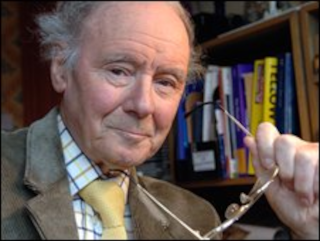
Birth of David Hammond, Singer & Folklorist

David Andrew (Davy) Hammond, singer, folkloristtelevision producer and documentary maker, is born on December 5, 1928, in Miss Kell’s nursing home on the Castlereagh Road in Belfast, Northern Ireland.

Hammond is the son of Leslie Hammond, a tram driver, and his wife Annie (née Lamont). His parents are not city people; his mother grew up near Ballybogy in the Ballymoney area of County Antrim, and his father, though from a family with roots in south County Londonderry, had lived in Ballymoney as a boy, and had been apprenticed to a blacksmith there. Both have a strong sense of their rural identity and maintain the Ulster Scots dialect of their childhood. They are never quite at home in the Belfast suburb of Cregagh, and in particular do not share the sectarian attitudes that are much more present in 1930s Belfast than they had been in north Antrim, one of the last strongholds of Presbyterian radicalism. Even as a boy, Hammond is interested in the old songs that his mother sang and realises that the traditions in which his parents had been nurtured are disappearing quickly in an increasingly urbanising and modernising world. When he encounters the work of Emyr Estyn Evans in the early 1940s, he is encouraged to document both rural tradition and the street life of the city, and he and a couple of friends, though still just teenagers, ride off on their bicycles to look for folklore in the hinterland of Belfast.

After primary school, Hammond wins a scholarship in 1941 to Methodist College Belfast, where he does well in examinations, and then goes to Stranmillis University College to train as a teacher. In his first job, in Harding Memorial primary school in east Belfast, he proves to be a popular, idealistic teacher, and is remembered by his pupils fifty years later as a fine singer and a teller of ghost stories, who had taken the class on memorable youth-hosteling trips to the Mourne Mountains. Youth hosteling and folklore collecting increases his awareness and understanding of the rich traditions of the whole community in the north of Ireland, and he is never constrained by political or religious barriers. His early career mirrors closely that of James Hawthorne, and their paths are to cross in later life.

Hammond is friendly with many others active in the cultural life of Northern Ireland and makes a name for himself as a song collector and eventually as an expert on all aspects of traditional singing. In 1956, he is awarded a scholarship to travel in the United States to meet the important pioneers of folk-music collecting and performance there. He records his first LP record of Ulster songs, I Am The Wee Falorie Man (1958), in the United States, and becomes friends with Pete Seeger, the Appalachian singer Jean Ritchie, with old blues singers, and notably with Liam Clancy, one of the three Clancy brothers who as a quartet with Tommy Makem are to popularise Irish folk music in the United States and elsewhere.

On returning to Belfast, Hammond takes a job in 1958 in Orangefield secondary school in the east of the city, where the highly regarded headmaster John Malone encourages new approaches to education. Among his pupils at Orangefield is George Ivan “Van” Morrison, who credits him with inspiring his interest in Irish traditional music. Hammond enjoys teaching but is increasingly drawn to folk-song performance and recording. He appears regularly on radio programmes of the BBC and Radio Éireann, and in 1964 joins the school’s department in BBC Northern Ireland. There, with colleagues like Sam Hanna Bell, James Hawthorne and others, he works on programmes such as Today and Yesterday in Northern Ireland, which for the first time introduces pupils (and many adults) to local history and to aspects of tradition. In 1968, with two friends, the poets Seamus Heaney and Michael Longley, he puts on poetry and traditional music events in schools all over the province. The Arts Council funds the Room to Rhyme project, which is immensely influential and inspiring, and is still talked about many years later by those who attended as children.

Hammond is creatively involved with hundreds of hours of broadcasting, in television as well as radio, and eventually for adults as well as children. He writes scripts, produces documentary series such as Ulster in Focusand Explorations, and brings an artistic sensibility to filming, as well as working sympathetically with traditional singers and craftspeople. Dusty Bluebells, a sensitively made film of Belfast children’s street games, wins the prestigious Golden Harp award in 1972. After he leaves the BBC to work as a freelance, and founds Flying Fox Films in 1986, he continues making documentaries on many aspects of Ulster life and heritage. His film called Steel Chest, Nail in the Boot and the Barking Dog (1986), about working in the Belfast shipyards, also wins a Golden Harp award. A companion book of the same name is published. Another book is Belfast, City of Song(1989), with Maurice Leyden. In 1979, he edits a volume of the songs of Thomas Moore. His documentary programmes include films about singers from Boho, County Fermanagh, and about the big houses of the gentry in Ireland. The Magic Fiddle (1991/2) examines the role of the instrument in the folk music of Ireland, ScandinaviaCanada, and the American south, while Another Kind of Freedom (1993) is about the experiences of a former Orangefield pupil, the Beirut hostage Brian Keenan. He also produces and directs the films Something to Write Home About (1998), Where Are You Now? (1999), and Bogland (1999), all of which explore Seamus Heaney’s home region and experiences.

The first poem in Heaney’s collection Wintering Out (1972) is entitled “For David Hammond and Michael Longley.” Their lifelong friendship leads to several other creative collaborations. In particular, after a distressing evening in 1972 when Hammond, affected by the despair and terror unleashed by Irish Republican Army (IRA) bombing of his city, is for once unable to sing, Heaney meditates on the experience in an essay and in an important poem, “The singer’s house” (subsequently included in his 1979 Field Work collection). The poem urges the singer to keep singing, to defend the values of art and friendship in a hostile time. Hammond collaborates with Dónal Lunny and other traditional musicians to bring out an LP also called The Singer’s House(1978), which includes Heaney’s poem on the album sleeve, and features some of the songs that he had made famous, such as “My Aunt Jane” and “Bonny Woodgreen,” from his vast repertoire of songs from Ulster. The album is reissued in 1980.

In 1995, Hammond is one of Heaney’s personal guests at the award of his Nobel prize in Stockholm, characteristically wearing his usual, mustard-yellow, cattle-dealer boots with evening dress. On another formal occasion, when he is awarded an honorary doctorate by Dublin City University in November 2003, he surprises the audience by standing up in his academic robes to sing “My Lagan love,” instead of giving an address. His unique, light mellow voice is an ideal vehicle for the traditional ballads which he knows so well. He records a number of records in the 1960s, including Belfast Street Songs, and publishes the book Songs of Belfast (1978). He also encourages traditional musicians like Arty McGlynn, and collaborates with them on various recording projects. He is well known for live and often impromptu performances at festivals and venues in Ireland and the United States. He also performs at the John F. Kennedy Center for the Performing Arts in Washington, D.C.

Hammond is also a notable collaborator with poets and dramatists, especially in the important Field Day Theatre Company project, of which he is a director, along with Seamus Heaney, Tom PaulinSeamus DeaneThomas Kilroy, and the project’s founders, Brian Friel and Stephen Rea. He supports the Field Day search for a “fifth province,” where history and community and culture can intersect, believing that to speak unthinkingly of “two traditions” is to perpetuate superficial political divisions. As he says in an interview in The Irish Times on July 4, 1998, songs can “take you out of yourself” and become bridges to unite people.

Hammond receives many honours. In 1994, he receives the Estyn Evans award for his contribution to mutual understanding, and his work is featured in several major events in his honour: in the University of North Florida (1999), in the Celtic Film Festival in Belfast (2003), and in Belfast’s Linen Hall Library (2005). A Time to Dream, a film about his life and work, is broadcast on BBC Northern Ireland in December 2008.

Hammond dies in hospital in Belfast, after a long illness, on August 25, 2008, survived by his wife Eileen (née Hambleton), whom he marries on July 19, 1954, and by their son and three daughters. His funeral in St. Finnian’s Church is a major cultural event, where friends sing, play and speak in his honour.

In Seamus Heaney’s last collection of poetry, Human Chain (2010), he includes a poignant farewell to Hammond. The poet imagines (or perhaps dreams) of another visit to the singer’s house, but this time “The door was open, and the house was dark.”

(From: “Hammond, David Andrew (‘Davy’)” by Linde Lunney, Dictionary of Irish Biography, http://www.dib.ie, December 2014)


Leave a comment

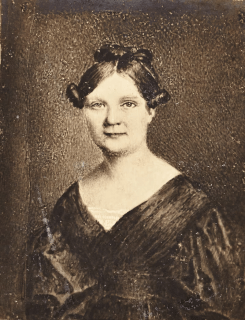
Birth of Harriet Kavanagh, Artist, Traveler & Antiquarian

Lady Harriet Kavanagh, Irish artist, traveler, and antiquarian, described as a “woman of high culture and of unusual artistic power,” is born Lady Harriet Margaret Le Poer Trench on October 13, 1799. She is believed to be the first Irish female traveler to Egypt.

Kavanagh is the second daughter of Richard Le Poer Trench and Henrietta Margaret Le Poer Trench (née Staples), with three brothers and three sisters. She marries Thomas Kavanagh of Borris House, County Carlow, on February 28, 1825, as his second wife. The couple has four children, three sons Charles, Thomas, Arthur, and one daughter, Harriet or “Hoddy.”

Kavanagh’s third son, Arthur MacMorrough Kavanagh, is born without fully formed limbs. Some attribute the disability to a peasant’s curse, while others speculate it is due to Lady Kavanagh taking laudanum during her pregnancy. She refuses to treat her son differently to his siblings, and with the help of local doctor Francis Boxwell, raises him as a normal child. During his initial education, she teaches Arthur herself, teaching him to paint and then write by holding brushes and pens in his mouth. With the help of the surgeon Sir Philip Crampton, she has a mechanical wheelchair constructed for Arthur, and also encourages him to ride horses and engage in other outdoor activities. Her husband dies after twelve years of marriage, in 1837.

In 1846, Kavanagh takes her children to learn French in Saint-Germain-en-Laye, later traveling to Rome. As an antiquarian, she also wants to visit Egypt and the Holy Land, setting off on the long journey from Marseille in October 1846. Accompanying her are her daughter, Harriet, her two sons, Thomas and Arthur, their tutor, the Rev. David Wood, and a maid, Miss Hudson. In Cairo, she hires two feluccas with Arab crews, and visits archaeological sites along the Nile, such as Thebes, Karnak, and the Nubia region. From there, she visits sites of biblical interest, including Tyre, Sidon, and Roda Island. She negotiates with Bedouin chiefs in Aqaba, hiring camels and Bedouin guides to travel to Hebron. She visits harems and a slave market and records the journey’s incidents in her diary, including her son Arthur’s accidental near drowning when he falls off their boat while fishing.

While in Cairo, Kavanagh becomes acquainted with a number of fellow Europeans, including Sir Charles Murray, Sophia Lane Poole, and Edward William Lane. Harriet Martineau travels with the party from Cairo to the Holy Land.

While visiting Jerusalem in Easter 1847, Kavanagh bears witness to a confrontation over the control of holy places between Roman and Orthodox Catholics priests. She goes on to visit Petra, the Sinai Peninsula, Beirut, Smyrna, and Constantinople. The group spends a second winter in Egypt before traveling to the Black Sea before returning to Marseilles in April 1848. Much of these journeys are conducted on horse or camel-back, with one desert crossing taking 36 days. She later comments on her travels as a woman, stating “quite enough danger to make it a very exciting business.”

In 1850 and 1852, Kavanagh travels to Corfu, returning to Borris with samples of Greek lace. She teaches a number of her tenants to copy these designs, which lead to the establishment of a local lace-making industry. She is elected to the Kilkenny Archaeological Society in 1851.

Kavanagh moves to Ballyragget Lodge, County Kilkenny, in 1860, dying there on July 14, 1885. She is buried in St. Mullin’s Abbey, Borris in County Carlow. She documented her travels in journals, with drawings and paintings of the sites she visited. These are held by the Kavanagh family, along with an oil portrait and a self-portrait. Her collection of roughly 300 Egyptian antiquities were donated to the Royal Society of Antiquaries of Ireland after her death. These collections were later moved to the National Museum of Ireland and form a core element of the Museum’s Egyptian collection. Copies of two of her watercolours, a self-portrait, and a landscape are on display in the Museum.


Leave a comment

Death of David Hammond, Singer, Folklorist & Television Producer

David Andrew (Davy) Hammond, singer, folklorist, television producer and documentary maker, dies in Belfast, Northern Ireland, following a long illness, on August 25, 2008.

Hammond is born on December 5, 1928, in Miss Kells’s nursing home on the Castlereagh Road in Belfast, the son of Leslie Hammond, a tram driver, and his wife Annie (née Lamont). His parents are not city people; his mother grew up near Ballybogy in the Ballymoney area of County Antrim, and his father, though from a family with roots in south County Londonderry, had lived in Ballymoney as a boy, and had been apprenticed to a blacksmith there. Both have a strong sense of their rural identity and maintain the Ulster Scots dialect of their childhood. They are never quite at home in the Belfast suburb of Cregagh, and in particular do not share the sectarian attitudes that are much more present in 1930s Belfast than they had been in north Antrim, one of the last strongholds of Presbyterian radicalism. Even as a boy, Hammond is interested in the old songs that his mother sang and realises that the traditions in which his parents had been nurtured are disappearing quickly in an increasingly urbanising and modernising world. When he encounters the work of Emyr Estyn Evans in the early 1940s, he is encouraged to document both rural tradition and the street life of the city, and he and a couple of friends, though still just teenagers, ride off on their bicycles to look for folklore in the hinterland of Belfast.

After primary school, Hammond wins a scholarship in 1941 to Methodist College Belfast, where he does well in examinations, and then goes to Stranmillis University College to train as a teacher. In his first job, in Harding Memorial primary school in east Belfast, he proves to be a popular, idealistic teacher, and is remembered by his pupils fifty years later as a fine singer and a teller of ghost stories, who had taken the class on memorable youth-hosteling trips to the Mourne Mountains. Youth hosteling and folklore collecting increases his awareness and understanding of the rich traditions of the whole community in the north of Ireland, and he is never constrained by political or religious barriers. His early career mirrors closely that of James Hawthorne, and their paths are to cross in later life.

Hammond is friendly with many others active in the cultural life of Northern Ireland and makes a name for himself as a song collector and eventually as an expert on all aspects of traditional singing. In 1956, he is awarded a scholarship to travel in the United States to meet the important pioneers of folk-music collecting and performance there. He records his first LP record of Ulster songs, I Am The Wee Falorie Man (1958), in the United States, and becomes friends with Pete Seeger, the Appalachian singer Jean Ritchie, with old blues singers, and notably with Liam Clancy, one of the three Clancy brothers who as a quartet with Tommy Makem are to popularise Irish folk music in the United States and elsewhere.

On returning to Belfast, Hammond takes a job in 1958 in Orangefield secondary school in the east of the city, where the highly regarded headmaster John Malone encourages new approaches to education. Among his pupils at Orangefield is George Ivan “Van” Morrison, who credits him with inspiring his interest in Irish traditional music. Hammond enjoys teaching but is increasingly drawn to folk-song performance and recording. He appears regularly on radio programmes of the BBC and Radio Éireann, and in 1964 joins the school’s department in BBC Northern Ireland. There, with colleagues like Sam Hanna Bell, James Hawthorne and others, he works on programmes such as Today and Yesterday in Northern Ireland, which for the first time introduces pupils (and many adults) to local history and to aspects of tradition. In 1968, with two friends, the poets Seamus Heaney and Michael Longley, he puts on poetry and traditional music events in schools all over the province. The Arts Council funds the Room to Rhyme project, which is immensely influential and inspiring, and is still talked about many years later by those who attended as children.

Hammond is creatively involved with hundreds of hours of broadcasting, in television as well as radio, and eventually for adults as well as children. He writes scripts, produces documentary series such as Ulster in Focus and Explorations, and brings an artistic sensibility to filming, as well as working sympathetically with traditional singers and craftspeople. Dusty Bluebells, a sensitively made film of Belfast children’s street games, wins the prestigious Golden Harp award in 1972. After he leaves the BBC to work as a freelance, and founds Flying Fox Films in 1986, he continues making documentaries on many aspects of Ulster life and heritage. His film called Steel Chest, Nail in the Boot and the Barking Dog (1986), about working in the Belfast shipyards, also wins a Golden Harp award. A companion book of the same name is published. Another book is Belfast, City of Song (1989), with Maurice Leyden. In 1979, he edits a volume of the songs of Thomas Moore. His documentary programmes include films about singers from Boho, County Fermanagh, and about the big houses of the gentry in Ireland. The Magic Fiddle (1991/2) examines the role of the instrument in the folk music of Ireland, Scandinavia, Canada, and the American south, while Another Kind of Freedom (1993) is about the experiences of a former Orangefield pupil, the Beirut hostage Brian Keenan. He also produces and directs the films Something to Write Home About (1998), Where Are You Now? (1999), and Bogland (1999), all of which explore Seamus Heaney’s home region and experiences.

The first poem in Heaney’s collection Wintering Out (1972) is entitled “For David Hammond and Michael Longley.” Their lifelong friendship leads to several other creative collaborations. In particular, after a distressing evening in 1972 when Hammond, affected by the despair and terror unleashed by Irish Republican Army (IRA) bombing of his city, is for once unable to sing, Heaney meditates on the experience in an essay and in an important poem, “The singer’s house” (subsequently included in his 1979 Field Work collection). The poem urges the singer to keep singing, to defend the values of art and friendship in a hostile time. Hammond collaborates with Dónal Lunny and other traditional musicians to bring out an LP also called The Singer’s House (1978), which includes Heaney’s poem on the album sleeve, and features some of the songs that he had made famous, such as “My Aunt Jane” and “Bonny Woodgreen,” from his vast repertoire of songs from Ulster. The album is reissued in 1980.

In 1995, Hammond is one of Heaney’s personal guests at the award of his Nobel prize in Stockholm, characteristically wearing his usual, mustard-yellow, cattle-dealer boots with evening dress. On another formal occasion, when he is awarded an honorary doctorate by Dublin City University in November 2003, he surprises the audience by standing up in his academic robes to sing “My Lagan love,” instead of giving an address. His unique, light mellow voice is an ideal vehicle for the traditional ballads which he knows so well. He records a number of records in the 1960s, including Belfast Street Songs, and publishes the book Songs of Belfast (1978). He also encourages traditional musicians like Arty McGlynn, and collaborates with them on various recording projects. He is well known for live and often impromptu performances at festivals and venues in Ireland and the United States. He also performs at the John F. Kennedy Center for the Performing Arts in Washington, D.C.

Hammond is also a notable collaborator with poets and dramatists, especially in the important Field Day Theatre Company project, of which he is a director, along with Seamus Heaney, Tom Paulin, Seamus Deane, Thomas Kilroy, and the project’s founders, Brian Friel and Stephen Rea. He supports the Field Day search for a “fifth province,” where history and community and culture can intersect, believing that to speak unthinkingly of “two traditions” is to perpetuate superficial political divisions. As he says in an interview in The Irish Times on July 4, 1998, songs can “take you out of yourself” and become bridges to unite people.

Hammond receives many honours. In 1994, he receives the Estyn Evans award for his contribution to mutual understanding, and his work is featured in several major events in his honour: in the University of North Florida (1999), in the Celtic Film Festival in Belfast (2003), and in Belfast’s Linen Hall Library (2005). A Time to Dream, a film about his life and work, is broadcast on BBC Northern Ireland in December 2008.

Hammond dies in hospital in Belfast, after a long illness, on August 25, 2008, survived by his wife Eileen (née Hambleton), whom he marries on July 19, 1954, and by their son and three daughters. His funeral in St Finnian’s church is a major cultural event, where friends sing, play and speak in his honour.

In Seamus Heaney’s last collection of poetry, Human Chain (2010), he includes a poignant farewell to Hammond. The poet imagines (or perhaps dreams) of another visit to the singer’s house, but this time “The door was open, and the house was dark.”

(From: “Hammond, David Andrew (‘Davy’)” by Linde Lunney, Dictionary of Irish Biography, http://www.dib.ie, December 2014)

Leave a comment

Brian Keenan Released by Islamic Jihad

brian-keenan

Brian Keenan, Northern Irish writer, is released by the Islamic Jihad Organization on August 24, 1990 after having spent 52 months as a hostage in Beirut, Lebanon. His works include the book An Evil Cradling, an account of the four and a half years he spends as a hostage.

Keenan is born into a working-class family in East Belfast on September 28, 1950. He leaves Orangefield High School early and begins work as a heating engineer. However, he continues an interest in literature by attending night classes and in 1970 gains a place at the University of Ulster in Coleraine. Other writers there at the time included Gerald Dawe and Brendan Hamill. In the mid 1980s he returns to the Magee College campus of the university for postgraduate study. Afterwards he accepts a teaching position at the American University of Beirut, where he works for about four months.

On the morning of April 11, 1986 Keenan is kidnapped by the Islamic Jihad Organization. After spending two months in isolation, he is moved to a cell shared with the British journalist John McCarthy. He is kept blindfolded throughout most of his ordeal, and is chained by hand and foot when he is taken out of solitary.

The British and American governments at the time have a policy that they will not negotiate with terrorists and Keenan is considered by some to have been ignored. Because he is travelling on both Irish and British passports, the Irish government makes numerous diplomatic representations for his release, working closely with the Iranian government. Throughout the kidnap they also provide support to his two sisters, Elaine Spence and Brenda Gillham, who are spearheading the campaign for his release. He is released from captivity to Syrian military forces on August 24, 1990 and is driven to Damascus. There he is handed over by the Syrian Foreign Ministry to the care of Irish Ambassador, Declan Connolly. His sisters are flown by Irish Government executive jet to Damascus to meet him and bring him home to Northern Ireland.

An Evil Cradling is an autobiographical book by Keenan about his four years as a hostage in Beirut. The book revolves heavily around the great friendship he experiences with fellow hostage John McCarthy, and the brutality that is inflicted upon them by their captors. It is the 1991 winner of The Irish Times Literature Prize for Non-fiction and the Christopher Ewart-Biggs Memorial Prize.

Keenan returns to Beirut in 2007 for the first time since his release 17 years earlier, and describes “falling in love” with the city.

Brian Keenan now lives in Dublin.


Leave a comment

Kidnapping of Writer Brian Keenan

Irish writer Brian Keenan is taken hostage in BeirutLebanon, on April 11, 1986.

Keenan is born into a working-class family in East Belfast on September 28, 1950. He leaves Orangefield High Schoolearly and begins work as a heating engineer. However, he continues an interest in literature by attending night classes and in 1970 gains a place at the University of Ulster in Coleraine. Other writers there at the time include Gerald Dawe and Brendan Hamill. In the mid-1980s Keenan returns to the Magee College campus of the university for postgraduate study. Afterwards he accepts a teaching position at the American University of Beirut, where he works for about four months.

On the morning of April 11, 1986 Keenan is kidnapped by Islamic Jihad. After spending two months in isolation, he is moved to a cell shared with the British journalist John McCarthy. He is kept blindfolded throughout most of his ordeal, and is chained by his hands and feet when taken out of solitary.

The British and American governments at the time have a policy that they will not negotiate with terrorists and Keenan is considered by some to have been ignored. Because he is travelling on both British and Irish passports, the Irish government makes numerous diplomatic representations for his release, working closely with the Iranian government. Throughout the kidnap the government also provides support to Keenan’s two sisters, Elaine Spence and Brenda Gillham, who are spearheading the campaign for his release.

Keenan is released from captivity to Syrian military forces on August 24, 1990 and is driven to Damascus. There he is handed over by the Syrian Foreign Ministry to the care of Irish Ambassador, Declan Connolly. His sisters are flown by Irish Government executive jet to Damascus to meet him and bring him home to Northern Ireland.

An Evil Cradling is an autobiographical book by Keenan about his four years as a hostage in Beirut. The book revolves heavily around the great friendship he experiences with fellow hostage John McCarthy, and the brutality that is inflicted upon them by their captors. It is the 1991 winner of The Irish Times Literature Prize for Non-fiction and the Christopher Ewart-Biggs Memorial Prize.

Keenan returns to Beirut in 2007 for the first time since being released 17 years earlier, and describes “falling in love” with the city. He now lives in Dublin.

(Pictured: Brian Keenan arrives at Dublin Airport after his release from captivity in Beirut in August 1990)