seamus dubhghaill

Promoting Irish Culture and History from Little Rock, Arkansas, USA


Leave a comment

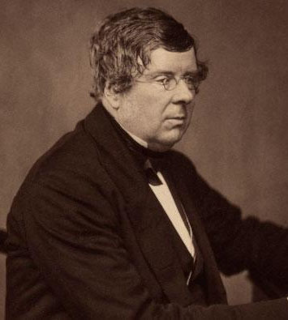
Birth of William Thompson, Naturalist

William Thompson, Irish naturalist celebrated for his founding studies of the natural history of Ireland, especially in ornithology and marine biology, is born on December 2, 1805, in the booming maritime city of Belfast.

Thompson is the eldest son of William Thompson, a prosperous linen merchant, and Elizabeth Thompson (née Callwell). He has at least two older sisters and several younger brothers. His mother’s father is Robert Callwell, a printer, book-collector, partner in the Commercial Bank, Belfast, and one of the owners of the Northern Star newspaper.

After attending the Royal Belfast Academical Institution (RBAI) from 1818, Thompson is apprenticed in the linen business of William Sinclair in 1821. When his apprenticeship ends, he goes with his cousin George Langtry, later a wealthy shipowner, on a four-month tour (May–September 1826) of the Low Countries, the Rhine, Switzerland, and Italy. On his return to Belfast, he sets up his own business in linen bleaching. Despite early success, losses are incurred. As family and economic circumstances change, he increasingly concentrates on his natural history studies. By 1831 he has given up business. A self-taught naturalist, related by ties of kinship or friendship to most of the liberal and cultivated families of the “northern Athens,” he is shy and fastidious, but is persuaded in 1826 to join the Belfast Natural History Society by its founder, his friend James Lawson Drummond. He reads his first scientific paper, The Birds of the Copeland Islands, to the society on August 13, 1827. In that year he becomes a member of the Belfast Natural History Society’s council, and in 1833 he is chosen as one of the society’s vice-presidents. He is president from 1843 until his death.

Thompson becomes the most important naturalist in mid nineteenth-century Ireland. From 1827 to 1852 he contributes almost eighty papers on Irish natural history to the Magazine of Zoology and Botany and the Proceedings of the Zoological Society of London. From 1836 to 1851 he contributes to The Magazine of Natural History. Invited to travel to the Levant and the Aegean Sea in April–July 1841 with Edward Forbes, professor of natural history at the University of Edinburgh, on HMS Beacon, he observes twenty-three species of birds on migratory flights and publishes “Notice of migratory birds” in The Annals of Natural History. His authoritative observations add considerably to knowledge of the still-to-be-ascertained details of migratory patterns. Indeed, some people refuse to believe, even at that date, that birds do migrate. He publishes other papers in the same journal during 1841–43. At a meeting of the British Association for the Advancement of Science in Glasgow in 1840 his Report on the fauna of Ireland (Vertebrata) attracts favourable notice. He presents and publishes a second and final part enumerating the invertebrates at the Cork meeting of the British Association in August 1843. The two reports form the most complete catalogue of Irish fauna yet published. Thanks to an assiduous correspondence with a network of informants, as well as his own extensive observations, he adds perhaps more than 800 species to Irish fauna lists.

Thompson’s chief work, The Natural History of Ireland, becomes the standard text in Irish zoology in the nineteenth century. The first three volumes, published between 1849 and 1851, deal with birds, particularly their habits and habitats rather than physical descriptions. He is one of the first naturalists to note the effects of industrialisation and other human activities on birdlife. He leaves instructions for his manuscripts on the remaining vertebrates and all the invertebrates to be prepared for publication by Robert Patterson and James Ramsey Garrett. Robert Ball and George Dickie also assist. His notes, though detailed and comprehensive, all require checking, and are found on tiny scraps of paper, even scribbled on the flaps of old envelopes. James Thompson of Macedon, Belfast, painstakingly gums them all into blank notebooks to facilitate the work of his brother’s literary executors, who preface the posthumous publication in 1856 with a lengthy memoir of their friend.

From about 1820 to 1852 Thompson lives with his mother at 1 Donegall Square West, Belfast, commuting from Holywood House, Holywood, County Down, during the summer. His daily routine begins with research, correspondence, or writing for publications for four hours after breakfast. After a two- or three-hour exercise period and dinner, he returns to work for a further two to three hours. He is president of the Belfast Literary Society (1837–39) and also an enthusiastic patron of the visual arts in the city. He enjoys hunting, wildfowling, shooting in Scotland, and gardening, though his health deteriorates from the 1840s.

Early in 1852 Thompson travels to London to make arrangements for that year’s Belfast meeting of the British Association. On February 15 he becomes ill, having suffered a minor stroke. He dies, unmarried, at his Jermyn Street lodgings on the day he is due to return home, February 17, 1852. He is buried in Clifton Street Cemetery, Belfast. He bequeaths his collection to the Belfast Natural History Society, and in March 1852 the Society adds a memorial Thompson Room to its museum, paid for by subscription.

Thompson is a corresponding member of natural history societies in Boston and Philadelphia and has many friends. He is known to assist many other researchers in Ireland, Britain, and the Continent. One of those who thinks highly of his work is Charles Darwin, with whom he corresponds. He also helps many local people, including the poet Francis Davis, with money and practical assistance. He is much loved, and his friends are deeply saddened by his death. His niece, Sydney Mary Thompson, later known by her married surname, Christen, who is born in Belfast, is an amateur naturalist, geologist, and artist, one of the first women to achieve distinction in geology.

(From: “Thompson, William” by Andrew O’Brien and Linde Lunney, Dictionary of Irish Biography, http://www.dib.ie, October 2009)


Leave a comment

Birth of Astronomer William Parsons, 3rd Earl of Rosse

William Parsons, 3rd Earl of Rosse, Anglo-Irish astronomer, naturalist, and engineer, is born in York, England on June 17, 1800. He is President of the Royal Society (UK), the most important association of naturalists in the world in the nineteenth century. He builds several giant telescopes. His 72-inch telescope, built in 1845 and colloquially known as the “Leviathan of Parsonstown,” is the world’s largest telescope, in terms of aperture size, until the early 20th century. From April 1807 until February 1841, he is styled as Baron Oxmantown.

Parsons is the son of Lawrence Parsons, 2nd Earl of Rosse, and Alice Lloyd. He is educated at Trinity College, Dublin and Magdalen College, Oxford, graduating with first-class honours in mathematics in 1822. He inherits an earldom and a large estate in King’s County (now County Offaly) in Ireland when his father dies in February 1841.

Parsons marries Mary Field, daughter of John Wilmer Field, on April 14, 1836. They have thirteen children, of which four sons survive to adulthood: Lawrence, 4th Earl of Rosse, Rev. Randal Parsons, the Hon. Richard Clere Parsons, and the Hon. Sir Charles Algernon Parsons.

In addition to his astronomical interests, Parsons serves as a Member of Parliament (MP) for King’s County from 1821 to 1834, president of the British Science Association in 1843–1844, an Irish representative peer after 1845, president of the Royal Society (1848–1854), and chancellor of Trinity College, Dublin (1862–1867).

During the 1840s, Parsons has the Leviathan of Parsonstown built, a 72-inch telescope at Birr Castle, Parsonstown, County Offaly. He has to invent many of the techniques he uses for constructing the Leviathan, both because its size is without precedent and because earlier telescope builders had guarded their secrets or had not published their methods. Details of the metal, casting, grinding and polishing of the 3-ton ‘speculum’ are presented in 1844 at the Belfast Natural History Society. His telescope is considered a marvelous technical and architectural achievement, and images of it are circulated widely within the British commonwealth. Building of the Leviathan begins in 1842, and it is first used in 1845, with regular use waiting another two years due to the Great Famine. Using this telescope, he sees and catalogues a large number of nebulae, including a number that would later be recognised as galaxies.

Parsons performs astronomical studies and discovers the spiral nature of some nebulas, today known to be spiral galaxies. His telescope Leviathan is the first to reveal the spiral structure of M51, a galaxy nicknamed later as the “Whirlpool Galaxy,” and his drawings of it closely resemble modern photographs.

Parsons dies at the age of 67 on October 31, 1867, at Monkstown, County Dublin.

Parsons’s son publishes his father’s findings, including the discovery of 226 New General Catalogue of Nebulae and Clusters of Stars (NGC) objects in the publication Observations of Nebulae and Clusters of Stars Made With the Six-foot and Three-foot Reflectors at Birr Castle From the Year 1848 up to the Year 1878, Scientific Transactions of the Royal Dublin Society Vol. II, 1878.


Leave a comment

Birth of Robert Simms, Founding Member of the Society of United Irishmen

Robert Simms, Irish radical, a founding member of the Society of United Irishmen (Cumann na nÉireannach Aontaithe) in Belfast, and proprietor of the Northern Star newspaper, is born into a Presbyterian family in Belfast on March 20, 1761.

Simms is the owner of a paper mill in Ballyclare with his brother William Simms, one of twelve proprietors of the Northern Star. A close friend of Theobald Wolfe Tone, he is one of the founders of the Society of United Irishmen in Belfast in 1791 and the author of “Declaration and Resolutions of the Society of United Irishmen of Belfast.” He serves as the first Secretary of the Society, drafting many of its early letters, pamphlets and papers.

Following the French declaration of war on Britain in February 1793, the movement is outlawed and goes underground from 1794 as they become more determined to force a revolt against British rule. Simms, along with his brother William and Thomas Addis Emmet are arrested, but swiftly acquitted. The leadership is divided into those who wish to wait for French aid before rising and the more radical elements that wish to press ahead regardless. However, the suppression of a bloody preemptive rebellion, which breaks out in Leitrim in 1793, leads to the former faction prevailing and links are forged with the revolutionary French government with instructions to wait sent to all of the United Irish membership.

In 1795, along with Wolfe Tone, Samuel Neilson and Thomas Russell meet atop the summit of McArt’s Fort, overlooking Belfast, and, in Wolfe Tone’s words, “took a solemn obligation…never to desist in our efforts until we had subverted the authority of England over our country and asserted her independence.” The Simms brothers are again arrested in 1797 and held in Newgate Prison. From there he is transported along with Russell and Emmett to Fort George, Scotland. In his absence, the printing press and building housing the Northern Star is burned.

Upon his release, Simms is appointed as Commander of the United Army in Antrim. The appointment is met reluctantly however, as he feels his lack of military experience counts against him being an effective leader. In addition, many leaders are beginning to agitate for a rising without French aid. He is unwavering in his rejection of this idea. He resigns his position on June 1, 1798, after falling out with the leadership on this issue when most had changed their minds. He is replaced by Henry Joy McCracken who leads the Society in the Battle of Antrim. Simms is accused by many of cowardice and indecision for his refusal to launch an insurrection in Antrim.

Simms is nonetheless arrested and again imprisoned in Fort George with Emmet and William James MacNeven and is released in 1802. When Robert Emmet‘s failed coup is launched in 1803, the Simms brothers do not participate. He dies at the age of 82 in 1843.

Simms is a friend of the naturalist John Templeton and his son, also Robert Simms, is one of the founders of the Belfast Natural History Society.