seamus dubhghaill

Promoting Irish Culture and History from Little Rock, Arkansas, USA


Leave a comment

Death of James Ryan, Doctor, Revolutionary & Fianna Fáil Politician

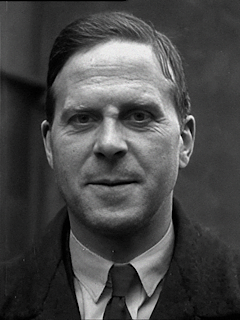
James Ryan, medical doctor, revolutionary and politician who serves in every Fianna Fáil government from 1932 to 1965, dies on his farm at Kindlestown, County Wicklow, on September 25, 1970.

Ryan is born on the family farm at Tomcoole, near TaghmonCounty Wexford, on December 6, 1892. The second-youngest of twelve children, he is educated at St. Peter’s College, Wexford, and Ring College, Waterford. In 1911, he wins a county council scholarship to University College Dublin (UCD) where he studies medicine.

In March 1917, Ryan passes his final medical examinations. That June he sets up medical practice in Wexford. In 1921, he moves to Dublin where he opens a doctor’s practice at Harcourt Street, specialising in skin diseases at the Skin and Cancer Hospital on Holles Street. He leaves medicine in 1925, after he purchases Kindlestown, a large farm near Delgany, County Wicklow. He lives there and it remains a working farm until his death.

In July 1919, Ryan marries Máirín Cregan, originally from County Kerry and a close friend of Sinéad de Valera throughout her life. Cregan, like her husband, also fought in the Easter Rising and is subsequently an author of children’s stories in Irish. They have three children together.

One of Ryan’s sisters, Mary Kate, marries Seán T. O’Kelly, one of Ryan’s future cabinet colleagues and a future President of Ireland. Following her death O’Kelly marries her sister, Phyllis Ryan. Another of Ryan’s sisters, Josephine (‘Min’) Ryan, marries Richard Mulcahy, a future leader of Fine Gael. Another sister, Agnes, marries Denis McCullough, a Cumann na nGaedheal TD from 1924 to 1927. He is also the great-grandfather of Ireland and Leinster Rugby player James Ryan.

While studying at university in 1913, Ryan joins the Gaelic League at Clonmel. The company commander recruits the young Catholic nationalist, who becomes a founder-member of the Irish Volunteers and is sworn into the Irish Republican Brotherhood (IRB) the following year. In 1916, he goes first to Cork to deliver a message from Seán Mac Diarmada to Tomás Mac Curtain that the Easter Rising is due to happen on Easter Sunday, then to Cork again in a 12-hour journey in a car to deliver Eoin MacNeill‘s cancellation order, which attempts to stop the rising. When he arrives back on Tuesday, he serves as the medical officer in the General Post Office (GPO) and treats many wounds, including James Connolly‘s shattered ankle, a wound which gradually turns gangrenous. He is, along with Connolly, one of the last people to leave the GPO when the evacuation takes place. Following the surrender of the garrison, he is deported to HM Prison Stafford in England and subsequently Frongoch internment camp. He is released in August 1916.

Ryan rejoins the Volunteers immediately after his release from prison, and in June 1917, he is elected Commandant of the Wexford Battalion. His political career begins the following year when he is elected as a Sinn Féin candidate for the constituency of South Wexford in the 1918 United Kingdom general election in Ireland. Like his fellow Sinn Féin MPs, he refuses to attend the Westminster Parliament. Instead he attends the proceedings of the First Dáil on January 21, 1919. As the Irish War of Independence goes on, he becomes Brigade Commandant of South Wexford and is also elected to Wexford County Council, serving as chairman on one occasion. In September 1919, he is arrested by the British and interned on Spike Island and later Bere Island. In February 1921, he is imprisoned at Kilworth Internment Camp, County Cork. He is later moved on Ballykinlar Barracks in County Down and released in August 1921.

In the 1922 Irish general election, Ryan and one of the other two anti-Treaty Wexford TDs lose their seats to pro-Treaty candidates. During the Irish Civil War, he is arrested and held in Mountjoy Prison before being transferred to Curragh Camp, where he embarks on a 36-day hunger strike. While interned he wins back his Dáil seat as an abstentionist at the 1923 Irish general election. He is released from prison in December 1923.

In 1926, Ryan is among the Sinn Féin TDs who follow leader Éamon de Valera out of the party to found Fianna Fáil. They enter the Dáil in 1927 and spend five years on the opposition benches.

Following the 1932 Irish general election, Fianna Fáil comes to office and Ryan is appointed Minister for Agriculture, a position he continuously holds for fifteen years. He faces severe criticism over the Anglo-Irish trade war with Britain as serious harm is done to the cattle trade, Ireland’s main export earner. The trade war ends in 1938 with the signing of the Anglo-Irish Trade Agreement between both governments, after a series of talks in London between the British Prime Minister Neville Chamberlain, de Valera, Ryan and Seán Lemass.

In 1947, after spending fifteen years as Minister for Agriculture, Ryan is appointed to the newly created positions of Minister for Health and Minister for Social Welfare. Following Fianna Fáil’s return to power at the 1951 Irish general election, he returns as Minister for Health and Social Welfare. Following the 1954 Irish general election, Fianna Fáil loses power and he moves to the backbenches once again.

Following the 1957 Irish general election, Fianna Fáil are back in office and de Valera’s cabinet has a new look to it. In a clear message that there will be a change to economic policy, Ryan, a close ally of Seán Lemass, is appointed Minister for Finance, replacing the conservative Seán MacEntee. The first sign of a new economic approach comes in 1958, when Ryan brings the First Programme for Economic Development to the cabinet table. This plan, the brainchild of T. K. Whitaker, recognises that Ireland will have to move away from self-sufficiency toward free trade. It also proposes that foreign firms should be given grants and tax breaks to set up in Ireland.

When Lemass succeeds de Valera as Taoiseach in 1959, Ryan is re-appointed as Minister for Finance. Lemass wants to reward him for his loyalty by also naming him Tánaiste. However, the new leader feels obliged to appoint MacEntee, one of the party elders to the position. Ryan continues to implement the First Programme throughout the early 1960s, achieving a record growth rate of 4 percent by 1963. That year an even more ambitious Second Programme is introduced. However, it overreaches and has to be abandoned. In spite of this, the annual growth rate averages five percent, the highest achieved since independence.

Ryan does not stand in the 1965 Irish general election, after which he is nominated by the Taoiseach to Seanad Éireann, where he joins his son, Eoin Ryan Snr. At the 1969 dissolution he retires to his farm at Kindlestown, County Wicklow, where he dies at age 77 on September 25, 1970. He is buried at Redford Cemetery, Greystones, County Wicklow. His grandson, Eoin Ryan Jnr, serves in the Oireachtas from 1989 to 2007 and later in the European Parliament from 2004 to 2009.


Leave a comment

Death of Charlie Hurley, OC of the IRA’s 3rd Cork Brigade

Charles Hurley (Irish: Cathal Ó Muirthile), Officer Commanding of the 3rd Cork Brigade (West Cork) of the Irish Republican Army (IRA) during the Irish War of Independence (1919–21), is killed by British Army troops on March 19, 1921. 

Hurley is born in Baurleigh, County Cork, near the village of Kilbrittain, on March 20, 1893, and is educated in the national school and subsequently passes the civil service examinations at age fifteen. According to his brother James, he is one of seven siblings, “born and reared in a farm of 35 acres.”

In his adolescence, Hurley becomes a clerk working for the government. In 1915, he is offered a promotion and a transfer to Haulbowline Island but declines on the grounds that this entails enlisting in the Royal Navy, albeit in a purely administrative role. Returning to Cork, he becomes friends with Liam Deasy who introduces him to the Irish republican movement. In 1917, he takes a job at Castletownbere and it is there that he joins the Irish Volunteers in 1917. He is also a member of Sinn Féin, the Gaelic Athletic Association (GAA) and the Gaelic League (Conradh na Gaeilge).

In 1918, Hurley is sentenced to five years penal servitude for possession of arms and plans of the British military fortifications at Bere Island. However, he is released in 1919 following a hunger strike. In the same year, his brother Willie, also an IRA Volunteer, dies of typhoid fever. He first becomes vice-commandant of the Volunteers or IRA Bandon Battalion and then in August 1920, after the arrest and imprisonment of Tom Hales, he becomes commander of the Third Cork Brigade of the IRA. One of his most important decisions is to establish a full-time guerrilla unit or flying column, under Tom Barry.

The 3rd Cork Brigade (also known as the West Cork Brigade) goes on to be one of the most active IRA units during the guerrilla war against the British in 1919–21. According to Barry, Hurley leads an ambush of the Royal Irish Constabulary (RIC) at Ahawadda in April 1920, killing three policemen, wounding one and taking their arms and ammunition. In July of that same year, he leads a successful attack on the Coastguard station at Howes Strand, capturing a large number of weapons and ammunition. Barry remarks that Hurley is “a remarkable man and a lovable personality” and “continually urged a fighting army policy.” 

Hurley is present at the Tooreen ambush in October 1920 and subsequently is part of an assassination attempt on a judge who gives “harsh sentences” to IRA members. From December 1920 until January 1921, he takes command of the 3rd Cork Brigade’s flying column while Barry is ill. He also tours IRA units to assess the impact of the decree of excommunication on the guerrilla movement issued by Catholic Bishop of Cork, Daniel Cohalan.

In February 1921, Hurley leads the disastrous Upton train ambush on February 15, 1921, an attack on a train carrying British troops. In the action, the attacking IRA party is heavily outnumbered and the firefight results in three IRA men and six civilians being killed. He is also badly wounded in the face and ankle. Barry writes of the aftermath of the ambush that “he (Hurley) mourned deeply for his dead comrades and for the dead civilians, whom he did not know.”

Hurley is killed in action by British troops just before the Crossbarry ambush on March 19, 1921. He is staying in a house with a pro-republican family, where he is recuperating from the serious wounds he had received at Upton a month earlier. When he realises that he is surrounded by the British forces, he flees the house, as Barry comments in his book, to reduce the danger to those in the house, and is shot dead by pursuing troops. Barry remarks that he “died in the manner in which we expected.” 

The British Army places Hurley’s body at the workhouse in Bandon. However, members of Cumann na mBan surreptitiously take his body and he is given a secret republican funeral in Clogagh. A local ballad exists that commemorates him. In addition, the Gaelic Athletic Association grounds in Bandon is named after him in 1971.


Leave a comment

Birth of Writer Pádraig Ó Siochfhradha

padraig-o-siochfhradha

Pádraig Ó Siochfhradha, writer under the pseudonym An Seabhac and promoter of the Irish language, is born in the Gaeltacht near Dingle, County Kerry on March 10, 1883. His brother, Mícheál Ó Siochfhradha is also a writer, teacher, and Irish language storyteller.

Ó Siochfhradha becomes an organiser for Conradh na Gaeilge, cycling all over the countryside to set up branches and promote the Irish language. As a writer, he takes the penname An Seabhac, the Hawk, writing books including An Baile Seo Gainne (1913) and Jimín Mháire Thaidhg (1921), both of which draw on his Dingle youth and are later published in one volume as Seoda an tSeabhaic (1974).

Ó Siochfhradha is a prominent and influential figure of early 20th century Irish culture, a key populariser of the Irish Revival. He is an author, storyteller, folklorist, activist and politician.

Ó Siochfhradha’s nickname is thought to be a consequence of his years as a travelling teacher, when he adopts it as a pseudonym for the writing of his most famous book Jimín Mháire Thaidhg. This book, known in its English translation as Jimeen, is a fictionalised account of life growing up in the country, which follows the tribulations and misadventures of a young boy who cannot stay out of trouble.

Ó Siochfhradha works as a teacher from 1910 until 1922 in Kildare and in the Fermoy region of Kerry. He also works as an editor of The Light, a bilingual magazine which lasts six years, from 1907 to 1913. He is a member of Conradh na Gaeilge from early in his life and a frequent member of the League of Employment, which is an outgrowth of Conradh na Gaeilge. In 1911, a resolution, proposed by him and a colleague, is adopted that helps set the agenda for the ongoing revival of the Irish language. The proposal is to teach Irish to children of secondary school age as a living language rather than an antique one. This strategy persists to the present day.

Ó Siochfhradha becomes an active organiser for the Irish Volunteers in 1913 and is imprisoned three times for his activities. He spends time in Durham Prison in England and on Bere Island, County Cork.

In 1922 Ó Siochfhradha moves to Dublin under the auspices of the Department of Education. It is around this time that he is thought to have taken up residence in 119 Morehampton Road, Donnybrook, where he remains for the rest of his life. He continues to stay active in a large number of writing and political projects. He is secretary to the Irish Manuscripts Commission from October 1928 to October 1932.

During the Irish Civil War, it is said Ó Siochfhradha does his best to reconcile the opposing sides of the conflict. His political sympathies are primarily republican, and he spends a great deal of energy in the 1920s establishing Irish-speaking schools in Dublin. He is a member of Seanad Éireann from 1946–1948, 1951–1954 and 1957–1964, being personally nominated by his friend Taoiseach Éamon de Valera, on each occasion.

Ó Siochfhradha dies on November 19, 1964. His personal papers are on loan to Tralee Library and his archive has been digitised and stored by the University of Limerick.

(From: Stair na hÉireann/History of Ireland (https://stairnaheireann.net), “Pádraig Ó Siochfhradha – An Seabhac”)