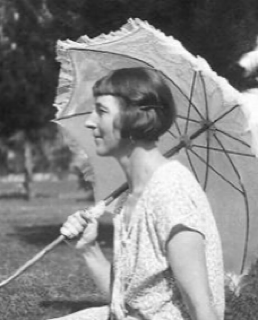
In 1910, Elvery moves to South Africa to marry Hobart Kay, FRCS. By 1916 they have settled in Port Elizabeth.
Kay is a founder member of the Eastern Province Society of Arts and Crafts. In 1924 she is elected a member of the Royal British Colonial Society of Artists. She paints and makes etchings, and in 1926 her etching Romance is bought by Mary of Teck, Queen of the United Kingdom, at the Dominion Artists’ Exhibition in London. She travels widely in South Africa and sketches as she goes, and is also commissioned to make many portraits of mayors of Port Elizabeth, many of them lost when the City Hall burns down in 1977. During World War II she is commissioned by the government to record the war on the home front, and some of her work is held in the South African National Museum of Military History. From 1927 to 1945 she produces two to four illustrations each week for The Outspan.
Kay’s largest painting is the 1937 work Surgery, showing a patient undergoing abdominal surgery (a cholecystectomy). She portrays herself as the scrub nurse and her husband Hobart as the surgeon. In preparation for this painting she visits three hospitals and observes at least two operations, making 27 pages of preliminary sketches of people and equipment used in surgery. During World War II she paints further medical paintings: Operation in a Base Hospital and Blood to Save Lives.
Kay holds one-woman exhibitions from 1922 to 1955, and retrospective exhibitions of her work are held at the Iziko South African National Gallery in 1965 and 1982.
In her early days at Port Elizabeth, Kay is a keen sailor and is described as “for a time the fastest spinnaker-hand in South Africa.”
Kay has three daughters and one son. Her daughter Joan Wright (1911-91) teaches painting at the Port Elizabeth Technical College School of Art and Design, and her daughter Marjorie Reynolds writes and publishes a biography of her mother in 1989, and a further book about the Elvery family in 1991, and also donates her mother’s collection of works and archives to the Iziko South African National Gallery as “The Kay Bequest” in 1992.
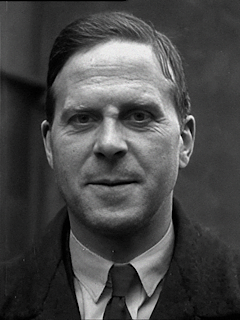
In March 1917, Ryan passes his final medical examinations. That June he sets up medical practice in Wexford. In 1921, he moves to Dublin where he opens a doctor’s practice at Harcourt Street, specialising in skin diseases at the Skin and Cancer Hospital on Holles Street. He leaves medicine in 1925, after he purchases Kindlestown, a large farm near Delgany, County Wicklow. He lives there and it remains a working farm until his death.
In July 1919, Ryan marries Máirín Cregan, originally from County Kerry and a close friend of Sinéad de Valera throughout her life. Cregan, like her husband, also fought in the Easter Rising and is subsequently an author of children’s stories in Irish. They have three children together.
While studying at university in 1913, Ryan joins the Gaelic League at Clonmel. The company commander recruits the young Catholicnationalist, who becomes a founder-member of the Irish Volunteers and is sworn into the Irish Republican Brotherhood (IRB) the following year. In 1916, he goes first to Cork to deliver a message from Seán Mac Diarmada to Tomás Mac Curtain that the Easter Rising is due to happen on Easter Sunday, then to Cork again in a 12-hour journey in a car to deliver Eoin MacNeill‘s cancellation order, which attempts to stop the rising. When he arrives back on Tuesday, he serves as the medical officer in the General Post Office (GPO) and treats many wounds, including James Connolly‘s shattered ankle, a wound which gradually turns gangrenous. He is, along with Connolly, one of the last people to leave the GPO when the evacuation takes place. Following the surrender of the garrison, he is deported to HM Prison Stafford in England and subsequently Frongoch internment camp. He is released in August 1916.
Ryan rejoins the Volunteers immediately after his release from prison, and in June 1917, he is elected Commandant of the Wexford Battalion. His political career begins the following year when he is elected as a Sinn Féin candidate for the constituency of South Wexford in the 1918 United Kingdom general election in Ireland. Like his fellow Sinn Féin MPs, he refuses to attend the Westminster Parliament. Instead he attends the proceedings of the First Dáil on January 21, 1919. As the Irish War of Independence goes on, he becomes Brigade Commandant of South Wexford and is also elected to Wexford County Council, serving as chairman on one occasion. In September 1919, he is arrested by the British and interned on Spike Island and later Bere Island. In February 1921, he is imprisoned at Kilworth Internment Camp, County Cork. He is later moved on Ballykinlar Barracks in County Down and released in August 1921.
In 1926, Ryan is among the Sinn Féin TDs who follow leader Éamon de Valera out of the party to found Fianna Fáil. They enter the Dáil in 1927 and spend five years on the opposition benches.
In 1947, after spending fifteen years as Minister for Agriculture, Ryan is appointed to the newly created positions of Minister for Health and Minister for Social Welfare. Following Fianna Fáil’s return to power at the 1951 Irish general election, he returns as Minister for Health and Social Welfare. Following the 1954 Irish general election, Fianna Fáil loses power and he moves to the backbenches once again.
Following the 1957 Irish general election, Fianna Fáil are back in office and de Valera’s cabinet has a new look to it. In a clear message that there will be a change to economic policy, Ryan, a close ally of Seán Lemass, is appointed Minister for Finance, replacing the conservative Seán MacEntee. The first sign of a new economic approach comes in 1958, when Ryan brings the First Programme for Economic Development to the cabinet table. This plan, the brainchild of T. K. Whitaker, recognises that Ireland will have to move away from self-sufficiency toward free trade. It also proposes that foreign firms should be given grants and tax breaks to set up in Ireland.
When Lemass succeeds de Valera as Taoiseach in 1959, Ryan is re-appointed as Minister for Finance. Lemass wants to reward him for his loyalty by also naming him Tánaiste. However, the new leader feels obliged to appoint MacEntee, one of the party elders to the position. Ryan continues to implement the First Programme throughout the early 1960s, achieving a record growth rate of 4 percent by 1963. That year an even more ambitious Second Programme is introduced. However, it overreaches and has to be abandoned. In spite of this, the annual growth rate averages five percent, the highest achieved since independence.
Ryan does not stand in the 1965 Irish general election, after which he is nominated by the Taoiseach to Seanad Éireann, where he joins his son, Eoin Ryan Snr. At the 1969 dissolution he retires to his farm at Kindlestown, County Wicklow, where he dies at age 77 on September 25, 1970. He is buried at Redford Cemetery, Greystones, County Wicklow. His grandson, Eoin Ryan Jnr, serves in the Oireachtas from 1989 to 2007 and later in the European Parliament from 2004 to 2009.
Crilley is born in Newry, County Down, (present-day Northern Ireland), on August 1, 1884, one of six children of Patrick Crilley. Her date of birth is often given as July 29, 1888, though local records do not support this, suggesting she is born four years earlier. Having initially trained at Newry technical school with her sister Mary, intending to become a teacher, in 1905, she wins a scholarship to attend the Dublin Metropolitan School of Art. There she studies under William Orpen, who regards her as one of his most promising students. She completes her studies in 1911 attaining an Art Teacher’s Certificate and begins working as Orpen’s assistant.
In 1914, Crilley marries her fellow student Harry Clarke, much to the surprise of their family and acquaintances. The couple moves into a flat at 33 North Frederick Street. They have three children, Michael, David and Ann. Harry’s brother, Walter, marries Margaret’s sister, Mary, in 1915.
Clarke first exhibits with the Royal Hibernian Academy in 1913 and goes on to exhibit over 60 artworks in the forty years until 1953, the majority being portraits. Among the portrait commissions she receives are ones for Dermod O’Brien, President Éamon de Valera, ArchbishopJohn Charles McQuaid, and Lennox Robinson. She spends a great deal of time on the Aran Islands with fellow artist Seán Keating and her husband, from which she produces a number of landscapes and smaller studies.
Clarke becomes the director of the Harry Clarke Stained Glass Studios following the death of her husband in 1931.
A critic notes in 1939 that Clarke produces “remarkable drawings in which individuality is caught in a few swift economical lines.” Over her lifetime she wins many awards including the Tailteann gold, silver and bronze medals in 1924, and another Tailteann bronze in both 1928 and 1932. She is elected an Associate of the Royal Hibernian Academy (ARHA) in 1926, and a full RHA member in 1927. Upon the founding of the Irish Exhibition of Living Art in 1943, she is appointed a member of the executive committee.
Clarke dies in Dublin on 31 October 31, 1961, and is buried in the Redford Cemetery, Greystones, County Wicklow. She is commemorated with a blue plaque at her birthplace in Newry.
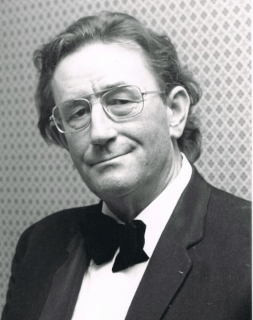
Potter is born in Belfast on September 22, 1918, to a Presbyterian family who, oddly, lives on the Falls Road, a republican (Catholic) stronghold. His father is a church organist and piano tuner who has been blind since childhood. His mother is, in Potter’s own words, “a raging alcoholic.” He escapes a rather grim childhood when he goes to live with an aunt in Kent, England.
Potter had already started composing chamber and vocal music before the war. Now, established in Dublin, he chooses the orchestra as his principal means of expression. His early pieces, such as Rhapsody under a High Sky and Overture to a Kitchen Comedy, show that he has absorbed Vaughan Williams’ pastoral style and his love of folk music. In 1952, both pieces are awarded Radio Éireann‘s “Carolan Prize” for orchestral composition by the adjudicatorArnold Bax. A year later Potter repeats this success when his Concerto da Chiesa, a concerto for piano and orchestra, also wins the Carolan Prize.
In 1955 Potter is appointed Professor of Composition at the Royal Irish Academy of Music, where he becomes an effective administrator and inspiring teacher.
In the 1960s, Potter turns to ballet, writing four orchestral scores for the Cork Ballet company. The first of these, Careless Love, becomes the composer’s own favourite of all his compositions. Several years later, following a successful battle with alcoholism, he writes what some regard as his magnum opus, Sinfonia “de Profundis” (1969). The première is given at the Gaiety Theatre, Dublin on March 23, 1969, in a performance by the RTÉ Symphony Orchestra under the baton of Albert Rosen. The Irish Times refers to the concert as a “major national event.” In December 1969, he receives a Jacob’s Award for the composition.
Potter’s last substantial work, an opera entitled The Wedding, receives its first public performance in Dublin in 1981, almost a year after his death.
Potter dies suddenly at his home in Greystones, County Wicklow on July 5, 1980, at the age of 61. He is buried in the nearby Redford cemetery.
Potter is born to a Presbyterian family who, oddly, lives on the Falls Road, a republican (Catholic) stronghold. His father is a church organist and piano tuner who has been blind since childhood. His mother is, in Potter’s own words, “a raging alcoholic.” He escapes a rather grim childhood when he goes to live with an aunt in Kent, England.
Potter had already started composing chamber and vocal music before the war. Now, established in Dublin, he chooses the orchestra as his principal means of expression. His early pieces, such as Rhapsody under a High Sky and Overture to a Kitchen Comedy, show that he has absorbed Vaughan Williams’ pastoral style and his love of folk music. In 1952, both pieces are awarded Radio Éireann‘s “Carolan Prize” for orchestral composition by the adjudicatorArnold Bax. A year later Potter repeats this success when his Concerto da Chiesa, a concerto for piano and orchestra, also wins the Carolan Prize.
In 1955 Potter is appointed Professor of Composition at the Royal Irish Academy of Music, where he becomes an effective administrator and inspiring teacher.
In the 1960s, Potter turns to ballet, writing four orchestral scores for the Cork Ballet company. The first of these, Careless Love, becomes the composer’s own favourite of all his compositions. Several years later, following a successful battle with alcoholism, he writes what some regard as his magnum opus, Sinfonia “de Profundis” (1969). The première is given at the Gaiety Theatre, Dublin on March 23, 1969 in a performance by the RTÉ Symphony Orchestra under the baton of Albert Rosen. The Irish Times refers to the concert as a “major national event.” In December 1969, he receives a Jacob’s Award for the composition.
Potter’s last substantial work, an opera entitled The Wedding, receives its first public performance in Dublin in 1981, almost a year after his death.
Potter dies suddenly at his home in Greystones, County Wicklow on July 5, 1980, at the age of 61. He is buried in the nearby Redford cemetery.
Drew is most recognised for his lead vocals on the singles “Seven Drunken Nights” and “The Irish Rover,” both charting in the UK top 10 and then performed on Top of the Pops. He is recognisable for his long beard and his voice, which was once described by Nathan Joseph as being “like the sound of coke being crushed under a door.”
Drew is born in Dún Laoghaire, County Dublin on September 16, 1934, and is educated at CBS Eblana. Despite his aversion to education, he is considered the most intelligent in his class by schoolfriend and future Irish film censor, Sheamus Smith. Drew also sings as a boy soprano before his voice breaks.
In the 1950s, Drew moves to Spain to teach English and learn Spanish and flamenco guitar. His interest in folk music begins at the age of nineteen. When he returns to Ireland, he performs in the Gate Theatre with John Molloy and soon goes into the music business full-time, after holding a number of short-term jobs.
In 1962, he founds the Ronnie Drew Group with Luke Kelly, Barney McKenna and Ciarán Bourke. They soon change their name to The Dubliners, with John Sheahan joining shortly afterwards to form the definitive line-up and quickly become one of the best-known Irish folk groups. They play at first in O’Donoghue’s Pub in Merrion Row, Dublin where they are often accompanied by Mary Jordan on the spoons and vocalist Ann Mulqueen, a friend of McKenna’s. Mary Jordan’s mother, Peggy Jordan, introduces them to the Abbey Tavern in Howth, which becomes a regular Monday night venue for the emerging group. They also play across the road in the Royal Hotel, at all-night parties in Peggy’s large house in Kenilworth Square in Rathgar, and in John Molloy’s flat at Ely Place.
Drew leaves the Dubliners in 1974, goes to Norway in 1978 and records two songs with the Norwegian group Bergeners. He rejoins The Dubliners in 1979 and leaves for good in 1995, though he does reunite with the group in 2002 for a 40th anniversary celebration. He makes several television appearances with the group between 2002 and 2005.
He fronts a campaign to encourage the use of Dublin’s light-rail infrastructure (the DART) and, before that, the “My Dublin” ads for radio stations 98FM and FM104. He narrates a retelling of the great Irish Myths and Legends over a six CD set in 2006. He also narrates the stories of Oscar Wilde in his distinctive voice for a series released on CD by the News of the World newspaper. Both were re-released as CD box sets in 2010.
On August 22, 2006, Drew is honoured in a ceremony where his handprints are added to the “Walk of Fame” outside Dublin‘s Gaiety Theatre.
In September 2006, Drew is reported to be in ill-health after being admitted to St. Vincent’s University Hospital, Dublin, to undergo tests for suspected throat cancer. On October 25, 2007, Drew, now bald and beardless, appears on Ryan Confidential on RTÉ One to give an interview about his role in The Dubliners, his life since leaving the band and being diagnosed with throat cancer. Later in 2007, he appears on The Late Late Show, where he speaks about the death of his wife and his ongoing treatment for cancer.
Ronnie Drew dies in St. Vincent’s University Hospital, Dublin, on August 16, 2008, following his long illness. He is buried three days later in Redford Cemetery in Greystones.