seamus dubhghaill

Promoting Irish Culture and History from Little Rock, Arkansas, USA


Leave a comment

Birth of Irish Artist Estella Solomons

Estella Frances Solomons, one of the leading Irish artists of her generation, is born into a prominent Jewish family in Dublin on April 2, 1882. She is noted for her portraits of contemporaries in the republican movement and her studio is a safe house during the Irish War of Independence.

Solomons is born to Maurice Solomons and poet Rosa Jane Jacobs. Her father is an optician whose practice in 19 Nassau Street, Dublin, is mentioned in Ulysses. Her father is also the Vice-Consul of Austria-Hungary. The Solomons family, who came to Dublin from England in 1824, are one of the oldest continuous lines of Jews in Ireland.

Solomons grandmother, Rosa Jacobs Solomons, who is born in Hull in England, is the author of a book called Facts and Fancies (Dublin 1883). Her brother, Bethel Solomons, a renowned physician, a master of the Rotunda Hospital and Irish international rugby player, is mentioned in Finnegans Wake. Her brother Edwin is a stockbroker and prominent member of the Dublin Jewish community. Her younger sister Sophie is a trained opera singer. A portrait of Sophie, by her cousin the printmaker Louise Jacobs, survives in the Estella Solomons archives in the Library of Trinity College Dublin (TCD).

In 1898, at the age of 16, Solomons enters the Dublin Metropolitan School of Art where she wins a significant prize. Her classmates include future Irish artists including Mary Swanzy, Eva Hamilton and William J. Leech. She also attends the Chelsea School of Art from 1903 to 1906. A visit to the tercentenary exhibition of the work of Rembrandt in Amsterdam in 1903 impacts her creative practice and possibly influences her adoption of printmaking as her principal vehicle of expression. She studies under two of Ireland’s leading artists, Walter Osborne, who is another major influence, and William Orpen. With her friends Cissie Beckett (aunt of Samuel Beckett) and Beatrice Elvery, she goes to study in Paris at Académie Colarossi. On her return she exhibits in Leinster Hall, Molesworth Street, with contemporaries such as Beatrice Elvery, Eva Hamilton and Grace Gifford. Her work is also included in joint exhibitions with other artists at Mills Hall and the Arlington Gallery, London. She also exhibits at her Great Brunswick Street studio in December 1926.

Solomons illustrates Padraic Colum‘s The Road Round Ireland (1926) and DL Kelleher’s The Glamour of Dublin in 1928. Originally published after the devastation of the 1916 Easter Rising, the later edition features eight views of familiar locations in the city centre including Merchant’s Arch and King’s Inns. Her etching “A Georgian Doorway” is included in Katherine MacCormack’s Leabhar Ultuin in 1920. This publication features illustrations by several prominent Irish artists and is sold in aid of the new Saint Ultan’s Children’s Hospital in Charlemont Street, Dublin, that had been founded by two prominent members of Cumann na mBan, Dr. Kathleen Lynn and Madeleine ffrench-Mullen.

Solomons paints landscapes and portraits, including of artist Jack Yeats, politician Arthur Griffith, poet Austin Clarke, and writers James Stephens and George Russell (Æ).

Solomons is elected an associate of the Royal Hibernian Academy (RHA) in July 1925, but it is not until 1966 that she is elected an honorary member. Her work is included in the Academy’s annual members’ exhibition every year for sixty years.

Solomons is married to poet and publisher Seumas O’Sullivan, whose birth name is James Sullivan Starkey. Her parents oppose the relationship as O’Sullivan is not of the Jewish faith. They marry in 1925, when she is 43 and he 46, after her parents have died. She collaborates with her husband on The Dublin Magazine (1923–58), the renowned literary and art journal, of which O’Sullivan is editor for 35 years. She provides vital financial support to the magazine, particularly in sourcing advertising, which is difficult in the tough economic climate of the new Free State. She is helped in this endeavour by poet and writer, Kathleen Goodfellow, a lifelong friend. When Solomons and O’Sullivan are looking to move from their house in Rathfarnham because of a damp problem, Goodfellow offers them the house beside her own on Morehampton Road for a nominal rent. Two of Solomons’ portraits of Goodfellow are in the Model Arts and Niland Gallery in Sligo.

Solomons joins the Ranelagh branch of Cumann na mBan at the same time as Goodfellow. They are taught first aid, drilling and signaling by Phyllis Ryan. She is active before and during the Irish War of Independence. She conceals ammunition in the family vegetable garden before delivering it to a Sinn Féin agent. Her studio at Great Brunswick Street is used as a safe house by republican volunteers. During this time, she paints the portraits of a number of revolutionaries, some of which she has to later destroy to avoid incriminating them. Her work includes a portrait of Frank Aiken when we was chief of staff of the Irish Republican Army (IRA).

Solomons takes up a teaching position at Bolton Street College, Dublin. In 1939, she organises an exhibition in Dublin to help refugee artists from Europe.

Solomons dies on November 2, 1968, and is buried in Woodtown Cemetery, Rathfarnham. Her friend Kathleen Goodfellow gifts the Morehampton Road Wildlife Sanctuary, where Solomons liked to paint, to An Taisce. Two plaques have subsequently been erected there, one in memory of Solomons and one for Goodfellow.

Some of Solomons works are held in the Niland Collection, at The Model gallery in Sligo and in the National Gallery of Ireland. Her archives, which include artwork and photographs (and prints by Louise Jacobs), and the archives of The Dublin Magazine are in the Library of Trinity College Dublin.

Leave a comment

Birth of Bethel Solomons, Medical Doctor & Rugby Player

Bethel Albert Herbert Solomons, gynaecologist and international rugby player for the Ireland national rugby union team, is born into a prominent Jewish family, one of the oldest continuous Jewish families in Ireland, at 32 Waterloo Road, Dublin, on February 27, 1885. He is also a supporter of the 1916 Easter Rising.

The Solomons come to Ireland from England in 1824. Solomons is the son of Maurice Solomons (1832–1922), an optician whose practice is mentioned in James Joyce‘s Ulysses. His grandmother, Rosa Jacobs Solomons (1833–1926), is born in Hull in England. His elder brother Edwin (1879–1964) is a stockbroker and prominent member of the Dublin Jewish community. His sister Estella Solomons (1882–1968) is a leading artist, and a member of Cumann na mBan during the 1916 Easter Rising. She marries poet and publisher Seumas O’Sullivan. His younger sister Sophie is a trained opera singer.

Solomons attends St. Andrew’s College, Dublin, where he is very interested in rugby. He earns ten international rugby caps for Ireland between 1908 and 1910. He studies medicine at Trinity College, Dublin, becomes a medical doctor, and is Master of the Rotunda Hospital in Dublin from 1926 to 1933, surprising those who felt that a Jew would never hold the post. When his term ends in 1933, his name is intimately linked with that of the hospital when James Joyce writes in Finnegans Wake, “in my bethel of Solyman’s I accouched my rotundaties.” He serves as president of the Royal College of Physicians of Ireland (RCPI) in the late 1940s and practices from No. 30 Lower Baggot Street.

In a biography of Solomons he is described as “World famous obstetrician & gynaecologist, Rugby international, horseman, leader of Liberal Jewry & of Irish literary & artistic renaissance.”

Following a brief courtship, Solomons marries Gertrude Levy, who had studied with his sister Sophie at the Royal Academy of Music, London, in the liberal synagogue in London in 1916. His second son, Dr. Michael Solomons (1919–2007), is a distinguished gynaecologist, a pioneer of family planning in Ireland, and a veteran of the bitter and divisive 1983 constitutional amendment campaign.

Solomons is a friend of the founder of Sinn Féin and TD, Arthur Griffith. He contributes to the purchase of a house for Griffith. He is a founding member and the first president of the Liberal Synagogue in Dublin. He establishes a dispensary for Jewish women with Ada Shillman. In retirement he is inspector of qualifying examinations and visitor of medical schools in midwifery for the general medical council. A volume of memoirs is published in 1956. He is an art collector, including the works of Jean Cooke.

Solomons dies on September 11, 1965, at his home, Laughton Beg, Rochestown Avenue, Dún Laoghaire. The Bethel Solomons medal is awarded annually to an outstanding student in midwifery at the hospital.


Leave a comment

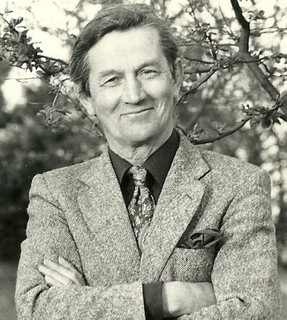
Birth of Noël Christopher Browne, Irish politician

Noël Christopher Browne, Irish politician who serves as Minister for Health from 1948 to 1951 and Leader of the National Progressive Democrats from 1958 to 1963, is born at Bath Street in Waterford, County Waterford, on December 20, 1915. He holds the distinction of being one of only seven TDs to be appointed to the cabinet on the start of their first term in the Dáil.

Browne grows up in the Bogside area of Derry. The Browne family also lives in Athlone and Ballinrobe for a period of time. His mother Mary Therese (née Cooney) is born in 1885 in Hollymount, County Mayo. His father Joseph Brown, a Royal Irish Constabulary (RIC) sergeant, later works as an inspector for the National Society for the Prevention of Cruelty to Children and, partly as a result of this work, all of the Browne family becomes infected with tuberculosis. Both parents die of the disease during the 1920s. His father is the first to die, leaving only £100 behind to support a wife and seven children. Fearing that if she and the children remain in Ireland they will be forced into a workhouse, Mary sells all their possessions and takes the family to London. Within two days of their arrival, Mary is dead, later buried in a pauper’s grave. Of her seven children, six contract tuberculosis. Noël is only one of two Browne children to survive into adulthood after those bouts with TB.

In 1929, Browne is admitted free of charge to St. Anthony’s, a preparatory school in Eastbourne, England. He then wins a scholarship to Beaumont College, the Jesuit public school near Old Windsor, Berkshire, where he befriends Neville Chance, a wealthy boy from Dublin. Neville’s father, the eminent surgeon Arthur Chance, subsequently pays Browne’s way through medical school at Trinity College Dublin.

In 1940, while still a student, Browne suffers a serious relapse of tuberculosis. His treatment at a sanatorium in Midhurst, Sussex is paid for by the Chance family. He recovers, passes his medical exams in 1942, and starts his career as a medical intern at Dr. Steevens’ Hospital in Dublin, where he works under Bethel Solomons. He subsequently works in numerous sanatoria throughout Ireland and England, witnessing the ravages of the disease. He soon concludes that politics is the only way in which he can make an attack on the scourge of tuberculosis.

The poverty and tragedy that had shaped Browne’s childhood deeply affects him. He considers both his survival and his level of education a complete fluke, a stroke of random chance that saved him when he was seemingly destined to die unknown and in poverty like the rest of his family. He finds this completely distasteful and is moved to enter politics as a means to ensure no one else would suffer the same fate that had befallen his family.

Browne joins the new Irish republican party Clann na Poblachta and is elected to Dáil Éireann for the Dublin South-East constituency at the 1948 Irish general election. To the surprise of many, party leader, Seán MacBride, chooses him to be one of the party’s two ministers in the new government. He becomes one of the few TDs appointed a Minister on their first day in Dáil Éireann, when he is appointed Minister for Health.

A ‘White Paper’ on proposed healthcare reforms had been prepared by the previous government, and results in the 1947 Health Act. In February 1948, Browne becomes Minister for Health and starts the reforms advocated by the Paper and introduced by the Act.

The health reforms coincide with the development of a new vaccine and of new drugs (e.g., BCG and penicillin) that help to treat a previously untreatable group of medical conditions. Browne introduces mass free screening for tuberculosis sufferers and launches a huge construction program to build new hospitals and sanitoria, financed by the income and accumulated investments from the Department of Health-controlled Hospital Sweeps funds. This, along with the introduction of Streptomycin, helps dramatically reduce the incidence of tuberculosis in Ireland.

As Minister for Health Browne comes into conflict with the bishops of the Catholic Church and the medical profession over the Mother and Child Scheme. This plan, also introduced by the 1947 Health Act, provides for free state-funded healthcare for all mothers and children aged under 16, with no means test, a move which is regarded as radical at the time in Ireland, but not in the rest of Europe. Virtually all doctors in private practice oppose the scheme, because it would undermine the “fee for service” model on which their income depended.

The Church hierarchy, which controls many hospitals, vigorously opposes the expansion of “socialised medicine” in the Irish republic. They claim that the Mother and Child Scheme interferes with parental rights, and fear that the provision of non-religious medical advice to mothers will lead to birth control contrary to Catholic teaching. They greatly dislike Browne, seeing him as a “Trinity Catholic,” one who has defied the Church’s ruling that the faithful should not attend Trinity College Dublin, which had been founded by Protestants and for many years did not allow Catholics to study there.

Under pressure from bishops, the coalition government backs away from the Mother and Child Scheme and forces Browne’s resignation as Minister for Health. Following his departure from government, he embarrasses his opponents by arranging for The Irish Times to publish Taoiseach John A. Costello‘s and MacBride’s correspondence with the Catholic hierarchy, which details their capitulation to the bishops.

The controversy over the Mother and Child Scheme leads to the fall of the coalition government in which Browne had served as a Minister. But Church opposition to socialised medicine continues under the subsequent Fianna Fáil-led government. The hierarchy does not accept a no-means-test mother-and-infant scheme even when Fianna Fáil reduces the age limit from sixteen years to six weeks, and the government again backs down.

After his resignation as Minister for Health, Browne leaves Clann na Poblachta, but is re-elected to the Dáil as an Independent TD from Dublin South-East in the subsequent election.

Browne joins Fianna Fáil in 1953 but loses his Dáil seat at the 1954 Irish general election. He fails to be selected as a candidate for the 1957 Irish general election and he resigns from the party. He is re-elected at that election for Dublin South-East as an Independent TD.

In 1958, Browne founds the National Progressive Democrats with Jack McQuillan. He holds onto his seat at the 1961 Irish general election, but in 1963, he and McQuillan join the Labour Party, disbanding the National Progressive Democrats. However, he loses his seat at the 1965 Irish general election.

Browne is re-elected as a Labour Party TD at the 1969 Irish general election, again for Dublin South-East. He does not seek a nomination by the Labour Party for the 1973 Irish general election but instead wins a seat in Seanad Éireann for Dublin University. He remains in the Seanad until the 1977 Irish general election, when he gains the Dublin Artane seat as an Independent Labour TD, having again failed to get the Party nomination.

In 1977 Browne is the first Irish parliamentarian to call for law reforms in regard to homosexuality, which is illegal at the time, and in 1979 is one of the few Irish politicians to attend the opening of the Hirschfeld Centre, Dublin’s first full-time LGBT community space.

Upon its formation, Browne joins the new Socialist Labour Party and is briefly its only TD, securing election for Dublin North-Central at the 1981 Irish general election. He retires from politics at the February 1982 Irish general election.

In 1990, a number of left-wing representatives within the Labour Party, led by Michael D. Higgins, approach Browne and suggest that he should be the party’s candidate in the presidential election due later that year. Though in failing health, Browne agrees. However, the offer horrifies party leader Dick Spring and his close associates for two reasons. Firstly, the leadership had secretly decided to run Mary Robinson, a barrister and former senator. Secondly, many around Spring are “appalled” at the idea of running Browne, believing he has “little or no respect for the party” and is “likely in any event to self-destruct as a candidate.” When Spring informs Browne by telephone that the party’s Administrative Council has chosen Robinson over him, Browne hangs up the telephone.

Browne spends the remaining seven years of his life constantly criticising Robinson who had gone on to win the election, thus becoming the seventh President of Ireland, and who is considered highly popular during her term. During the campaign he also indicates support for the rival Fine Gael candidate, Austin Currie.

After retiring from politics, Browne moves with his wife Phyllis to Baile na hAbhann, County Galway. He dies at the age of 81 in the Regional Hospital, Galway, on May 21, 1997. He is buried in a small graveyard near Baile na hAbhann.


Leave a comment

Birth of Seumas O’Sullivan, Poet & Editor

seamus-o-sullivan

Seumas O’Sullivan, Irish poet and editor of The Dublin Magazine born James Sullivan Starkey, is born in Dublin on July 17, 1879.

O’Sullivan spends his adult life in the Dublin suburb of Rathgar. In 1926 he marries the artist Estella Solomons, sister of Bethel Solomons. Her parents are opposed to the marriage as Seumas is not Jewish.

O’Sullivan’s books include Twilight People (1905), Verses Sacred and Profane (1908), The Earth Lover (1909), Selected Lyrics (1910), Collected Poems (1912), Requiem (1917), Common Adventures (1926), The Lamplighter (1929), Personal Talk (1936), Poems (1938), Collected Poems (1940), and Dublin Poems (1946). Terence de Vere White praises him as “a true poet,” and is critical of William Butler Yeats for leaving him out of his anthology of Irish poets, which he thinks a particularly strange decision since Yeats and O’Sullivan are friends, although they quarrel from time to time. In 1936 a version of a play by Irish playwright Teresa Deevy called The King of Spain’s Daughter is included in The Dublin Magazine which is edited by Seumas O’Sullivan.

O’Sullivan and B.J. Brimmer Company are accredited within the ‘Acknowledgments’ of People and Music by Thomasine C. McGehee, published via Allyn & Bacon within the Junior High School Series and edited by James M. Glass, 1929 and 1931 respectively, for both the frontispiece In Mercer Street and the excerpt from Ballad of a Fiddler on page 93.

O’Sullivan has a great admiration for Patrick Kavanagh, and in the 1940s he is one of the very few Irish editors who is prepared to publish his poetry.

O’Sullivan’s father, William Starkey (1836-1918), a physician, is also a poet and a friend of George Sigerson.

O’Sullivan is a friend of most of the leading literary figures in Dublin, including William Butler Yeats, James Stephens and George William Russell. His “at homes” on Sunday afternoons are a leading feature of Dublin literary life, as are Russell’s Sunday evenings and Yeats’s Monday evenings. He is inclined to be quarrelsome due to his heavy drinking and on one occasion he insults James Stephens publicly at a literary dinner. Even the kind-hearted Russell admits that “Seumas drinks too much.” Yeats’ verdict is that “the trouble with Seumas is that when he’s not drunk, he’s sober.”

Seumas O’Sullivan dies on March 24, 1958.

(Pictured: Portrait of Seumas O’Sullivan by Estella Frances Solomons)