seamus dubhghaill

Promoting Irish Culture and History from Little Rock, Arkansas, USA


Leave a comment

Death of Brian Keenan, Member of the Army Council of the Provisional IRA

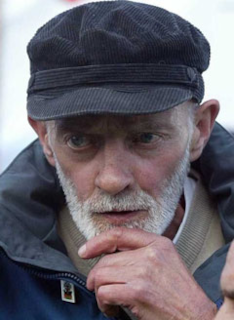
Brian Keenan, a member of the Army Council of the Provisional Irish Republican Army (IRA), dies on May 21, 2008, at Cullyhanna, County Armagh, Northern Ireland, following a battle with colorectal cancer. He receives an 18-year prison sentence in 1980 for conspiring to cause explosions and plays a key role in the Northern Ireland peace process.

The son of a member of the Royal Air Force (RAF), Keenan is born on July 17, 1941, in Swatragh, County Londonderry, Northern Ireland, before his family moves to Belfast. As a teenager, he moves to England to find work, for a time working as a television repairman in partnership with his brother in Corby, Northamptonshire. During this time, he comes to the attention of the police when he damages a cigarette machine, which leads to police having his fingerprints on file. He returns to Northern Ireland when the Troubles begin and starts working at the Grundig factory in the Finaghy area of Belfast where he acquires a reputation as a radical due to his involvement in factory trade union activities.

Despite his family having no history of republicanism, Keenan joins the Provisional Irish Republican Army in 1970 or 1971, and by August 1971 is the quartermaster of the Belfast Brigade. He is an active IRA member, planning bombings in Belfast and travelling abroad to make political contacts and arrange arms smuggling, acquiring contacts in East Germany, Libya, Lebanon and Syria. In 1972, he travels to Tripoli to meet with Libyan leader Muammar Gaddafi in order to acquire arms and finance from his government. In early 1973 he takes over responsibility for control of the IRA’s bombing campaign in England and also becomes IRA Quartermaster General. In late 1973, he is the linchpin of the kidnap of his former employer at Grundig, director Thomas Niedermayer.

In early 1974, Keenan plans to break Gerry Adams and Ivor Bell out of Long Kesh using a helicopter, in a method similar to Seamus Twomey‘s escape from Mountjoy Prison in October 1973, but the plan is vetoed by Billy McKee. He is arrested in the Republic of Ireland in mid-1974 and sentenced to twelve months imprisonment for IRA membership. On March 17, 1975, he is shot and wounded while attempting to lead a mass escape from Portlaoise Prison. While being held in Long Kesh, Gerry Adams helps to devise a blueprint for the reorganisation of the IRA, which includes the use of covert cells and the establishment of a Southern Command and Northern Command. As the architects of the blueprint, Adams, Bell and Brendan Hughes, are still imprisoned, Martin McGuinness and Keenan tour the country trying to convince the IRA Army Council and middle leadership of the benefits of the restructuring plan, with one IRA member remarking “Keenan was a roving ambassador for Adams.” The proposal is accepted after Keenan wins support from the South Derry Brigade, East Tyrone Brigade and South Armagh Brigade, with one IRA member saying, “Keenan was really the John the Baptist to Adams’ Christ.”

In December 1975, members of an IRA unit based in London are arrested following the six-day Balcombe Street siege. The IRA unit had been active in England since late 1974 carrying out a series of bombings, and a few months after his release from prison Keenan visits the unit in Crouch Hill, London, to give it further instructions. In follow-up raids after the siege, police discover crossword puzzles in his handwriting and his fingerprints on a list of bomb parts. A warrant is issued for his arrest.

Garda Síochána informer Sean O’Callaghan claims that Keenan recommended IRA Chief of Staff Seamus Twomey to authorise an attack on Ulster Protestants in retaliation to an increase in sectarian attacks on Catholic civilians by Protestant loyalist paramilitaries, such as the killing of three Catholics in a gun and bomb attack by the Ulster Volunteer Force (UVF) on Donnelly’s Bar in Silverbridge, County Armagh on December 19, 1975. According to O’Callaghan “Keenan believed that the only way, in his words, to put the nonsense out of the Prods [Protestants] was to just hit back much harder and more savagely than them.” Soon after the sectarian Kingsmill massacre occurs, when ten Protestant men returning home from their work are ordered out of a minibus they are travelling in and executed en masse with a machine gun on January 5, 1976.

Keenan is arrested on the basis of the 1975 warrant near Banbridge on March 20, 1979, when the Royal Ulster Constabulary (RUC) stopped two cars travelling north on the main road from Dublin to Belfast and is extradited to England to face charges relating to the Balcombe Street Gang‘s campaign in England. His capture is a blow to the IRA, in particular as he was carrying an address book listing his contacts including Palestinian activists in the United Kingdom. The IRA responds by dispatching Bobby Storey and three other members to break Keenan out of prison using a helicopter, but all four are arrested and remanded to Brixton Prison. Keenan stands trial at the Old Bailey in London in June 1980 defended by Michael Mansfield and is accused of organising the IRA’s bombings in England and being implicated in the deaths of eight people including Ross McWhirter and Gordon Hamilton Fairley. He is sentenced to eighteen years imprisonment after being found guilty on June 25, 1980.

Keenan continues to support Gerry Adams while in prison. In August 1982 Adams is granted permission by the IRA’s Army Council to stand in a forthcoming election to the Northern Ireland Assembly, having been refused permission at a meeting the previous month. In a letter sent from Leicester Prison, Keenan writes that he “emphatically” supports the move and endorses the Army Council’s decision.

Keenan is released from prison in June 1993 and by 1996 is one of seven members of the IRA’s Army Council. Following the events after the IRA’s ceasefire of August 1994, he is openly critical of Gerry Adams and the “tactical use of armed struggle,” or TUAS, strategy employed by the republican movement. After the Northern Ireland peace process becomes deadlocked over the issue of the IRA decommissiong its arms, he and the other members of the Army Council authorise the Docklands bombing which kills two people and marks the end of the IRA’s eighteen-month ceasefire in February 1996.

Keenan outlines the IRA’s public position in May 1996 at a ceremony in memory of hunger striker Seán McCaughey at Milltown Cemetery, where he states, “The IRA will not be defeated…Republicans will have our victory…Do not be confused about decommissioning. The only thing the Republican movement will accept is the decommissioning of the British state in this country.” In the same speech he accuses the British of “double-dealing” and denounces the Irish government as “spineless.”

On February 25, 2001, Keenan addresses a republican rally in Creggan, County Armagh, saying that republicans should not fear “this phase” of “the revolution” collapsing should the Good Friday Agreement fail. He confirms his continued commitment to the Armalite and ballot box strategy, saying that both political negotiations and violence are “legitimate forms of revolution” and that both “have to be prosecuted to the utmost.” He goes on to say, “The revolution can never be over until we have British imperialism where it belongs—in the dustbin of history,” a message aimed at preventing rank-and-file IRA activists defecting to the dissident Real IRA.

Keenan plays a key role in the peace process, acting as the IRA’s go-between with the Independent International Commission on Decommissioning (IICD). Gerry Adams remarks, “There wouldn’t be a peace process if it wasn’t for Brian Keenan.” Keenan resigns from his position on the Army Council in 2005 due to ill-health, and is replaced by Bernard Fox, who had taken part in the 1981 Irish hunger strike. On May 6, 2007, he is guest speaker at a rally in Cappagh, County Tyrone, to commemorate the 20th anniversary of the deaths of the so-called “Loughgall Martyrs,” eight members of the IRA East Tyrone Brigade killed by the Special Air Service (SAS) in 1987.

In July 2002, Keenan is diagnosed as suffering from terminal colorectal cancer. It is alleged by the Irish Independent and The Daily Telegraph that Keenan succeeded Thomas “Slab” Murphy as Chief of Staff of the Provisional IRA at some point between the late 1990s and the mid-2000s before he relinquished the role to deal with his poor health caused by cancer.

Keenan’s last years are spent living with his wife in Cullyhanna, County Armagh, where he dies of cancer on May 21, 2008. He is an atheist and receives a secular funeral, representing a major republican show of strength.
Leave a comment

Birth of Bobby Storey, Provisional Irish Republican Army Volunteer

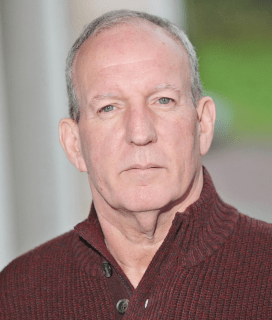
Robert “Bobby” Storey, a Provisional Irish Republican Army (IRA) volunteer, is born in Belfast, Northern Ireland, on April 11, 1956. Prior to an 18-year conviction for possessing a rifle, he also spends time on remand for a variety of charges and in total serves 20 years in prison. He also plays a key role in the Maze Prison escape, the biggest prison break in British penal history.

The family is originally from the Marrowbone area, on the Oldpark Road in North Belfast. The family has to move when Storey is very young due to Ulster loyalist attacks on the district, moving to Manor Street, an interface area also in North Belfast. His uncle is boxing trainer Gerry Storey and his father, also called Bobby, is involved in the defence of the area in the 1970s when Catholics are threatened by loyalists.

Storey is one of four children. He has two brothers, Seamus and Brian, and a sister Geraldine. Seamus and his father are arrested after a raid on their home which uncovers a rifle and a pistol. While his father is later released, Seamus is charged. He escapes from Crumlin Road Prison with eight other prisoners in 1971, and they are dubbed the Crumlin Kangaroos.

On his mother Peggy’s side of the family there is also a history of republicanism, but Storey says the dominant influences on him are the events happening around him. These include the McGurk’s Bar bombing in the New Lodge, some of those killed being people who knew his family, and also Bloody Sunday. This then leads to his attempts to join the IRA. He leaves school at fifteen and goes to work with his father selling fruit. At sixteen, he becomes a member of the IRA.

On April 11, 1973, his seventeenth birthday, Storey is interned and held at Long Kesh internment camp. He had been arrested 20 times prior to this but was too young for internment. In October 1974, he takes part in the protest at Long Kesh against living conditions where internees set fire to the “cages” in which they are being held. He is released from internment in May 1975. He is arrested on suspicion of a bombing at the Skyways Hotel in January 1976 and a kidnapping and murder in the Andersonstown district of Belfast in March 1976, but is acquitted by the judge at his trial. He is arrested leaving the courthouse and charged with a shooting-related incident. He is released after the case cannot be proven, only to be charged with shooting two soldiers in Turf Lodge. Those charges are dropped in December 1977. The same month he is arrested for the murder of a soldier in Turf Lodge, but the charges are again dropped. In 1978 he is charged in relation to the wounding of a soldier in Lenadoon, but is acquitted at trial due to errors in police procedure.

On December 14, 1979, he is arrested in Holland Park, London, with three other IRA volunteers including Gerard Tuite, and charged with conspiring to hijack a helicopter to help Brian Keenan escape from Brixton Prison. Tuite escapes from the same prison prior to the trial, and the other two IRA volunteers are convicted, but Storey is acquitted at the Old Bailey in April 1981. That August, after a soldier is shot, he is arrested in possession of a rifle and is convicted for the first time, being sentenced to eighteen years’ imprisonment.

Storey is one of the leaders of the Maze Prison escape in 1983, when 38 republican prisoners break out of the H-Blocks, the largest prison escape in British penal history and the largest peacetime prison escape in Europe. He is recaptured within an hour and sentenced to an additional seven years’ imprisonment. Released in 1994, he is again arrested in 1996 and charged with having personal information about a British Army soldier, and Brian Hutton, the Lord Chief Justice of Northern Ireland. At his trial at Crumlin Road Courthouse in July 1998, he is acquitted after his defence proves the personal information had previously been published in books and newspapers.

Having spent over twenty years in prison, much of it on remand, Storey’s final release is in 1998, and he again becomes involved in developing republican politics and strategy, eventually becoming the northern chairman of Sinn Féin.

On January 11, 2005, Ulster Unionist Member of Parliament for South Antrim David Burnside tells the British House of Commons under parliamentary privilege that Storey is head of intelligence for the IRA.

On September 9, 2015, Storey is arrested and held for two days in connection with the killing of former IRA volunteer Kevin McGuigan the previous month. He is subsequently released without any charges, and his solicitor John Finucane states Storey will be suing for unlawful arrest.

Storey dies in England on June 21, 2020, following an unsuccessful lung transplant surgery. Sinn Féin president Mary Lou McDonald describes him as “a great republican” in her tribute. His funeral procession in Belfast on June 30 is attended by over 1,500 people including McDonald, deputy First Minister Michelle O’Neill, and former Sinn Féin president Gerry Adams, but is criticised for breaking social distancing rules implemented in response to the COVID-19 pandemic which, at the time operating in Northern Ireland, limited funeral numbers to no more than 30 mourners.

In the 2017 film Maze, dramatising the 1983 prison break, directed by Stephen Burke, Storey is portrayed by Irish actor Cillian O’Sullivan.


Leave a comment

The Maze Prison Escape

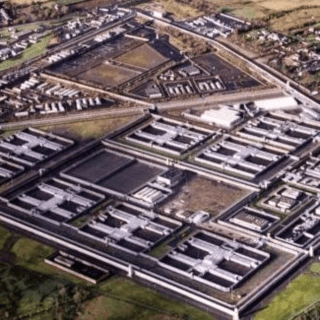
The Maze Prison escape, known to Irish republicans as the Great Escape, takes place on September 25, 1983, in County Antrim, Northern Ireland. HM Prison Maze, also known as Long Kesh, is a maximum-security prison considered to be one of the most escape-proof prisons in Europe, and holds prisoners suspected of taking part in armed paramilitary campaigns during the Troubles. In the biggest prison escape in UK history, 38 Provisional Irish Republican Army (IRA) prisoners escaped from H-Block 7 (H7) of the prison. One prison officer dies of a heart attack during the escape and twenty others are injured, including two who are shot with guns that had been smuggled into the prison. The escape is a propaganda coup for the IRA, and a British government minister faces calls to resign. The official inquiry into the escape places most of the blame onto prison staff, who in turn blame the escape on political interference in the running of the prison.

IRA volunteers regard themselves as prisoners of war with a duty to escape. During the Troubles, Irish republican prisoners escape from custody en masse on several occasions between 1971 and 1981.

Prisoners had been planning the 1983 escape for several months. Bobby Storey and Gerry Kelly start working as orderlies in H7, which allows them to identify weaknesses in the security systems. Six handguns are also smuggled into the prison. Shortly after 2:30 PM on September 25, prisoners seize control of H7 by simultaneously taking the prison officers hostage at gunpoint in order to prevent them from triggering an alarm. One officer is stabbed with a craft knife, and another is knocked down by a blow to the back of the head. One officer who attempts to prevent the escape is shot in the head by Gerry Kelly but survives. By 2:50 PM the prisoners are in control of H7 without an alarm being raised. A dozen prisoners also take uniforms from the officers, and the officers are forced to hand over their car keys and details of where their cars are, for possible later use during the escape. A rearguard is left behind to watch over hostages and keep the alarm from being raised until they believe the escapees are clear of the prison, at which time they return to their cells. At 3:25 PM, a lorry delivering food supplies arrives at the entrance to H7, whereupon Brendan McFarlane and other prisoners take the occupants hostage at gunpoint and move them inside H7. The lorry driver is told the lorry is being used in the escape, and he is instructed what route to take and how to react if challenged.

At 3:50 PM the prisoners leave H7, and the driver and a prison orderly are taken back to the lorry. Thirty-seven prisoners climb into the back of the lorry, while Gerry Kelly lay on the floor of the cab with a gun pointed at the driver, who is also told the cab has been booby trapped with a hand grenade. At nearly 4:00 PM the lorry drives toward the main gate of the prison, where the prisoners intend to take over the gatehouse. Ten prisoners dressed in guards’ uniforms and armed with guns and chisels dismount from the lorry and enter the gatehouse, where they take the officers hostage.

At 4:05 PM the officers begin to resist, and an officer presses an alarm button. When other staff respond via an intercom, a senior officer says while being held at gunpoint that the alarm had been triggered accidentally. By this time the prisoners are struggling to maintain control in the gatehouse due to the number of hostages. Officers arriving for work are entering the gatehouse from outside the prison, and each is ordered at gunpoint to join the other hostages. Officer James Ferris runs from the gatehouse toward the pedestrian gate attempting to raise the alarm, pursued by Dermot Finucane. Ferris had already been stabbed three times in the chest, and before he can raise the alarm he collapses.

Finucane continues to the pedestrian gate where he stabs the officer controlling the gate, and two officers who had just entered the prison. This incident is seen by a soldier on duty in a watchtower, who reports to the British Army operations room that he has seen prison officers fighting. The operations room telephones the prison’s Emergency Control Room (ECR), which replies that everything is all right and that an alarm had been accidentally triggered earlier.

At 4:12 PM the alarm is raised when an officer in the gatehouse pushes the prisoner holding him hostage out of the room and telephones the ECR. However, this is not done soon enough to prevent the escape. After several attempts the prisoners open the main gate and are waiting for the prisoners still in the gatehouse to rejoin them in the lorry. At this time two prison officers block the exit with their cars, forcing the prisoners to abandon the lorry and make their way to the outer fence which is 25 yards away.

Four prisoners attack one of the officers and hijack his car, which they drive toward the external gate. They crash into another car near the gate and abandon the car. Two escape through the gate, one is captured exiting the car, and another is captured after being chased by a soldier. At the main gate, a prison officer is shot in the leg while chasing the only two prisoners who have not yet reached the outer fence. The prisoner who fires the shot is captured after being shot and wounded by a soldier in a watch tower, and the other prisoner is captured after falling. The other prisoners escape over the fence, and by 4:18 PM the main gate is closed and the prison secured, after 35 prisoners had breached the prison perimeter. The escape is the biggest in British history, and the biggest in Europe since World War II.

Outside the prison the IRA has planned a logistical support operation involving 100 armed members, but due to a miscalculation of five minutes, the prisoners find no transport waiting for them and are forced to flee across fields or hijack vehicles. The British Army and Royal Ulster Constabulary immediately activate a contingency plan and by 4:25 PM a cordon of vehicle checkpoints are in place around the prison, and others are later in place in strategic positions across Northern Ireland, resulting in the recapture of one prisoner at 11:00 PM. Twenty prison officers are injured during the escape, thirteen are kicked and beaten, four stabbed, and two shot. One prison officer, James Ferris, who had been stabbed, dies after suffering a heart attack during the escape.

The escape is a propaganda coup and morale boost for the IRA, with Irish republicans dubbing it the “Great Escape.” Leading unionist politician Ian Paisley calls on Nicholas Scott, the Parliamentary Under-Secretary of State for Northern Ireland, to resign. The British Prime Minister Margaret Thatcher makes a statement in Ottawa during a visit to Canada, saying “It is the gravest [breakout] in our present history, and there must be a very deep inquiry.” The day after the escape, Secretary of State for Northern Ireland James Prior announces an inquiry to be headed by Her Majesty’s Chief Inspector of Prisons, James Hennessy. The Hennessy Report is published on January 26, 1984, placing most of the blame for the escape on prison staff, and making a series of recommendations to improve security at the prison. The report also places blame with the designers of the prison, the Northern Ireland Office and successive prison governors who had failed to improve security. Prior announces that the prison’s governor has resigned, and that there will be no ministerial resignations as a result of the report’s findings. Four days after the Hennessy Report is published, the Minister for Prisons Nicholas Scott dismisses allegations from the Prison Governors Association and the Prison Officers Association that the escape is due to political interference in the running of the prison.

Fifteen escapees are captured on the day, including four who are discovered hiding underwater in a river near the prison using reeds to breathe. Four more escapees are captured over the next two days, including Hugh Corey and Patrick McIntyre who are captured following a two-hour siege at an isolated farmhouse. Out of the remaining 19 escapees, 18 end up in the republican stronghold of South Armagh where two members of the IRA’s South Armagh Brigade are in charge of transporting them to safehouses and given the option of either returning to active service in the IRA’s armed campaign or a job and new identity in the United States.

On October 25, 1984, nineteen prisoners appear in court on charges relating to the death of prison officer James Ferris, sixteen charged with his murder. A pathologist determines that the stab wounds Ferris suffered would not have killed a healthy man. The judge acquits all sixteen as he cannot correlate the stabbing to the heart attack.


Leave a comment

Birth of Mairéad Farrell, Provisional IRA Member

mairead-farrell

Mairéad Farrell, member of the Provisional Irish Republican Army (IRA), is born in Belfast on March 3, 1957. She is shot dead by the British Army in Gibraltar on March 6, 1988.

Farrell is born into a middle-class family with no link to militant Irish republicanism other than a grandfather who had been interned during the Irish War for Independence. She is educated at Rathmore Grammar School, Belfast. At the age of 14 she is recruited into the Provisional IRA by Bobby Storey. After leaving school at the age of 18, she is hired as a clerical worker for an insurance broker’s office.

On March 1, 1976, the British government revokes Special Category Status for prisoners convicted from this date under anti-terrorism legislation. In response, the IRA instigates a wave of bombings and shootings across Northern Ireland and younger members such as Farrell are asked to participate. On April 5, 1976, along with Kieran Doherty and Sean McDermott, she attempts to plant a bomb at the Conway Hotel in Dunmurry, as that hotel had often been used by British soldiers on temporary duty in Northern Ireland. She is arrested by Royal Ulster Constabulary (RUC) officers within an hour of planting the bomb. McDermott, her boyfriend, is shot dead by a RUC reservist at a nearby housing estate.

At her trial, Farrell refuses to recognise the court as it is an institution of the British state. She is sentenced to fourteen years in prison for explosives offences, firearms offences, and belonging to an illegal organisation.

When Farrell arrives at Armagh Prison, she refuses to wear a prison uniform in protest at the designation of republican prisoners as criminals and becomes the official Officer Commanding of the female IRA prisoners. After 13 months, she, along with Mary Doyle and Mairead Nugent, begin a hunger strike to coincide with the one already taking place in Long Kesh Prison. It ends on December 19, a day after the men’s strike. In March 1981 the prisoners’ rights campaign is focused on the hunger strike being undertaken by Bobby Sands, leader of IRA prisoners in the H-Blocks. She was one of the H-Block/Armagh prisoners to stand for election in the Republic of Ireland in the 1981 Irish general election, standing in Cork North-Central and polling 2,751 votes (6.05%).[17]

Upon her release from prison in October 1986, Farrell enrolls at Queen’s University, Belfast for a course in Political Science and Economics. However, she drops out to re-engage in IRA activity. The IRA sends her with Seán Savage and Daniel McCann to the British overseas territory of Gibraltar to plant a car bomb in a heavily populated town area. The target is the band and guard of the 1st Battalion of the Royal Anglian Regiment during a weekly ceremonial changing of the guard in front of Governors’ residence, on March 8, 1988. According to interrogated IRA members, Gibraltar is selected as a target because it is a British possession that is in dispute, and that it is an area with lighter security measures than had become endemic at British military installations elsewhere due to the IRA’s campaign.

The British Government’s domestic intelligence service MI5 becomes aware of their plan and a detachment from the British Army is specifically deployed to Gibraltar to intercept the IRA team and prevent the attack. Farrell, Savage and McCann are confronted by plainclothes soldiers from the Special Air Service regiment while they are engaged in a reconnaissance in Gibraltar pending the delivery of the car bomb. Farrell is shot three times in the back and once in the face. Her two accomplices are also killed in an operation code-named Operation Flavius by the British Government. Some witnesses to the shooting state that Farrell and McCann were shot while attempting to surrender, and while lying wounded on the ground. The three IRA members are all found afterwards to be unarmed.

Keys to a hire car found in Farrell’s handbag lead the Spanish Police to the discovery across the border in Spain of five packages totaling 84 kg of Semtex explosive in a car which the IRA team intended to subsequently drive into Gibraltar for the attack. These packages have four separate detonators attached. Around this is packed 200 rounds of ammunition as shrapnel. There are two timers but they were not primed or connected.

At the funeral of the ‘Gibraltar Three’ on March 16, three mourners are killed in a gun and grenade attack by loyalist paramilitary Michael Stone in the Milltown Cemetery attack.