seamus dubhghaill

Promoting Irish Culture and History from Little Rock, Arkansas, USA


Leave a comment

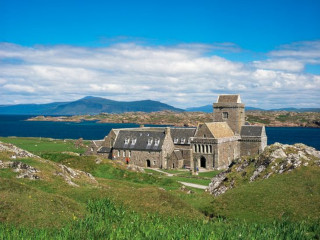
St. Columba Arrives on the Isle of Iona

iona-abbey-isle-of-iona

St. Columba, an Irish monk, and twelve followers arrive on the tiny isle of Iona, barely three miles long by one mile wide, on May 12, 563, establishing a monastic community and building his first Celtic church. Iona has an influence out of all proportion to its size on the establishment of Christianity in Scotland, England and throughout mainland Europe.

Once settled, Columba sets about converting most of pagan Scotland and northern England to the Christian faith. Iona’s fame as a missionary centre and outstanding place of learning eventually spreads throughout Europe, turning it into a place of pilgrimage for several centuries to come. Iona becomes a sacred isle where kings of Scotland, Ireland and Norway are buried.

Columba is born of royal blood in 521 AD in Ireland, or Scotia as it is then called. He is the grandson of the Irish King Niall. He leaves Ireland for Scotland not as a missionary but as an act of self-imposed penance for a bloody mess he had caused at home. He had upset the king of Ireland by refusing to hand over a copy of the Gospel he had illegally copied, leading to a pitched battle in which Columba’s warrior family prevailed. Full of remorse for his actions and the deaths he had ultimately caused, he flees, ultimately settling on Iona as it is the first place he finds from which he is unable to see his native Ireland. One of the features on the island is even called “The Hill with its back to Ireland.”

Columba, however, is not the shy retiring type and sets about building Iona’s original abbey from clay and wood. In this endeavour he displays some strange idiosyncrasies, including banishing women and cows from the island. The abbey builders have to leave their wives and daughters on the nearby Eilean nam Ban (Woman’s Island). Stranger still, he also banishes frogs and snakes from Iona, although how he accomplishes this feat is not well documented.

The strangest claim of all however is that Columba is prevented from completing the building of the original chapel until a living person has been buried in the foundations. His friend Oran volunteers for the job and is duly buried. It is said that Columba later requests that Oran’s face be uncovered so he can bid a final farewell to his friend. Oran’s face is uncovered and he is found to be still alive but utters such blasphemous descriptions of Heaven and Hell that Columba orders that he be covered up immediately.

Over the centuries the monks of Iona produce countless elaborate carvings, manuscripts and Celtic crosses. Perhaps their greatest work is the exquisite Book of Kells, which dates from 800 AD, currently on display in Trinity College, Dublin. Shortly after this, in 806 AD, come the first of the Viking raids and many of the monks are slaughtered and their work destroyed.

The Celtic Church, lacking central control and organisation, diminishes in size and stature over the years to be replaced by the much larger and stronger Roman Church. Even Iona is not exempt from these changes and in 1203 a nunnery for the Order of the Black Nuns is established and the present-day Benedictine abbey, Iona Abbey, is built. The abbey is a victim of the Reformation and lay in ruins until 1899 when restoration is started.

No part of Columba’s original buildings have survived, however on the left hand side of the abbey entrance can be seen a small roofed chamber which is claimed to mark the site of the Columba’s tomb.

(From: “St. Columba and the Isle of Iona” by Ben Johnson, historic-uk.com, pictured is the Iona Abbey and Nunnery)
Leave a comment

Death of Olympic Gold Medalist Martin John Sheridan

martin-john-sheridan

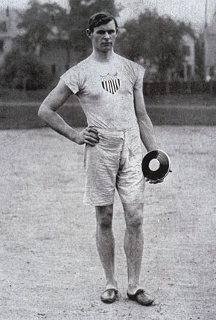
Martin John Sheridan, “one of the greatest athletes the United States has ever known” according to his obituary in The New York Times, dies in St. Vincent’s Hospital in Manhattan, New York City on March 27, 1918, the day before his 37th birthday.

Sheridan is born in Bohola, County Mayo on March 28, 1881. At 6’3″ and 194 lbs., Sheridan is the best all-around athlete of the Irish American Athletic Club, and like many of his teammates, serves with the New York City Police Department from 1906 until his death. He is so well respected in the NYPD, that he serves as the Governor’s personal bodyguard when the governor is in New York City.

A five-time Olympic gold medalist, with a total of nine Olympic medals, Sheridan is called “one of the greatest figures that ever represented this country in international sport, as well as being one of the most popular who ever attained the championship honor.” He wins the discus throw event at the 1904, 1906, and 1908 Summer Olympic Games as well as the shot put at the 1906 Olympics and the Greek discus in 1908. At the 1906 Intercalated Games in Athens, Greece he also wins silver medals in the standing high jump, standing long jump and the stone throw.

In 1907, Sheridan wins the National Amateur Athletic Union discus championship and the Canadian championship, and in 1908 he wins the Metropolitan, National and Canadian championships as well as two gold medals in the discus throw and bronze in the standing long jump at the 1908 Olympic Games.

Two of Sheridan’s gold medals from the 1904 Summer Olympic Games in St. Louis, Missouri, and one of his medals from the 1906 Intercalated Games in Athens, Greece, are currently located in the USA Track & Field‘s Hall of Fame History Gallery, in Washington Heights, Manhattan.

There are claims that Sheridan fuels a controversy in London in 1908, when flagbearer Ralph Rose refuses to dip the flag to King Edward VII. Sheridan supports Rose by explaining “This flag dips to no earthly king,” and it is claimed that his statement exemplifies both Irish and American defiance of the British monarchy. However, careful research has shown that this is first reported in 1952. Sheridan himself makes no mention of it in his published reports on the Games and neither does his obituary.

Martin Sheridan dies in Manhattan, New York City on March 27, 1918, a very early casualty of the 1918 flu pandemic. He is buried in Calvary Cemetery, Queens, New York. The inscription on the granite Celtic Cross monument marking his grave says in part: “Devoted to the Institutions of his Country, and the Ideals and Aspirations of his Race. Athlete. Patriot.” He is part of a group of Irish American athletes known as the “Irish Whales.”


Leave a comment

Death of Jane Francesca Agnes, Lady Wilde

jane-wilde

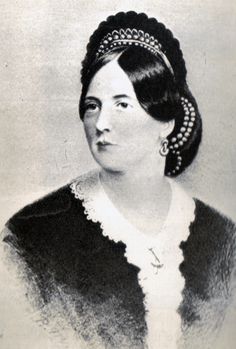
Jane Francesca Agnes, Lady Wilde, Irish poet who writes under the pen name “Speranza” and supporter of the nationalist movement, dies at her home, 146 Oakley Street, Chelsea, London, of bronchitis on February 3, 1896.

Jane is the last of the four children of Charles Elgee, a Wexford solicitor, and his wife Sarah. Her great-grandfather is an Italian who had come to Wexford in the 18th century. She has a special interest in Irish folktales, which she helps to gather. She marries Sir William Wilde on November 12, 1851, and they have three children, William Charles Kingsbury Wilde (1852–1899), Oscar Fingal O’Flahertie Wills Wilde (1854–1900), and Isola Francesca Emily Wilde (1857–1867).

Jane, who is the niece of Charles Maturin, writes for the Young Ireland movement of the 1840s, publishing poems in The Nation under the pseudonym of “Speranza.” Her works include pro-Irish independence and anti-British writing. She is sometimes known as “Speranza of the Nation.” Charles Gavan Duffy is the editor when “Speranza” writes commentary calling for armed revolution in Ireland. The authorities at Dublin Castle shut down the paper and bring the editor to court. Duffy refuses to name who has written the offending article. “Speranza” reputedly stands up in court and claims responsibility for the article. The confession is ignored by the authorities. But in any event the newspaper is permanently shut down by the authorities.

She is an early advocate of women’s rights, and campaigns for better education for women. She invites the suffragist Millicent Fawcett to her home to speak on female liberty. She praises the passing of the Married Women’s Property Act of 1883, preventing women from having to enter marriage “as a bond slave, disenfranchised of all rights over her fortune.”

William Wilde is knighted in January 1864, but the family celebrations are short-lived, for in the same year Sir William and Lady Wilde are at the centre of a sensational Dublin court case regarding a young woman called Mary Travers, the daughter of a colleague of Sir William’s, who claims that he had seduced her and who then brings an action against Lady Wilde for libel. Mary Travers wins the case and costs of £2,000 are awarded against Lady Wilde. Then, in 1867, their daughter Isola dies of fever at the age of nine. In 1871 the two illegitimate daughters of Sir William are burned to death and in 1876 Sir William himself dies. The family discovers that he is virtually bankrupt.

Lady Wilde leaves Dublin for London in 1879, where she joins her two sons, Willie, a journalist, and Oscar, who is making a name for himself in literary circles. She lives with her older son in poverty, supplementing their meagre income by writing for fashionable magazines and producing books based on the researches of her late husband into Irish folklore.

Lady Wilde contracts bronchitis in January 1896 and, dying, asks for permission to see Oscar, who is in prison. Her request is refused. It is claimed that her “fetch” appears in Oscar’s prison cell as she dies at her home, 146 Oakley Street, Chelsea, on February 3, 1896. Willie Wilde, her older son, is penniless, so Oscar pays for her funeral, which is held on February 5, at Kensal Green Cemetery in London. A headstone proved too expensive and she is buried anonymously in common ground. A monument to her, in the form of a Celtic cross, is erected at Kensal Green Cemetery by the Oscar Wilde Society in 1999.


Leave a comment

Annie Moore Departs Queenstown for the United States

annie-moore

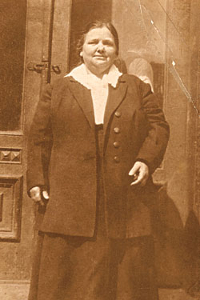
Fifteen-year-old Annie Moore departs Queenstown, now Cobh, County Cork, on December 20, 1891, and becomes the first immigrant to the United States to pass through the Ellis Island facility in New York Harbor.

Her parents, Matthew and Julia Moore, had come to the United States in 1888 and are living at 32 Monroe Street in Manhattan. Moore departs from Queenstown aboard the S.S. Nevada, one of 148 steerage passengers. Accompanied by her brothers, Anthony and Philip, she spends twelve days at sea, including Christmas Day, arriving in New York City on Thursday evening, December 31. It is reported that her arrival is on her 15th birthday, but records in Ireland reveal that her birthday is in May, and she is actually seventeen.

Ellis Island officially opens on January 1, 1892, and, as the first person to be processed at the newly opened facility, Moore is presented with an American $10 gold piece from an American official. All three children are soon reunited with their parents in New York. From 1820 to 1920, more than 4 million people leave their native shores of Ireland bound for the Port of New York and a new life in America.

Moore marries a son of German immigrants, Joseph Augustus Schayer, an employee at Manhattan’s Fulton Fish Market, with whom she has at least eleven children. She dies of heart failure on December 6, 1924, and is buried in Calvary Cemetery, Queens. Her previously unmarked grave is identified in August 2006. On October 11, 2008, a dedication ceremony is held at Calvary which celebrates the unveiling of a marker for her grave, a Celtic cross made of Irish Blue Limestone.

The Irish American Cultural Institute presents an annual Annie Moore Award “to an individual who has made significant contributions to the Irish and/or Irish American community and legacy.” Moore’s story is told in the song “Isle of Hope, Isle of Tears,” written by Brendan Graham. The song has been performed by Ronan Tynan and by The Irish Tenors, of which Tynan was formerly a member. Other artists performing the song include Seán Keane, Sean & Dolores Keane, Daniel O’Donnell, Celtic Thunder, Irish tenor Brian Dunphy, Celtic Woman, and Tommy Fleming.

A woman named “Annie Moore” who died near Fort Worth, Texas in 1924 had long been thought to be the one whose arrival marked the beginning of Ellis Island. Further research, however, established that the Annie Moore in Texas was born in Illinois.