seamus dubhghaill

Promoting Irish Culture and History from Little Rock, Arkansas, USA


Leave a comment

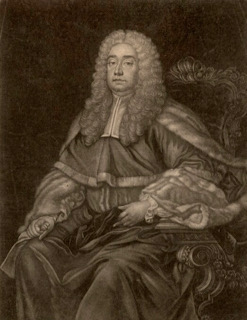
Death of John Bowes, 1st Baron Bowes

John Bowes, 1st Baron BowesPC (I), Anglo-Irish peer, politician and judge, dies in Dublin on July 22, 1767. He is noted for his great legal ability, but also for his implacable hostility to Roman Catholics.

Bowes is born in London, the second son of Thomas Bowes, a merchant and member of the Worshipful Company of Turners, and his wife, a Miss North, and is called to the Bar in 1712. He comes to Ireland as a member of the staff of Richard West, the Lord Chancellor of Ireland, in 1723. He builds up a large practice at the Irish Bar and is appointed Solicitor-General for Ireland in 1730, and Attorney-General for Ireland in 1739. He is raised to the Bench as Lord Chief Baron of the Irish Exchequer in 1741, having previously failed to become third Baron (which is a surprisingly lucrative office, as the Baron receives several extra fees). He is appointed Lord Chancellor of Ireland by King George II in 1757, despite the chronic ill-health which afflicts him. In his last years, his legs are so swollen that he can scarcely walk.

Bowes epitomizes the severity of the 18th century Penal Laws against Irish Catholics when he rules, in about 1759, that: “The law does not suppose any such person to exist as an Irish Roman Catholic, nor could such a person draw breath without the Crown’s permission”. Such views, given that Roman Catholics make up more than 90% of the Irish population at the time, inevitably make him bitterly unpopular, and in 1760 he is assaulted during a riot outside the House of Commons.

In spite of his religious bigotry, Bowes is considered one of the outstanding judges of his time. In particular, he is a reforming Lord Chancellor, who is praised for making the Court of Chancery “a terror for fraud, and a comfort and protection for honest men”. As Attorney-General he shows considerable courage in going on assize during the Irish Famine (1740–1741) despite the infectious fever which is raging at the time, and which claims the lives of three other judges who decide to brave the dangers.

Between 1731 and 1742, Bowes represents Taghmon in the Irish House of Commons.

Bowes is considered one of the finest speakers of his time. His speech for the prosecution at the trial of Henry Barry, 4th Baron Barry of Santry, who is charged with murder in 1739, is described by those who hear it as a masterpiece of eloquence and logic, and leads to the Irish House of Lords bringing in a unanimous verdict of guilty against Santry.

Bowes is raised to the peerage of Ireland in 1758 as Baron Bowes, of Clonlyon in the County of Meath.

Bowes dies in Dublin on July 22, 1767, his mental faculties fully intact despite his bodily infirmities. He is buried in Christ Church Cathedral, Dublin, where his brother raises a memorial to him. He never marries, and his title becomes extinct on his death. He lives at Belvedere House, Drumcondra. His estates passes to his brother Rumsey Bowes of BinfieldBerkshire.


Leave a comment

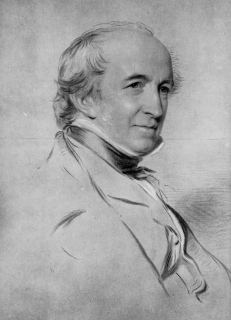
Birth of Thomas Spring Rice, 1st Baron Monteagle of Brandon

Thomas Spring Rice, 1st Baron Monteagle of Brandon, PC, FRS, FGS, British Whig politician who serves as Chancellor of the Exchequer from 1835 to 1839, is born on February 8, 1790, into a notable Anglo-Irish family which owns large estates in Munster.

Spring Rice is one of the three children of Stephen Edward Rice, of Mount Trenchard House, and Catherine Spring, daughter and heiress of Thomas Spring of Ballycrispin and Castlemaine, County Kerry, a descendant of the Suffolk Spring family. He is a great grandson of Sir Stephen Rice, Chief Baron of the Irish Exchequer and a leading Jacobite Sir Maurice FitzGerald, 14th Knight of Kerry. His grandfather, Edward, converted the family from Roman Catholicism to the Anglican Church of Ireland, to save his estate from passing in gavelkind.

Spring Rice is educated at Trinity College, Cambridge, and later studies law at Lincoln’s Inn, but is not called to the Bar. His family is politically well-connected, both in Ireland and Great Britain, and he is encouraged to stand for Parliament by his father-in-law, Lord Limerick.

Spring Rice first stands for election in Limerick City in 1818 but is defeated by the Tory incumbent, John Vereker, by 300 votes. He wins the seat in 1820 and enters the House of Commons. He positions himself as a moderate unionist reformer who opposes the radical nationalist politics of Daniel O’Connell and becomes known for his expertise on Irish and economic affairs. In 1824 he leads the committee which establishes the Ordnance Survey in Ireland.

Spring Rice’s fluent debating style in the Commons brings him to the attention of leading Whigs and he comes under the patronage of the Marquess of Lansdowne. As a result, he is made Under-Secretary of State for the Home Department under George Canning and Lord Goderich in 1827, with responsibility for Irish affairs. This requires him to accept deferral of Catholic emancipation, a policy which he strongly supports. He then serves as joint Secretary to the Treasury from 1830 to 1834 under Lord Grey. Following the Reform Act 1832, he is elected to represent Cambridge from 1832 to 1839. In June 1834, Grey appoints him Secretary of State for War and the Colonies, with a seat in the cabinet, a post he retains when Lord Melbourne becomes Prime Minister in July. A strong and vocal unionist throughout his life, he leads the Parliamentary opposition to Daniel O’Connell’s 1834 attempt to repeal the Acts of Union 1800. In a six-hour speech in the House of Commons on April 23, 1834, he suggests that Ireland should be renamed “West Britain.” In the Commons, he also champions causes such as the worldwide abolition of slavery and the introduction of state-supported education.

The Whig government falls in November 1834, after which Spring Rice attempts to be elected Speaker of the House of Commons in early 1835. When the Whigs return to power under Melbourne in April 1835, he is made Chancellor of the Exchequer. As Chancellor, he has to deal with crop failures, a depression and rebellion in North America, all of which create large deficits and put considerable strain on the government. His Church Rate Bill of 1837 is quickly abandoned and his attempt to revise the charter of the Bank of Ireland ends in humiliation. Unhappy as Chancellor, he again tries to be elected as Speaker but fails. He is a dogmatic figure, described by Lord Melbourne as “too much given to details and possessed of no broad views.” Upon his departure from office in 1839, he has become a scapegoat for the government’s many problems. That same year he is raised to the peerage as Baron Monteagle of Brandon, in the County of Kerry, a title intended earlier for his ancestor Sir Stephen Rice. He is also Comptroller General of the Exchequer from 1835 to 1865, despite Lord Howick‘s initial opposition to the maintenance of the office. He differs from the government regarding the exchequer control over the treasury, and the abolition of the old exchequer is already determined upon when he dies.

From 1839 Spring Rice largely retires from public life, although he occasionally speaks in the House of Lords on matters generally relating to government finance and Ireland. He vehemently opposes John Russell, 1st Earl Russell‘s policy regarding the Irish famine, giving a speech in the Lords in which he says the government had “degraded our people, and you, English, now shrink from your responsibilities.”

In addition to his political career, Spring Rice is a commissioner of the state paper office, a trustee of the National Gallery and a member of the senate of the University of London and of the Queen’s University of Ireland. Between 1845 and 1847, he is President of the Royal Statistical Society. In addition, he is a Fellow of the Royal Society and a Fellow of the Geological Society of London. In May 1832 he becomes a member of James Mill‘s Political Economy Club.

Spring Rice is well regarded in Limerick, where he is seen as a compassionate landlord and a good politician. An advocate of traditional Whiggism, he strongly believes in ensuring society is protected from conflict between the upper and lower classes. Although a pious Anglican, his support for Catholic emancipation wins him the favour of many Irishmen, most of whom are Roman Catholic. He leads the campaign for better county government in Ireland at a time when many Irish nationalists are indifferent to the cause. During the Great Famine of the 1840s, he responds to the plight of his tenants with benevolence. The ameliorative measures he implements on his estates almost bankrupts the family and only the dowry from his second marriage saves his financial situation. A monument in honour of him still stands in the People’s Park in Limerick.

Even so, Spring Rice’s reputation in Ireland is not entirely favourable. In a book regarding assisted emigration from Ireland, a process in which a landlord pays for their tenants’ passage to the United States or Australia, Moran suggests that Spring Rice was engaged in the practice. In 1838, he is recorded as having “helped” a boat load of his tenants depart for North America, thereby allowing himself the use of their land. However, he is also recorded as being in support of state-assisted emigration across the British Isles, suggesting that his motivation is not necessarily selfish.

Spring Rice dies at the age of 76 on February 7, 1866. Mount Monteagle in Antarctica and Monteagle County in New South Wales are named in his honour.

(Pictured: Thomas Spring Rice, 1st Baron Monteagle of Brandon (1790-1866), contemporary portrait by George Richmond (1809-1896))

Leave a comment

Birth of Sir Maziere Brady, 1st Baronet & Lord Chancellor of Ireland

Sir Maziere Brady, 1st Baronet, PC (Ire), Irish judge, notable for his exceptionally long, though not particularly distinguished tenure as Lord Chancellor of Ireland, is born on July 20, 1796.

Brady is born on Parliament Street, Dublin, the second son of Francis Tempest Brady of Booterstown, a manufacturer of gold and silver thread, and his wife Charlotte Hodgson, daughter of William Hodgson of Castledawson, County Londonderry. He is baptised at St. Werburgh’s Church, Dublin. He is the brother of Sir Nicholas Brady, Lord Mayor of Dublin, and uncle of the eminent ecclesiastical historian William Maziere Brady.

The Bradys are an old and distinguished Munster family who are particularly associated with the town of Bandon, County Cork. Probably the most celebrated of his ancestors is the poet and psalmist Nicholas Brady (1659–1726), who collaborated with Nahum Tate, the Poet Laureate, on New Version of the Psalms of David.

Other notable forebears include Hugh Brady, the first Protestant Bishop of Meath (d. 1584), his father-in-law Robert Weston who, like Maziere serves as Lord Chancellor of Ireland, and the judge and author Luke Gernon (d. 1672), who is now best remembered for his work A Discourse of Ireland (1620), which gives a detailed and (from the English colonial point of view) not unsympathetic picture of the state of Ireland in 1620.

Brady is educated at Trinity College Dublin and takes his Bachelor of Arts degree in 1816. He enters the Middle Temple in 1816, is called to the Bar in 1819 and becomes King’s Counsel in 1835.

In politics Brady is a Liberal and supports Catholic emancipation. He sits on a commission of inquiry into Irish municipal corporations in 1833. He is appointed Solicitor-General for Ireland in 1837 and Attorney-General for Ireland the following year. In 1840 he is appointed Lord Chief Baron of the Irish Exchequer. In 1846 he is appointed Lord Chancellor of Ireland and serves in that office, with short intervals, for the next 20 years. He retires in 1866 and is made a baronet, of Hazelbrook in the County of Dublin, in 1869. His appointment ends the practice which grew after the Acts of Union 1800 of appointing only English lawyers as Lord Chancellor of Ireland. He sits on the Government Commission on Trinity College Dublin in 1851 and is nominated as Vice-Chancellor of Queen’s University Belfast in 1850. All through his life he shows a keen interest in education.

According to Elrington Ball, Brady’s Lord Chancellorship is notable for its length but for nothing else. Ball calls him “a good Chief Baron spoiled to make a bad Chancellor.” By general agreement he had been an excellent Chief Baron of the Exchequer, having a reputation for being fair-minded, courteous and approachable, but in Ball’s view the more onerous (and partly political) office of Lord Chancellor is beyond his capacity. Unlike some judges whose training had been in the common law, he never quite masters the separate code of equity. Delaney takes a somewhat more favourable view of Brady as Lord Chancellor, arguing that while his judgements do not show any great depth of learning they do show an ability to identify the central issue of any case and to apply the correct legal principle to it.

An anonymous pamphlet from 1850, which is highly critical of the Irish judiciary in general, describes Brady as being unable to keep order in his Court, and easily intimidated by counsel, especially by that formidable trio of future judges, Jonathan Christian, Francis Alexander FitzGerald, and Abraham Brewster. The author paints an unflattering picture of Brady as sitting “baffled and bewildered” in a Court where he is “a judge but not an authority.” On the other hand, Jonathan Christian, who had often clashed with Brady in Court, later praises him as “no ordinary man” despite his shortcomings as a judge. He describes him as “independent-minded, patriotic, natural and unaffected.”

Brady is a founder member of the Stephen’s Green Club and a member of the Royal Dublin Society and the Royal Irish Academy. In addition to the arts, he shows a keen interest in science, especially after his retirement. Like most judges of the time, he has both a town house in central Dublin and a place some distance from the city centre. His country house is Hazelbrook, Terenure, Dublin. He changes his town house several times, settling finally in Pembroke Street.

Brady marries firstly Elizabeth Anne Buchanan, daughter of Bever Buchanan, apothecary of Dublin, and his wife Eleanor Hodgson, in 1823 and they have five children. Elizabeth dies in 1858. In 1860, Brady marries Mary Hatchell, daughter of John Hatchell, Attorney-General for Ireland and Elizabeth Waddy, who survives him. He dies at his house in Pembroke Street on April 13, 1871. He is buried in Mount Jerome Cemetery.


Leave a comment

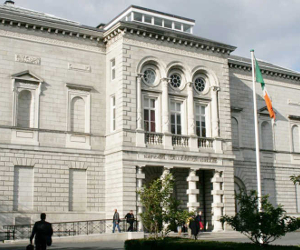
Opening of the National Gallery of Ireland

national-gallery-of-ireland

The National Gallery of Ireland, home of the national collection of Irish and European art, opens on January 30, 1864. It is located in the centre of Dublin with one entrance on Merrion Square, beside Leinster House, and another on Clare Street. The Gallery has an extensive, representative collection of Irish painting and is also notable for its Italian Baroque and Dutch masters painting.

In 1853 an exhibition, the Great Industrial Exhibition, is held on the lawns of Leinster House in Dublin. Among the most popular exhibits is a substantial display of works of art organised and underwritten by the railway magnate William Dargan. The enthusiasm of the visiting crowds demonstrates a public need for art, and it is decided to establish a permanent public art collection as a lasting monument of gratitude to Dargan. The moving spirit behind the proposal is the barrister John Edward Pigot (1822-1871), son of David Richard Pigot, Chief Baron of the Irish Exchequer, and he becomes one of the first Governors of the Gallery. The façade of the National Gallery copies the Natural History building of the National Museum of Ireland which is already planned for the facing flank of Leinster House. The building itself is designed by Francis Fowke, based on early plans by Charles Lanyon.

The Gallery is unlucky not to have been founded around an existing collection, but through diligent and skilful purchase, by the time it opens it has 125 paintings. In 1866 an annual purchase grant is established and by 1891 space is already limited. In 1897, the Dowager Countess of Milltown indicates her intention of donating the contents of Russborough House to the Gallery. This gift includes about 223 paintings, 48 pieces of sculpture, 33 engravings, much silver, furniture, and a library, and prompts construction from 1899 to 1903 of what is now called the Milltown Wing, designed by Thomas Newenham Deane.

At around this time Henry Vaughan leaves 31 watercolours by J.M.W. Turner with the requirement that they can only be exhibited in January, this to protect them from the ill-effects of sunlight. Though modern lighting technology has made this stipulation unnecessary, the Gallery continues to restrict viewing of the Vaughan bequest to January and the exhibition is treated as something of an occasion.

Another substantial bequest comes with the untimely death in the sinking of the RMS Lusitania of Hugh Lane, director of the Gallery since 1914. Not only does he leave a large collection of pictures, but he also leaves part of his residual estate, and the Lane Fund has continued to contribute to the purchase of art works to this day. In addition to his involvement in the Gallery, Lane has also hoped to found a gallery of modern art, something only realised after his death in Dublin City Gallery The Hugh Lane. George Bernard Shaw also makes a substantial bequest, leaving the Gallery a third of royalties of his estate in gratitude for the time he spent there as a youth.

The Gallery is again extended in 1962 with a new wing designed by Frank DuBerry of the Office of Public Works. This opens in 1968 and is now named the Beit Wing. In 1978 the Gallery receives from the government the paintings given to the nation by Chester Beatty and in 1987 the Sweeney bequest brings fourteen works of art including paintings by Pablo Picasso and Jack Butler Yeats. The same year the Gallery is once again given some of the contents of Russborough House when Alfred Beit donates 17 masterpieces, including paintings by Diego Velázquez, Bartolomé Esteban Murillo, Jan Steen, Johannes Vermeer, and Henry Raeburn.

In the 1990s a lost Caravaggio, The Taking of Christ, known through replicas, is discovered hanging in a Jesuit house of studies in Leeson Street in Dublin by Sergio Benedetti, senior conservator of the gallery. The Jesuits generously allow this painting to be exhibited in the Gallery and the discovery is the cause of national excitement. In 1997 Anne Yeats donates sketchbooks by her uncle, Jack Yeats, and the Gallery now includes a Yeats Museum. Denis Mahon, well known art critic, promises the Gallery part of his rich collection and eight paintings from his promised bequest are on permanent display, including Jacob Blessing the Sons of Joseph by Rembrandt.

The collection currently contains about 14,000 artworks, including approximately 2,500 oil paintings, 5,000 drawings, 5,000 prints, and some sculpture, furniture, and other works of art.