seamus dubhghaill

Promoting Irish Culture and History from Little Rock, Arkansas, USA


Leave a comment

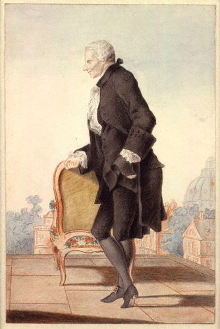
Birth of Laurence Sterne, Humorist & Author

laurence-sterne

Lawrence Sterne, Anglican clergyman, humorist, and author of the experimental novel The Life and Opinions of Tristram Shandy, Gentleman, is born on November 24, 1713, in Clonmel, County Tipperary. Though popular during his lifetime, he becomes even more celebrated in the 20th century, when modernist and postmodernist writers rediscover him as an innovator in textual and narrative forms.

Sterne is born to a British military officer stationed in County Tipperary. Following his father’s postings, the family moves briefly to Yorkshire before returning to Ireland, where they live largely in poverty and move frequently throughout the rest of Sterne’s youth. When the elder Sterne is dispatched to Jamaica, where he would die in 1731, he places his son with a wealthy uncle who supports the boy’s education.

Sterne attends Jesus College, Cambridge, following in the footsteps of his grandfather, Richard Sterne, who had been Master of the College. After being ordained as an Anglican priest, he takes up the vicarship of Sutton-on-the-Forest, where he marries Elizabeth Lumley. The couple lives there for the next 20 years.

Through his paternal family line, Sterne is connected to several powerful clergymen. His uncle, Archdeacon Jacques Sterne, encourages him to contribute to Whig political journals, and consequently he writes several articles supporting Sir Robert Walpole. However, when his political fervency fails to match his uncle’s, prompting him to abandon the role of political controversialist, Jacques Sterne cuts ties with his nephew and refuses to support his career. Nevertheless, Sterne continues writing.

Sterne’s first long work, a sharp satire of the spiritual courts entitled A Political Romance, makes him as many enemies as allies. Though the work is not widely distributed and indeed is burned at the request of those targeted by its Swiftian-style criticism, it represents Sterne’s first foray into the kind of humorous satire for which he would become famous. At age 46, he steps back from managing his parishes and turns his full attention to writing.

Sterne begins what becomes his best-known work, The Life and Opinions of Tristram Shandy, Gentleman, at a moment of personal crisis. He and his wife are both ill with tuberculosis and, in the same year that the first volumes of his long comic novel appear, his mother and uncle Jacques die. The blend of sentiment, humour and philosophical exploration that characterises his works matures during this difficult period. Tristram Shandy is an enormous success, and Sterne becomes, for the first time in his life, a famous literary figure in London. Still suffering from tuberculosis, he leaves England for Continental Europe, where his travels influence his second major work, A Sentimental Journey Through France and Italy (1768).

Sterne’s narrator in A Sentimental Journey is Parson Yorick, a sensitive but also comic figure who first appears in Tristram Shandy and who becomes Sterne’s fictive alter ego. In A Sentimental Journey, Parson Yorick wears a “little picture of Eliza around his neck,” and in the last year of his life Sterne writes the autobiographical Journal to Eliza under the pseudonym Yorick. Eliza is Eliza Draper, the wife of an East India Company official, and the literary and emotional muse of Sterne’s final years. After Draper returns to India, the two continue to exchange letters, some of which Draper allows to be published after Sterne’s death in the volume Letters from Yorick to Eliza.

In early 1768, less than a month after A Sentimental Journey is published, Sterne’s strength fails him and he dies in his lodgings at 41 Old Bond Street in London on March 18, 1768, at the age of 54. He is buried in the churchyard of St. George’s Hanover Square Church.

(Pictured: Laurence Sterne painted in watercolour by French artist Louis Carrogis Carmontelle, ca. 1762)


Leave a comment

The Whiteboys

the-whiteboys

The Whiteboys, a secret Irish agrarian organisation in 18th-century Ireland which uses violent tactics to defend tenant farmer land rights for subsistence farming, is created on October 1, 1761. Their name derives from the white smocks the members wear in their nightly raids. They seek to address rack-rents, tithe collection, excessive priests’ dues, evictions and other oppressive acts. As a result they target landlords and tithe collectors. Over time, Whiteboyism becomes a general term for rural violence connected to secret societies. Because of this generalisation, the historical record for the Whiteboys as a specific organisation is unclear. There are three major outbreaks of Whiteboyism: 1761–64, 1770–76 and 1784–86.

Between 1735 and 1760 there is an increase in land used for grazing and beef cattle, in part because pasture land is exempt from tithes. The landlords, having let their lands far above their value, on condition of allowing the tenants the use of certain commons, now enclose the commons, but do not lessen the rent. As more landlords and farmers switch to raising cattle, labourers and small tenant farmers are forced off the land. The Whiteboys develop as a secret oath-bound society among the peasantry. Whiteboy disturbances had occurred prior to 1761 but were largely restricted to isolated areas and local grievances, so that the response of local authorities had been limited.

Their operations are chiefly in the counties of Waterford, Cork, Limerick, and Tipperary. This combination is not political. It is not directed against the government, but against the local landlords. Members of different religious affiliations take part.

The first major outbreak occurs in County Limerick in November 1761 and quickly spreads to counties Tipperary, Cork, and Waterford. A great deal of organisation and planning seems to have gone into the outbreak, including the holding of regular assemblies. Initial activities are limited to specific grievances and the tactics used non-violent, such as the levelling of ditches that closed off common grazing land, although cattle hamstringing is often practised as the demand for beef prompts large landowners to initiate the process of enclosure. As their numbers increase, the scope of Whiteboy activities begins to widen, and proclamations are clandestinely posted stipulating demands such as that rent not be paid, that land with expired leases not be rented until it has lain fallow for three years, and that no one pay or collect tithes demanded by the Anglican Church. Threatening letters are also sent to debt collectors, landlords, and occupants of land gained from eviction, demanding that they give up their farms.

March 1762 sees a further escalation of Whiteboy activities, with marches in military array preceded by the music of bagpipes or the sounding of horns. At Cappoquin they fire guns and march by the military barracks playing the Jacobite tune “The lad with the white cockade.” These processions are often preceded by notices saying that Queen Sive and her children will make a procession through part of her domain and demand that the townspeople illuminate their houses and provide their horses, ready saddled, for their use. More militant activities often follow such processions with unlit houses in Lismore attacked, prisoners released in an attack on Tallow jail and similar shows of strength in Youghal.

The events of March 1762, however, prompt a more determined response, and a considerable military force under Charles Moore, 1st Marquess of Drogheda is sent to Munster to crush the Whiteboys.

On April 2, 1762 a force of 50 militia men and 40 soldiers set out for Tallow. By mid-April at least 150 suspected Whiteboys have been arrested. Clogheen in County Tipperary bears the initial brunt of this assault as the local parish priest, Fr. Nicholas Sheehy, had earlier spoken out against tithes and collected funds for the defence of parishioners charged with rioting. An unknown number of “insurgents” are reported killed in the “pacification exercise” and Fr. Sheehy is unsuccessfully indicted for sedition several times before eventually being found guilty of a charge of accessory to murder, and hanged, drawn and quartered in Clonmel in March 1766.

In the cities, suspected Whiteboy sympathisers are arrested and in Cork, citizens form an association of about 2,000 strong which offer rewards of £300 for capture of the chief Whiteboy and £50 for the first five sub-chiefs arrested. They often accompany the military on their rampages. The leading Catholics in Cork also offer similar rewards of £200 and £40 respectively.

Acts passed by the Parliament of Ireland (to 1800) and Parliament of the United Kingdom of Great Britain and Ireland (from 1801) to empower the authorities to combat Whiteboyism are commonly called “Whiteboy Acts.”


Leave a comment

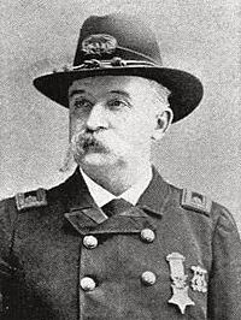
Birth of James Joseph Quinlan, Union Army Officer

james-joseph-quinlan

James Joseph Quinlan, Union Army officer during the American Civil War, is born in Clonmel, County Tipperary on September 13, 1833.

Quinlan is appointed as Major of the 88th New York Infantry in December 1861. He becomes the regiment’s Lieutenant Colonel in October 1862 and is discharged in February 1863.

Quinlan receives America’s highest military decoration, the Medal of Honor, on February 18, 1891, for his actions at the Battle of Savage’s Station in Henrico County, Virginia, the fourth of the Seven Days Battles (Peninsula Campaign). His citation states he “led his regiment on the enemy’s battery, silenced the guns, held the position against overwhelming numbers, and covered the retreat of the Second Army Corps.”

James Joseph Quinlan dies on August 29, 1906, in Queens, New York and is buried at Calvary Cemetery, Woodside, Queens County, New York.


1 Comment

Birth of Marguerite Gardiner,Novelist & Journalist

marguerite-power-farmer-gardiner

Marguerite Gardiner, Countess of Blessington, Irish novelist, journalist, and literary hostess, is born near Clonmel, County Tipperary on September 1, 1789. She becomes acquainted with Lord Byron in Genoa and writes a book about him.

Born Margaret Power, she is a daughter of Edmund Power and Ellen Sheehy, small landowners. She is “haphazardly educated by her own reading and by her mother’s friend Ann Dwyer.” Her childhood is blighted by her father’s character and poverty, and her early womanhood made wretched by a compulsory marriage at the age of fifteen to Captain Maurice St. Leger Farmer, an English officer whose drunken habits finally bring him as a debtor to the King’s Bench Prison, where he dies by falling out of a window in October 1817. She had left him after three months of marriage.

Marguerite later moves to Hampshire, England to live for five years with the family of Thomas Jenkins, a sympathetic and literary sea captain. Jenkins introduces her to the Irishman Charles John Gardiner, 1st Earl of Blessington, a widower with four children and seven years her senior. They marry at St. Mary’s, Bryanston Square, Marylebone, on February 16, 1818, only four months after the death of her first husband.

Of rare beauty, charm and wit, Lady Blessington is no less distinguished for her generosity and for the extravagant tastes she shares with her second husband, which results in encumbering his estates with debt. On August 25, 1822, they set out for a continental tour with Marguerite’s youngest sister, the 21-year-old Mary Anne, and servants. On the way they meet Count Alfred D’Orsay, who had first become an intimate of Lady Blessington in London in 1821, in Avignon on November 20, 1822, before settling at Genoa for four months from March 31, 1823. There they meet Lord Byron on several occasions, giving Lady Blessington material for her Conversations with Lord Byron.

After that they settle for the most part in Naples, where she meets the Irish writer Richard Robert Madden, who is to become her biographer. They also spend time in Florence with their friend Walter Savage Landor, author of Imaginary Conversations which she greatly admires.

It is in Italy, on December 1, 1827, that Count D’Orsay marries Harriet Gardiner, Lord Blessington’s only daughter by his former wife. The Blessingtons and the newlywed couple move to Paris towards the end of 1828, taking up residence in the Hôtel Maréchal Ney, where the Earl suddenly dies at the age of 46 of an apoplectic stroke in 1829. D’Orsay and Harriet then accompanied Lady Blessington to England, but the couple separates soon afterwards amidst much acrimony. D’Orsay continues to live with Lady Blessington until her death. Their home, first at Seymour Place, and afterwards Gore House, Kensington, now the site of the Royal Albert Hall, become a centre of attraction for all that is distinguished in literature, learning, art, science and fashion. Benjamin Disraeli writes Venetia whilst staying there, and it is at her home that Hans Christian Andersen first meets Charles Dickens.

After her husband’s death Lady Blessington supplements her diminished income by contributing to various periodicals as well as by writing novels. She is for some years editor of The Book of Beauty and The Keepsake, popular annuals of the day. In 1834 she publishes her Conversations with Lord Byron. Her Idler in Italy (1839–1840), and Idler in France (1841) are popular for their personal gossip and anecdotes, descriptions of nature and sentiment.

Early in 1849, Count D’Orsay leaves Gore House to escape his creditors. Subsequently the furniture and decorations are sold in a public sale successfully discharging Lady Blessington’s debts. She joins the Count in Paris, where she dies on June 4, 1849, of a burst heart. On examination it is discovered that her heart is three times normal size.

(Pictured: Marguerite, Countess of Blessington, painted by Sir Thomas Lawrence in 1822)


Leave a comment

First Horse-Drawn Coach Service in Ireland

charles-bianconi

Charles Bianconi, Italo-Irish entrepreneur, opens his first horse-drawn coach service, between Clonmel and Cahir, County Tipperary, a distance of 10 miles, on July 6, 1815.

Born Carlo Bianconi, in Tregolo, Costa Masnaga, Italy on September 24, 1786, he moves from an area poised to fall to Napoleon and travels to Ireland via England in 1802, just four years after the Irish Rebellion of 1798. At the time, British fear of continental invasion results in an acute sense of insecurity and additional restrictions on the admission of foreigners. He is christened Carlo but anglicises his name to Charles when he arrives in Ireland in 1802.

At the age of 16, Bianconi works as an engraver and printseller in Dublin, near Essex Street, under his sponsor, Andrea Faroni. In 1806 he sets up an engraving and print shop in Carrick-on-Suir, moving to Clonmel in 1815.

Bianconi eventually becomes famous for his innovations in transport and is twice elected mayor of Clonmel. He is the founder of public transportation in Ireland, at a time preceding railways. He establishes regular horse-drawn carriage services on various routes beginning in 1815. These are known as “Bianconi coaches” and the first service, Clonmel to Cahir, which takes five to eight hours by boat, takes only two hours by Bianconi’s carriage. Travel on a coach costs one penny farthing a mile.

Bianconi’s carriage services continue into the 1850s and later, by which time there are a number of railway services in the country. The Bianconi coaches continue to be well-patronised, by offering connections from various termini, one of the first and few examples of an integrated transport system in Ireland. By 1865 Bianconi’s annual income is about £35,000.

Bianconi also establishes a series of inns, the Bianconi Inns, some of which still exist; in Piltown, County Kilkenny and Killorglin, County Kerry.

In 1832 Bianconi marries Eliza Hayes, the daughter of a wealthy Dublin stockbroker. They have three children. Bianconi dies on September 22, 1875 at Longfield House, Boherlahan, County Tipperary.

Having donated land to the parish of Boherlahan for the construction of a parish church, Bianconi wishes to be buried on the Church grounds. He, and his family, are buried in a side chapel, separate from the parish church in Boherlahan, approximately 5 miles from Cashel, County Tipperary.


Leave a comment

Death of Denis “Dinny” Lacey

dinny-lacey

Denis “Dinny” Lacey, Irish Republican Army (IRA) officer during the Irish War of Independence and anti-Treaty IRA officer during the Irish Civil War, dies at Glen of Aherlow, County Tipperary on February 18, 1923.

Lacey is born on May 31, 1889 in the village of Attybrick, near Annacarty, County Tipperary. He joins the Irish Volunteers in 1913 and is sworn into the secretive Irish Republican Brotherhood (IRB) in 1914. He is introduced to the IRB by Seán Treacy. During the War of Independence (1919–1921) he is selected to command an IRA flying column of the 3rd Tipperary Brigade, in September 1920. The flying column mounts two successful ambushes of British forces – killing six British soldiers at Thomastown near Golden, and four Royal Irish Constabulary (RIC) men at Lisnagaul in the Glen of Aherlow.

In April 1921, following another ambush of British troops near Clogheen, he captures RIC inspector Gilbert Potter, whom he later executes in reprisal of the British hanging of republican prisoners.

In December 1921, Lacey’s unit splits over the Anglo-Irish Treaty. He opposes the Treaty and most of his men follow suit. He takes over command of the 3rd Tipperary Brigade as Séamus Robinson is appointed to commanded the anti-Treaty IRA’s Second Southern Division. In the ensuing civil war (June 1922-May 1923), he organises guerrilla activity in the Tipperary area against Pro-Treaty Irish Free State forces.

Denis Lacey is killed in an action against Free State troops at Ballydavid, near Bansha in the Glen of Aherlow on February 18, 1923. He is 33 years old at the time of his death. Over 1,000 Free State troops drawn from Cahir, Cashel, Clonmel, and Tipperary, under the command of General John T. Prout, with the intention of breaking up Lacey’s guerrilla unit, converge on the Glen where he and four other men from his column are billeted. Lacey and one of his men are killed and others are captured. Two National Army soldiers are killed in the action.

A memorial in Annacarty commemorates Lacey’s war service and subsequent death in action.


Leave a comment

Discovery of the Derrynaflan Chalice

derrynaflan-chalice

The Derrynaflan Chalice, an 8th- or 9th-century chalice, is found as part of the Derrynaflan Hoard of five liturgical vessels on February 17, 1980 near Killenaule, County Tipperary. According to art historian Michael Ryan the hoard “represents the most complex and sumptuous expression of the ecclesiastical art-style of early-medieval Ireland as we know it in its eighth- and ninth-century maturity.” The group is among the most important surviving examples of Insular metalwork.

The hoard is probably secreted during the turbulent 10th to 12th centuries, when Viking raids and dynastic turmoil create many occasions when valuables are hidden. The early and later 10th century is marked by a particular concentration of hoarding in Ireland.

Derrynaflan, the site of an early Irish abbey, is a small island of dry land situated in a surrounding area of peat bogs, in the townland of Lurgoe, County Tipperary, northeast of Cashel. The monastery is an important foundation in the period preceding the Viking raids. The present modest ruins of a small Cistercian nave-and-chancel abbey church there, however, date from a later period.

The Derrynaflan Hoard is discovered on February 17, 1980 by Michael Webb from Clonmel and his son, also Michael, while they are exploring the ancient monastic site of Derrynaflan with a metal detector. They have permission of the owners of the land on which the ruins stand to visit the site but they have no permission to dig on the lands. A preservation order had been made in respect of the ruin under the National Monuments Act, 1930, so that it is an offence to injure or to interfere with the site. The discovery is initially kept secret for three weeks.

The behaviour of the Webbs, and nearly seven years of litigation, culminating in the Supreme Court action where they unsuccessfully seek over £5,000,000 for the find, leads to the replacement of Irish laws of treasure trove by the law in the National Monuments (Amendment) Act, 1994, with a new Section 2 being included in the legislation.

The Ardagh Chalice dates from around the same period, perhaps a century earlier, of the Derrynaflan Hoard and is found close by in neighbouring County Limerick. At the time, the ruling dynasty in Tipperary and most of Munster are the Eóganachta, while their longtime allies and possible cousins the Uí Fidgenti rule in the Limerick area. Feidlimid mac Cremthanin, king-bishop of Cashel, who becomes King of Munster in 821 and dies in 847, is a patron of the monastic foundation at Derrynaflan and has been suggested as a possible patron of the chalice.

As a masterpiece of Insular art, the Derrynaflan chalice is included in the exhibition “The Work of Angels: Masterpieces of Celtic Metalwork, 6th–9th Centuries AD” (London, 1989). The Derrynaflan Hoard is donated to the Irish State and the items are now on display in the National Museum of Ireland.


Leave a comment

Death of Aeneas Coffey, Inventor & Distiller

Aeneas Coffey, Irish inventor and distiller, dies in England on November 26, 1852. He is born in Calais, France, to Irish parents in 1780. He is educated at Trinity College, Dublin, and enters the excise service around 1799–1800 as a gauger. He marries Susanna Logie in 1808, and they have a son, also named Aeneas, who may have been their only child.

According to British customs and excise records, Coffey is a remarkable man with widespread interests and multiple talents who rises quickly through the excise service ranks. He is appointed sub-commissioner of Inland Excise and Taxes for the district of Drogheda in 1813. He is appointed Surveyor of Excise for Clonmel and Wicklow in 1815. In 1816 he is promoted to the same post at Cork. By 1818 he is Acting Inspector General of Excise for the whole of Ireland and within two years is promoted to Inspector General of Excise in Dublin.

Coffey is a strong, determined upholder of the law, but aware of its shortcomings. He survives many nasty skirmishes with illegal distillers and smugglers, particularly in County Donegal in Ulster and in the west of Ireland, where moonshining is most rife. On several occasions he proposes to the government simple, pragmatic solutions to rules and regulations which have hampered legal distillers. Not all of his ideas are accepted. Between 1820 and 1824 he submits reports and gives evidence to Parliamentary Commissions of Inquiry on many aspects of distilling, including formalising the different spellings of Irish whiskey and Scotch whisky. His 1822 report is solidly backed by the Irish distillers. He believes in making it viable to distill legally, and illegal distilling might largely disappear.

He assists the government in the drafting of the 1823 Excise Act which makes it easier to distill legally. It sanctions the distilling of whiskey in return for a licence fee of £10, and a set payment per gallon of proof spirit. It also provides for the appointment of a single Board of Excise, under Treasury control, for the whole of the United Kingdom, replacing the separate excise boards for England, Scotland and Ireland. The 1823 Excise Act also provides for not more than four assistant commissioners of excise to transact current business in Scotland and Ireland, under the control of the board in London. Coffey resigns from government excise service at his own request in 1824.

Between his Dublin education and his work as an excise officer, Coffey has ample opportunity to observe the design and workings of whiskey stills, as Ireland is the world’s leading producer of whiskey in the 19th century, and Dublin is at the center of that global industry. This is how Coffey becomes familiar with a design differing from the traditional copper pot alembic still commonly used in Ireland, the continuous, or column, still. First patented by a Cork County distillery in 1822, the column still remains a relatively inefficient piece of equipment, although it points the way towards a cheaper and more productive way to distill alcohol. It is that last point that captures Coffey’s imagination. He makes his own modifications to existing column still designs, so as to allow a greater portion of the vapors to re-circulate into the still instead of moving into the receiver with the spirit. The result is more efficient, producing a lighter spirit at higher alcohol content. Coffey patents his design in 1830, and it becomes the basis for every column still used ever since.

On his retirement from service, Coffey goes into the Irish distilling business. For a short time he runs the Dodder Bank Distillery, Dublin and Dock Distillery in Grand Canal Street, Dublin, before setting up on his own as Aeneas Coffey Whiskey Company in 1830. The development of the Coffey still makes distillation of his own whiskey much more economical.

Nothing is known of the final years and last resting place of Aeneas Coffey. His only son, also called Aeneas Coffey, emigrates to South Africa and manages a distillery. He marries but his wife dies childless. He returns to England and spends his final years near London.


Leave a comment

Birth of Irish Republican Army Officer Liam Lynch

Liam Lynch, officer in the Irish Republican Army during the Irish War of Independence and the commanding general of the Irish Republican Army during the Irish Civil War, is born in the townland of Barnagurraha, County Limerick, on November 9, 1893.

In 1910, at the age of 17, he starts an apprenticeship in O’Neill’s hardware trade in Mitchelstown, where he joins the Gaelic League and the Ancient Order of Hibernians. Later he works at Barry’s Timber Merchants in Fermoy. In the aftermath of the 1916 Easter Rising, he witnesses the shooting and arrest of David, Thomas and Richard Kent of Bawnard House by the Royal Irish Constabulary. After this, he determines to dedicate his life to Irish republicanism. In 1917 he is elected First Lieutenant of the Irish Volunteer Company, which resides in Fermoy.

In Cork in 1919, Lynch re-organises the Irish Volunteers, the paramilitary organisation that becomes the Irish Republican Army (IRA), becoming commandant of the Cork No. 2 Brigade of the IRA during the guerrilla Irish War of Independence. He is captured, along with the other officers of the Cork No. 2 Brigade, in a British raid on Cork City Hall in August 1920. He provides a false name and is released three days later. In September 1920, he and Ernie O’Malley command a force that takes the British Army barracks at Mallow. The arms in the barracks are seized and the building is partially burned. In April 1921, the IRA is re-organised into divisions based on regions. Lynch’s reputation is such that he is made commander of the 1st Southern Division.

The war formally ends with the signing of the Anglo-Irish Treaty between the Irish negotiating team and the British government in December 1921. Lynch is opposed to the Treaty, on the ground that it disestablishes the Irish Republic proclaimed in 1916 in favour of Dominion status for Ireland within the British Empire. He becomes Chief of Staff of the IRA in March 1922, much of which is also against the Treaty.

Although Lynch opposes the seizure of the Four Courts in Dublin by a group of hardline republicans, he joins its garrison in June 1922 when it is attacked by the newly formed National Army. This marks the beginning of the Irish Civil War. The ‘Munster Republic’ falls in August 1922, when Free State troops land by sea in Cork and Kerry. The Anti-Treaty forces then disperse and pursue guerrilla tactics.

Lynch contributes to the growing bitterness of the war by issuing what are known as the “orders of frightfulness” against the Provisional government on November 30, 1922. This General Order sanctions the killing of Free State Teachta Dála (TDs) and Senators, as well as certain judges and newspaper editors in reprisal for the Free State’s killing of captured republicans. Lynch is heavily criticised by some republicans for his failure to co-ordinate their war effort and for letting the conflict peter out into inconclusive guerrilla warfare. Lynch makes unsuccessful efforts to import mountain artillery from Germany to turn the tide of the war.

In March 1923, the Anti-Treaty IRA Army Executive meets in a remote location in the Nire Valley. Several members of the executive propose ending the civil war. However, Lynch opposes them and narrowly carries a vote to continue the war.

On April 10, 1923, a National Army unit is seen approaching Lynch’s secret headquarters in the Knockmealdown Mountains. Lynch is carrying important papers that could not fall into enemy hands, so he and his six comrades begin a strategic retreat. To their surprise, they run into another unit of 50 soldiers approaching from the opposite side. Lynch is hit by rifle fire from the road at the foot of the hill. Knowing the value of the papers they carry, he orders his men to leave him behind.

When the soldiers finally reach Lynch, they initially believe him to be Éamon de Valera, but he informs them, “I am Liam Lynch, Chief-of-Staff of the Irish Republican Army. Get me a priest and doctor, I’m dying.” He is carried on an improvised stretcher manufactured from guns to “Nugents” pub in Newcastle, at the foot of the mountains. He is later brought to the hospital in Clonmel and dies that evening. He is laid to rest two days later at Kilcrumper Cemetery, near Fermoy, County Cork.


Leave a comment

Death of John Moore Neligan, Physician & Medical Teacher

atlas-of-cutaneous-diseases

John Moore Neligan, one of the foremost physicians and medical teachers of his day, dies on July 24, 1863. Neligan, son of a medical practitioner, is born at Clonmel, County Tipperary, in 1815. He graduates M.D. at Edinburgh in 1836, and begins practice in his birthplace. He later moves to Cork, where he lectures on materia medica and medical botany in a private school of anatomy, medicine, and surgery in Warren’s Place.

In 1840 he takes a house in Dublin, and in 1841 is appointed physician to the Jervis Street Hospital. He also gives lectures on materia medica from 1841 to 1846, and on medicine from 1846 to 1857, in the Dublin school of Peter Street. He publishes in 1844 Medicines, their Uses and Mode of Administration, which gives an account of all the drugs mentioned in the London, Scottish, and Irish pharmacopœias, and of some others. Their sources, medicinal actions, doses, and most useful compounds are clearly stated. The compilation, though containing no original matter, is useful to medical practitioners, and goes through many editions.

Neligan enjoys the friendship of Robert James Graves, the famous lecturer on medicine, and in 1848 edits the second edition of his Clinical Lectures on the Practice of Medicine. In the same year he publishes The Diagnosis and Treatment of Eruptive Diseases of the Scalp, which is printed at the Dublin University Press. He describes as inflammatory diseases herpes, eczema, impetigo, and pityriasis, and as non-inflammatory porrigo, and gives a lucid statement of their characteristics in tabular form. He is unaware, however, of the parasitic nature of herpes capitis, as he calls ringworm, and seems not to have noticed the frequent relation between eczema of the occiput and animal parasites.

From 1849 to 1861 he edits the Dublin Quarterly Journal of Medical Science, and publishes many medical papers of his own in it. In 1852 he publishes A Practical Treatise on Diseases of the Skin, and, like most men who attain notoriety as dermatologists, issues in 1855 a coloured Atlas of Skin Diseases. His treatise is a compilation from standard authors, with a very small addition from his own experience. The subject is well arranged, and so set forth as to be useful to practitioners. It is much read, and leads to his treating many patients with cutaneous affections.

Neligan suffers from kidney disease in his final years. On July 17, he begins to feel unwell and returns to his country residence, Clonmel House, and goes to bed, from which he never rises again. Over the next few days his kidneys ceased to function altogether and he slips into a coma. John Moore Neligan dies on July 24, 1863.