seamus dubhghaill

Promoting Irish Culture and History from Little Rock, Arkansas, USA


Leave a comment

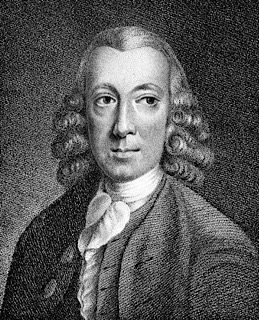
Death of Henry Brooke, Novelist & Dramatist

Henry Brooke, Irish novelist and dramatist, dies in Dublin on October 10, 1783.

Brooke is born and raised at Rantavan House near Mullagh, a village in the far south of County Cavan. He later studies law at Trinity College Dublin, but embraces literature as a career.

Brooke is the son of  The Reverend William Brooke, the well-off Church of Ireland Rector of Killinkere and Mullagh within the Church of Ireland Diocese of Kilmore. He first begins his career as a poet. His now forgotten philosophical poem Universal Beauty is published in 1735, and Alexander Pope thinks its sentiments and poetry fine. He then turns dramatist by adapting extant plays, such as The Earl of Essex. He writes from the Tory point of view and becomes one of the most important figures in Augustan drama, although not for his successes. 

Brooke’s Gustavus Vasa (1739) has the distinction of being the first play banned by the Licensing Act 1737. The play concerns the liberation of Sweden from Denmark in 1521 by Riksföreståndare (Protector of the Realm or Regent) Gustav Vasa (who later becomes King Gustav I of Sweden). Sir Robert Walpole believes that the villain of the play resembles him. Further, a facetious “attack” on it is the first public writing of Samuel Johnson, whose A Complete Vindication of the Licensers of the English Stage feigns support for Walpole while it drives the censor’s argument to reductio ad absurdum.

Brooke lives in Ireland most of his life, but he spends time in London when his plays are on the stage. In politics, he is somewhat radical in arguing publicly for loosening the laws persecuting Roman Catholics in the United Kingdom. His daughter, Charlotte Brooke, is herself an important figure in the history of Irish literature, publishing Reliques of Irish Poetry (1789) and working to increase the profile of Irish language poetry.

Later, Brook’s Earl of Essex comes back to the boards in a revival. Again, Samuel Johnson offers his public support of Brooke, but when he hears the Earl saying at the end of Act II, “Who rules o’er free men must himself be free,” Johnson replies, “Who drives fat oxen must himself be fat.” Although Johnson is objecting to the misuse and overuse of “freedom” and is at that time in a vexatious debate over the American Revolutionary War (saying, “Why is it that we hear the loudest cries for liberty from the drivers of Negroes?”), Brooke is mortified by Johnson’s parody and changes the line for his Collected Works.

Brooke has a difficult life and makes a very poor living. The Licensing Act 1737 robs him of his primary avenue to making a living, for, after the Act, he is the first man banned by it. Whatever fame this lends him is made up for by his inability to get new plays performed. His greatest commercial successes come from the Earl of Essex and his two novels, The Fool of Quality (1760-1772) and Juliet Grenville (1774), which are two of the finest sentimental novels.  John Wesley is so fond of The Fool of Quality, in which Brooke declares his belief in universal salvation, that he seeks to have a copy of it given out to all new Methodist churches.

Brooke has twenty-two children. Of these, only Charlotte survives adolescence. She shepherds his Works through the press after his death.

The death of Brooke’s wife after a long illness and the loss of so many of his children, leaves Brooke’s physical and mental health increasingly unstable. His decline is evident in the last volume of The Fool of Quality and his final three-volume novel Juliet Grenville. He dies in Dublin on October 10, 1783, and is buried in his father’s churchyard in Mullagh.

Leave a comment

Death of Lawrence Sterne, Humorist & Author

Lawrence Sterne, Anglican clergyman, humorist, and author of the experimental novel The Life and Opinions of Tristram Shandy, Gentleman, dies in London on March 18, 1768. Though popular during his lifetime, he becomes even more celebrated in the 20th century, when modernist and postmodernist writers rediscover him as an innovator in textual and narrative forms.

Sterne is born on November 24, 1713, in Clonmel, County Tipperary, to a British military officer stationed there. Following his father’s postings, the family moves briefly to Yorkshire before returning to Ireland, where they live largely in poverty and move frequently throughout the rest of Sterne’s youth. When the elder Sterne is dispatched to Jamaica, where he would die in 1731, he places his son with a wealthy uncle who supports the boy’s education.

Sterne attends Jesus College, Cambridge, following in the footsteps of his grandfather, Richard Sterne, who had been Master of the College. After being ordained as an Anglican priest, he takes up the vicarship of Sutton-on-the-Forest, where he marries Elizabeth Lumley. The couple lives there for the next 20 years.

Through his paternal family line, Sterne is connected to several powerful clergymen. His uncle, Archdeacon Jaques Sterne, encourages him to contribute to Whig political journals, and consequently he writes several articles supporting Sir Robert Walpole. However, when his political fervency fails to match his uncle’s, prompting him to abandon the role of political controversialist, Jaques Sterne cuts ties with his nephew and refuses to support his career. Nevertheless, Sterne continues writing.

Sterne’s first long work, a sharp satire of the spiritual courts entitled A Political Romance, makes him as many enemies as allies. Though the work is not widely distributed and indeed is burned at the request of those targeted by its Swiftian-style criticism, it represents Sterne’s first foray into the kind of humorous satire for which he would become famous. At age 46, he steps back from managing his parishes and turns his full attention to writing.

Sterne begins what becomes his best-known work, The Life and Opinions of Tristram Shandy, Gentleman, at a moment of personal crisis. He and his wife are both ill with tuberculosis and, in the same year that the first volumes of his long comic novel appear, his mother and uncle Jaques die. The blend of sentiment, humour and philosophical exploration that characterises his works matures during this difficult period. Tristram Shandy is an enormous success, and Sterne becomes, for the first time in his life, a famous literary figure in London. Still suffering from tuberculosis, he leaves England for Continental Europe, where his travels influence his second major work, A Sentimental Journey Through France and Italy (1768).

Sterne’s narrator in A Sentimental Journey is Parson Yorick, a sensitive but also comic figure who first appears in Tristram Shandy and who becomes Sterne’s fictive alter ego. In A Sentimental Journey, Parson Yorick wears a “little picture of Eliza around his neck,” and in the last year of his life Sterne writes the autobiographical Journal to Eliza under the pseudonym Yorick. Eliza is Eliza Draper, the wife of an East India Company official, and the literary and emotional muse of Sterne’s final years. After Draper returns to India, the two continue to exchange letters, some of which Draper allows to be published after Sterne’s death in the volume Letters from Yorick to Eliza.

In early 1768, less than a month after A Sentimental Journey is published, Sterne’s strength fails him and he dies in his lodgings at 41 Old Bond Street in London on March 18, 1768, at the age of 54. He is buried in the churchyard of St. George’s Hanover Square Church.

(Pictured: Portrait of Laurence Sterne (1713-1768), oil on canvas by Joshua Reynolds, 1760)


Leave a comment

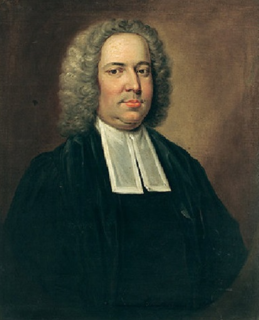
Birth of Writer & Philanthropist Samuel Madden

samuel-madden

Samuel Madden, writer, economist, and philanthropist commonly called “Premium” Madden, is born in Dublin on December 23, 1686. His father is John Madden, and his mother is Mary Molyneux.

In 1729, Madden writes a tragedy entitled Themistocles, the Lover of His Country. In 1733, he writes Memoirs of the Twentieth Century, one of the first science fiction novels. However, it is suppressed by Sir Robert Walpole, and is now very rare. A reprint of the original sheets appears with publishing company Garland Science in 1972 (ISBN 0824005708). The work is originally designed to have six volumes yet is discontinued after the first volume.

In 1738, Madden writes his most famous work, Reflections and Resolutions Proper for the Gentlemen of Ireland, in which he describes the poor living conditions in Ireland at the time.

Dr. Samuel Johnson writes of Madden, “His was a name which Ireland ought to honour.” He suggests that the Royal Dublin Society initiate a scheme to fund improvements in agriculture and arts in Ireland via the use of premiums – the source of his nickname Premium.

Samuel Madden dies at the age of 79 on December 31, 1765, at Manor Waterhouse in County Fermanagh.

(Pictured: Portrait of Samuel Madden wearing clerical robes, Oil on Canvas, Philip Hussey (Irish, 1713–1783))


Leave a comment

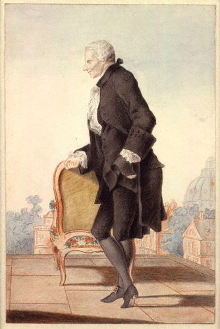
Birth of Laurence Sterne, Humorist & Author

laurence-sterne

Lawrence Sterne, Anglican clergyman, humorist, and author of the experimental novel The Life and Opinions of Tristram Shandy, Gentleman, is born on November 24, 1713, in Clonmel, County Tipperary. Though popular during his lifetime, he becomes even more celebrated in the 20th century, when modernist and postmodernist writers rediscover him as an innovator in textual and narrative forms.

Sterne is born to a British military officer stationed in County Tipperary. Following his father’s postings, the family moves briefly to Yorkshire before returning to Ireland, where they live largely in poverty and move frequently throughout the rest of Sterne’s youth. When the elder Sterne is dispatched to Jamaica, where he would die in 1731, he places his son with a wealthy uncle who supports the boy’s education.

Sterne attends Jesus College, Cambridge, following in the footsteps of his grandfather, Richard Sterne, who had been Master of the College. After being ordained as an Anglican priest, he takes up the vicarship of Sutton-on-the-Forest, where he marries Elizabeth Lumley. The couple lives there for the next 20 years.

Through his paternal family line, Sterne is connected to several powerful clergymen. His uncle, Archdeacon Jacques Sterne, encourages him to contribute to Whig political journals, and consequently he writes several articles supporting Sir Robert Walpole. However, when his political fervency fails to match his uncle’s, prompting him to abandon the role of political controversialist, Jacques Sterne cuts ties with his nephew and refuses to support his career. Nevertheless, Sterne continues writing.

Sterne’s first long work, a sharp satire of the spiritual courts entitled A Political Romance, makes him as many enemies as allies. Though the work is not widely distributed and indeed is burned at the request of those targeted by its Swiftian-style criticism, it represents Sterne’s first foray into the kind of humorous satire for which he would become famous. At age 46, he steps back from managing his parishes and turns his full attention to writing.

Sterne begins what becomes his best-known work, The Life and Opinions of Tristram Shandy, Gentleman, at a moment of personal crisis. He and his wife are both ill with tuberculosis and, in the same year that the first volumes of his long comic novel appear, his mother and uncle Jacques die. The blend of sentiment, humour and philosophical exploration that characterises his works matures during this difficult period. Tristram Shandy is an enormous success, and Sterne becomes, for the first time in his life, a famous literary figure in London. Still suffering from tuberculosis, he leaves England for Continental Europe, where his travels influence his second major work, A Sentimental Journey Through France and Italy (1768).

Sterne’s narrator in A Sentimental Journey is Parson Yorick, a sensitive but also comic figure who first appears in Tristram Shandy and who becomes Sterne’s fictive alter ego. In A Sentimental Journey, Parson Yorick wears a “little picture of Eliza around his neck,” and in the last year of his life Sterne writes the autobiographical Journal to Eliza under the pseudonym Yorick. Eliza is Eliza Draper, the wife of an East India Company official, and the literary and emotional muse of Sterne’s final years. After Draper returns to India, the two continue to exchange letters, some of which Draper allows to be published after Sterne’s death in the volume Letters from Yorick to Eliza.

In early 1768, less than a month after A Sentimental Journey is published, Sterne’s strength fails him and he dies in his lodgings at 41 Old Bond Street in London on March 18, 1768, at the age of 54. He is buried in the churchyard of St. George’s Hanover Square Church.

(Pictured: Laurence Sterne painted in watercolour by French artist Louis Carrogis Carmontelle, ca. 1762)