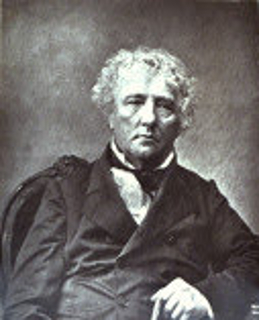
Charles Bianconi, Italo-Irish passenger car entrepreneur, dies on September 22, 1875, at Longfield House, Boherlahan, County Tipperary. Sometimes described as the “man who put Ireland on wheels,” he develops a network of horse-drawn coaches that become Ireland’s “first regular public transport” system.
Bianconi is born Carlo Bianconi in Tregolo, Costa Masnaga, Italy on September 24, 1786. He moves from an area poised to fall to Napoleon and travels to Ireland in 1802, by way of England, just four years after the Irish Rebellion of 1798. At the time, British fear of continental invasion results in an acute sense of insecurity and additional restrictions on the admission of foreigners. He is christened Carlo but anglicises his name to Charles when he arrives in Ireland.
Bianconi works as an engraver and printseller in Dublin, near Essex Street, under his sponsor, Andrea Faroni, when he is sixteen. In 1806 he sets up an engraving and print shop in Carrick-on-Suir, County Tipperary, moving to Clonmel in 1815.
Bianconi eventually becomes famous for his innovations in transport and is twice elected mayor of Clonmel.
Bianconi is the founder of public transportation in Ireland, at a time preceding railways. He establishes regular horse-drawn carriage services on various routes from about 1815 onward. These are known as “Bianconi coaches” and the first service, Clonmel to Cahir, takes five to eight hours by boat but only two hours by Bianconi’s carriage. Travel on one of his carriages cost one penny farthing a mile.
In 1832 Bianconi marries Eliza Hayes, the daughter of a wealthy Dublin stockbroker. They have three children – Charles Thomas Bianconi, Catherine Henrietta Bianconi and Mary Anne Bianconi, who marries Morgan John O’Connell and is the mother of his grandson John O’Connell Bianconi.
Bianconi’s transport services continue into the 1850s and later, by which time there are a number of railway services in the country. The Bianconi coaches continue to be well-patronised, by offering connections from various termini, one of the first and few examples of an integrated transport system in Ireland. By 1865 Bianconi’s annual income was about £35,000.
Charles Bianconi dies on September 22, 1875, at Longfield House, Boherlahan, County Tipperary. Having donated land to the parish of Boherlahan for the construction of a parish church, he wishes to be buried on the Church grounds. He, and his family, are buried in a side chapel, separate from the parish church in Boherlahan, approximately five miles from Cashel, County Tipperary.
Healy’s brother, Paddy Healy, serves as president of the Teachers’ Union of Ireland and runs unsuccessfully in the Seanad elections in 2007 and 2011 on the NUI panel, and in the 1980s runs in the Dublin North–East constituency as an Anti H-Block candidate.
Healy is re-elected to South Tipperary County Council at the 2009 Irish local elections. He wins back Tipperary South seat at the 2011 Irish general election with 21.3% of the first preference vote. On December 15, 2011, he helps launch a nationwide campaign against the household charge being brought in as part of the 2012 Irish budget.
Healy stands for re-election to the new Tipperary constituency as a non-party candidate in the 2016 Irish general election, and is elected on the seventh count. However, he is entered into the register of the 32nd Dáil as a Workers and Unemployed Action TD once again. He votes for both Gerry Adams and Richard Boyd Barrett for Taoiseach when the 32nd Dáil first convenes on March 10, 2016.
As a young man O’Neill leaves Ireland, one of the ninety-nine involved in the Flight of the Earls escaping the English conquest of his native Ulster. He grows up in the Spanish Netherlands and spends 40 years serving in the Irish regiment of the Spanish army. He sees most of his combat in the Eighty Years’ War against the Dutch Republic in Flanders, notably at the Siege of Arras, where he commands the Spanish garrison. He also distinguishes himself in the Franco-Spanish War by holding out for 48 days with 2,000 men against a French army of 35,000.
O’Neill is, like many Gaelic Irish officers in the Spanish service, very hostile to the English Protestant presence in Ireland. In 1627, he is involved in petitioning the Spanish monarchy to invade Ireland using the Irish Spanish regiments. He proposes that Ireland be made a republic under Spanish protection to avoid in-fighting between Irish Catholic landed families over which of them would provide a prince or king of Ireland. This plot comes to nothing. However in 1642, He returns to Ireland with 300 veterans to aid the Irish Rebellion of 1641.
The subsequent war, known as the Irish Confederate Wars, is part of the Wars of the Three Kingdoms, civil wars throughout Britain and Ireland. Because of his military experience, O’Neill is recognised on his return to Ireland in July 1642, at Doe Castle in County Donegal, as the leading representative of the O’Neills and head of the Ulster Irish. Sir Phelim O’Neill resigns the northern command of the Irish rebellion in his favour and escorts him from Lough Swilly to Charlemont.
Jealousy between the kinsmen is complicated by differences between O’Neill and the Catholic Confederation which meet at Kilkenny in October 1642. O’Neill professes to be acting in the interest of Charles I, but his real aim is the complete Independence of Ireland as a Roman Catholic country, while the Old English Catholics represented by the council desire to secure religious liberty and an Irish constitution under the crown of England. More concretely, O’Neill wants the Plantation of Ulster overturned and the recovery of the O’Neill clan’s ancestral lands. Moreover, he is unhappy that the majority of Confederate military resources are directed to Thomas Preston‘s Leinster army. Preston is also a Spanish veteran but he and O’Neill have an intense personal dislike of each other.
Although O’Neill is a competent general, he is outnumbered by the Scottish Covenanter army that lands in Ulster in 1642. Following a reverse at Clones, he has to abandon central Ulster and is followed by thousands of refugees, fleeing the retribution of the Scottish soldiers for some atrocities against Protestants in the rebellion of 1641. He does his best to stop the killings of Protestant civilians, for which he receives the gratitude of many Protestant settlers. From 1642–1646 a stalemate exists in Ulster, which he uses to train and discipline his Ulster Army. This poorly supplied force nevertheless gains a very bad reputation for plundering and robbing friendly civilians around its quarters in northern Leinster and southern Ulster.
In 1646 O’Neill, with substantial Gallowglass numbers and additionally furnished with supplies by the Papal Nuncio, Giovanni Battista Rinuccini, attacks the Scottish Covenanter army under Major-General Robert Monro, who had landed in Ireland in April 1642. On June 5, 1646 O’Neill utterly routs Monro at the Battle of Benburb, killing or capturing up to 3,000 Scots. However after being summoned to the south by Rinuccini, he fails to take advantage of the victory, and allows Monro to remain unmolested at Carrickfergus.
In March 1646 a treaty is signed between James Butler, 1st Duke of Ormond and the Catholics, which would have committed the Catholics to sending troops to aid the Royalist cause in the English Civil War. The peace terms however, are rejected by a majority of the Irish Catholic military leaders and the Catholic clergy including the Nuncio, Rinuccini. O’Neill leads his Ulster army, along with Thomas Preston’s Leinster army, in a failed attempt to take Dublin from Ormond. However, the Irish Confederates suffer heavy military defeats the following year at the hands of Parliamentarian forces in Ireland at Dungan’s Hill and Knocknanauss, leading to a moderation of their demands and a new peace deal with the Royalists. This time O’Neill is alone among the Irish generals in rejecting the peace deal and finds himself isolated by the departure of the papal nuncio from Ireland in February 1649.
So alienated is O’Neill by the terms of the peace the Confederates have made with Ormond that he refuses to join the Catholic/Royalist coalition and in 1648 his Ulster army fights with other Irish Catholic armies. He makes overtures for alliance to George Monck, 1st Duke of Albemarle, who is in command of the parliamentarians in the north, to obtain supplies for his forces, and at one stage even tries to make a separate treaty with the English Parliament against the Royalists in Ireland. Failing to obtain any better terms from them, he turns once more to Ormond and the Catholic confederates, with whom he prepares to co-operate more earnestly when Oliver Cromwell‘s arrival in Ireland in August 1649 brings the Catholic party face to face with serious danger.
Before, however, anything is accomplished by this combination, O’Neill dies on November 6, 1649 at the O’Reilly stronghold of Cloughoughter Castle located on an island in Lough Oughter in County Cavan. There is no clear evidence of the cause of death, with one belief being that he was poisoned by a priest, while others think it is more likely that he died from an illness resulting from an old wound. Under cover of night he is reputed to have been brought to the Franciscan abbey in Cavan town for burial. However some local tradition still suggests that it may have been at Trinity abbey located upon an island in Lough Oughter, which may be more likely given the logistics of his removal. His death is a major blow to the Irish of Ulster and is kept secret for some time.
The Catholic nobles and gentry meet in Ulster in March 1650 to appoint a commander to succeed O’Neill, and their choice is Heber MacMahon, Roman Catholic Bishop of Clogher, the chief organiser of the recent Clonmacnoise meeting. O’Neill’s Ulster army is unable to prevent the Cromwellian conquest of Ireland, despite a successful defence of Clonmel by O’Neill’s nephew Hugh Dubh O’Neill and is destroyed at the Battle of Scarrifholis in County Donegal in 1650. Its remnants continue guerrilla warfare until 1653, when they surrender at Cloughoughter Castle in County Cavan. Most of the survivors are transported to serve in the Spanish Army.
Between 1932 and 1937, Dillon serves as a TD for the Donegal constituency for the National Centre Party and after its merger with Cumann na nGaedheal, for the new party of Fine Gael. He plays a key role in instigating the creation of Fine Gael and becomes a key member of the party in later years. He remains as TD for Monaghan from 1937 to 1969. He becomes deputy leader of Fine Gael under W. T. Cosgrave.
Dillon temporarily resigns from Fine Gael in 1942 over its stance on Irish neutrality during World War II. While Fine Gael supports the government’s decision to stay out of the war, he urges the government to side with the Allies. A passionate anti-Nazi, he describes the Nazi creed as “the devil himself with twentieth-century efficiency.” His zeal against Adolf Hitler draws him the ire of the German Minister to Ireland Eduard Hempel, who denounces him as a “Jew” and “German-hater.” Even Éamon de Valera, then Taoiseach, is not spared the fierceness of Dillon’s rhetoric. When the Taoiseach ridicules his stark support for the Allies, noting this means he has to adopt a Pro-British stance, Dillon defiantly retorts, “My ancestors fought for Ireland down the centuries on the continent of Europe while yours were banging banjos and bartering budgies in the backstreets of Barcelona.”
In 1942, while holidaying in Carna, County Galway, Dillon meets Maura Phelan of Clonmel on a Friday. By that Monday the two are engaged and six weeks after that the pair are married. He is 40 and Maura is 22 years of age.
Dillon is one of the independents who supports the first inter-party government (1948–1951) and is appointed Minister for Agriculture. As Minister, he is responsible for huge improvements in Irish agriculture. Money is spent on land reclamation projects in the areas of less fertile land while the overall quality of Irish agricultural produce increases.
Dillon rejoins Fine Gael in 1953. He becomes Minister for Agriculture again in the second inter-party government (1954–1957). In 1959, he becomes leader of Fine Gael, succeeding Richard Mulcahy. He becomes president of the party in 1960. In 1965, Fine Gael loses the general election to Seán Lemass and Fianna Fáil. The non-Fianna Fáil parties win 69 seats to Fianna Fáil’s 72. Had the other parties won four more seats between them, they would have been able to form a government. Having narrowly failed to become Taoiseach, Dillon stands down as Fine Gael leader after the election.
On Northern Ireland, while Dillon stands against Partition, he equally opposes any “armed solution” or militant nationalist policy, stating, “We have got to win, not only the barren acres of Ulster, but the hearts of the people who live in it.”
Dillon is a colourful contributor to Dáil proceedings and is noted for his high standard of oratory. He remains a TD until 1969, when he retires from politics. He dies in Malahide, Dublin on February 10, 1986, at the age of 83.
The Royalist rebellion that breaks out in Ireland against the new English republic in 1649 is met by a prompt English response. On August 15 Oliver Cromwell and 15,000 troops land in Dublin. His merciless policy toward the Irish Royalists becomes brutally clear within a month.
The defeat of the Irish Royalists in the Battle of Rathmines in early August is fortuitous for Cromwell, for without it, the English would have held only the small port of Derry (known as Londonderry from 1662) in the north, making his invasion almost impossible to effect. Cromwell quickly finds that the Irish Royalists have retreated into fortified towns. He therefore prepares for a series of sieges.
The first such siege occurs at Drogheda, 28 miles north of Dublin. Cromwell arrives at Drogheda on September 3. His siege guns, brought up by sea, arrive two days later. He finds the town surrounded by high but relatively thin walls and its governor, Sir Arthur Ashton, is confident of his defenses and refuses an order to surrender. On September 10 Cromwell begins an artillery bombardment of the walls. These are breached the following day, but the gap created is too small to allow troops to enter the city. Twice they are repelled until Cromwell himself leads an assault and overwhelms the defenders on September 11.
The carnage inside the city is appalling. Cromwell’s troops kill priests and monks on sight and set fire to a Catholic church sheltering some soldiers. Civilians as well as soldiers are massacred, and Ashton is bludgeoned to death with his own wooden leg. The few Royalist soldiers who survive are transported to Barbados. What happens at Drogheda is replicated at Wexford the following month and Clonmel the next May. By the time Cromwell has put down the rebellion and returned to England in that same month, he has become forever hated by Irish Catholics.
During the eight day siege the British lose 150 of their 12,000 men while 2,800 Irish are killed and 200 captured of the 3,100 at Drogheda.
(Pictured: St Laurence’s Gate – the last remaining of the ten original defensive gates at Drogheda)
Scott is the third son of Thomas Scott of Scottsborough, County Tipperary, and his wife Rachel, daughter of Mark Prim of Johnswell, County Kilkenny. His parents are cousins, being two of the grandchildren of Nicholas Purcell, 13th Baron of Loughmoe. His elder brother is the uncle of Bernard Phelan, who establishes Château Phélan Ségur, and Dean John Scott, who first plants the gardens open to the public at Ballyin, County Waterford and marries a niece of Scott’s political ally, Henry Grattan.
While at Kilkenny College, Scott stands up to the tormentor of a boy named Hugh Carleton, who grows up to be Viscount Carleton of Clare. They become firm friends, and Carleton’s father, then known as the “King of Cork,” due to his wealth and influence, invites him to their home and becomes his patron. In 1756, Carleton sends both the young men off, with equal allowances, to study at Trinity College, Dublin and then the Middle Temple in London. On being called to the Irish bar in 1765, Scott’s eloquence secures him a position that enables him to pay £300 a year to his patron, Francis Carleton, who through a series of disappointments has been declared bankrupt. He continues to gratefully support his patron until Hugh Carleton is financially able to insist that he take up the payments to his father. Scott in later life turns against Carleton, describing him in his diary as a “worthless wretch.”
Admitted to King’s Inns in 1765, Scott is entitled to practice as a barrister. In 1769 he is elected as the Member of Parliament for Mullingar, a seat he holds until 1783. The following year he is made a King’s Counsel (KC). In 1772 he is Counsel to the Board of Revenue and in 1774 is appointed Solicitor-General for Ireland (1774–1777). Three years later, he is elected a Privy Councillor and Attorney-General for Ireland (1774–1783). He is dismissed from the latter position in 1782 for refusing to acknowledge the right of England to legislate for Ireland. In 1775, he is awarded an honorary degree of Doctor of Law (LL.D.) by Trinity College, Dublin. He holds the office of Prime Serjeant-at-Law of Ireland between 1777 and 1782. He is Clerk of the Pleas of the Court of the Exchequer in 1783 and is elected Member of Parliament for Portarlington between 1783 and 1784.
In 1784, Scott is created 1st Baron Earlsfort of Lisson-Earl, County Tipperary, following his appointment to Lord Chief Justice of the King’s Bench. In 1789 he is created 1st Viscount Clonmel, of Clonmel, County Tipperary and in 1793 is created 1st Earl of Clonmel. By the 1790s he has an annual income of £20,000. Due to heavy drinking and overeating he becomes seriously overweight, and this no doubt contributes to his early death, although his diary shows that he makes frequent efforts to live a more temperate life. Drinking also produces the red face which earns him the nickname “Copper-faced Jack.”
In 1768, Scott marries the widowed Catherine Anna Maria Roe, daughter of Thomas Mathew, of Earl Landaff and sister of Francis Mathew, 1st Earl Landaff. She dies in 1771. In 1779, he marries Margaret Lawless, daughter and eventual heiress of banker Patrick Lawless of Dublin. He leaves a son and heir and a daughter by his second marriage.
Scott lives at Clonmell House, 17 Harcourt Street, Dublin. He also keeps a country residence, Temple Hill House, in County Dublin. Clonmell Street in Dublin is named in his honour, as is Earlsfort Terrace, also in Dublin. He also gains a reputation of being an experienced duelist.
In 1797, in the last conversation he would have with his wife’s cousin, Valentine Lawless, 2nd Baron Cloncurry, he exclaims, “My dear Val, I have been a fortunate man in life. I am a Chief Justice and an Earl; but, believe me, I would rather be beginning the world as a young (chimney) sweep.” He dies at the age of 58 the following year on May 23, 1798.
(Pictured: John Scott, 1st Earl of Clonmell, oil on canvas by Gilbert Charles Stuart)
As a boy Patterson performs with his local parish choir and is involved in maintaining the annual tradition of singing with the “Wrenboys.” He sings in the local St. Mary’s Choral Society and at a production of The Pirates of Penzance performed with both his parents. His interests extend beyond music and as a boy he represents Marlfield GAAhurling club, plays tennis at Hillview and golf at the Mountain Road course. He quits school at an early stage to work in the printing business of his mother’s family. He moves to Dublin in 1961 to enroll at the National Academy of Theatre and Allied Arts where he studies acting while at the same time receiving vocal training from Hans Waldemar Rosen. In 1964, he enters the Feis Ceoil, a nationwide music competition, in which he wins several sections including oratorio, lieder and the German Gold Cup.
Patterson gives classical recitals around Ireland and wins scholarships to study in London, Paris and in the Netherlands. While in Paris, he signs a contract with Philips Records and releases his first record, My Dear Native Land. He works with conductors and some of the most prestigious orchestras in Europe including the London Symphony Orchestra and Orchestre de Paris. He also gains a reputation as a singer of Handel, Mozart, and Bach oratorios and German, Italian and French song. He has a long-running programme on RTÉ titled For Your Pleasure.
Patterson is equally at home in more intimate settings. His singing in the role of the Evangelist in Bach’s St. John Passion is given fine reviews. Further recordings follow, of Beethoven arrangements, Irish songs, Berlioz songs, Purcell songs and others, all on the Philips label.
Patterson performs sold-out concerts from London’s Royal Albert Hall to New York’s Carnegie Hall, and with his family he presents two concerts at the White House, for presidents Ronald Reagan in 1982 and Bill Clinton in 1995. He records over thirty albums in six languages, wins silver, gold and platinum discs and is the first Irish singer to host his own show in Radio City Music Hall in New York.
Rising to greater prominence with the new popularity of Celtic music in the 1990s, Patterson sees many of his past recordings reissued for American audiences, and in 1998 he stars in the PBS special Ireland in Song. His last album outsells Pavarotti.
In 1999, Patterson learns he has a brain tumour. He has several operations in the following year and his condition appears to stabilise. He is diagnosed with a recurrence of his illness on May 7, 2000. He briefly recuperates and resumes performing. His last performance is on June 4, 2000, at Regis College in the Boston suburb of Weston, Massachusetts. Shortly thereafter he is admitted to the Memorial Sloan Kettering Cancer Center in New York where he lapses into a coma and dies on June 10, 2000, at the age of 61.
Between 1932 and 1937 Dillon serves as Teachta Dála (TD) for the Donegal constituency for the National Centre Party and after its merger with Cumann na nGaedheal, for the new party of Fine Gael. He plays a key role in instigating the creation of Fine Gael and becomes a key member of the party in later years. He remains as TD for Monaghan from 1937 to 1969. He becomes deputy leader of Fine Gael under W. T. Cosgrave.
Dillon resigns from Fine Gael in 1942 over its stance on Irish neutrality during World War II. While Fine Gael supports the government’s decision to stay out of the war, he urges the government to side with the Allies. He is a rabid anti-Nazi, proclaiming the Nazi ideology is “the devil himself with twentieth-century efficiency.” His zealousness against the Nazis draws him the ire of the German minister to Ireland, Eduard Hempel, who denounces him as a “Jew” and “German-hater.”
Dillon has a personally eventful 1942. While holidaying in Carna, County Galway he meets Maura Phelan of Clonmel on a Friday. By that Monday the two are engaged and six weeks after that they are married.
Dillon is one of the independents who supports the first inter-party government (1948–1951) and is appointed Minister for Agriculture. As Minister, he is responsible for huge improvements in Irish agriculture. Money is spent on land reclamation projects in the areas of less fertile land while the overall quality of Irish agricultural produce increases.
Dillon rejoins Fine Gael in 1953. He becomes Minister for Agriculture again in the second inter-party government (1954–1957). In 1959 he becomes leader of Fine Gael, succeeding Richard Mulcahy. He becomes president of the party in 1960. In 1965 Fine Gael loses the general election to Seán Lemass and Fianna Fáil. The non-Fianna Fáil parties win 69 seats to Fianna Fáil’s 72. Had the other parties been able to win four more seats between them, they would have been able to form a government. Having narrowly failed to become Taoiseach, Dillon stands down as Fine Gael leader after the election.
Dillon is a colourful contributor to Dáil proceedings and is noted for his high standard of oratory. He remains a TD until 1969, when he retires from politics. He died in Malahide, Dublin on February 10, 1986, at the age of 83.
Charles Bianconi, Italo-Irish passenger car entrepreneur, is born Carlo Bianconi in Tregolo, Costa Masnaga, Italy on September 24, 1786.
Bianconi moves from an area poised to fall to Napoleon and travels to Ireland in 1802, by way of England, just four years after the Irish Rebellion of 1798. At the time, British fear of continental invasion results in an acute sense of insecurity and additional restrictions on the admission of foreigners. He is christened Carlo but anglicises his name to Charles when he arrives in Ireland.
Bianconi works as an engraver and printseller in Dublin, near Essex Street, under his sponsor, Andrea Faroni, when he is 16. In 1806 he sets up an engraving and print shop in Carrick-on-Suir, County Tipperary, moving to Clonmel in 1815.
Bianconi eventually becomes famous for his innovations in transport and is twice elected mayor of Clonmel.
Bianconi is the founder of public transportation in Ireland, at a time preceding railways. He establishes regular horse-drawn carriage services on various routes from about 1815 onward. These are known as “Bianconi coaches” and the first service, Clonmel to Cahir, takes five to eight hours by boat but only two hours by Bianconi’s carriage. Travel on one of his carriages cost one penny farthing a mile.
In 1832 Bianconi marries Eliza Hayes, the daughter of a wealthy Dublin stockbroker. They have three children – Charles Thomas Bianconi, Catherine Henrietta Bianconi and Mary Anne Bianconi, who marries Morgan O’Connell and is the mother of his grandson John O’Connell Bianconi.
Bianconi’s transport services continue into the 1850s and later, by which time there are a number of railway services in the country. The Bianconi coaches continue to be well-patronised, by offering connections from various termini, one of the first and few examples of an integrated transport system in Ireland. By 1865 Bianconi’s annual income was about £35,000.
Charles Bianconi dies on September 22, 1875 at Longfield House, Boherlahan, County Tipperary. Having donated land to the parish of Boherlahan for the construction of a parish church, he wishes to be buried on the Church grounds. He, and his family, are buried in a side chapel, separate from the parish church in Boherlahan, approximately 5 miles from Cashel, County Tipperary.
The Royalist rebellion that breaks out in Ireland against the new English republic in 1649 is met by a prompt English response. On August 15 Oliver Cromwell and 15,000 troops land in Dublin. His merciless policy toward the Irish Royalists becomes brutally clear within a month.
The defeat of the Irish Royalists at Rathmines in early August is fortuitous for Cromwell, for without it, the English would have held only the small port of Derry (known as Londonderry from 1662) in the north, making his invasion almost impossible to effect. Cromwell quickly finds that the Irish Royalists have retreated into fortified towns. He therefore prepares for a series of sieges.
The first such siege occurs at Drogheda, 28 miles north of Dublin. Cromwell arrives at Drogheda on September 3. His siege guns, brought up by sea, arrive two days later. He finds the town surrounded by high but relatively thin walls and its governor, Sir Arthur Ashton, is confident of his defenses and refuses an order to surrender. On September 10 Cromwell begins an artillery bombardment of the walls. These are breached the following day, but the gap created is too small to allow troops to enter the city. Twice they are repelled until Cromwell himself leads an assault and overwhelms the defenders on September 11.
The carnage inside the city is appalling. Cromwell’s troops kill priests and monks on sight and set fire to a Catholic church sheltering some soldiers. Civilians as well as soldiers are massacred, and Ashton is bludgeoned to death with his own wooden leg. The few Royalist soldiers who survive are transported to Barbados. What happens at Drogheda is replicated at Wexford the following month and Clonmel the next May. By the time Cromwell has put down the rebellion and returned to England in that same month, he has become forever hated by Irish Catholics.
During the eight day siege the British lose 150 of their 12,000 men while 2,800 Irish are killed and 200 captured of the 3,100 at Drogheda.
(Pictured: St Laurence’s Gate – the last remaining of the ten original defensive gates at Drogheda)