seamus dubhghaill

Promoting Irish Culture and History from Little Rock, Arkansas, USA


Leave a comment

The 1991 Cappagh Killings

The 1991 Cappagh killings, a gun attack by the loyalist Ulster Volunteer Force (UVF) in the village of Cappagh, County Tyrone, Northern Ireland, takes place on March 3, 1991. A unit of the UVF’s Mid-Ulster Brigade drive to the staunchly republican village and shoot dead three Provisional Irish Republican Army (IRA) members and a Catholic civilian at Boyle’s Bar. There are allegations of collusion between the UVF and the Ulster Defence Regiment (UDR) in the shootings.

Although nobody is ever charged in connection with the killings, it is widely believed by nationalists and much of the press that the attack had been planned and led by Billy Wright, the leader of the Mid-Ulster Brigade’s Portadown unit. Wright himself takes credit for this and boasts to The Guardian newspaper, “I would look back and say Cappagh was probably our best,” though some sources are sceptical about his claim.

On the evening of Sunday, March 3, 1991, a unit of the UVF’s Mid-Ulster Brigade drive into the heartland of the East Tyrone IRA, intent on wiping out an entire IRA unit that is based in the County Tyrone village of Cappagh. One team of the UVF men wait outside Boyle’s Bar, while a second team waits on the outskirts of the town. At 10:30 p.m. a car pulls into the car park outside the bar and the UVF gunmen open fire with vz. 58 assault rifles, killing Provisional IRA volunteers John Quinn (23), Dwayne O’Donnell (17) and Malcolm Nugent (20). The victims and car are riddled with bullets. According to author Thomas G. Mitchell, Quinn, O’Donnell and Nugent are part of an IRA active service unit (ASU). The gunmen then attempt to enter the pub but are unable to after the civilians inside realise what is happening and barricade the door. Unable to get into the bar, a UVF gunman shoots through a high open toilet window killing local civilian, Thomas Armstrong (50) and badly wounding a 21-year-old man. Their intended target, IRA commander Brian Arthurs, escapes with his life by crouching behind the bar during the shooting. According to the Conflict Archive on the Internet (CAIN), the three IRA volunteers chose to go to the pub “on the spur of the moment,” thus are unlikely to be the UVF’s original target.

After the attack, the UVF issues a statement: “This was not a sectarian attack on the Catholic community, but was an operation directed at the very roots of the Provisional IRA command structure in the Armagh–Tyrone area.” The statement concludes with the promise that “if the Provisional IRA were to cease its campaign of terror, the Ulster Volunteer Force would no longer deem it necessary to continue with their military operations.” Privately the UVF are hugely pleased with the attack in a republican heartland and Billy Wright, leader of the Portadown unit of the UVF’s Mid-Ulster Brigade, who is alleged to be centrally involved, tells Jim Cusack and Henry McDonald the killings were “one of things we did militarily in thirty years. We proved we could take the war to the Provos in one of their strongest areas.” Cusack and McDonald assert that a wealthy UVF supporter with a business in South Belfast helped the UVF purchase the cars used in the attack at auctions in the city.

The Provisional IRA initially does not acknowledge that three of the victims are within its ranks, apparently with the aim of garnering sympathy from the wider world, particularly in the Republic of Ireland, toward nationalists in Northern Ireland.

The first reprisal takes place on April 9, 1991, when alleged UVF member Derek Ferguson, a cousin of local MP Reverend William McCrea, is shot and killed in Coagh by members of the East Tyrone Brigade. His family denies any paramilitary links. In the months following the 1991 shootings, two former UDR soldiers are killed by the IRA near Cappagh. One of them is shot dead while driving along Altmore Road on August 5, 1991. The other former soldier is blown up by an IRA bomb planted inside his car at Kildress on April 25, 1993. It is claimed that he has loyalist paramilitary connections. The 1993 bombing leads to allegations that the IRA is killing Protestant landowners in Tyrone and Fermanagh in an orchestrated campaign to drive Protestants out of the region. There are at least five botched IRA attempts against the life of Billy Wright before the Irish National Liberation Army (INLA) succeeds in killing him in 1997 inside the Maze Prison.

This is not the first time the UVF carries out an attack on Boyle’s Bar in Cappagh. On January 17, 1974, at around 7:40 p.m. two masked UVF gunmen enter the pub and open fire indiscriminately on the customers with a Sterling submachine gun and a Smith & Wesson revolver, firing at least 35 shots. A Catholic civilian and retired farmer Daniel Hughes (73) is shot eleven times and killed in the attack and three other people are injured. A group calling itself the “Donaghmore-Pomeroy Battalion of the UVF” claim responsibility for the shooting. The attack is linked to the notorious Glenanne gang.

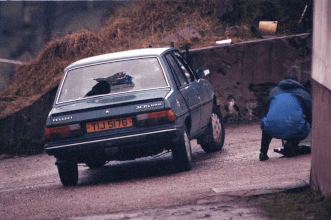
(Pictured: The scene of the UVF attack outside Boyle’s Bar in Cappagh in March 1991. Photo: Pacemaker Archive Belfast 153-91-BW)

Leave a comment

1997 Coalisland Attack

On the evening of March 26, 1997, the Provisional Irish Republican Army (IRA) East Tyrone Brigade launches an improvised grenade attack on the fortified Royal Ulster Constabulary (RUC)/British Army base in Coalisland, County Tyrone, Northern Ireland. The blast sparks an immediate reaction by an undercover Special Air Service (SAS) unit, who shoots and wounds Gareth Doris, an Irish republican and alleged IRA volunteer. The SAS unit is then surrounded by a crowd of protesters who prevent them approaching Doris or leaving. RUC officers arrive and fire plastic bullets at the crowd, allowing the special forces to leave the area.

Coalisland is a town in County Tyrone that has a tradition of militant republicanism; five residents are killed by British security forces before the first IRA ceasefire in 1994. In February 1992, four IRA volunteers are killed in a gun battle with the SAS during their escape after a machine gun attack on the RUC/British Army barracks there. Three months later, an IRA bomb attack on a British Army patrol at Cappagh, in which a paratrooper loses his legs, triggers a series of clashes between local residents and British troops on May 12 and 17. A number of civilians and soldiers are injured, a soldier’s backpack radio destroyed, and two British weapons stolen. The melee is followed by a 500-strong protest in the town and bitter exchanges between Republic of Ireland and British officials. Further scuffles between civilians and soldiers are reported in the town on March 6, 1994.

At 9:40 p.m. on Wednesday, March 26, 1997, a grenade is thrown at the joint British Army/RUC base at Coalisland, blowing a hole in the perimeter fence. The RUC reports that a 1 kg device hit the fence ten feet off the ground. Another source claims that the device is a coffee-jar bomb filled with Semtex. The grenade is thrown or fired by two unidentified men. At the time of the attack, there is an art exhibition at Coalisland Heritage Hall, also known as The Mill, from where the explosion and the gunshots that follow are clearly heard. The incident lasts less than two minutes.

Just one minute after the IRA attack, bypassers hear high-velocity rounds buzzing around them. A number of men, apparently SAS soldiers, get out of civilian vehicles wearing baseball caps with “Army” stamped on the front. A source initially describes them as members of the 14 Field Security and Intelligence Company. The men are firing Browning pistols and Heckler & Koch submachine guns. Witnesses say there are eight to ten gunshots, while a republican source claims that up to eighteen rounds are fired. Nineteen-year-old Gareth Doris is shot in the stomach and falls to the ground. He is allegedly returning from the local church and is in the company of a priest when he is shot. A local priest, Seamus Rice, is driving out of the church car park when his car is hit by bullets, smashing the windscreen.

Three minutes after the blast, hundreds of angry residents gather at the scene and confront the undercover soldiers. The soldiers fire live rounds at the ground and into the air to keep people back. The crowd keeps drawing back and moving forward again until 9:50 p.m., when the RUC arrives and begins firing plastic bullets at the protesters. Two women are wounded by plastic bullets and the undercover soldiers then flee in unmarked cars, setting off crackers or fireworks at the same time. Sinn Féin councillor Francie Molloy claims that the protesters forced the SAS to withdraw, saving Doris’s life in the process. Witnesses allegedly fear an undercover soldier brandishing a pistol would have killed the wounded Doris with a shot to his head.

Afterward, hundreds of residents are forced to leave their homes as security forces search the area near the base. This keeps tensions high, according to local republican activist Bernadette McAliskey. Two men are later questioned by the RUC about the attack.

The attack, along with two large bombings the same day in Wilmslow, England, raise concerns that the IRA is trying to influence the upcoming UK general election. Martin McGuinness describes the shooting as “murderous,” while independent councillor Jim Canning says that more than a dozen soldiers “were threatening to shoot anybody who moved […] while a young man lay shot on the ground.” Republican sources claim that this is another case of shoot-to-kill policy by the security forces. Ulster Unionist Party (UUP) MP Ken Maginnis, however, praises the SAS for their actions.

Gareth Doris is admitted to South Tyrone Hospital in Dungannon, where he is arrested after undergoing surgery. He is later transferred to Musgrave Park Hospital in Belfast. He is later convicted for involvement in the bombing and sentenced to ten years in jail, before being released in 2000 under the terms of the Good Friday Agreement. Gareth is the cousin of Tony Doris, an IRA member killed in an SAS ambush in the nearby village of Coagh on June 3, 1991, and a cousin of Sinn Féin leader Michelle O’Neill. According to Sinn Féin councillor Brendan Doris, another cousin of Gareth, “He absolutely denies being involved in terrorist activity of any description.” Amnesty International raises its concerns over the shooting and the fact that no warning is given beforehand.

DNA evidence collected in the area of the shooting leads to the arrest of Coalisland native Paul Campbell by the Police Service of Northern Ireland (PSNI) in 2015, on the charges of being the other man with Doris during the attack. In February 2020, he is convicted by a Diplock court in Belfast. He denies the charges but receives a seven-and-a-half-year sentence. The prosecutor acknowledges that Campbell would have been released by this time under the provisions of the Good Friday Agreement but argues that that was a decision for the parole commission, not the court.

On July 5, 1997, on the eve of the 1997 nationalist riots in Northern Ireland, the British Army/RUC base is the scene of another attack, when an IRA volunteer engages an armoured RUC vehicle with gunfire beside the barracks. One female officer is wounded. The former RUC station at Coalisland is eventually shut down in 2006 and sold for private development in 2010.

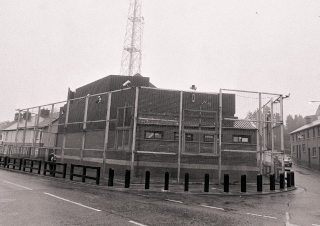
(Pictured: Coalisland RUC/British Army base in Coalisland, County Tyrone, Northern Ireland)


Leave a comment

The Clonoe Ambush

The Clonoe Ambush, a military action between the British Army and the Provisional Irish Republican Army (IRA), occurs on February 16, 1992, during the Troubles in Northern Ireland. An IRA unit attacks the Royal Ulster Constabulary (RUC) security base in the village of Coalisland in County Tyrone and is ambushed shortly afterwards by the Special Air Service (SAS) in the grounds of a church in the village of Clonoe while attempting to make its escape, resulting in several IRA fatalities.

From 1985 onwards, the IRA in East Tyrone had been at the forefront of a campaign against British state police and army facilities and their personnel. In 1987, an East Tyrone IRA unit was ambushed with eight of its members being killed by the SAS while they were making an attack on a police station in Loughgall, County Armagh. This was the IRA’s greatest loss of life in a single incident during The Troubles. Despite these losses, the IRA’s campaign continued, with it attacking nearly 100 police and military facilities over the next five years, wrecking thirty-three and damaging the remainder to varying degrees. The SAS ambush has no noticeable long-term effect on the level of IRA activity in East Tyrone. In the two years before the Loughgall ambush, the IRA killed seven people in East Tyrone and North Armagh, and eleven in the two years following the ambush.

Three other IRA members – Gerard Harte, Martin Harte and Brian Mullin – had been ambushed and killed by the SAS as they tried to kill an off-duty Ulster Defence Regiment (UDR) soldier near Carrickmore, County Tyrone. British intelligence identified them as the perpetrators of the Ballygawley bus bombing, which killed eight British soldiers. After that bombing, all troops going on leave or returning from leave were ferried in and out of East Tyrone by helicopter. Another high-profile attack of the East Tyrone Brigade was carried out on January 11, 1990, near Augher, where a Gazelle helicopter was shot down.

On June 3, 1991, three IRA men, Lawrence McNally, Michael “Pete” Ryan and Tony Doris, were killed at the town of Coagh, when a stolen car they were driving in on their way to kill an off-duty Ulster Defence Regiment soldier was ambushed by the Special Air Service. Ryan was the same man who, according to Irish journalist and author Ed Moloney, had led an attack on Derryard checkpoint on the orders of IRA Army Council member Thomas “Slab” Murphy two years earlier.

The IRA’s East Tyrone Brigade lost 53 members killed by the British Forces during the Troubles – the highest of any “Brigade areas.” Of these, 28 were killed between 1987 and 1992.

At 10.30 p.m. on the night of February 16, 1992, a stolen car and lorry carrying multiple IRA attackers drives into the centre of the village of Coalisland and, pulling up at its fortified Royal Ulster Constabulary security base, fires 30 rounds of armour-piercing tracer ammunition into it at close range from a Soviet Union made DShK heavy machine-gun that they had mounted on the back of the lorry. The heavy machine gun is fired by IRA member Kevin O’Donnell, the rest of the unit being armed with Soviet-made AKM assault rifles. The IRA attackers then drive off at speed up Annagher hill, without any apparent pursuit from the security forces. While making their escape they drive past the home of Tony Doris, an IRA man who had been killed by the British Army the previous year, where they stop to fire into the air, shouting, “Up the ‘RA, that’s for Tony Doris!” Witnesses also report the IRA men waving Irish Tricolours from the back of the lorry. After this they drive on at speed to the car park of St. Patrick’s Roman Catholic Church in the village of Clonoe, two miles away from Coalisland police station, arriving at 10.45 p.m., where getaway cars are waiting.

Immediately on arrival, the IRA attackers are in the process of preparing to abandon the attack vehicles and dismounting the DShK to take with them when they are assailed by a British Army detachment that had been lying in wait for them in the car park’s perimeter, primarily composed of soldiers from the Special Air Service, who engage them with sustained automatic fire. Patrick Vincent, age 20, the driver of the stolen lorry, is shot dead with five bullets while still in its cab. Peter Clancy, age 19, and Kevin O’Donnell, age 21) are killed while dismounting the DShK on the back of the lorry. Sean O’Farrell, age 23, is pursued on foot across the church grounds over a distance of 100 yards before being shot dead with five bullets while trying to climb over a fence. Two other IRA men, one of them being Aidan McKeever, who are found sitting in a car in the car park with the intention of acting as getaway drivers, surrender after being wounded and are taken prisoner. The roof of the church is accidentally set on fire after a stray round hit a fuel storage tank. One British soldier is wounded during the confrontation. An IRA statement reports that another active service unit made up of at least four volunteers taking part in the operation at Coalisland “escaped unharmed” under heavy fire in other vehicles after splitting up into two teams.

Several witnesses to the ambush later claim that some of the IRA men tried to surrender to the British Army engaging unit during the ambush but were summarily executed. Justice Seamus Treacy of Northern Ireland’s High Court awards McKeever, the IRA getaway driver, £75,000 in damages in 2011. It is unclear whether or not this decision is appealed, or whether the damages are ever paid.

A local IRA source points out areas of incompetence in the attack by the IRA unit involved that leads to its destruction:

  • The use of a long-range weapon for a short-range shooting. The DShK can be used up to 2,000 metres from the target, and its armour-piercing capabilities at 1,500 metres are still considerable.
  • The use of tracer rounds is ill-judged as they easily reveal the firing location of the gun if it is not being fired from a well-hidden position.
  • The escape route is chosen at random, with the machine-gun in full sight and the support vehicle flashing its hazard lights.
  • The gathering of so many men at the same place after such an attack is another factor in the failure to escape for most of the attacking force.

During the funeral services for O’Donnell and O’Farrell in Coalisland, the parish priest criticises the security forces for what happened at Clonoe church, which had resulted in the deaths of the four IRA men. The priest, Fr. MacLarnon, then appeals to the IRA and Sinn Féin to replace “the politics of confrontation with the politics of cooperation.” While Francie Molloy, a local Sinn Féin councillor, walks out of the church in protest, leading Sinn Féin politicians Gerry Adams and Martin McGuinness remain in their seats. There are hundreds of Royal Ulster Constabulary police officers outside the church during the funeral, the RUC having changed its policy after the Milltown Cemetery attack. This show of force is criticised by Sinn Féin.

This is the last occasion that IRA members are killed in a series of ambushes by the British Army, spearheaded by the Special Air Service, in Northern Ireland. Growing tension between locals and the British military foot-patrols lead to street confrontations with soldiers from the Parachute Regiment three months later.

(Pictured: The ambush scene at Clonoe, County Tyrone, where four IRA men were shot dead by the British army in February 1992)


Leave a comment

The Coagh Ambush

coagh-county-tyrone

The Coagh ambush takes place in Coagh, County Tyrone, Northern Ireland, on June 3, 1991, during The Troubles, when a Provisional Irish Republican Army (IRA) active service unit from its East Tyrone Brigade is ambushed by the British Army‘s Special Air Service (SAS) while on its way to kill a part-time member of the Ulster Defence Regiment (UDR). The ambush results in the deaths of all three IRA men involved.

The series of killings which lead to the Coagh ambush begin on April 26, 1988, when a 23-year-old UDR soldier from Coagh, Edward Gibson, is shot dead by an IRA unit at Ardboe while at work for Cookstown Council on a bin lorry. The Ulster Volunteer Force (UVF) retaliates by murdering Phelim McNally, brother of local Sinn Féin councillor Francie McNally, on November 24, 1988. This is followed by an IRA attack upon a car maintenance garage business owned by retired UDR soldier Leslie Dallas on March 7, 1989, in which Dallas, along with two civilian pensioners that are in the premises at the time of the attack, are all murdered by machine gun fire from a passing vehicle, the IRA attackers driving off afterwards cheering as reported by eyewitnesses in the vicinity.

The tit-for-tat campaign around Coagh continues on November 29, 1989, when UVF gunmen attack a pub owned by IRA member Liam Ryan, shooting Ryan dead. A customer in the premises is also killed in the incident. On March 8, 1990, part-time UDR soldier and construction worker Thomas Jamison is killed by the IRA in a gun and grenade ambush attack on a lorry he is driving near Donaghmore, while delivering concrete to a British Army base. On March 3, 1991, the Ulster Volunteer Force carries out an attack at the village of Cappagh, killing three IRA members. On April 9, 1991, the IRA’s East Tyrone Brigade shoots dead Derek Ferguson in Coagh, a cousin of local Member of Parliament Reverend William McCrea, stating afterward that he was a paramilitary with the Ulster Volunteer Force. Ferguson’s family subsequently refutes that he had anything to do with Loyalist paramilitarism.

At 7:30 AM on June 3, 1991, three Tyrone IRA paramilitaries, Tony Doris (21), Michael “Pete” Ryan (37) and Lawrence McNally (39), drive a stolen Vauxhall Cavalier from Moneymore, County Londonderry to the village of Coagh, crossing the border of counties Londonderry and Tyrone, to kill a part-time Ulster Defence Regiment soldier, who is in his civilian life a contractor that works with the security forces. Their intent, however, is known to the British security forces, having been revealed by either a Crown agent within the IRA itself or from covert technical surveillance. In consequence a detachment from the British Army’s Special Air Service is lying in wait on both sides of Coagh’s main street, and also in a red Bedford lorry at the scene.

The stolen car is driven by Doris towards the centre of the village, its journey from Moneymore being tracked on the ground and in the air. At the scene of the ambush the British Army has set up a “decoy” target for the IRA to go for in the form of an SAS trooper who is pretending to be their intended victim, sitting in his car at a regular spot while waiting to pick up a friend on their way to work, which IRA intelligence had established as a behavioral pattern of their intended victim. When the stolen car carrying the IRA men approaches the scene, the Special Air Service detachment opens sustained automatic fire upon it from close range. Doris is immediately hit and the out-of-control car crashes into two nearby parked cars. The shooting continues until the car explodes in flames. According to an eyewitness, one of the IRA men in the car returns fire from within the vehicle after the crash.

Some reports claim at least two of the IRA men attempt to exit the crashed car and are subsequently found lying half out of its doors by the later police investigation of the scene. Relatives of the IRA men subsequently state that they had received information from the scene that two of the IRA attackers had fled on foot from the car after the crash, but had been pursued after and shot down by the British Army in the vicinity, with their bodies being taken back to the car, which is subsequently reported to be riddled with over 200 bullet holes. A Royal Ulster Constabulary crime-scene report states that a balaclava belonging to one of the IRA men is found some distance away from the vehicle.

The bodies of Doris, Ryan and McNally are badly burned and have to be identified by police using their dental records. Two rifles are recovered from within the burned-out stolen car and subsequent police forensic examination reveals that they had both been used in the multiple murders at Leslie Dallas’s garage in March 1989.

(Pictured: Looking towards Coagh village, from the County Londonderry side)


Leave a comment

Birth of Jimmy Kennedy, Songwriter & Lyricist

jimmy-kennedy-1

James Kennedy, songwriter and lyricist, is born on July 20, 1902, near Omagh, County Tyrone in what is now Northern Ireland. He puts words to existing music such as “The Teddy Bears’ Picnic” and “My Prayer” and co-writes with composers Michael Carr, Wilhelm Grosz and Nat Simon, among others. In a career spanning more than fifty years, he writes some 2,000 songs, of which over 200 become worldwide hits and about 50 are all-time popular music classics.

Kennedy’s father, Joseph Hamilton Kennedy, is a policeman in the Royal Irish Constabulary (RIC). While growing up in the village of Coagh, Kennedy writes several songs and poems. He is inspired by local surroundings — the view of the Ballinderry River, the local Springhill House and the plentiful chestnut trees on his family’s property, as evidenced in his poem Chestnut Trees. He later moves to Portstewart, a seaside resort in County Londonderry.

Kennedy graduates from Trinity College, Dublin, before teaching in England. He is accepted into the Colonial Service, as a civil servant, in 1927.

While awaiting a Colonial Service posting to the colony of Nigeria, Kennedy embarks on a career in songwriting. His first success comes in 1930 with “The Barmaid’s Song”, sung by Gracie Fields. Fellow lyricist Harry Castling introduces him to Bert Feldman, a music publisher based in London‘s “Tin Pan Alley“, for whom he starts to work. In the early 1930s he writes a number of successful songs, including “Oh, Donna Clara” (1930), “My Song Goes Round the World” (1931), and “The Teddy Bears’ Picnic” (1933), in which he provides new lyrics to John Walter Bratton‘s tune from 1907.

In 1934, Feldman turns down Kennedy’s song “Isle of Capri“, but it becomes a major hit for a new publisher, Peter Maurice. He writes several more successful songs for Maurice, including “Red Sails in the Sunset” (1935), inspired by beautiful summer evenings in Portstewart, Northern Ireland, “Harbour Lights” (1937) and “South of the Border” (1939), inspired by a holiday picture postcard he receives from Tijuana, Mexico and written with composer Michael Carr. He and Carr also collaborate on several West End shows in the 1930s, including London Rhapsody (1937). “My Prayer,” with original music by Georges Boulanger, has English lyrics penned by Kennedy in 1939. It is originally written by Boulanger with the title “Avant de Mourir” in 1926.

During the early stages of World War II, while serving in the British Army‘s Royal Artillery, where he rises to the rank of Captain, Kennedy writes the wartime hit, “We’re Going to Hang out the Washing on the Siegfried Line.” His hits also include “Cokey Cokey” (1945), and the English lyrics to “Lili Marlene.” After the end of the war, his songs include “Apple Blossom Wedding” (1947), “Istanbul (Not Constantinople)” (1953), and “Love Is Like a Violin” (1960). In the 1960s he writes the song “The Banks of the Erne'”, for recording by his friend from the war years, Theo Hyde, also known as Ray Warren.

Kennedy is a patron of the Castlebar Song Contest from 1973 until his death in 1984 and his association with the event adds great prestige to the contest.

Kennedy wins two Ivor Novello Awards for his contribution to music and receives an honorary degree from the New University of Ulster. He is awarded the OBE in 1983 and, in 1997, is posthumously inducted into the Songwriter’s Hall of Fame.

Jimmy Kennedy dies in Cheltenham on April 6, 1984, at the age of 81. He is interred in Taunton, Somerset.


Leave a comment

Death of Songwriter & Lyricist Jimmy Kennedy

jimmy-kennedy

James Kennedy, a Northern Irish songwriter and lyricist, dies in Cheltenham, Gloucestershire, England on April 6, 1984. In a career spanning more than fifty years, he writes some 2,000 songs, of which over 200 become worldwide hits and about 50 are all-time popular music classics. Until the duo of John Lennon and Paul McCartney, Kennedy has more hits in the United States than any other Irish or British songwriter.

Kennedy is born near Omagh, County Tyrone, Northern Ireland. His father, Joseph Hamilton Kennedy, is a policeman in the Royal Irish Constabulary, which exists before the partition of Ireland. While growing up in Coagh, Kennedy writes several songs and poems. He is inspired by local surroundings such as the view of the Ballinderry river, the local Springhill house and the plentiful chestnut trees on his family’s property, as evidenced in his poem Chestnut Trees. Kennedy later moves to Portstewart, a seaside resort.

Kennedy graduates from Trinity College, Dublin, before teaching in England. He is accepted into the Colonial Service, as a civil servant, in 1927.

While awaiting a Colonial Service posting to the colony of Nigeria, Kennedy embarks on a career in songwriting. His first success comes in 1930 with The Barmaid’s Song, sung by Gracie Fields. Fellow lyricist Harry Castling introduces him to Bert Feldman, a music publisher based in London‘s “Tin Pan Alley,” for whom Kennedy starts to work. In the early 1930s he writes a number of successful songs, including Oh, Donna Clara (1930), My Song Goes Round the World (1931), and The Teddy Bears’ Picnic (1933), in which he provides new lyrics to John Walter Bratton‘s tune from 1907.

In 1934, Feldman turns down Kennedy’s song Isle of Capri, but it becomes a major hit for a new publisher, Peter Maurice. He writes several more successful songs for Maurice, including Red Sails in the Sunset (1935), inspired by beautiful summer evenings in Portstewart, Northern Ireland, Harbor Lights (1937) and South of the Border (1939), inspired by a holiday picture postcard he receives from Tijuana, Mexico, and written with composer Michael Carr. Kennedy and Carr also collaborate on several West End theatre shows in the 1930s, including London Rhapsody (1937). My Prayer, with original music by Georges Boulanger, has English lyrics penned by Kennedy in 1939. It is originally written by Boulanger with the title Avant de Mourir in 1926.

During the early stages of World War II, while serving in the British Army‘s Royal Artillery, where he rises to the rank of Captain, Kennedy writes the wartime hit, We’re Going to Hang out the Washing on the Siegfried Line. His hits also include Cokey Cokey (1945), and the English lyrics to Lili Marlene. After the end of the war, his songs include Apple Blossom Wedding (1947), Istanbul (Not Constantinople) (1953), and Love Is Like a Violin (1960). In the 1960s he writes the song The Banks of the Erne, for recording by his friend from the war years, Theo Hyde, also known as Ray Warren.

Kennedy is a patron of the Castlebar International Song Contest from 1973 until his death in 1984 and his association with the event adds great prestige to the contest. He wins two Ivor Novello Awards for his contribution to music and receives an honorary degree from the New University of Ulster. He is awarded the Order of the British Empire (OBE) in 1983.

Jimmy Kennedy dies in Cheltenham on April 6, 1984, at the age of 81, and was interred in Taunton, Somerset. In 1997 he is posthumously inducted into the Songwriter’s Hall of Fame.