seamus dubhghaill

Promoting Irish Culture and History from Little Rock, Arkansas, USA


Leave a comment

Assassination of Máire Drumm, VP of Sinn Féin

maire-drumm

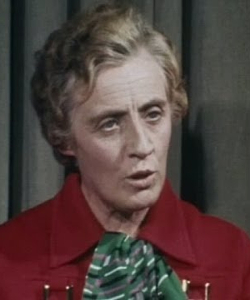
Máire Drumm, vice president of Sinn Féin and a commander in Cumann na mBan, is shot dead on October 28, 1976, by Ulster loyalists dressed as doctors while recovering from an eye operation in Belfast‘s Mater Hospital.

Drumm is born in Newry, County Down to a staunchly Irish republican family. Drumm’s mother has been active in the Irish War of Independence and the Irish Civil War. Drumm grows up in the village of Killean, County Armagh, where she plays camogie. She is active in the republican movement after meeting her husband, a republican prisoner. She begins to speak at many rallies and protest meetings and is soon elected as Vice President of Sinn Fein. She becomes involved in the Northern Ireland Civil Rights Association in the 1960s and works to rehouse Catholics forced from their homes by loyalist intimidation.

Drumm is jailed twice for seditious speeches. After she is released from HM Prison Armagh, raids on her house by the security forces escalate. She is widely demonised in the British media and is already a target for assassination when she is admitted to Belfast’s Mater Hospital for eye treatment in October 1976.

While recovering from the operation, Drumm is shot at point blank range in a joint operation by the Ulster Volunteer Force and the Ulster Defence Association who are able to enter and leave the hospital undisturbed. No one has ever been convicted of her murder.

Drumm’s speeches and quotations can be found on murals across Northern Ireland, including:

“The only people worthy of freedom are those who are prepared to go out and fight for it every day, and die if necessary.”

“We must take no steps backward, our steps must be onward, for if we don’t, the martyrs that died for you, for me, for this country will haunt us forever.”


Leave a comment

Birth of Professor James Francis “Frank” Pantridge

frank-pantridge

Professor James Francis “Frank” Pantridge, physician and cardiologist from Northern Ireland, is born in Hillsborough, County Down, on October 3, 1916. Pantridge transforms emergency medicine and paramedic services with the invention of the portable defibrillator.

Pantridge is educated at Friends’ School Lisburn and Queen’s University Belfast, graduating in medicine in 1939. During World War II he serves in the British Army and is commissioned into the Royal Army Medical Corps as a lieutenant on April 12, 1940. He is awarded the Military Cross during the Fall of Singapore, when he becomes a POW. He serves much of his captivity as a slave labourer on the Burma Railway. When he is freed at the end of the war, Pantridge is emaciated and has contracted cardiac beriberi. He suffers from ill-health related to the disease for the remainder of his life.

After Pantridge’s liberation he works as a lecturer in the pathology department at Queen’s University, and then wins a scholarship to the University of Michigan, where he studies under Dr. F.N. Wilson, a cardiologist and authority on electrocardiography.

Pantridge returns to Northern Ireland in 1950 and is appointed as cardiac consultant to the Royal Victoria Hospital, Belfast and professor at Queen’s University, where he remains until his retirement in 1982. There he establishes a specialist cardiology unit whose work becomes well known.

By 1957, Pantridge and his colleague, Dr. John Geddes, introduce the modern system of cardiopulmonary resuscitation (CPR) for the early treatment of cardiac arrest. Further study leads Pantridge to the realization that many deaths result from ventricular fibrillation which needs to be treated before the patient is admitted to hospital. This leads to his introduction of the mobile coronary care unit (MCCU), an ambulance with specialist equipment and staff to provide pre-hospital care.

To extend the usefulness of early treatment, Pantridge goes on to develop the portable defibrillator, and in 1965 installs his first version in a Belfast ambulance. It weighs 70 kg and operates from car batteries. By 1968 he has designed an instrument weighing only 3 kg, incorporating a miniature capacitor manufactured for NASA.

His work is backed up by clinical investigations and epidemiological studies in scientific papers, including an influential 1967 The Lancet article. With these developments, the Belfast treatment system, often known as the “Pantridge Plan”, becomes adopted throughout the world by emergency medical services. The portable defibrillator becomes recognised as a key tool in first aid, and Pantridge’s refinement of the automated external defibrillator (AED) allows it to be used safely by members of the public.

Although he is known worldwide as the “Father of Emergency Medicine,” Frank Pantridge is less acclaimed in his own country, and is saddened that it takes until 1990 for all front-line ambulances in the United Kingdom to be fitted with defibrillators.

He died in Hillsborough at the age of 88 on Boxing Day, December 26, 2004. He never married.


Leave a comment

Birth of Arthur Guinness, Founder of the Guinness Brewery

arthur-guinness

Arthur Guinness, Irish brewer and the founder of the Guinness brewery, is born in Celbridge, County Kildare, on September 28, 1725. He is also an entrepreneur and philanthropist.

Arthur Guinness is born into the Protestant Guinness family, part of the Anglo-Irish aristrocracy. They claim to descend from the Gaelic Magennis clan of County Down. However, recent DNA evidence suggests descent from the McCartans, another County Down clan, whose spiritual home lay in the townland of “Guiness” near Ballynahinch, County Down.

Guinness’s place and date of birth are the subject of speculation. His gravestone in Oughter Ard, County Kildare, reads that he dies on January 23, 1803, at the age of 78, and that he is born some time in 1724 or very early in 1725. This contradicts the date of September 28, 1725, chosen by the Guinness company in 1991, apparently to end speculation about his birthdate. The place of birth is perhaps his mother’s home at Read homestead at Ardclough, County Kildare.

In 2009 it is claimed that Guinness is born in nearby Celbridge where his parents live in 1725 and where his father later becomes land steward for the Archbishop of Cashel, Dr. Arthur Price. In his will, Dr. Price leaves £100 each to “his servant” Arthur and his father in 1752.

Guinness leases a brewery in Leixlip in 1755, brewing ale. Guinness also purchases a long lease of an adjacent site from George Bryan of Philadelphia in 1756 that is developed as investment property. He leaves his younger brother in charge of the Leixlip enterprise in 1759 and moves on to another at St. James’ Gate, Dublin. He signs a 9,000-year lease for the brewery, effective from December 31, 1759. The lease is presently displayed in the floor at St. James’ Gate. By 1767 he is the master of the Dublin Corporation of Brewers. His first actual sales of porter are listed on tax data from 1778. From the 1780s his second son, Arthur, works at his side and becomes the senior partner in the brewery in 1803.

Guinness’ major achievement is the expansion of his brewery in 1797–1799. Thereafter he brews only porter and employs members of the Purser family who have brewed porter in London from the 1770s. The Pursers become partners in the brewery for most of the 19th century. By the time of his death in 1803, the annual brewery output is over 20,000 barrels. Subsequently Arthur and/or his beer is nicknamed “Uncle Arthur” in Dublin. Guinness’ florid signature is still copied on every label of bottled Guinness.

From 1764, Guinness and his wife Olivia, whom he marries in 1761, live at Beaumont House, which Guinness has built on a 51-acre farm which is now a part of Beaumont Convalescent Home, behind the main part of Beaumont Hospital, between Santry and Raheny in north County Dublin. His landlord is Charles Gardiner. Beaumont, meaning beautiful hill, is named by Arthur and the later Beaumont parish copies the name. From March 1798 he lives at Mountjoy Square in Dublin, which is then in the process of being built in the style of elegant Georgian architecture. Three of his sons are also brewers, and his other descendants eventually include missionaries, politicians, and authors.

Sir Arthur Guinness dies in Mountjoy Square, Dublin, on January 23, 1803, and is buried in his mother’s family plot at Oughter Ard, County Kildare.


6 Comments

The Battle of Moira

battle-of-moira

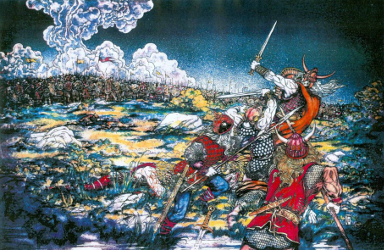
The Battle of Moira, known archaically as the Battle of Magh Rath, is fought on June 24, 637, near the Woods of Killultagh, just outside the village of Moira in what becomes County Down. The battle pits the Gaelic High King of Ireland Domnall II against his foster son King Congal of Ulster, supported by his ally Domnall the Freckled (Domnall Brecc) of Dál Riata.

The battle is allegedly the largest battle ever fought on the island of Ireland, and results in the death of Congal and the retreat of Domnall Brecc. The battle is caused as a result of the invading Gaels spreading out from Galway Bay. The Gaels have fled France and Spain to escape the Roman invasion of those areas. The Gaels are later to be known as Irish but are not native to the island. The native people of Ulster have been pushed into an area the size of two counties in what is now Antrim and Down.

Congal first establishes his power base in Dál nAraidi, where he becomes King before being recognised as King of Ulster in 627. His ambitions soon come into conflict with Domnall II, who becomes High King of Ireland in 628. Ironically, Domnall II rises to such a position because Congal has defeated and killed the previous High King, Suibne Menn, in a previous battle.

Domnall continues to press the rivalry with Congal very quickly. In 629 the two kings engage each other at the Battle of Dún Ceithirn in what is now County Londonderry. On that occasion Congal is defeated and Domnall is left unchallenged as the High King.

Throughout the 630s, Domnall continues to wage war on his rivals in the Uí Néill clan. In 637, however, Congal once again rises to challenge the Ard Rí, and enlists the help of Dál Riata to do so. The two forces meet just east of Lough Neagh.

Little is known about the actual battle itself. The armies of both Domnall II and Congal are primarily made up of warriors native to Ireland. However, Domnall I of Dál Riata brings a more varied force to the fight. His army included Scots, Picts, Anglo-Saxons, and Britons (Welshmen). At least one side has a substantial cavalry force.

There is reason to believe that the battle might have lasted a week, at the end of which the defeated force flees towards the woods of Killultagh. The forces of Ulster and Dál Riata are defeated, with Domnall of Dál Riata forced to flee north to his kingdom’s holdings. Congall is killed in the course of the battle.

The scale of the battle is confirmed in the 19th century when the railway line in Moira is being constructed. Thousands of bodies of men and horses are excavated. When one considers that the survivors probably numbered quite considerably more, then the reputation of the scale of the battle becomes obvious.


Leave a comment

Hugh de Lacy Appointed 1st Earl of Ulster

1st-earl-of-ulster-coat-of-arms

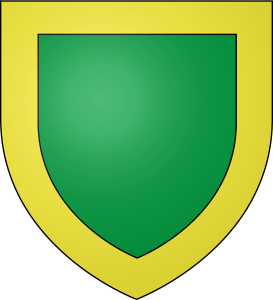
King John of England appoints Hugh de Lacy, a leading figure in the Norman invasion of Ireland in the 12th century, as the 1st Earl of Ulster on May 29, 1205.

Circa 1189 de Lacy is appointed Viceroy of Ireland, a position previously held by his father, Hugh de Lacy, Lord of Meath. He is replaced in 1190 by Guillaume le Petil. He is later reappointed to serve as viceroy from 1205 to 1210.

In 1199, King John authorises de Lacy to wage war on John de Courcy, who has conquered much of Ulster without help or permission from the King. Hugh captures de Courcy in 1204. An account of the capture appears in the Book of Howth.

After King John creates him Earl of Ulster in 1205, he makes what was de Courcy’s territory in Ulster the Earldom of Ulster. He grants Drogheda its charter and continues the conquest of the northeastern over-kingdom of Ulaid, building on de Courcy’s success, with the earldom spanning across the modern counties of Antrim and Down and parts of Londonderry.

In 1207, war breaks out between the Earl of Ulster and the justiciar. This brings King John to Ireland, where he expels the earl’s brother, Walter de Lacy, from Meath, and compels the earl himself to flee to Scotland.

For several years Ulster takes part in the wars in France, and de Lacy does not return to Ireland until 1221, when he allies himself with the O’Neills against the English. In 1226, his lands in Ulster are handed over to his brother Walter, but they are restored to him in the following year, after which date, he appears to loyally serve the king, being more than once summoned to England to give advice about Irish affairs.

De Lacy purportedly separates from his first wife and lives in adultery. He has legitimate and natural children. In 1226, his daughter by his first wife marries Alan, Lord of Galloway. He marries his second wife, Emmeline de Riddlesford, the daughter of Walter de Riddlesford around 1242. Hugh de Lacy dies shortly thereafter in 1242 or 1243. Emmeline’s second marriage takes place around 1243 with Stephen Longespee, grandson of Henry II of England, by whom she has two daughters, Ela Longespee, Lady of Ashby, and Emmeline Longespee, Lady of Offaly.

Left with no surviving legitimate children, the earldom of Ulster reverts to the crown upon de Lacy’s death.