seamus dubhghaill

Promoting Irish Culture and History from Little Rock, Arkansas, USA


Leave a comment

Death of Novelist Maria Edgeworth

maria-edgeworth

Maria Edgeworth, Anglo-Irish writer known for her children’s stories and for her novels of Irish life, dies on May 22, 1849, in Edgeworthstown, County Longford.

Edgeworth is born at Black Bourton, Oxfordshire, England on January 1, 1768. She is the second child of Richard Lovell Edgeworth and Anna Maria Edgeworth (née Elers). She spends her early years with her mother’s family in England, until her mother’s death when Maria is five. When her father marries his second wife Honora Sneyd in 1773, she goes with him to his estate, Edgeworthstown, in County Longford. There, she assists her father in managing his estate. In this way she acquires the knowledge of rural economy and of the Irish peasantry that is to become the backbone of her novels.

Domestic life at Edgeworthstown is busy and happy. Encouraged by her father, Edgeworth begins her writing in the common sitting room, where the 21 other children in the family provide material and audience for her stories. She publishes them in 1796 as The Parent’s Assistant. Even the intrusive moralizing, attributed to her father’s editing, does not wholly suppress their vitality, and the children who appear in them, especially the impetuous Rosamond, are the first real children in English literature since William Shakespeare.

Her first novel, Castle Rackrent (1800), written without her father’s interference, reveals her gift for social observation, character sketch, and authentic dialogue and is free from lengthy lecturing. It establishes the genre of the “regional novel,” and its influence is enormous. Sir Walter Scott acknowledges his debt to Edgeworth in writing Waverley. Her next work, Belinda (1801), a society novel unfortunately marred by her father’s insistence on a happy ending, is particularly admired by Jane Austen.

Edgeworth never marries. She has a wide acquaintance in literary and scientific circles. Between 1809 and 1812 she publishes her Tales of Fashionable Life in six volumes. They include one of her best novels, The Absentee, which focuses attention on a great contemporary abuse in Irish society: absentee English landowning.

Before her father’s death in 1817 she publishes three more novels, two of them, Patronage (1814) and Ormond (1817), of considerable power. After 1817 she writes less. She completes her father’s Memoirs (1820) and devotes herself to the estate. She enjoys a European reputation and exchanges cordial visits with Scott. Her last years are saddened by the Irish famine of 1846, during which she works for the relief of stricken peasants.

After a visit to see her relations in Trim, Maria, now in her eighties, begins to feel heart pains and dies suddenly of a heart attack in Edgeworthstown on May 22, 1849. She is laid to rest in a vault at Edgeworthstown Church.

The feminist movement of the 1960s leads to the reprinting of her Moral Tales for Young People, 5 vol. (1801) and Letters for Literary Ladies (1795) in the 1970s. Her novels continue to be regularly reprinted in the 21st century.

(Pictured: Maria Edgeworth by John Downman, 1807)

Leave a comment

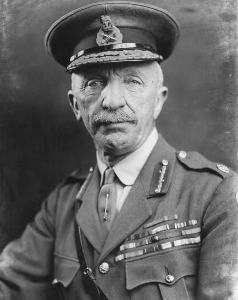
Birth of Field Marshal Sir Henry Hughes Wilson

henry-hughes-wilson

Field Marshal Sir Henry Hughes Wilson, 1st Baronet, GCB, DSO, one of the most senior British Army staff officers of World War I and briefly an Irish unionist politician, is born at Currygrane in Ballinalee, County Longford on May 5, 1864.

Wilson attends Marlborough public school between September 1877 and Easter 1880, before leaving for a crammer to prepare for the Army.

Wilson serves as Commandant of the Staff College, Camberley, and then as Director of Military Operations at the War Office, in which post he plays a vital role in drawing up plans to deploy an Expeditionary Force to France in the event of war. During these years he acquires a reputation as a political intriguer for his role in agitating for the introduction of conscription and in the Curragh incident of 1914, when he encourages senior officers to resign rather than move against the Ulster Volunteers.

As Sub Chief of Staff to the British Expeditionary Force (BEF), Wilson is John French‘s most important adviser during the 1914 campaign, but his poor relations with Douglas Haig and William Robertson see him sidelined from top decision-making in the middle years of the war. He plays an important role in Anglo-French military relations in 1915 and, after his only experience of field command as a corps commander in 1916, again as an ally of the controversial French General Robert Nivelle in early 1917. Later in 1917 he is informal military advisor to British Prime Minister David Lloyd George, and then British Permanent Military Representative at the Supreme War Council at Versailles.

In 1918 Wilson serves as Chief of the Imperial General Staff, the professional head of the British Army. He continues to hold this position after the war, a time when the Army is being sharply reduced in size whilst attempting to contain industrial unrest in the UK and nationalist unrest in Mesopotamia, Iraq and Egypt. He also plays an important role in the Irish War of Independence.

After retiring from the army Wilson serves briefly as a Member of Parliament, and also as security advisor to the Government of Northern Ireland. He is assassinated on his own doorstep by two Irish Republican Army (IRA) gunmen on June 22, 1922, while returning home from unveiling the Great Eastern Railway War Memorial at Liverpool Street station.


Leave a comment

The Selton Hill Ambush

selton-hill-ambush-memorial

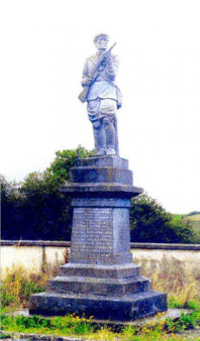
The Selton Hill Ambush takes place on March 11, 1921, during the Irish War of Independence. An Irish Republican Army (IRA) flying column is ambushed by members of the Royal Irish Constabulary (RIC) Auxiliary Division at Selton Hill, County Leitrim. Six IRA officers of the Leitrim Brigade are killed.

Seán Connolly is an IRA activist from County Longford, but he is also used by IRA GHQ to organise the surrounding areas of County Roscommon and County Leitrim. When Michael Collins orders Connolly into the county, he warns that it is “the most treacherous county in Ireland.” As Connolly is running a training camp at Selton Hill in early 1921, his position is given to the RIC. The RIC District Inspector, Thomas Gore-Hickman, has been alerted to Connolly’s position by a local doctor who had served in the British Army. The doctor had reportedly been told of the training camp by a local member of the Orange Order.

The events at Selton Hill take place one week after the Sheemore ambush, in which British troops from the Bedfordshire and Hertfordshire Regiment, based in Boyle suffer several casualties and at least one fatality. On March 11, at Selton Hill, a large force of RIC and Auxiliaires, based in Mohill and troops from the Bedfordshire and Hertfordshire Regiment surround and then attack the IRA camp. Six IRA volunteers are killed. The RIC suffers no losses. The IRA dead are Sean Connolly, Seamus Wrynne, Joseph O’Beirne, John Reilly, Joseph Reilly, and Capt. M.E. Baxter.

Ernie O’Malley later claims the volunteers’ bodies are “taken to Mohill by soldiers who shouted, “fresh meat!” as they were driving through the town.” He is also quoted as saying, “Men from the Bedfordshire Regiment were seen by a badly wounded IRA officer, Bernie Sweeney who survived, to use rifle butts on the skulls of two wounded men.” He also states that the location of the column was given to the local District Inspector of the RIC by a doctor who had been in the British Army, who received the information by a local Orangeman. The IRA officer who survives is Bernie Sweeney, from Ballinamore, who survives by hiding in a drain, where the cold water prevents him from bleeding to death. He is rescued and hidden from the Black and Tans and Auxiliaries by locals.

The IRA learn their position had been given away by the doctor and the Orangeman. The latter is later killed by the IRA. The doctor escapes to England and later dies in an accident.

The border country of the north midlands often proves to be a treacherous place for IRA training camps. On May 8, 1921, a camp of Belfast IRA volunteers based in the Lappanduff hills in neighbouring County Cavan, is also surprised. One volunteer is killed, thirteen captured, and arms and ammunition are seized by the British forces.

(Pictured: Selton Hill Ambush Memorial, south of the village of Fenagh, County Leitrim)


Leave a comment

Birth of Singer Larry Cunningham

larry-cunningham

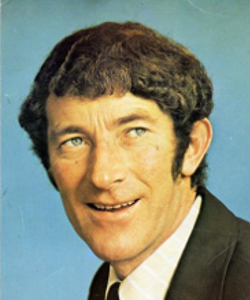
Larry Cunningham, Irish country music singer, who is one of the leading figures of the Irish showband scene in the 1960s and 1970s, is born in Clooneen, Mullinalaghta, County Longford on February 13, 1938. He is regarded as a “trailblazer” and “legend” in the music industry.

Cunningham grows up in the townland of Clooneen in a farming family of seven children. After leaving school at the age of 16 he goes to England and works as a carpenter, playing Irish traditional music and gaelic football during his spare time. In 1958 he returns to Ireland. Still working as a carpenter, he soon joins the part-time Gowna-based Grafton Showband, but leaves it in 1961 to become fully professional as the lead singer of the Mighty Avons, based in Cavan. That band initially specialises in covers of Jim Reeves songs and similar country material.

The band’s first taste of fame comes when they are supporting Jim Reeves during the Irish leg of his European tour in 1963. When Reeves walks off the stage during a concert in Lifford in protest at the poor condition of the supplied piano, the Avons, as they later become popularly called, takes over and entertains the crowd, to much subsequent publicity and acclaim.

In December 1964, Cunningham and the Mighty Avons have a Top-10 hit with the song Tribute to Jim Reeves, which also enters the British charts and is played on Top of the Pops, both firsts for an Irish artist, which further boosted their career. Their major hit is Lovely Leitrim in September 1965, which stays at number one in the charts for four weeks. As well as regularly touring Ireland to large crowds, the Avons make many appearances on television, and often played in Britain, the United States, and other places.

In late 1969, Cunningham leaves the Mighty Avons and merges with Edenderry band The Fairways to form Larry Cunningham and the Country Blue Boys, leaving Gene Stuart to front the Avons. He continues having success with his new band, but after his marriage to Beatrice Nannery in February 1972 he gives up regular touring in favour of occasional concerts and recording. He continues to have top-10 hits until the mid-1970s, and still performs occasionally for the remainder of his life. In recent years, audio and video compilations of his music have been released, as well as a biography.

Larry Cunningham dies in Dublin on September 28, 2012, following a lengthy illness. Among those to pay tribute are U.S. country singer Robert Mizzell who says, “I am so saddened to hear of the passing of country legend Larry. I admired his talent and quick humour. My thoughts are with his family, friends, and the fans who loved the big deep voice that rattled the radio waves.”


Leave a comment

Death of Ann Lovett & Her Newborn Son

OLYMPUS DIGITAL CAMERA

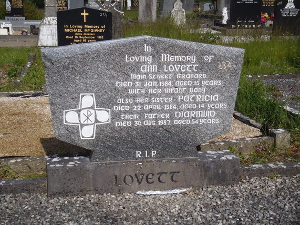
Ann Lovett, a 15-year-old schoolgirl from Granard, County Longford, dies on January 31, 1984, while giving birth beside a grotto. Her baby son dies at the same time and the story of her death plays a huge part in a seminal national debate in Ireland at the time on women giving birth outside marriage.

Tuesday, January 31, 1984, is a cold, wet, winter’s day in Granard. That afternoon, the fifteen-year-old schoolgirl leaves her Cnoc Mhuire Secondary School and makes her way to a Grotto dedicated to the Virgin Mary at the top of her small hometown in the Irish midlands. It is here beneath the statue of Our Lady, that she gives birth, alone, to her infant son.

At around 4:00 PM some children on their way home from school see Ann’s schoolbag on the ground and discover her lying in the Grotto. They alert a passing farmer who rushes to the nearby priest’s house to inform him of the chilling discovery of Ann and her already deceased baby in the adjacent grotto. The priest’s response to his request for help is “It’s a doctor you need.”

Ann, still alive but hemorrhaging heavily, is carried to the house of the Parish Priest from where a doctor is phoned. She is then driven in the doctor’s car to her parents’ house in the centre of the town. By the time an ambulance arrives it is already too late.

Ann Lovett and her child are quietly buried three days later in Granardkill cemetery.

An inquest is held in Mullingar, County Westmeath, a few weeks later and finds that Ann’s death is due to irreversible shock caused by hemorrhage and exposure during childbirth. The inquest also confirms that, contrary to claims emanating from the local community, some people did indeed know about Ann’s condition before her death. Subsequent inquiries by the Gardaí, the Department of Education and the Midlands Health Board have yet to be published leaving the tragic events of that day and the circumstances that forced a young girl to leave her classroom on a cold, wet winters day to give birth alone in a grotto, still shrouded in uncertainty.

Ann Lovett’s death comes just four months after the outcome of a divisive abortion referendum in which a two-thirds majority vote to enshrine the right to life of the unborn in the constitution, creating confusion over where that leaves the rights of the mother. In the ensuing public debate, the tragic events at Granard become symbolic of the emerging clash between church and state.


Leave a comment

Birth of Oliver Goldsmith, Novelist, Playwright & Poet

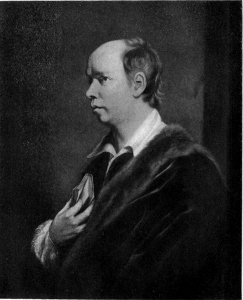
Oliver Goldsmith, novelist, playwright and poet, is born on November 10, 1728. He is best known for his novel The Vicar of Wakefield (1766), his pastoral poem The Deserted Village (1770), and his plays The Good-Natur’d Man (1768) and She Stoops to Conquer (1771, first performed in 1773). He is thought to have written the classic children’s tale The History of Little Goody Two-Shoes (1765).

The location of Goldsmith’s birth is uncertain. He is born either in the townland of Pallas, near Ballymahon, County Longford, where his father is the Anglican curate of the parish of Forgney, or at the residence of his maternal grandparents, at the Smith Hill house near Elphin, County Roscommon. When Goldsmith is two years old, his father is appointed the rector of the parish of Kilkenny West in County Westmeath. The family moves to the parsonage at Lissoy, between Athlone and Ballymahon, and continues to live there until his father’s death in 1747.

In 1744 Goldsmith enters Trinity College, Dublin. Neglecting his studies in theology and law, he falls to the bottom of his class. In 1747, along with four other undergraduates, he is expelled for a riot in which they attempt to storm the Marshalsea Prison. He graduates in 1749 as a Bachelor of Arts, but without the discipline or distinction necessary to gain entry into a profession in the church or the law. He lives for a short time with his mother, tries various professions without success, studies medicine desultorily at the University of Edinburgh from 1752 to 1755, and sets out on a walking tour of Flanders, France, Switzerland and Northern Italy, living by his wits.

Goldsmith settles in London in 1756, where he briefly holds various jobs, including an apothecary‘s assistant and an usher of a school. Perennially in debt and addicted to gambling, Goldsmith produces a massive output as a hack writer on Grub Street for the publishers of London, but his few painstaking works earn him the company of Samuel Johnson, with whom he is a founding member of “The Club.” There, through fellow Club member Edmund Burke, he makes the acquaintance of Sir George Savile, who later arranges a job for him at Thornhill Grammar School. During this period, he uses the pseudonym “James Willington” to publish his 1758 translation of the autobiography of the Huguenot Jean Marteilhe.

In character Goldsmith has a lively sense of fun, is totally guileless, and never happier than when in the light-hearted company of children. The money that he sporadically earns is often frittered away or happily given away to the next good cause that presents itself so that any financial security tends to be fleeting and short-lived. His talents are unreservedly recognised by Samuel Johnson whose patronage aids his eventual recognition in the literary world and the world of drama.

Goldsmith is described by contemporaries as prone to envy, a congenial but impetuous and disorganised personality who once planned to emigrate to America but failed because he missed his ship. At some point around this time he works at Thornhill Grammar School, later basing the character Squire Thornhill in The Vicar of Wakefield on his benefactor Sir George Savile and certainly spending time with eminent scientist Rev. John Mitchell, whom he probably knows from London. Mitchell sorely misses good company, which Goldsmith naturally provides in spades.

Oliver Goldsmith’s premature death in 1774 may have been partly due to his own misdiagnosis of his kidney infection. He is buried in Temple Church in London. There is a monument to him in the centre of Ballymahon, also in Westminster Abbey with an epitaph written by Samuel Johnson.


Leave a comment

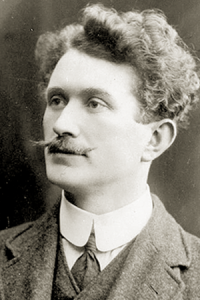
Death of Hunger Striker Thomas Patrick Ashe

Thomas Patrick Ashe, a member of the Gaelic League, the Irish Republican Brotherhood (IRB), and a founding member of the Irish Volunteers, dies on September 25, 1917, at Mater Misericordiae Hospital in Dublin following a hunger strike.

Ashe is born in Lispole, County Kerry, on January 12, 1885. He enters De La Salle Training College, Waterford in 1905 and begins a teaching career as principal of Corduff National School, Lusk, County Dublin, in 1908.

Ashe plays a major part in the 1916 Easter Rising outside the capital city commanding the Fingal battalion of the Irish Volunteers. He is commandant of the 5th battalion of the Dublin brigade, a force of 60–70 men engaging British forces around north County Dublin during the rising. They are armed only with a few rounds, about a dozen service rifles, a dozen Mausers, and a dozen Martini carbines. Some of Ashe’s men are armed only with a shotgun against the well-equipped army regulars.

Ashe’s battalion wins a major victory in Ashbourne, County Meath, where they engage a much larger force. They capture a significant quantity of arms and up to twenty Royal Irish Constabulary (RIC) vehicles. Eleven RIC members, including County Inspector Alexander Gray, and two volunteers are killed during the 5-1/2-hour battle. Twenty-four hours after the rising collapses, Ashe’s battalion surrenders on the orders of Patrick Pearse. On May 8, 1916, Ashe and Éamon de Valera are court-martialled and sentenced to death. The sentences are commuted to penal servitude for life. Ashe is imprisoned in Frongoch internment camp and Lewes Prison in Lewes, East Sussex, England.

De Valera, Ashe, and Thomas Hunter lead a prisoner hunger strike on May 28, 1917. With accounts of prison mistreatment appearing in the Irish press and mounting protests in Ireland, Ashe and the remaining prisoners are freed on June 18, 1917, by David Lloyd George as part of a general amnesty.

Upon his release, Ashe returns to Ireland and begins a series of speaking engagements. In August 1917, he is arrested and charged with sedition for a speech that he makes in Ballinalee, County Longford, where Michael Collins is also speaking. He is detained at the Curragh but is then transferred to Mountjoy Prison in Dublin. He is convicted and sentenced to two years hard labour. Ashe and other prisoners, including Fionán Lynch and Austin Stack, demand prisoner of war status.

On September 20, 1917, Ashe again goes on hunger strike. He dies at Mater Misericordiae Hospital on September 25, 1917, after being force fed by prison authorities. At the inquest into his death, the jury condemns the staff at the prison for the “inhuman and dangerous operation performed on the prisoner, and other acts of unfeeling and barbaric conduct.” His body lies in state at Dublin City Hall and is buried in Glasnevin Cemetery in Dublin.

The Ashe Memorial Hall built in 1928, housing the Kerry County Museum, in Tralee is named after him while Nelson Street, also in Tralee, is renamed Ashe Street. Ashe is a relative of Catherine Ashe, the paternal grandmother of American actor Gregory Peck, who emigrates to the United States in the 19th century.


Leave a comment

Assassination of Field Marshal Sir Henry Hughes Wilson

Field Marshal Sir Henry Hughes Wilson is shot and killed by two Irish Republican Army (IRA) men in London on June 22, 1922.

Wilson is born in County Longford and a long-time opponent of the Irish Home Rule movement. He joins the British army in 1884 and sees action during the Boer War. He is assigned to British army headquarters during the infamous Curragh incident and supports the near-mutiny of British officers who refuse to lead troops against Ulster opponents of home rule. He serves in France during the World War I and, when the war ends, continues his staunch support of the Unionist cause while serving as Chief of General Staff. He is a strong supporter of the coercion tactics of the British in Ireland during the Irish War of Independence, even suggesting that the leaders of Sinn Féin be executed. He leaves the army when David Lloyd George decides not to renew his term as chief of staff and is elected Member of Parliament (MP) for North Down as a Conservative in 1922. In Parliament, he urges even stronger coercion methods than those then being carried out by the Black and Tans.

On June 22, 1922, two London-based volunteers of the Irish Republican Army, Reginald Dunne and Joseph O’Sullivan, assassinate Wilson outside his house at 36 Eaton Place at approximately 2:20 PM. He is in full uniform as he is returning from unveiling the Great Eastern Railway War Memorial at Liverpool Street station at 1:00 PM. He has six wounds, two of them fatal wounds to the chest.

Stories later circulate that the first shot misses but rather than taking shelter in the house, he draws his sword and advances on his attackers, who are able to shoot and kill him. These stories often stress that he dies a martyr. His housemaid testifies that she found his drawn sword lying by his side. These details do not feature in the witness accounts by Reginald Dunne, which is smuggled out of prison, the inquest testimony of one of two road menders working nearby, and the taxi driver who had just dropped Wilson off. One of the road mender’s accounts, as published in the Daily Mail, mentions Wilson turning on his attackers with the words “you cowardly swine!” but this is believed to be a possible embellishment by the newspaper.

Two police officers and a chauffeur are also shot as the men attempt to avoid capture. They are then surrounded by a crowd and arrested by other policemen after a struggle. Dunne and O’Sullivan are convicted of murder and hanged on August 10, 1922. On the day Wilson’s killers were hanged, Currygrane, the family homesite in Ballinalee, County Longford is burned to the ground, possibly as a reprisal although possibly as an unrelated part of the unrest in that county.

Wilson’s widow blames the government for his death and is only persuaded to allow government representation at the funeral on the grounds that not to do so would be disrespectful to the King. Wilson’s funeral is a public affair attended by David Lloyd George and the cabinet, Ferdinand Foch, Robert Nivelle and Maxime Weygand from France as well as many of his former army colleagues including John French, Nevil Macready, Douglas Haig and William Robertson. He is buried in the crypt of St. Paul’s Cathedral in London.


Leave a comment

Death of Oliver Goldsmith, Novelist, Playwright & Poet

Oliver Goldsmith, Irish novelist, playwright, and poet best known for his novel The Vicar of Wakefield (1766), his pastoral poem The Deserted Village (1770), and his plays The Good-Natur’d Man (1768) and She Stoops to Conquer (1771, first performed in 1773), dies in London on April 4, 1774. He is thought to have written the classic children’s tale The History of Little Goody Two-Shoes (1765).

Goldsmith’s birth date and location are not known with certainty, although he reportedly tells a biographer that he was born on November 10, 1728. The location of his birthplace is either in the townland of Pallas, near BallymahonCounty Longford, where his father is the Anglican curate of the parish of Forgney, or at the residence of his maternal grandparents, at the Smith Hill House near Elphin, County Roscommon, where his grandfather Oliver Jones is a clergyman and master of the Elphin diocesan school, which is where Goldsmith studies. When Goldsmith is two years old, his father is appointed the rector of the parish of “Kilkenny West” in County Westmeath. The family moves to the parsonage at Lissoy, between Athlone and Ballymahon, and continues to live there until his father’s death in 1747.

In 1744 Goldsmith enters Trinity College, Dublin. His tutor is Theaker Wilder. Neglecting his studies in theology and law, he falls to the bottom of his class. In 1747, along with four other undergraduates, he is expelled for a riot in which they attempt to storm the Marshalsea Prison. He is graduated in 1749 as a Bachelor of Arts, but without the discipline or distinction that might have gained him entry to a profession in the church or the law. His education seems to have given him mainly a taste for fine clothes, playing cards, singing Irish airs, and playing the flute. He lives for a short time with his mother, tries various professions without success, studies medicine desultorily at the University of Edinburgh from 1752 to 1755, and sets out on a walking tour of FlandersFranceSwitzerland, and Northern Italy.

Goldsmith settles in London in 1756, where he briefly holds various jobs, including an apothecary‘s assistant and an usher of a school. Perennially in debt and addicted to gambling, Goldsmith produces a massive output as a hack writer for the publishers of London, but his few painstaking works earn him the company of Samuel Johnson, with whom he is a founding member of “The Club.” There, through fellow Club member Edmund Burke, he makes the acquaintance of Sir George Savile, who later arranges a job for him at Thornhill Grammar School. The combination of his literary work and his dissolute lifestyle leads Horace Walpole to give him the epithet “inspired idiot.” During this period, he uses the pseudonym “James Willington,” the name of a fellow student at Trinity, to publish his 1758 translation of the autobiography of the Huguenot Jean Marteilhe.

Goldsmith is described by contemporaries as prone to envy, a congenial but impetuous and disorganised personality who once planned to emigrate to America but failed because he missed his ship. At some point around this time he works at Thornhill Grammar School, later basing Squire Thornhill on his benefactor Sir George Savile and certainly spending time with eminent scientist Rev. John Mitchell, whom he probably knows from London. Mitchell sorely misses good company, which Goldsmith naturally provides in spades. Thomas De Quincey writes of him “All the motion of Goldsmith’s nature moved in the direction of the true, the natural, the sweet, the gentle.”

His premature death in 1774 is believed to have been partly due to his own misdiagnosis of a kidney infection. Goldsmith is buried in Temple Church in London. There is a monument to him in the centre of Ballymahon and also in Westminster Abbey with an epitaph written by Samuel Johnson.


Leave a comment

Birth of Thomas Patrick Ashe

thomas-patrick-ashe

Thomas Patrick Ashe, a member of the Gaelic League, the Irish Republican Brotherhood (IRB), and a founding member of the Irish Volunteers, is born in Lispole, County Kerry, on January 12, 1885. Ashe enters De La Salle Training College, Waterford, in 1905 and begins a teaching career as principal of Corduff National School, Lusk, County Dublin, in 1908.

Ashe plays a major part in the 1916 Easter Rising outside the capital city commanding the Fingal battalion of the Irish Volunteers. Ashe is commandant of the 5th battalion of the Dublin brigade, a force of 60–70 men engaging British forces around north County Dublin during the rising. They are armed only with a few rounds, about a dozen service rifles, a dozen Mausers, and a dozen Martini-Henry carbines. Some of Ashe’s men are armed only with a shotgun against the well-equipped army regulars.

Ashe’s battalion wins a major victory in Ashbourne, County Meath, where they engage a much larger force. They capture a significant quantity of arms and up to twenty Royal Irish Constabulary (RIC) vehicles. Eleven RIC members, including County Inspector Alexander Gray, and two volunteers are killed during the 5-1/2-hour battle. Twenty-four hours after the rising collapses, Ashe’s battalion surrenders on the orders of Patrick Pearse. On May 8, 1916, Ashe and Éamon de Valera are court-martialled and sentenced to death. The sentences are commuted to penal servitude for life. Ashe is imprisoned in Lewes Prison in Lewes, East Sussex, England.

De Valera, Ashe, and Thomas Hunter lead a prisoner hunger strike on May 28, 1917. With accounts of prison mistreatment appearing in the Irish press and mounting protests in Ireland, Ashe and the remaining prisoners are freed on June 18, 1917, by David Lloyd George as part of a general amnesty.

Upon his release, Ashe returns to Ireland and begins a series of speaking engagements. In August 1917, he is arrested and charged with sedition for a speech that he makes in Ballinalee, County Longford, where Michael Collins is also speaking. He is detained at the Curragh but is then transferred to Mountjoy Prison in Dublin. He is convicted and sentenced to two years hard labour. Ashe and other prisoners, including Austin Stack, demand prisoner of war status. On September 20, 1917, Ashe again goes on hunger strike. He dies at the Mater Hospital on September 25, 1917, after being force fed by prison authorities. At the inquest into his death, the jury condemns the staff at the prison for the “inhuman and dangerous operation performed on the prisoner, and other acts of unfeeling and barbaric conduct.” His body lies in state at Dublin City Hall and is buried in Glasnevin Cemetery in Dublin.

Ashe is a relative of Catherine Ashe, the paternal grandmother of American actor Gregory Peck, who emigrates to the United States in the 19th century. The Ashe Memorial Hall built in 1928, housing the Kerry County Museum, in Tralee, County Kerry, is named after him while Nelson Street, also in Tralee, is renamed Ashe Street.