seamus dubhghaill

Promoting Irish Culture and History from Little Rock, Arkansas, USA


Leave a comment

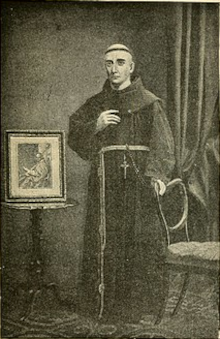
Death of Flaithrí Ó Maolchonaire, Archbishop of Tuam

Flaithrí Ó Maolchonaire, Irish Franciscan and theologian, founder of St. Anthony’s College, Leuven, and Archbishop of Tuam, dies in Madrid, Spain on November 18, 1629.

Ó Maolchonaire is born in the townland of Figh, civil parish of Tibohine, barony of Frenchpark, County Roscommon. His father and mother are Fíthil and Onóra Ó Maolchonaire. Two other sons survive to adulthood, Maoilechlainn and Firbisigh. They belong to a well-known family of historians and poets. He is brought up in the family profession.

Ó Maolchonaire studies for the priesthood at Salamanca, entering the Irish college founded in 1592. He first studies the liberal arts and philosophy. In 1593 he translates into Irish a short Castilian catechism by Jerónimo de Ripalda SJ. The original is a simple catechetical work written in Aristotelian master-pupil dialogue. According to Mícheál Mac Craith, Ó Maolchonaire’s translation pointedly refers to the Irish as Eirinnach rather than Gaedheal.

After five years at the Salamanca Irish college, Ó Maolchonaire leaves to join the Franciscan province of Santiago. Aodh Mac Cathmhaoil is among his classmates in the Salamanca Franciscan friary. They and nine of their peers in the Santiago province are later raised to the episcopacy, an unprecedented development in the history of the order.

At the height of the Nine Years’ War, Ó Maolchonaire sails to Ireland where he serves as a confessor and preacher to troops under the command of Hugh O’Neill and Hugh Roe O’Donnell. In 1601, they request a bishopric for Ó Maolchonaire “in recognition of his diligence, commending his sound judgment on Irish affairs.” After the disaster of Kinsale in 1601, he accompanies O’Donnell to Spain as his confessor and adviser, hoping to see a renewal of Spanish military intervention in Ireland.

In 1602, Ó Maolchonaire attempts to get approval for O’Donnell to meet Philip III in person, but they are kept at arm’s length by the Spanish court. During this time, they also drafted an official complaint against the Jesuit superiors of the Irish college at Salamanca over presumed discrimination in favour of Old English students at the expense of students from Connacht and Ulster.

While waiting for a response to his repeated calls for military support in Ireland, O’Donnell becomes seriously ill and dies at Simancas, being assisted on his deathbed by Ó Maolconaire. In keeping with his patronage of the order of friars minor in Donegal, O’Donnell is buried in the Franciscan habit. Ó Maolchonaire accompanies the remains to their last resting place in the Franciscan church at Valladolid. He continues to press for military support after O’Donnell’s death. He participates in an abandoned maritime expedition which reaches Achill Sound in 1603 but never lands in Ireland. He subsequently assists the Spanish councils of state and war to stem the flow of Irish military migrants and their dependents in Spain.

As adviser to Puñonrostro, the king’s appointee as protector of Irish exiles in Spain, Ó Maolchonaire helps to secure funds for widows, orphans and clerics. Trained as a chronicler and genealogist, he sponsors the entry of Irish soldiers into Spanish military orders and successfully calls for the promotion of Henry O’Neill, second eldest son of the earl of Tyrone, as colonel of Irish infantry units in Flanders, the O’Neill tercio in 1604.

In 1606, the Franciscan general chapter is held in Toledo where Ó Maolchonaire is selected as minister-provincial of the Irish friars minor. The most notable act of his tenure as provincial is the founding of a new Irish Franciscan college at Leuven in the Habsburg Netherlands. A year before his appointment, he begins his efforts in earnest with an appeal to the Spanish king. The loss of five Franciscan houses during the Nine Years’ War makes a new foundation essential. In response, Philip III instructs Albert VII, Archduke of Austria, to provide a perpetual grant for a new college in the university town of Leuven. Ó Maolchonaire’s part in founding the college clearly influences the Catholic pastoral mission to Ireland during the seventeenth century. The first and most active Irish printing press on the continent is long in operation at Leuven.

After Hugh O’Neill and Rory O’Donnell leave Ireland in 1607, Ó Maolconaire accompanies them from Douai to Rome as interpreter and advisor. Christopher St. Laurence, baron of Howth, implicates him in a plot to seize Dublin Castle and raises a new rebellion just before the Flight of the Earls. In recognition of his losses, Philip III and Paul V offer O’Neill the concession of Ó Maolchonaire’s promotion to the archbishopric of Tuam. On Sunday, May 3, 1609, he is consecrated archbishop by Cardinal Maffeo Barberini in the centre of Rome at the Chiesa Santo Spirito in Sassia. He remains in Rome until his appointment as archbishop of Tuam before returning to Madrid on behalf of Hugh O’Neill.

In response to the 1613–15 Parliament of Ireland, Ó Maolchonaire writes from Valladolid a remonstrance to the Catholic members of the parliament, rebuking them for assenting to the bill of attainder that confiscated the estates of O’Neill, O’Donnell and their adherents. As Archbishop of Tuam, he never takes possession of his episcopal see, governing through vicars general. He continues to live in Madrid and Leuven, as is the case with many Irish clergy at the time. Like his fellow-Franciscan, Luke Wadding, and Peter Lombard, Archbishop of Armagh, he serves as a key intermediary and his influence in Irish matters is considerable. In 1626, a year after Charles I declared war on Spain, he makes the case for an invasion of Ireland under the joint leadership of the earls of Tyrone and Tyrconnell.

Ó Maolconaire dies at the Franciscan friary of San Francisco el Grande in Madrid on November 18, 1629. In 1654, two Irish friars bring his remains back to St. Anthony’s College in Leuven where he is buried near the high altar in the collegiate chapel.

Leave a comment

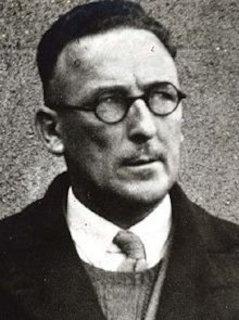
Birth of Seamus O’Donovan, IRA Volunteer & Nazi Collaborator

James O’Donovan, a leading volunteer in the Irish Republican Army (IRA) and Nazi collaborator also known as Séamus or Jim O’Donovan, is born on November 3, 1896, in County Roscommon. He is best known for his contacts with the Abwehr military intelligence of Nazi Germany.

O’Donovan is an explosives expert and reputedly invents the “Irish War Flour” (named after the flour sacks in which it was smuggled into Dublin aboard ships) and “Irish Cheddar” devices. He subsequently becomes IRA Director of Chemicals in 1921. During the Irish War of Independence, he is imprisoned in Mountjoy Prison and Kilmainham Gaol and later interned in Newbridge, County Kildare.

In addition to fighting in the Irish War of Independence, O’Donovan fights on the Anti-Treaty side during the Irish Civil War. In 1930 he becomes manager at Electricity Supply Board (ESB) headquarters in Dublin.

In August 1938, at the request of IRA Chief of Staff Seán Russell, O’Donovan writes the S-Plan, a bombing campaign targeting the United Kingdom. In his unpublished memoirs he writes that he “conducted the entire training of cadre units, was responsible for all but locally derived intelligence, carried out small pieces of research and, in general, controlled the whole explosives and munitions end” of S-Plan. During this time, he and Russell are the only GHQ members of the old IRA still in the organisation.

As “Agent V-Held”, O’Donovan visits Germany three times in 1939 on behalf of the IRA. On February 28 he negotiates an arms and radio equipment delivery at the Abwehrstelle in Hamburg. On April 26 he concludes a new arms deal with the Abwehrstelle and establishes, with the help of a Breton, a secret courier connection to Ireland via France. On August 23, he receives the last instructions for the event of war.

On February 9, 1940, Abwehr II agent Ernst Weber-Drohl lands at Killala Bay, County Sligo aboard U-37. He is equipped with an ‘Ufa’ transmitter, cash, and instructions for O’Donovan, who by this time is the chief IRA contact for Abwehr I/II. The transmitter is lost upon landing, but when Weber-Drohl reaches O’Donovan at Shankill, Killiney, County Dublin, he is able to deliver new transmission codes, $14,450 in cash, and a message from “Pfalzgraf Section” asking that the IRA concentrate its S-Plan attacks on military rather than civilian targets.

O’Donovan becomes increasingly enamoured of Nazi ideology during this time, and visits Germany three times. In 1942 he writes an article arguing that Ireland’s future lay in an alliance with a victorious Germany and attacks Britain and the United States for being “centres of Freemasonry, international financial control and Jewry.” Even long after the pact with the Germans falls apart, he continues to express his sympathy for the Nazi regime. His son, Gerard O’Donovan, recalls that every Saturday night a visitor would come to the family home and send messages to Germany.

In 1940, O’Donovan is involved in setting up Córas na Poblachta, a minor Irish republican political party which proves unsuccessful.

O’Donovan dies in Dublin on June 4, 1979.


Leave a comment

Birth of James Matthew Dillon, Fine Gael Politician

James Matthew Dillon, Fine Gael politician who serves as Leader of the Opposition and Leader of Fine Gael from 1959 to 1965 and Minister for Agriculture from 1948 to 1951 and 1954 to 1957, is born in Drumcondra, Dublin on September 26, 1902. He also serves as a Teachta Dála (TD) from 1932 to 1969.

Dillon is the son of John Dillon, the last leader of the Irish Parliamentary Party, and Elizabeth Mathew. He is educated at Mount St. Benedict’s, in Gorey, County Wexford, University College Galway and King’s Inns. He qualifies as a barrister and is called to the Bar of Ireland in 1931. He studies business methods at Selfridges in London. After some time at Marshall Field’s in Chicago he returns to Ireland where he becomes manager of the family business known as Monica Duff’s in Ballaghaderreen, County Roscommon.

Between 1932 and 1937, Dillon serves as a TD for the Donegal constituency for the National Centre Party and after its merger with Cumann na nGaedheal, for the new party of Fine Gael. He plays a key role in instigating the creation of Fine Gael and becomes a key member of the party in later years. He remains as TD for Monaghan from 1937 to 1969. He becomes deputy leader of Fine Gael under W. T. Cosgrave.

Dillon temporarily resigns from Fine Gael in 1942 over its stance on Irish neutrality during World War II. While Fine Gael supports the government’s decision to stay out of the war, he urges the government to side with the Allies. A passionate anti-Nazi, he describes the Nazi creed as “the devil himself with twentieth-century efficiency.” His zeal against Adolf Hitler draws him the ire of the German Minister to Ireland Eduard Hempel, who denounces him as a “Jew” and “German-hater.” Even Éamon de Valera, then Taoiseach, is not spared the fierceness of Dillon’s rhetoric. When the Taoiseach ridicules his stark support for the Allies, noting this means he has to adopt a Pro-British stance, Dillon defiantly retorts, “My ancestors fought for Ireland down the centuries on the continent of Europe while yours were banging banjos and bartering budgies in the backstreets of Barcelona.”

In 1942, while holidaying in Carna, County Galway, Dillon meets Maura Phelan of Clonmel on a Friday. By that Monday the two are engaged and six weeks after that the pair are married. He is 40 and Maura is 22 years of age.

Dillon is one of the independents who supports the first inter-party government (1948–1951) and is appointed Minister for Agriculture. As Minister, he is responsible for huge improvements in Irish agriculture. Money is spent on land reclamation projects in the areas of less fertile land while the overall quality of Irish agricultural produce increases.

Dillon rejoins Fine Gael in 1953. He becomes Minister for Agriculture again in the second inter-party government (1954–1957). In 1959, he becomes leader of Fine Gael, succeeding Richard Mulcahy. He becomes president of the party in 1960. In 1965, Fine Gael loses the general election to Seán Lemass and Fianna Fáil. The non-Fianna Fáil parties win 69 seats to Fianna Fáil’s 72. Had the other parties won four more seats between them, they would have been able to form a government. Having narrowly failed to become Taoiseach, Dillon stands down as Fine Gael leader after the election.

On Northern Ireland, while Dillon stands against Partition, he equally opposes any “armed solution” or militant nationalist policy, stating, “We have got to win, not only the barren acres of Ulster, but the hearts of the people who live in it.”

Dillon is a colourful contributor to Dáil proceedings and is noted for his high standard of oratory. He remains a TD until 1969, when he retires from politics. He dies in Malahide, Dublin on February 10, 1986, at the age of 83.


Leave a comment

Death of John Blake Dillon, Founding Member of Young Ireland

John Blake Dillon, Irish writer and politician who is one of the founding members of the Young Ireland movement, dies in Killiney, County Dublin on September 15, 1866.

Dillon is born on May 5, 1814, in the town of Ballaghaderreen, on the border of counties Mayo and Roscommon. He is a son of Anne Blake and her husband Luke Dillon (d. 1826), who had been a land agent for his cousin Patrick Dillon, 11th Earl of Roscommon. His niece is Anne Deane, who helps to raise his family after his death.

Dillon is educated at St. Patrick’s College, Maynooth, leaving after only two years there, having decided that he is not meant for the priesthood. He later studies law at Trinity College, Dublin, and in London, before being called to the Irish Bar. It is during his time at Trinity College that he first meets and befriends Thomas Davis.

While working for The Morning Register newspaper Dillon meets Charles Gavan Duffy, with whom he and Davis found The Nation in 1842, which is dedicated to promoting Irish nationalism and all three men become important members of Daniel O’Connell‘s Repeal Association, which advocates the repeal of the Act of Union 1800 between Great Britain and Ireland.

The young wing of the party, of which they are key members with William Smith O’Brien and Thomas Francis Meagher, come to be known as Young Ireland and advocate the threat of force to achieve repeal of the Act of Union. This is in contrast to the committed pacifism of O’Connell’s “Old Ireland” wing. This posturing eventually leads to the Young Ireland rebellion of 1848 where a countryside devastated by the Great Famine fails to rise up and support the rebels.

According to fellow Irish nationalist, Justin McCarthy, “…it has been said of him that while he strongly discouraged the idea of armed rebellion and had no faith in the possibility of Ireland’s succeeding by any movement of insurrection, yet when Smith O’Brien risked Ireland’s chances in the open field, he cast his lot with his leader and stood by his side in Tipperary.”

After the failure of Young Ireland’s uprising, Dillon flees Ireland, escaping first to France and, eventually, to the United States, where he serves the New York Bar.

Dillon returns to Ireland on amnesty in 1855 and in 1865 is elected as a Member of Parliament for Tipperary. By now he advocates a Federal union of Britain and Ireland and denounces the violent methods advocated by the Irish Republican Brotherhood or Fenian movement.

Dillon dies of cholera on September 15, 1866, in Killiney, County Dublin, at the age of 52, and is buried in Glasnevin Cemetery in Dublin.

Dillon is the father of John Dillon and grandfather of James Dillon.


4 Comments

The Battle of Curlew Pass

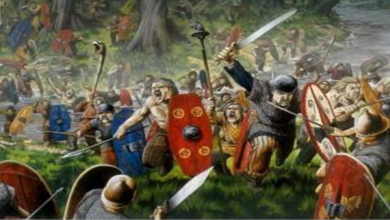
The Battle of Curlew Pass is fought on August 15, 1599, during the campaign of the Earl of Essex in the Nine Years’ War, between an English force under Sir Conyers Clifford and a rebel Irish force led by Hugh Roe O’Donnell. The English are ambushed and routed while marching through a pass in the Curlew Mountains, near the town of Boyle, in northwestern Ireland. The English forces suffer heavy casualties. Losses by allied Irish forces are not recorded but are probably minimal.

In April 1599, Robert Devereux, 2nd Earl of Essex, lands in Ireland with over 17,000 troops and cavalry to put down the rebellion of Hugh O’Neill and Red Hugh O’Donnell, which has spread from Ulster to all Ireland. To this end, he supports an Irish enemy of O’Donnell’s, Sir Donogh O’Connor (O’Connor Sligo), encouraging him to repossess those territories of his in Sligo that O’Donnell has occupied. Sligo Town is an excellent advance base, with Ballyshannon 20 miles to the northeast commanding an important river-ford at the principal western passage into O’Donnell’s country in Ulster. English military advisers have long urged the government councils in Dublin and London to capture these strategic points. O’Connor’s brother-in-law, Tibbot ne Long Bourke, is appointed joint-commander with an English captain of a force sailing from Galway, and O’Connor is expected to receive them in Sligo. However, O’Donnell quickly besieges O’Connor at Collooney Castle with over 2,000 men in an effort to starve him out, and Essex is put on the back foot. Essex has no option but to support the besieged O’Connor, one of the few Gaelic chieftains the Crown can rely upon for support. He orders the experienced Sir Conyers Clifford, who is based in Athlone, to relieve the castle with 1,500 English infantry and 200 cavalry. It is hoped that the operation would also distract the chief rebel, O’Neill, and afford the crown an opportunity to march into his Ulster territory across its southeastern border.

O’Donnell leaves 300 men at Collooney Castle under his cousin, Niall Garbh O’Donnell, and sends another 600 to Sligo town to prevent the landing of English reinforcements under Tibbot ne Long Bourke. He then marches to Dunavaragh with 1,500 of his men, where he is joined by additional forces under local chieftains Conor MacDermott and Brian Óg na Samhthach Ó Ruairc. The Irish then carefully prepare an ambush site in the Curlew Mountains, along the English line of march. O’Donnell has trees felled and placed along the road to impede their progress. When he gets word of the English passing through Boyle, O’Donnell positions his men. Musketeers, archers and javelin men are placed in the woods alongside the road to harass the English. The main body of Irish infantry, armed with pikes and axes, are placed out of sight behind the ridge of the mountain.

In hot harvest weather, Clifford’s force marches from Athlone through Roscommon, Tulsk and Boyle. At 4:00 PM on August 15, they reach the foot of the Curlew Mountains, which have to be crossed before Sligo can be approached. The expedition is poorly supplied, and Clifford’s men are tired and hungry, and probably in no fit state to continue. But Clifford has received false intelligence that the pass is undefended, and he therefore chooses to seize the opportunity and march across, promising his troops plenty of beef in the evening. This means that his men miss out on the rest that had been planned for them in Boyle, whereas the Irish are well fed and prepared.

The English come under gunfire, arrow and javelin attack as soon as they reach the first of O’Donnell’s barricades, between Boyle and Ballinafad. The barricade is immediately abandoned by the Irish but as the English moved past and proceed up the hill they sustain further casualties. The road consists of “stones of six or seven foot broad, lying above ground, with plashes of bog between them,” and is lined with woodland on one side. The further the English advance, the more intensive the rebels’ fire becomes, and some English soldiers begin to lose their nerve and slip away. Eventually, there is a firefight, lasting about 90 minutes, at the end of which the English vanguard has run out of gunpowder. The commander of the vanguard, Alexander Radcliffe, can no longer control his troops. They wheel about in a panic and collide with the main column, which breaks and flees. The commander leads a charge with his remaining pikemen but is shot dead. With the English ranks in disarray, the main body of Irish infantry, which has concealed itself on the reverse slope of the hill, closes in and fights hand to hand. Clifford tries to regain control over his men, but appears overcome by his circumstances. He manages to rally himself and is killed by a pike-thrust as he rushes the enemy. The English are routed, but the situation is prevented from becoming a complete disaster for them when the commander of the horse, Sir Griffin Markham, charges uphill and temporarily drives the rebels back.

Though the actions of the English cavalry allows many of their foot soldiers to escape, Clifford’s men are pursued as far as the town of Boyle, where they find shelter in Boyle Abbey. About 500 English are killed in the battle. Irish losses are not recorded, but are probably small, having been firing from prepared positions and then routing a disorganised and demoralised enemy.

Clifford’s head is cut off and delivered to O’Donnell, who has remained nearby but without taking part in the fight. While the head is brought to Collooney Castle to intimidate its defenders, the trunk is carried by MacDermott to the monastery of Lough Key, where he hopes to use it to ransom his own prisoners. At last, the trunk is given a decent burial in the monastery.

O’Connor Sligo surrenders the castle shortly afterwards and reluctantly joins with the rebels. After the victory, there is a noticeable increase in the rate of desertion by Irish troops from the ranks of Essex’s army, and the earl orders that the surviving troops be divided up as fit only to hold walls.

The battle is a classic Gaelic Irish ambush, similar to the Battle of Glenmalure in 1580 or the Battle of the Yellow Ford in 1598. According to the Annals of the Four Masters, the victory is put down to the intercession of the Blessed Mary, rather than to arms. But Clifford had been overconfident, a trait in him that Essex once warned against, and it is clear that English military commanders are choosing to learn the hard way about the increased effectiveness of Irish rebel forces. Queen Elizabeth I‘s principal secretary, Sir Robert Cecil, rates this defeat (and the simultaneous defeat of Sir Henry Harrington in the Battle of Deputy’s Pass in County Wicklow) as the two heaviest blows ever suffered by the English in Ireland, and seeks to lay the blame indirectly on Essex. It leaves O’Donnell and O’Neill free from any threat from the Connacht side, and renders a land-based attack through Armagh highly improbable, a factor that weighs with Essex as he marches northward later in the year and enters a truce with O’Neill.

In August 1602, the Curlew Pass is the scene of the last victory won by the rebels during the war, when a panicking English force is again routed and suffers significant losses. This time the rebels are led by Rory O’Donnell who commands 400 musketeers.

Today the battlefield at Curlew Pass is overlooked by an impressionistic sculpture by Maurice Harron called “The Gaelic Chieftain”, unveiled in 1999.


Leave a comment

Death of Frank Harte, Traditional Irish Singer

Frank Harte, traditional Irish singer, music collector, architect and lecturer, dies of a heart attack on June 27, 2005.

Harte is born in Chapelizod, County Dublin on May 14, 1933. He emigrates to the United States for a short period, but later returns to Ireland where he works as an architect, lecturer at Dublin Institute of Technology in Rathmines, Dublin and in later life fully engages in songs in many ways.

Harte’s introduction to Irish traditional singing comes from a chance listening to an itinerant who is selling ballad sheets at a fair in Boyle, County Roscommon. He begins collecting early in life and by the end of his life has assembled a database of over 15,500 recordings.

Harte becomes a great exponent of the Dublin street ballad, which he prefers to sing unaccompanied. He is widely known for his distinctive singing, his Dublin accent having a rich nasal quality complementing his often high register. His voice mellows considerably by the time of his later recordings, allowing for an expressive interpretation of many love songs such as “Bonny Light Horseman” on the album My Name is Napoleon Bonaparte. This is contrasted sublimely by his cogent interpretation of the popular “Molly Malone.” He also becomes more accustomed to singing with accompaniment which is not strictly part of the Irish singing tradition and does not come naturally to him.

Though Irish Republican in his politics, Harte believes that the Irish song tradition need not be a sectarian or nationalist preserve. He believes that songs are a key to understanding the past often saying, “those in power write the history, while those who suffer write the songs, and, given our history, we have an awful lot of songs.” Though considered a stalwart of traditional Irish singing and well aware of it, he does not consider himself to be a sean-nós singer.

Harte wins the All-Ireland Fleadh Cheoil singing competition on a number of occasions and in 2003 receives the Traditional Singer of the Year award from the Irish-language television channel TG4.

Harte records several albums and makes numerous television and radio appearances, most notably the Singing Voices series he writes and presents for RTÉ Radio, which is produced by Peter Browne in 1987. He is a regular at the Sunday morning sessions at The Brazen Head pub, along with Liam Weldon who runs the session. He is also an enthusiastic supporter of An Góilín Traditional Singer’s Club.

Harte appears at many American festivals including The Blarney Star in New York City, Gaelic Roots in Boston College, The Catskills Irish Arts Week, The Greater Washington Ceili Club Festival in Maryland and the Milwaukee Irish Fest and for seventeen years he is a veritable staple at the Irish Week every July in the Augusta Heritage Festival in Elkins, West Virginia where he often performs with Mick Moloney.

Frank Harte dies of a heart attack, aged 72, on June 27, 2005. His influence is still evident in singers such as Karan Casey and he continues to be remembered fondly in sessions and folk clubs on both sides of the Irish Sea.


1 Comment

Birth of Garry Hynes, Theatre Director & Tony Award Winner

Garry Hynes, Irish theatre director, is born in Ballaghaderreen, County Roscommon, on June 10, 1953. She is the first woman to win the prestigious Tony Award for direction of a play.

Hynes is educated at St. Louis Convent at Monaghan, the Dominican Convent at Galway, and University College Galway (UCG).

Hynes is a co-founder of the Druid Theatre Company with Mick Lally and Marie Mullen in 1975 after meeting through the drama society of UCG. She is Druid’s artistic director from 1975 to 1991, and again from 1995 to date. She directs for the Abbey Theatre from 1984 and is its artistic director from 1991 to 1994, and also the Royal Shakespeare Company, the Royal Exchange, Manchester, the John F. Kennedy Center for the Performing Arts and the Royal Court Theatre, London.

Hynes directs DruidSynge, the company’s critically acclaimed production of all six of John Millington Synge‘s plays that première at the Galway Arts Festival in 2005 and has since toured to Dublin, Edinburgh, Inis Meáin, Minneapolis and New York City. DruidSynge has been described by Charles Isherwood of The New York Times as “the highlight not just of my theatre going year but of my theatre going life” and by The Irish Times as “one of the greatest achievements in the history of Irish theatre.”

In 2017, award-winning artist Vera Klute is commissioned by the National Gallery of Ireland to create a portrait of Hynes as part of the 2015 Hennessey Portrait Prize. The bust, made of porcelain, concrete and timber (with a dimension of 164cm x 54cm x 45cm), is unveiled to the public in April 2017 and is currently on display as part of the Gallery’s National Portrait Collection.

In 1998 Hynes wins the Tony Award for Direction for The Beauty Queen of Leenane, the first woman to receive the award. She is a recipient of many other Theatre Awards, including The Irish Times/ESB Irish Theatre Award for Best Director (2002) and a The Irish Times Special Tribute Award for her contribution to Irish Theatre in February 2005.

Hynes has received honorary Doctorates from the University of Dublin (2004), The National University of Ireland, Galway (1998) and the National Council for Educational Awards (1988). On June 15, 2006, she is awarded the Freedom of the City of Galway, its highest bestowed honour.

Hynes is the civil partner of film producer Martha O’Neill.


Leave a comment

Death of Séamus O’Donovan, IRA Volunteer & Nazi Collaborator

James O’Donovan, a leading volunteer in the Irish Republican Army (IRA) and Nazi collaborator also known as Séamus or Jim O’Donovan, dies in Dublin on June 4, 1979. He is best known for his contacts with the Abwehr military intelligence of Nazi Germany.

Born on November 3, 1896, in County Roscommon, O’Donovan is an explosives expert and reputedly invents the “Irish War Flour” (named after the flour sacks in which it was smuggled into Dublin aboard ships) and “Irish Cheddar” devices. He subsequently becomes IRA Director of Chemicals in 1921. During the Irish War of Independence, he is imprisoned in Mountjoy Prison and Kilmainham Gaol and later interned in Newbridge, County Kildare.

In addition to fighting in the Irish War of Independence, O’Donovan fights on the Anti-Treaty side during the Irish Civil War. In 1930 he becomes manager at Electricity Supply Board (ESB) headquarters in Dublin.

In August 1938, at the request of IRA Chief of Staff Seán Russell, O’Donovan writes the S-Plan, a bombing campaign targeting the United Kingdom. In his unpublished memoirs he writes that he “conducted the entire training of cadre units, was responsible for all but locally derived intelligence, carried out small pieces of research and, in general, controlled the whole explosives and munitions end” of S-Plan. During this time, he and Russell are the only GHQ members of the old IRA still in the organisation.

As “Agent V-Held”, O’Donovan visits Germany three times in 1939 on behalf of the IRA. On February 28 he negotiates an arms and radio equipment delivery at the Abwehrstelle in Hamburg. On April 26 he concludes a new arms deal with the Abwehrstelle and establishes, with the help of a Breton, a secret courier connection to Ireland via France. On August 23, he receives the last instructions for the event of war.

On February 9, 1940, Abwehr II agent Ernst Weber-Drohl lands at Killala Bay, County Sligo aboard U-37. He is equipped with an ‘Ufa’ transmitter, cash, and instructions for O’Donovan, who by this time is the chief IRA contact for Abwehr I/II. The transmitter is lost upon landing, but when Weber-Drohl reaches O’Donovan at Shankill, Killiney, County Dublin, he is able to deliver new transmission codes, $14,450 in cash, and a message from “Pfalzgraf Section” asking that the IRA concentrate its S-Plan attacks on military rather than civilian targets.

O’Donovan becomes increasingly enamoured of Nazi ideology during this time, and visits Germany three times. In 1942 he writes an article arguing that Ireland’s future lay in an alliance with a victorious Germany and attacks Britain and the United States for being “centres of Freemasonry, international financial control and Jewry.” Even long after the pact with the Germans falls apart, he continues to express his sympathy for the Nazi regime. His son, Gerard O’Donovan, recalls that every Saturday night a visitor would come to the family home and send messages to Germany.

In 1940, O’Donovan is involved in setting up Córas na Poblachta, a minor Irish republican political party which proves unsuccessful.

O’Donovan dies in Dublin on June 4, 1979.


Leave a comment

Robert King, 2nd Earl of Kingston, Acquitted of Murder

Robert King, 2nd Earl of Kingston, an Anglo-Irish peer, is acquitted of the murder of his brother-in-law, Colonel Henry Gerald FitzGerald, on May 18, 1798.

King is the eldest surviving son of Edward King, 1st Earl of Kingston, and Jane Caulfeild. From 1767 to 1768 he is educated at Eton College. He is styled Viscount Kingsborough between 1768 and 1797. He marries Caroline FitzGerald, daughter of Richard FitzGerald and Margaret King, on December 5, 1769, from whom he later separates. Together they have nine children.

King sits in the Irish House of Commons as the Member of Parliament for Boyle from 1776 to 1783, and for Cork County between 1783 and 1797, and serves as a Governor of County Cork in 1789. In 1797 he succeeds to his father’s titles and assumes his seat in the Irish House of Lords. Between 1797 and his death he is Custos Rotulorum of Roscommon.

On May 18, 1798, King is tried by his peers in the Irish House of Lords after allegedly murdering Colonel Henry FitzGerald. FitzGerald is a married man who elopes with King’s daughter. With public sympathy on King’s side and with considerable publicity he is tried by his peers. An executioner stands beside King with an immense axe, painted black except for two inches of polished steel, and holds at the level of the defendant’s neck. King is acquitted as after three summonses no witnesses come forward. After a short conferee the Lords Temporal returns to the House of Commons and delivers the verdict ‘not guilty.’ The Lord Chancellor of Ireland, John FitzGibbon, 1st Earl of Clare, pronounces the verdict, breaks his wand and dismisses the assembly.

The Directory of the United Irishmen had planned to use the occasion to kill the entire government and all the lords, but one vote cast against this scheme by the informer Francis Magan causes it to be abandoned.

King dies on April 17, 1799 in Rockingham, County Roscommon.

(Pictured: “Robert King, 2nd Earl of Kingston,” pastel by Hugh Douglas Hamilton, RHA (Dublin 1739-1808))


Leave a comment

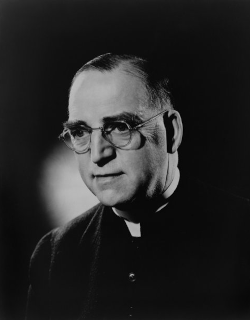
Death of Fr. Edward J. Flanagan, Founder of Boys Town

Edward Joseph Flanagan, Irish-born priest of the Catholic Church in the United States, dies in Berlin, Germany on May 15, 1948. He founds the orphanage known as Boys Town located in Boys Town, Douglas County, Nebraska, which now also serves as a center for troubled youth.

Flanagan is born to John and Honoria Flanagan in the townland of Leabeg, County Roscommon, near the village of Ballymoe, County Galway, on July 13, 1886. He attends Summerhill College, Sligo.

In 1904, Flanagan emigrates to the United States and becomes a US citizen in 1919. He attends Mount St. Mary’s University in Emmitsburg, Maryland, where he receives a Bachelor of Arts degree in 1906 and a Master of Arts degree in 1908. He studies at Saint Joseph’s Seminary in Dunwoodie, Yonkers, New York. He continues his studies in Italy and at the University of Innsbruck in Austria where he is ordained a priest on July 26, 1912. His first parish is in O’Neill, Nebraska, where from 1912 he serves as an assistant pastor at St. Patrick’s Catholic Church. He then moves to Omaha, Nebraska, to serve as an assistant pastor at St. Patrick’s Church and later at St. Philomena’s Church.

In 1917, Flanagan founds a home for homeless boys in Omaha. Bishop Jeremiah James Harty of the Diocese of Omaha has misgivings but endorses Flanagan’s experiment. Because the downtown facilities are inadequate, he establishes Boys Town, ten miles west of Omaha in 1921. Under his direction, Boys Town grows to be a large community with its own boy-mayor, schools, chapel, post office, cottages, gymnasium, and other facilities where boys between the ages of 10 and 16 can receive an education and learn a trade.

Boys Town, a 1938 film starring Spencer Tracy based on Flanagan’s life, wins Tracy an Academy Award for Best Actor for his performance. Mickey Rooney also stars as one of the residents. Tracy spends his entire Oscar acceptance speech talking about Flanagan. Without confirming it with Tracy, an overzealous MGM publicity representative announces incorrectly that Tracy is donating his Oscar to Flanagan. The Academy of Motion Picture Arts and Sciences hastily strikes another inscription, so Tracy keeps his statuette and Boys Town gets one as well. A sequel also starring Tracy and Rooney, Men of Boys Town, is released in 1941.

Flanagan himself appears in a separate 1938 MGM short, The City of Little Men, promoting Boys Town and giving a tour of its facilities. The actor Stephen McNally plays Flanagan in a 1957 episode of the ABC religion anthology series, Crossroads.

Flanagan receives many awards for his work with the delinquent and homeless boys. Pope Pius XI names him a Domestic Prelate with the title Right Reverend Monsignor in 1937. He serves on several committees and boards dealing with the welfare of children and is the author of articles on child welfare. Internationally known, he travels to the Republic of Ireland in 1946, where he is appalled by the children’s institutions there, calling them “a national disgrace.” When his observations are published after returning to Omaha, instead of improving the horrid conditions, vicious attacks are leveled against him in the Irish print media and the Oireachtas. He is invited by General Douglas MacArthur to Japan and Korea in 1947 to advise on child welfare, as well as to Austria and Germany in 1948. While in Germany, he dies of a heart attack on May 15, 1948. He is interred at Dowd Memorial Chapel of the Immaculate Conception Parish in Boys Town, Nebraska.

In 1986, the United States Postal Service issues a 4¢ Great Americans series postage stamp honoring Flanagan. He is a member of the Nebraska Hall of Fame.

On February 25, 2012, the Catholic Archdiocese of Omaha, Nebraska opens the canonization process of Flanagan. At a March 17, 2012 prayer service at Boys Town’s Immaculate Conception Church, he is given the title “Servant of God,” the first of three titles bestowed before canonization as a Catholic saint. The investigation is completed in June 2015 and the results forwarded to the Vatican. If the Vatican approves the local findings, Flanagan will be declared venerable. The next steps will be beatification and canonization.

There is a portrait statue dedicated to Fr. Edward J. Flanagan in Ballymoe, County Galway.