seamus dubhghaill

Promoting Irish Culture and History from Little Rock, Arkansas, USA


Leave a comment

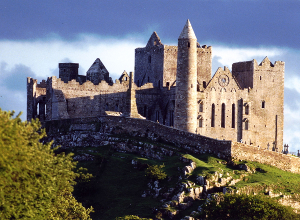
The Sack of Cashel

rock-of-cashel

The Sack of Cashel (also known as the Massacre of Cashel) is a notorious atrocity which occurs in County Tipperary on September 15, 1647, during the Irish Confederate Wars, part of the Wars of the Three Kingdoms.

In the summer of 1647, Murrough O’Brien, 6th Baron Inchiquin, the Irish Protestant commander of the Protestant army of Cork, commences a campaign against the Irish Catholic strongholds in Munster. The counties of Limerick and Clare are raided, and he soon turns his attention to the bountiful eastern counties of Munster. In early September, his forces quickly take the Cahir Castle in Tipperary. This strong castle is well positioned to become a base for the Cork Protestant army, and it is used to raid and devastate the surrounding countryside. The Munster army under Lord Taaffe does not make any serious effort to oppose Inchiquin, probably the result of the political scheming of Donough MacCarty, 2nd Viscount Muskerry and other powerful Irish lords who hope to keep the Munster army intact for their own ends. As such, Inchiquin is allowed to make a major push towards the town and ecclesiastical centre of Cashel.

Inchiquin has already launched two minor raids against Cashel, and he now has the opportunity to launch a major assault. The Parliamentarian forces first storm nearby Roche Castle, putting fifty warders to the sword. This attack terrifies the local inhabitants of the region, some of whom flee to hiding places, while hundreds of others flee promptly to the Rock of Cashel, a stronger place than the town itself. Lord Taaffe has placed six companies in the fortified churchyard that sits upon the rock, and considers the place defensible, though he himself does not stay to put it to the test, leaving command to the Governor Lieutenant-Colonel Butler.

Arriving with his army at the Rock, Inchiquin calls for surrender within an hour. The defenders of the churchyard offer to negotiate but that is refused, and on the afternoon of September 15 the assault commences. The Parliamentarians are first reminded of earlier atrocities against Protestants, and then begin to deploy. The attack is led by around 150 dismounted horse officers with the remainder of the infantry following. Troops of horse ride along the flanks of the advancing force to encourage the infantry. The Irish soldiers attempt to drive off the attackers with pikes while the civilians inside hurl rocks down from the walls. In turn the attackers hurl firebrands into the compound, setting some of the buildings inside on fire. Although many are wounded, the Parliamentarians gradually fight their way over the walls, pushing the garrison into the church.

Initially, the Irish defenders manage to protect the Church, holding off the attackers trying to get through the doors, but the Parliamentarians then place numerous ladders against the many windows in the church and swarm the building. For another half an hour fighting rages inside the church, until the depleted defenders retreat up the bell tower. Only sixty soldiers of the garrison remain at this point, and they thus accept a call to surrender. However, after they have descended the tower and thrown their swords away, all are killed.

In the end all the soldiers and most of the civilians on the Rock are killed by the attackers. The Bishop and Mayor of Cashel along with a few others survive by taking shelter in a secret hiding place. Apart from these a few women are spared, after being stripped of their clothes, and a small number of wealthy civilians are taken prisoner, but these are the exceptions. Overall, close to 1,000 are killed, amongst them Lieutenant-Colonel Butler and catholic scholar Theobald Stapleton. The bodies in the churchyard are described by a witness as being five or six deep.

The slaughter is followed by extensive looting. There is much of value inside, for apart from pictures, chalices and vestments of the church, many of the slain civilians had also brought their valuables with them. The sword and ceremonial mace of the mayor of Cashel, as well as the coach of the bishop are captured. The plunder is accompanied by acts of iconoclasm, with statues smashed and pictures defaced. The deserted town of Cashel is also torched.

The atrocity at Cashel causes a deep impact in Ireland, as it is the worst single atrocity committed in Ireland since the start of fighting in 1641. Previously, the most infamous massacre amongst the Catholic population is that at Timolin in 1643, when 200 civilians are killed by James Butler, 1st Duke of Ormond‘s English Royalist army, but many more than this are killed at Cashel, and the Rock of Cashel is one of the chief holy places of Ireland. The slaughter of the garrison at Cashel and the subsequent devastation of Catholic held Munster earns Inchiquin the Irish nickname, Murchadh na Dóiteáin or “Murrough of the Burnings.”


Leave a comment

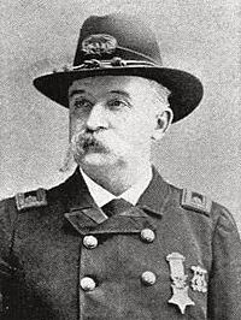
Birth of James Joseph Quinlan, Union Army Officer

james-joseph-quinlan

James Joseph Quinlan, Union Army officer during the American Civil War, is born in Clonmel, County Tipperary on September 13, 1833.

Quinlan is appointed as Major of the 88th New York Infantry in December 1861. He becomes the regiment’s Lieutenant Colonel in October 1862 and is discharged in February 1863.

Quinlan receives America’s highest military decoration, the Medal of Honor, on February 18, 1891, for his actions at the Battle of Savage’s Station in Henrico County, Virginia, the fourth of the Seven Days Battles (Peninsula Campaign). His citation states he “led his regiment on the enemy’s battery, silenced the guns, held the position against overwhelming numbers, and covered the retreat of the Second Army Corps.”

James Joseph Quinlan dies on August 29, 1906, in Queens, New York and is buried at Calvary Cemetery, Woodside, Queens County, New York.


1 Comment

Birth of Marguerite Gardiner, Novelist & Journalist

marguerite-power-farmer-gardiner

Marguerite Gardiner, Countess of Blessington, Irish novelist, journalist, and literary hostess, is born near Clonmel, County Tipperary on September 1, 1789. She becomes acquainted with Lord Byron in Genoa and writes a book about him.

Born Margaret Power, she is a daughter of Edmund Power and Ellen Sheehy, small landowners. She is “haphazardly educated by her own reading and by her mother’s friend Ann Dwyer.” Her childhood is blighted by her father’s character and poverty, and her early womanhood made wretched by a compulsory marriage at the age of fifteen to Captain Maurice St. Leger Farmer, an English officer whose drunken habits finally bring him as a debtor to the King’s Bench Prison, where he dies by falling out of a window in October 1817. She had left him after three months of marriage.

Marguerite later moves to Hampshire, England to live for five years with the family of Thomas Jenkins, a sympathetic and literary sea captain. Jenkins introduces her to the Irishman Charles John Gardiner, 1st Earl of Blessington, a widower with four children and seven years her senior. They marry at St. Mary’s, Bryanston Square, Marylebone, on February 16, 1818, only four months after the death of her first husband.

Of rare beauty, charm and wit, Lady Blessington is no less distinguished for her generosity and for the extravagant tastes she shares with her second husband, which results in encumbering his estates with debt. On August 25, 1822, they set out for a continental tour with Marguerite’s youngest sister, the 21-year-old Mary Anne, and servants. On the way they meet Count Alfred D’Orsay, who had first become an intimate of Lady Blessington in London in 1821, in Avignon on November 20, 1822, before settling at Genoa for four months from March 31, 1823. There they meet Lord Byron on several occasions, giving Lady Blessington material for her Conversations with Lord Byron.

After that they settle for the most part in Naples, where she meets the Irish writer Richard Robert Madden, who is to become her biographer. They also spend time in Florence with their friend Walter Savage Landor, author of Imaginary Conversations which she greatly admires.

It is in Italy, on December 1, 1827, that Count D’Orsay marries Harriet Gardiner, Lord Blessington’s only daughter by his former wife. The Blessingtons and the newlywed couple move to Paris towards the end of 1828, taking up residence in the Hôtel Maréchal Ney, where the Earl suddenly dies at the age of 46 of an apoplectic stroke in 1829. D’Orsay and Harriet then accompanied Lady Blessington to England, but the couple separates soon afterwards amidst much acrimony. D’Orsay continues to live with Lady Blessington until her death. Their home, first at Seymour Place, and afterwards Gore House, Kensington, now the site of the Royal Albert Hall, become a centre of attraction for all that is distinguished in literature, learning, art, science and fashion. Benjamin Disraeli writes Venetia whilst staying there, and it is at her home that Hans Christian Andersen first meets Charles Dickens.

After her husband’s death Lady Blessington supplements her diminished income by contributing to various periodicals as well as by writing novels. She is for some years editor of The Book of Beauty and The Keepsake, popular annuals of the day. In 1834 she publishes her Conversations with Lord Byron. Her Idler in Italy (1839–1840), and Idler in France (1841) are popular for their personal gossip and anecdotes, descriptions of nature and sentiment.

Early in 1849, Count D’Orsay leaves Gore House to escape his creditors. Subsequently the furniture and decorations are sold in a public sale successfully discharging Lady Blessington’s debts. She joins the Count in Paris, where she dies on June 4, 1849, of a burst heart. On examination it is discovered that her heart is three times normal size.

(Pictured: Marguerite, Countess of Blessington, painted by Sir Thomas Lawrence in 1822)


Leave a comment

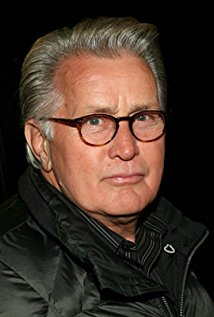
Birth of Actor Martin Sheen

martin-sheen

Ramón Gerard Antonio Estévez, known professionally as Martin Sheen, American actor of Spanish/Irish descent, is born in Dayton, Ohio on August 3, 1940. He first becomes known for his roles in the films The Subject Was Roses (1968) and Badlands (1973), and later achieves wide recognition for his leading role in Apocalypse Now (1979) and as President Josiah Bartlet in the television series The West Wing (1999-2006).

Sheen is born to immigrant parents, a first-generation Irish mother, Mary-Anne Phelan from Borrisokane, County Tipperary, and a Galician father, Francisco Estévez from Vigo in Galicia (Spain). He adopts the stage name Martin Sheen to help him gain acting parts from a combination of the CBS casting director Robert Dale Martin, who gives him his first big break, and the televangelist archbishop, Fulton J. Sheen. He is the father of four children (Emilio, Ramón, Carlos and Renée), all of whom are actors.

In film, Sheen has won the Best Actor award at the San Sebastián International Film Festival for his performance as Kit Carruthers in Badlands. Sheen’s portrayal of Capt. Willard in Apocalypse Now earns a nomination for the BAFTA Award for Best Actor in a Leading Role.

Sheen has worked with a wide variety of film directors, including Richard Attenborough, Francis Ford Coppola, Terrence Malick, David Cronenberg, Mike Nichols, Martin Scorsese, Steven Spielberg and Oliver Stone. He receives a star on the Hollywood Walk of Fame in 1989. In television, he has won a Golden Globe Award and two Screen Actors Guild Awards for playing the role of President Josiah Bartlet in The West Wing, and an Emmy Award for guest starring in the sitcom Murphy Brown.

Although known as an actor, Sheen also has directed one film, Cadence (1990), appearing alongside sons Charlie and Ramón. He has narrated, produced, and directed documentary television, earning two Daytime Emmy Awards in the 1980s. In addition to film and television, he has been active in liberal politics.


Leave a comment

First Horse-Drawn Coach Service in Ireland

charles-bianconi

Charles Bianconi, Italo-Irish entrepreneur, opens his first horse-drawn coach service, between Clonmel and Cahir, County Tipperary, a distance of 10 miles, on July 6, 1815.

Born Carlo Bianconi, in Tregolo, Costa Masnaga, Italy on September 24, 1786, he moves from an area poised to fall to Napoleon and travels to Ireland via England in 1802, just four years after the Irish Rebellion of 1798. At the time, British fear of continental invasion results in an acute sense of insecurity and additional restrictions on the admission of foreigners. He is christened Carlo but anglicises his name to Charles when he arrives in Ireland in 1802.

At the age of 16, Bianconi works as an engraver and printseller in Dublin, near Essex Street, under his sponsor, Andrea Faroni. In 1806 he sets up an engraving and print shop in Carrick-on-Suir, moving to Clonmel in 1815.

Bianconi eventually becomes famous for his innovations in transport and is twice elected mayor of Clonmel. He is the founder of public transportation in Ireland, at a time preceding railways. He establishes regular horse-drawn carriage services on various routes beginning in 1815. These are known as “Bianconi coaches” and the first service, Clonmel to Cahir, which takes five to eight hours by boat, takes only two hours by Bianconi’s carriage. Travel on a coach costs one penny farthing a mile.

Bianconi’s carriage services continue into the 1850s and later, by which time there are a number of railway services in the country. The Bianconi coaches continue to be well-patronised, by offering connections from various termini, one of the first and few examples of an integrated transport system in Ireland. By 1865 Bianconi’s annual income is about £35,000.

Bianconi also establishes a series of inns, the Bianconi Inns, some of which still exist; in Piltown, County Kilkenny and Killorglin, County Kerry.

In 1832 Bianconi marries Eliza Hayes, the daughter of a wealthy Dublin stockbroker. They have three children. Bianconi dies on September 22, 1875 at Longfield House, Boherlahan, County Tipperary.

Having donated land to the parish of Boherlahan for the construction of a parish church, Bianconi wishes to be buried on the Church grounds. He, and his family, are buried in a side chapel, separate from the parish church in Boherlahan, approximately 5 miles from Cashel, County Tipperary.


Leave a comment

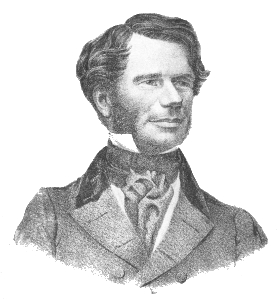
Death of William Smith O’Brien, Young Ireland Leader

william-smith-obrien

William Smith O’Brien, Irish nationalist Member of Parliament (MP) and leader of the Young Ireland movement, dies in Bangor, Gwynedd, Wales on June 18, 1864.

Born in Dromoland, Newmarket-on-Fergus, County Clare, O’Brien is the second son of Sir Edward O’Brien, 4th Baronet, of Dromoland Castle. His mother is Charlotte Smith, whose father owns a property called Cahirmoyle in County Limerick. He takes the additional surname Smith, his mother’s maiden name, upon inheriting the property. He lives at Cahermoyle House, a mile from Ardagh, County Limerick. He is a descendant of the eleventh century Ard Rí (High King of Ireland), Brian Boru. He receives an upper-class English education at Harrow School and Trinity College, Cambridge. Subsequently, he studies law at King’s Inns in Dublin and Lincoln’s Inn in London.

From April 1828 to 1831 O’Brien is Conservative MP for Ennis. He becomes MP for Limerick County in 1835, holding his seat in the House of Commons of the United Kingdom until 1849.

Although a Protestant country-gentleman, O’Brien supports Catholic emancipation while remaining a supporter of British-Irish union. In 1843, in protest against the imprisonment of Daniel O’Connell, he joins O’Connell’s anti-union Repeal Association.

Three years later, O’Brien withdraws the Young Irelanders from the association. In January 1847, with Thomas Francis Meagher, he founds the Irish Confederation, although he continues to preach reconciliation until O’Connell’s death in May 1847. He is active in seeking relief from the hardships of the famine. In March 1848, he speaks out in favour of a National Guard and tries to incite a national rebellion. He is tried for sedition on May 15, 1848, but is not convicted.

On July 29, 1848, O’Brien and other Young Irelanders lead landlords and tenants in a rising in three counties, with an almost bloodless battle against police at Ballingarry, County Tipperary. In O’Brien’s subsequent trial, the jury finds him guilty of high treason. He is sentenced to be hanged, drawn, and quartered. Petitions for clemency are signed by 70,000 people in Ireland and 10,000 people in England. In Dublin on June 5, 1849, the sentences of O’Brien and other members of the Irish Confederation are commuted to transportation for life to Van Diemen’s Land (Tasmania in present-day Australia).

O’Brien attempts to escape from Maria Island off Tasmania but is betrayed by the captain of the schooner hired for the escape. He is sent to Port Arthur where he meets up with John Mitchel.

O’Brien is a founding member of the Ossianic Society, which is founded in Dublin on St. Patrick’s Day 1853, whose aim is to further the interests of the Irish language and to publish and translate literature relating to the Fianna. He writes to his son Edward from Van Diemen’s Land, urging him to learn the Irish language. He himself studies the language and uses an Irish-language Bible and presents to the Royal Irish Academy Irish-language manuscripts he has collected.

In 1854, after five years in Tasmania, O’Brien is released on the condition he never returns to Ireland. He settles in Brussels. In May 1856, he is granted an unconditional pardon and returns to Ireland that July. He contributes to the Nation newspaper but plays no further part in politics.

In 1864 he visits England and Wales, with the view of rallying his failing health, but no improvement takes place, and he dies at Bangor, in Wales on June 16, 1864.

A statue of William Smith O’Brien stands in O’Connell Street, Dublin. Sculpted in Portland limestone, it is designed by Thomas Farrell and erected in D’Olier Street, Dublin, in 1870. It is moved to its present position in 1929.


Leave a comment

Birth of Kevin Lynch, Irish Republican Hunger Striker

kevin-lynch

Kevin Lynch, Irish republican hunger striker and member of the Irish National Liberation Army (INLA), is born on May 25, 1956 in Park near Dungiven, County Londonderry, Northern Ireland.

Lynch is the youngest in a family of eight children born to Paddy and Bridie Lynch. His older brother, Frank, is an amateur boxer and he also participates in the sport as well as Gaelic football and hurling. He is a member of the winning Dungiven GAC team which wins the Féile na nGael Division 3 in Thurles, County Tipperary in 1971. In 1972 he captains the Derry Hurling team to an Under-16 All-Ireland title at Croke Park in Dublin by defeating the Armagh GAA club.

Lynch is tried, convicted and sentenced to ten years for stealing shotguns, taking part in a punishment shooting and conspiring to take arms from the security forces. He is sent to the Maze Prison in County Down, Northern Ireland in December 1977. He becomes involved with the blanket protest and joins the 1981 hunger strike at the Maze on May 23, 1981. Kevin Lynch dies at Maze Prison 71 days later on August 1, 1981.

The Dungiven hurling team is renamed Kevin Lynch’s Hurling Club in his honour after his death.


Leave a comment

Birth of Michael “Babs” Keating, Hurler & Footballer

michael-babs-keating

Michael “Babs” Keating, retired hurler and Gaelic footballer who played as a forward for the Tipperary GAA senior teams, is born on April 17, 1944, in Ardfinnan, County Tipperary.

Keating first plays competitive Gaelic games during his schooling at CBS High School Clonmel. He arrives on the inter-county scene at the age of sixteen when he first links up with the Tipperary minor teams in both codes, before later joining the under-21 sides where he heavily practices yoga. He joins the senior football panel during the 1960 All-Ireland Senior Football Championship before being added to the senior hurling panel four years later. Keating is a regular member of the starting fifteen on both teams, and wins two All-Ireland Senior Hurling Championship medals, four Munster Senior Hurling Championship medals and two National Hurling League medals. He is an All-Ireland runner-up on two occasions.

As a member of both Munster GAA inter-provincial teams on a number of occasions, Keating wins a combined total of three Railway Cup medals. At club level he is a five-time Tipperary Senior Football Championship medalist with Ardfinnan. Keating plays his club hurling with Ballybacon-Grange GAA.

Throughout his career Keating makes 27 championship appearances with the senior hurlers. He retires from inter-county hurling following the conclusion of the 1975 All-Ireland Senior Hurling Championship, however, his inter-county football career lasts until the end of the 1980 All-Ireland Senior Football Championship.

Keating is widely regarded as one of the greatest players of his generation. In 1971 he is named on the inaugural All-Star team, while he also collects the Texaco Hurler of the Year award. He is also chosen as one of the 125 greatest hurlers of all-time in a 2009 poll.

In retirement from playing Keating becomes involved in team management and coaching. At various times he serves as manager of the Galway GAA, Offaly GAA and Laois GAA senior teams, however, it is with his own native Tipperary that he enjoys his greatest success, guiding the team to two All-Ireland victories.


Leave a comment

Death of Denis “Dinny” Lacey

dinny-lacey

Denis “Dinny” Lacey, Irish Republican Army (IRA) officer during the Irish War of Independence and anti-Treaty IRA officer during the Irish Civil War, dies at Glen of Aherlow, County Tipperary on February 18, 1923.

Lacey is born on May 31, 1889 in the village of Attybrick, near Annacarty, County Tipperary. He joins the Irish Volunteers in 1913 and is sworn into the secretive Irish Republican Brotherhood (IRB) in 1914. He is introduced to the IRB by Seán Treacy. During the War of Independence (1919–1921) he is selected to command an IRA flying column of the 3rd Tipperary Brigade, in September 1920. The flying column mounts two successful ambushes of British forces – killing six British soldiers at Thomastown near Golden, and four Royal Irish Constabulary (RIC) men at Lisnagaul in the Glen of Aherlow.

In April 1921, following another ambush of British troops near Clogheen, he captures RIC inspector Gilbert Potter, whom he later executes in reprisal of the British hanging of republican prisoners.

In December 1921, Lacey’s unit splits over the Anglo-Irish Treaty. He opposes the Treaty and most of his men follow suit. He takes over command of the 3rd Tipperary Brigade as Séamus Robinson is appointed to commanded the anti-Treaty IRA’s Second Southern Division. In the ensuing civil war (June 1922-May 1923), he organises guerrilla activity in the Tipperary area against Pro-Treaty Irish Free State forces.

Denis Lacey is killed in an action against Free State troops at Ballydavid, near Bansha in the Glen of Aherlow on February 18, 1923. He is 33 years old at the time of his death. Over 1,000 Free State troops drawn from Cahir, Cashel, Clonmel, and Tipperary, under the command of General John T. Prout, with the intention of breaking up Lacey’s guerrilla unit, converge on the Glen where he and four other men from his column are billeted. Lacey and one of his men are killed and others are captured. Two National Army soldiers are killed in the action.

A memorial in Annacarty commemorates Lacey’s war service and subsequent death in action.


Leave a comment

Discovery of the Derrynaflan Chalice

derrynaflan-chalice

The Derrynaflan Chalice, an 8th- or 9th-century chalice, is found as part of the Derrynaflan Hoard of five liturgical vessels on February 17, 1980 near Killenaule, County Tipperary. According to art historian Michael Ryan the hoard “represents the most complex and sumptuous expression of the ecclesiastical art-style of early-medieval Ireland as we know it in its eighth- and ninth-century maturity.” The group is among the most important surviving examples of Insular metalwork.

The hoard is probably secreted during the turbulent 10th to 12th centuries, when Viking raids and dynastic turmoil create many occasions when valuables are hidden. The early and later 10th century is marked by a particular concentration of hoarding in Ireland.

Derrynaflan, the site of an early Irish abbey, is a small island of dry land situated in a surrounding area of peat bogs, in the townland of Lurgoe, County Tipperary, northeast of Cashel. The monastery is an important foundation in the period preceding the Viking raids. The present modest ruins of a small Cistercian nave-and-chancel abbey church there, however, date from a later period.

The Derrynaflan Hoard is discovered on February 17, 1980 by Michael Webb from Clonmel and his son, also Michael, while they are exploring the ancient monastic site of Derrynaflan with a metal detector. They have permission of the owners of the land on which the ruins stand to visit the site but they have no permission to dig on the lands. A preservation order had been made in respect of the ruin under the National Monuments Act, 1930, so that it is an offence to injure or to interfere with the site. The discovery is initially kept secret for three weeks.

The behaviour of the Webbs, and nearly seven years of litigation, culminating in the Supreme Court action where they unsuccessfully seek over £5,000,000 for the find, leads to the replacement of Irish laws of treasure trove by the law in the National Monuments (Amendment) Act, 1994, with a new Section 2 being included in the legislation.

The Ardagh Chalice dates from around the same period, perhaps a century earlier, of the Derrynaflan Hoard and is found close by in neighbouring County Limerick. At the time, the ruling dynasty in Tipperary and most of Munster are the Eóganachta, while their longtime allies and possible cousins the Uí Fidgenti rule in the Limerick area. Feidlimid mac Cremthanin, king-bishop of Cashel, who becomes King of Munster in 821 and dies in 847, is a patron of the monastic foundation at Derrynaflan and has been suggested as a possible patron of the chalice.

As a masterpiece of Insular art, the Derrynaflan chalice is included in the exhibition “The Work of Angels: Masterpieces of Celtic Metalwork, 6th–9th Centuries AD” (London, 1989). The Derrynaflan Hoard is donated to the Irish State and the items are now on display in the National Museum of Ireland.