seamus dubhghaill

Promoting Irish Culture and History from Little Rock, Arkansas, USA


1 Comment

Birth of Ivana Bacik, Labour Party Politician

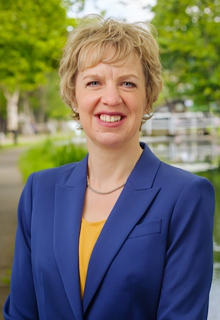
Ivana Catherine Bacik, Irish politician who has been the Leader of the Labour Party since March 24, 2022 and a Teachta Dála (TD) for the Dublin Bay South constituency since winning a by-election on July 9, 2021, is born in Dublin on May 25, 1968. She comes to prominence due to her abortion rights campaigning from the 1980s onward.

Bacik’s paternal grandfather, Charles Bacik, was a Czech factory owner who moved to Ireland in 1946. He eventually settled in Waterford, County Waterford, and in 1947 was involved in the establishment of Waterford Crystal. Her mother’s side of the family are Murphys from County Clare. Her father is an astronomer and is employed in a number of locations. As a result, she lives in London and South Africa, before moving to Crookstown, County Cork, at the age of six, when he becomes a physics lecturer in the Cork Institute of Technology. She attends the nearby national school in Cloughduv. When she is 11 years old, her family moves to the Sunday’s Well area of Cork city. At the age of 14, she moves to Dublin.

Bacik wins a scholarship to board at Alexandra College in Milltown, Dublin, and is awarded a sizarship at Trinity College Dublin. She has an LL.B. from Trinity and an LL.M. from the London School of Economics.

Bacik contests the Seanad Éireann elections in 1997 and 2002 as an independent candidate for the Dublin University constituency but is not successful.

She runs as a Labour Party candidate at the 2004 election to the European Parliament in the Dublin constituency. She runs with sitting MEP Proinsias De Rossa, who is also the party president, on the same ticket. She polls 40,707 first preference votes (9.6%) but is not elected.

In 2004, Bacik’s book Kicking and Screaming: Dragging Ireland into the 21st Century, is published by The O’Brien Press.

In 2007, she contested the Seanad Éireann elections for the third time in the Dublin University constituency, and is elected to the third seat, behind sitting Independent senators Shane Ross and David Norris. She initially sits as an Independent senator.

In February 2009, Bacik is included in an ‘All Star Women’s Cabinet’ in the Irish Independent. In March 2009, she confirmed claims made on a TV programme that she had taken two voluntary pay cuts of 10% in addition to a pension levy. In June 2009, she is the Labour Party candidate for the Dublin Central by-election. She comes in third with 17% of the first preference votes. She joins the Labour Party group in the Seanad in September 2009, and becomes Labour Party Seanad spokesperson for both Justice and Arts, Sports and Tourism. In November 2009, a feature by Mary Kenny of the Irish Independent includes Bacik in a list of women who “well deserved their iconic status.”

In May 2010, Bacik seeks Labour’s nomination to contest the next election in the Dublin South-East constituency but is not selected. In December 2010, she is added to the ticket as the second candidate beside Labour Party leader, Eamon Gilmore, in the Dún Laoghaire constituency for the 2011 Irish general election. Gilmore tops the poll, with Bacik receiving 10.1% of first preference votes but she is not elected. She is re-elected to Seanad Éireann at the subsequent election, after which she becomes Deputy Leader of the Seanad. She holds her seat in the Seanad in 2016 and in 2020.

On April 27, 2021, after the resignation of Eoghan Murphy from his Dáil seat in Dublin Bay South, Bacik announces her intention to stand in the upcoming by-election. She campaigns with an emphasis on providing affordable housing, as well as improving healthcare and childcare, tackling climate change, and achieving “a true republic in which church and state are separated.” During the campaign, she describes herself as having “more bills passed into law than any other Senator, on issues such as workers’ conditions, women’s health rights, and LGBT equality”. She also campaigns on increasing the number of sports amenities for children in the area, calling for unused Defence Forces football fields at the Cathal Brugha Barracks to be freed up for local sports, with the suggestion rejected by Fine Gael Minister for Defence Simon Coveney. Fine Gael complains to RTÉ after she features prominently on National Treasures, a prime-time TV show broadcast by RTÉ during the campaign. RTÉ has strict rules about fair coverage of candidates during campaigns. The national broadcaster blames an “inadvertent error” for the programme being shown three days before the election. A steering group within the broadcaster tells Fine Gael that “the broadcast should not have happened.” Consequentially, RTÉ has to show a special report on the by-election on Prime Time to “ensure fair coverage is given to all candidates.”

Bacik wins this election, receiving 8,131 (30.2%) first-preference votes. It is her fourth attempt as a Labour candidate, and she expresses her delight at the success at the count centre in the RDS. Following the election, she is described by The Irish Times as “a formidable activist and public intellectual” and that Fine Gael’s perceived antipathy towards their former TD, Kate O’Connell, may have contributed to the surge in support to Bacik from women voters. The newspaper claims that her election is “a long overdue morale boost” for Labour.

In August 2021, Bacik apologises for attending Katherine Zappone‘s controversial party in the Merrion Hotel, Dublin, in July of that year. She states that she believed that it took place within existing COVID-19 pandemic restrictions.

In March 2022, Bacik confirms she will run to succeed Alan Kelly as Labour Party leader. Kelly states that he believes that Bacik will succeed him. On March 24, 2022, she is confirmed as Labour Party leader unopposed at a party conference in Dublin. In a speech, she says she will focus on the rising cost of living and the serious and global problems facing the country. She pledges that Labour will fight the next election as a “standalone party” rather than joining any left-wing alliance.

At the 2024 Irish general election, Bacik is re-elected to the Dáil.

Bacik lives with husband Alan Saul and their two daughters in Portobello, Dublin.


Leave a comment

28th Amendment of the Constitution Bill 2008 Rejected by Irish Voters

The Twenty-eighth Amendment of the Constitution Bill 2008, a proposed amendment to the Constitution of Ireland, is rejected by voters on June 12, 2008, by a margin of 53.4% to 46.6%, with a turnout of 53.1%. The purpose of the proposed amendment is to allow the state to ratify the Treaty of Lisbon of the European Union.

The treaty had been intended to enter into force on January 1, 2009, but has to be delayed following the Irish rejection. However, the Lisbon treaty is approved by Irish voters when the Twenty-eighth Amendment of the Constitution of Ireland is approved in the second Lisbon referendum, held in October 2009.

The Treaty of Lisbon is signed by the member states of the European Union on December 13, 2007. It is in large part a revision of the text of the Treaty establishing a Constitution for Europe (TCE) after its rejection in referendums in France in May 2005 and in the Netherlands in June 2005. The Treaty of Lisbon preserves most of the content of the Constitution, especially the new rules on the functioning of the European Institutions but gives up any symbolic or terminologic reference to a constitution.

Because of the decision of the Supreme Court of Ireland in Crotty v. An Taoiseach (1987), an amendment to the Constitution is required before it can be ratified by Ireland. Ireland is the only one of the then fifteen EU member states to put the Treaty to the people in a referendum. Ratification of the Treaty in all other member states is decided upon by national parliaments alone.

On February 26, 2008, the Government of Ireland approves the text of the changes to the constitution. The Twenty-eighth Amendment of the Constitution Bill is proposed in Dáil Éireann by Minister for Foreign Affairs Dermot Ahern on April 2, 2008. It passes final stages in the Dáil on April 29, with Sinn Féin TDs and Independent TD Tony Gregory rising against, but with insufficient numbers to call a vote. It passes final stages in the Seanad on May 7.

A Referendum Commission is established by Minister for the Environment, Heritage and Local Government John Gormley. It is chaired by former High Court judge Iarfhlaith O’Neill. Its role is to prepare one or more statements containing a general explanation of the subject matter of the proposal and of the text of the proposal in the amendment bill.

The government parties of Fianna Fáil and the Progressive Democrats are in favour of the treaty, but the other government party, the Green Party, is divided on the issue. At a special convention on January 19, 2008, the leadership of the Green Party fails to secure a two-thirds majority required to make support for the referendum official party policy. As a result, the Green Party itself does not participate in the referendum debate, although individual members are free to be involved in whatever side they chose. All Green Party members of the Oireachtas support the Treaty. The main opposition parties of Fine Gael and the Labour Party are also in favour. Only one party represented in the Oireachtas, Sinn Féin, is opposed to the treaty, while minor parties opposed to it include the Socialist Party, the Workers’ Party and the Socialist Workers Party. Independent TD’s Tony Gregory and Finian McGrath, Independent MEP Kathy Sinnott, and Independent members of the Seanad from the universities David Norris, Shane Ross and Rónán Mullen advocate a “No” vote as well.

The Government sends bilingual booklets written in English and Irish, explaining the Treaty, to all 2.5 million Irish households. However, compendiums of the two previous treaties, of which the Lisbon Treaty is intended to be a series of reforms and amendments, remain unavailable in Ireland. Some commentators argue that the treaty remains essentially incomprehensible in the absence of such a compendium.

On March 12, 2008, the Libertas Institute, a lobby group started by businessman Declan Ganley, launches a campaign called Facts, not politics which advocates a “No” vote in the referendum. A month later, the German Chancellor, Angela Merkel, appeals to Irish people to vote “Yes” in the referendum while on a visit to Ireland. The anti-Lisbon Treaty campaign group accuses the government and Fine Gael of a U-turn on their previous policy of discouraging foreign leaders from visiting Ireland during the referendum campaign. The European Commissioner for Internal Market Charlie McCreevy admits he had not read the Treaty from cover to cover and says, “he would not expect any sane person to do so.”

At the start of May, the Irish Alliance for Europe launches its campaign for a “Yes” vote in the referendum this consists of trade unionists, business people, academics and politicians. Its members include Garret FitzGerald, Ruairi Quinn, Pat Cox and Michael O’Kennedy. The Taoiseach Brian Cowen states that should any member of the Fianna Fáil parliamentary party campaign against the treaty, they will likely be expelled from the party.

On May 21, 2008, the executive council of the Irish Congress of Trade Unions votes to support a “Yes” vote in the referendum. Rank and file members of the individual unions are not balloted, and the Technical, Engineering and Electrical Union (TEEU) advises its 45,000 members to vote “No.” The Irish bishops conference states the Catholic Church‘s declaration that the treaty will not weaken Ireland’s constitutional ban on abortion, however the conference does not advocate either a “Yes” or “No” vote. By the start of June, Fianna Fáil, Fine Gael and the Labour Party have united in their push for a “Yes” vote despite earlier divisions. The two largest farming organisations, the Irish Creamery Milk Suppliers Association (ICMSA) and the Irish Farmers’ Association call for a “Yes” vote, the latter giving its support after assurances from Taoiseach Brian Cowen that Ireland will use its veto in Europe if a deal on World Trade reform is unacceptable.

There were 3,051,278 voters on the electoral register. The vast majority of voting takes place on Thursday, June 12, between 7:00 a.m. and 10:00 p.m. Counting begins at 9:00 a.m. the following morning. Several groups vote before the standard polling day, with some casting postal votes before June 9. These include members of the Irish Defence Forces serving in United Nations peacekeeping missions, Irish diplomats and their spouses abroad, members of the Garda Síochána, those unable to vote in person due to physical illness or disability, those who are unable to vote in person due to their employment (including students) and prisoners.

On June 9, several islands off the coast of County Donegal vote: Tory Island, Inishfree, Gola, Inishbofin and Arranmore. These islands are all part of the Donegal South-West constituency. Around 37% of the 745 eligible votes. Two days later, several islands off the coast of counties Galway and Mayo vote: the Aran Islands (Inis Mór, Inis Meáin and Inis Oírr) and Inishboffin form part of Galway West constituency, while Inishturk, Inishbiggle and Clare Island form part of the Mayo constituency. The Galway islands have 1,169 eligible voters, while the Mayo islands have 197.

Votes are counted separately in each Dáil constituency. The overall verdict is formally announced by the Referendum Returning officer in Dublin Castle by accumulating the constituency totals.

(Pictured: Campaign posters in St. Stephen’s Green, Dublin)


Leave a comment

Death of Brendan McGahon, Fine Gael Politician

Brendan McGahon, Irish Fine Gael politician who serves as a Teachta Dála (TD) for the Louth constituency from 1982 to 2002, dies on February 8, 2017, following a brief illness. Often described as “colourful,” with a reputation as a social conservative, he is first elected to Dáil Éireann at the November 1982 Irish general election and retains his seat until retiring at the 2002 Irish general election.

McGahon is born in Dundalk, County Louth, on November 22, 1936, and is educated at St. Mary’s College, Dundalk. His grandfather, T.F. McGahon, is one of the inaugural members of Dundalk Urban District Council when it is created along with other Irish local authorities by the British Government in 1898. T.F. McGahon is a leading member of the Irish Parliamentary Party (IPP). He starts a local newspaper, the Dundalk Democrat, which is supportive of the IPP. He is a critic of the Irish War of Independence campaign, of Sinn Féin, and of the then Irish Republican Army (IRA), arguing that the campaign will result in the partition of Ireland. He is later succeeded on the council by his son, O.B. McGahon, who in turn is followed by his nephew, Hugh McGahon. The family subsequently supports the National League Party and the Independent TD James Coburn and joins Fine Gael when Coburn joins the party. They are also prominent members of the Ancient Order of Hibernians.

McGahon marries Celine Lundy, a widow from Newry, County Down, and takes over the running of the family newspaper business in the 1960s. He plays soccer for Dundalk F.C. in the League of Ireland Premier Division for a number of years.

McGahon succeeds his cousin Hugh on Dundalk Town Council and on Louth County Council at the 1979 Irish local elections. He is an unsuccessful candidate at the 1981 Irish general election and at the February 1982 Irish general election. He is first elected to Dáil Éireann for Louth at the November 1982 Irish general election, defeating incumbent Fine Gael TD, Bernard Markey. He is re-elected at the next five general elections.

A notable aspect of McGahon’s political career is his stand against the Provisional IRA when that organisation’s campaign of violence is at its height. At great personal risk, he refuses to close his newsagents shop in Dundalk during the funerals of the hunger strikers in 1981. He takes another huge risk a few years later when he gives evidence in the High Court in support of The Sunday Times, which is being sued for libel by Thomas Murphy for accusing him of directing an IRA bombing campaign in Britain. Local Gardaí are ordered not to get involved in the case, but McGahon is not deterred from giving evidence that helps the newspaper to defend the claims being made against it by Murphy.

A maverick and outspoken TD, McGahon is known to speak his mind on many issues including divorce, crime, and single mothers. He once advocates that pedophiles should be castrated as part of their prison sentence and is the only TD to oppose the referendum to abolish the death penalty from the Constitution. He also argues that those under 21 years of age should not be able to drive or drink. He is a member of the World Anti-Communist League and opposes the decriminalisation of homosexuality. In 1993, he is the only TD to oppose the decriminalisation of homosexuality and says in the Dáil that:

“I regard homosexuals as being in a sad category, but I believe homosexuality to be an abnormality, some type of psycho-sexual problem that has defied explanation over the years. I do not believe that the Irish people desire this normalisation of what is clearly an abnormality. Homosexuality is a departure from normality and while homosexuals deserve our compassion, they do not deserve our tolerance. That is how the man in the street thinks. I know of no homosexual who has been discriminated against. Such people have a persecution complex because they know they are different from the masses or normal society. They endure inner torment, and it is not a question of the way others view them. The lord provided us with sexual organs for a specific purpose. Homosexuals are like left-hand drivers driving on the right-hand side of the road.”

On the other hand, McGahon speaks out strongly against the influence of the drink industry and defies his own party whip to vote with his left-wing friend Tony Gregory in favour of banning of hare coursing. He is also on good personal terms with members of the Oireachtas such as Michael D. Higgins and David Norris despite holding fundamentally opposed views to them.

McGahon does not contest the 2002 Irish general election and retires from politics.

McGahon lives in Ravensdale, County Louth. His son Conor is a Louth County Councillor from 1991 to 1999 and his brother Johnny is a Louth County Councillor from 1995 to 2004. Johnny’s nephew, John McGahon, is elected to Louth County Council at the 2014 Irish local elections and to Seanad Éireann in 2020.

McGahon dies at the age of 80 on February 8, 2017, following a short illness. Following a Mass at St. Patrick’s Cathedral on February 11, he is buried afterwards in St. Patrick’s Cemetery.


Leave a comment

Birth of Justice Catherine McGuinness

Catherine McGuinness (née Ellis), retired Irish judge, is born in Belfast, Northern Ireland on November 14, 1934. She serves as a Judge of the Supreme Court of Ireland from 2000 to 2006, a Judge of the High Court from 1996 to 2000, a Judge of the Circuit Court from 1994 to 1996 and a Senator for the University of Dublin from 1979 to 1981 and between 1983 and 1987. She is appointed by President Michael D. Higgins to the Council of State from 1988 to 1990 and 2012 to 2019.

McGuinness is President of the Law Reform Commission from 2007 to 2009. In May 2013, she is appointed Chair of the National University of Ireland Galway Governing Authority.

McGuinness is educated in Alexandra College, Trinity College Dublin and the King’s Inns. In the 1960s she works for the Labour Party. She is called to the Irish Bar in 1977 at age 42. In 1989, she is called to the Inner Bar.

In 1979, McGuinness is elected as an independent candidate to Seanad Éireann at a by-election on December 11, 1979, as a Senator for the University of Dublin constituency, following the resignation of Senator Conor Cruise O’Brien, taking her seat in the 14th Seanad. She is re-elected at the 1981 elections to the 15th Seanad, and in 1983 to the 17th Seanad, where she serves until 1987, losing her seat to David Norris. She is appointed to the Council of State on May 2, 1988, by President Patrick Hillery and serves until 1990.

McGuinness is appointed a judge of the Circuit Court in 1994, the first woman to hold that office in Ireland. In 1996, she is appointed to the High Court and remains there until her appointment to the Supreme Court in January 2000.

In November 2005, McGuinness is appointed Adjunct Professor at the Faculty of Law, National University of Ireland, Galway. She is also appointed President of the Law Reform Commission in 2005 and holds that position until 2011.

In April 2009, McGuinness is awarded a “Lord Mayor’s Award” by Lord Mayor of Dublin Eibhlin Byrne “for her contribution to the lives of children and families in the city through her pioneering work.” In September 2010, she is named as one of the “People of the Year” for “her pioneering, courageous and long-standing service to Irish society.” In November 2012, she wins the Irish Tatler Hall of Fame Award.

In addition to her judicial career, McGuinness serves on the Employment Equality Agency, Kilkenny Incest Investigation, the Forum for Peace and Reconciliation, the National Council of the Forum on End of Life in Ireland and the Irish Universities Quality Board. In June 2011, she becomes patron of the Irish Refugee Council. In November 2011, she is appointed Chairperson of the “Campaign for Children.”

McGuinness has received honorary doctorates from the University of Ulster, the National University of Ireland, the University of Dublin, the Higher Education and Training Awards Council (HETAC) and the Royal College of Surgeons in Ireland. In February 2013, she accepts the Honorary Presidency of Trinity College, Dublin’s Free Legal Advice Centre.

In January 2014, McGuinness is appointed by Minister for Communications, Energy and Natural Resources, Pat Rabbitte, to chair the expert panel to oversee the preparation of reports on the best underground route options to compare with the Grid Link and Grid West high voltage power lines in Ireland. In March 2015, McGuinness receives an Alumni Award from Trinity College Dublin.

McGuinness is married to broadcaster and writer Proinsias Mac Aonghusa from 1954 until his death in 2003 and has three children. She resides in Blackrock, Dublin.


Leave a comment

Máiría Cahill Elected to Seanad Éireann

mairia-cahillMáiría Cahill is elected to Seanad Éireann on November 13, 2015 after winning a by-election held to fill the seat left vacant after the resignation of the Labour Party‘s Jimmy Harte. She wins 122 of the 188 valid votes cast in an election in which only Teachta Dálas (TDs) and Senators can cast a vote.

Cahill is born in 1981 into a prominent republican extended family in West Belfast. Her great-uncle Joe Cahill is one of the founders and chief of staff of the Provisional Irish Republican Army (IRA) in the 1970s. She is a cousin of both Siobhán O’Hanlon, a prominent republican activist in the IRA and later in Sinn Féin until her death in 2006, and her sister Eilis O’Hanlon, a political commentator for the Irish Independent and critic of both the IRA and Sinn Féin. She also claims her grandfather recruited Gerry Adams into the IRA.

Cahill is elected National Secretary of Ógra Shinn Féin and works for Sinn Féin between 1998 and 2001. She quits Sinn Féin in 2001 when she moves to the United States. She later returns and works on two election campaigns for the party before growing disillusioned at her treatment and leaving for good.

In February 2015, Cahill receives a James Larkin Thirst for Justice award from the Irish Labour Party. In November 2015, she receives a Special Recognition Award in the Irish Tatler‘s Woman of the Year Awards.

In October 2015, Labour Party leader Joan Burton announces Cahill has joined the party and she, along with her deputy Alan Kelly, will put her forward as the party’s nominee in a by-election to Seanad Éireann’s Industrial and Commercial Panel. The by-election has been occasioned by the resignation of Senator Jimmy Harte due to illness. Cahill secures the party’s nomination unopposed and wins the election in November 13 on the first count, with 122 first preferences out of 188 valid votes from Oireachtas members.

Cahill is criticised by Senator David Norris for failing to satisfactorily answer questions on her links to dissident republican groups and for failing to take part in media debates with other candidates. Norris later states that she is “an interesting and vital voice in Seanad Éireann.”

In a March 2016 interview with Catherine Shanahan of the Irish Examiner, Kathleen Lynch, a former Labour party TD and Minister of state, states she has no idea as to why Cahill was chosen as the party’s by-election candidate. Cahill does not contest the 2016 Seanad elections.

Cahill is co-opted into a Social Democratic and Labour Party (SDLP) council seat in Lisburn and Castlereagh council in July 2018. She has to withdraw from the local election campaign in April 2019, due to a law requiring candidates to publish their home addresses. Cahill is unable to do so due to threats made against her. The British Government subsequently apologises.