seamus dubhghaill

Promoting Irish Culture and History from Little Rock, Arkansas, USA


Leave a comment

Birth of Barry Yelverton, 1st Viscount Avonmore

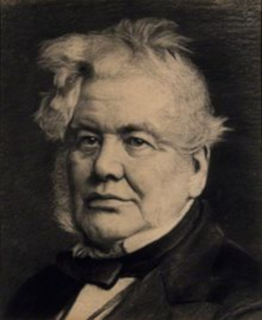
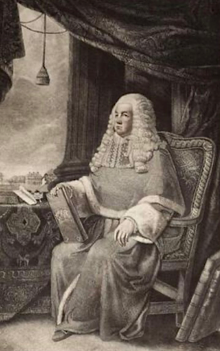
Barry Yelverton, 1st Viscount AvonmorePC (Ire) KC, Irish judge and politician, is born in Newmarket, County Cork, on May 28, 1736. He gives his name to Yelverton’s Act 1782, which effectively repeals Poynings’ Law and thus restores the independence of the Parliament of Ireland. This achievement is destroyed by the Acts of Union 1800, which he supports. By doing so, he gravely harms his reputation for integrity, which had already been damaged by his leading role in the conviction and execution for treason of the United Irishman William Orr, which is now seen as a major miscarriage of justice.

Yelverton is the eldest son of Francis Yelverton of KanturkCounty Cork, and Elizabeth Barry, daughter of Jonas Barry of Kilbrin (now Ballyclogh, County Cork). His father dies when he is only ten. His mother reaches a great age, dying only a year before her son. He goes to school in Charleville and Midleton College, and attends Trinity College Dublin, where he takes a degree of Bachelor of Arts in 1757 and of Bachelor of Laws in 1761. His family lacks wealth and social position and he is for some years an assistant master under Andrew Buck in the Hibernian Academy. This menial occupation is later a source of great embarrassment to him, as his enemies love to ridicule him as “Buck’s usher.”

In 1761, Yelverton marries Mary Nugent, daughter of William Nugent of Clonlost, County Westmeath, and his wife Ursula Aglionby, a lady of some fortune, and is thus enabled to read for the Irish Bar, entering the Middle Temple. He is called to the Bar in 1764. Despite his lack of family connections, his success in his profession is rapid, due to his legal ability, charm and remarkable eloquence, and he takes silk eight years afterward.

Yelverton is elected to the Irish House of Commons as member for Donegal Borough from 1774 to 1776. In the latter year, he is elected for both Belfast and Carrickfergus. He chooses to sit for the latter constituency and represents Carrickfergus until 1784. Although few examples of his oratory survive, all contemporaries agree on his eloquence, which gives him a dominant position in the Commons. He also serves as Recorder of Carrickfergus from 1778 until his death. This is not a Crown appointment as the Recorder is elected by a vote of the entire town corporation.

Yelverton gives his support to Henry Grattan and the Whigs during the greater part of his parliamentary career. He is a strong supporter of the demand for an independent Irish Parliament, but later changes his stance.

Yelverton plays a crucial role in the reforms which are collectively called the Irish Constitution of 1782. In particular he sponsors the Act 21 and 22 of George III, An Act to regulate the manner of passing bills and to prevent delays in summoning of Parliaments – which is popularly known as “Yelverton’s Act.” This radically modifies Poynings’ Law of 1495 by which all legislation to be passed by the Irish Parliament has to be drafted by the Privy Council of Ireland, then sent to the English privy council for approval. Under Yelverton’s Act, the role of the Irish Privy Council is abolished and legislation is commenced in the normal way in the Irish Parliament, which for the last 17 years of its existence enjoys a wide measure of independence.

In his latter days, Yelverton becomes identified with the court party and votes for the Act of Union 1800, for which his viscounty is a reward. For this he is never forgiven by many of his former friends. Sir Jonah Barrington, who continues to regard Yelverton with affection and respect, regrets that this action should have destroyed his reputation forever, but he argues that such a mistake of judgment is understandable in a man who lacks worldly wisdom, and despite his many good qualities, does not have a strong moral sense.

Yelverton becomes Attorney-General for Ireland in 1782, and is elevated to the bench as Lord Chief Baron of the Irish Exchequer in 1783. He is created Baron Yelverton in 1795, and in 1800 Viscount Avonmore in the Peerage of Ireland. As Chief Baron, he leads the opposition to the proposal to increase the number of judges in each of the courts of common law from three to four, on the practical ground that four-judge courts often divide evenly and thus cannot reach an effective decision. Despite this common-sense view, the new judges are eventually appointed.

Yelverton becomes a member of the Royal Irish Academy in 1787.

In 1797, Yelverton attains a degree of infamy for presiding over what is widely regarded as a “show trial” which leads to the execution of the United Irishman, William Orr, although he is said to have shed tears when passing the death sentence on Orr. Orr is charged with administering the United Irish oath to a soldier called Hugh Wheatly. This had recently become a capital offence. In fact, it is generally believed that another man, William McKeever, administered the oath. Wheatly, who is the principal witness for the prosecution, later confesses that he had perjured himself, but despite a superb defence by John Philpot Curran, Orr is found guilty and hanged. Yelverton may have formed an early impression of Orr’s guilt and acted on it – even his admirers admitted that as a judge he lacks impartiality.

Peter Finnerty, a journalist, is later convicted of seditious libel for publishing an attack on Yelverton over his conduct of Orr’s trial and this does nothing to enhance the judge’s reputation.

Yelverton dies on August 19, 1805, at his mansion, Fortfield House, TerenureCounty Dublin, which he had built at great expense around 1785. He is buried nearby in Rathfarnham.

Leave a comment

Birth of Standish James O’Grady, Author, Journalist & Historian

Standish James O’Grady (Irish: Anéislis Séamus Ó Grádaigh), Irish author, journalist, and historian, is born in Castletownbere, County Cork, on September 18, 1846. He is inspired by Sylvester O’Halloran and plays a formative role in the Celtic Revival, publishing the tales of Irish mythology, as the History of Ireland: Heroic Period (1878), arguing that the Gaelic tradition has rival only from the tales of Homeric Greece.

O’Grady’s father is the Reverend Thomas O’Grady, the scholarly Church of Ireland minister of Castletown Berehaven, County Cork, and his mother Susanna Doe (or Dowe). The Glebe, his childhood home, lies a mile west of Castletownbere near a famine mass grave and ruined Roman Catholic chapel. He is a cousin of Standish Hayes O’Grady, another noted figure in Celtic literature, and of Standish O’Grady, 1st Viscount Guillamore. After a rather severe education at Tipperary Grammar School, he follows his father to Trinity College, Dublin, where he wins several prize medals and distinguishes himself in several sports.

O’Grady is a paradox for his times, proud of his Gaelic heritage, he is also a member of the Church of Ireland, a champion of aristocratic virtues (particularly decrying bourgeois values and the uprooting cosmopolitanism of modernity) and at one point advocates a revitalised Irish people taking over the British Empire and renaming it the Anglo-Irish Empire.

O’Grady proves too unconventional of mind to settle into a career in the church, and takes a job as a schoolmaster at Midleton College, then in a period of expansion. He also qualifies as a barrister, while earning much of his living by writing for the Irish newspapers. Reading Sylvester O’Halloran’s A general history of Ireland (1778) sparks an interest in early Irish history. After an initial lukewarm response to his writing on the legendary past in History of Ireland: The Heroic Period (1878) and Early Bardic Literature of Ireland (1879), he realises that the public wants romance, and so follows the example of James Macpherson in recasting Irish legends in literary form, producing historical novels including Finn and his Companions (1891), The Coming of Cuculain (1894), The Chain of Gold (1895), Ulrick the Ready (1896) and The Flight of the Eagle (1897), and The Departure of Dermot (1913).

O’Grady also studies Irish history of the Elizabethan period, presenting in his edition of Sir Thomas Stafford‘s Pacata Hibernia (1896) the view that the Irish people had made the Tudors into kings of Ireland to overthrow their unpopular landlords, the Irish chieftains. His The Story of Ireland (1894) is not well received, as it sheds too positive a light on the rule of Oliver Cromwell for the taste of many Irish readers. He is also active in social and political campaigns in connection with such issues as unemployment and taxation.

Until 1898, O’Grady works as a journalist for the Daily Express of Dublin, but in that year, finding Dublin journalism in decline, he moves to Kilkenny to become editor of the Kilkenny Moderator, which is printed at 28 High Street. It is here he becomes involved with Ellen Cuffe, Countess of Desart, and Captain Otway Cuffe. He engages in the revival of the local woolen and woodworking industries. In 1900 he founds the All-Ireland Review and returns to Dublin to manage it until it ceases publication in 1908. He also contributes to James LarkinsThe Irish Worker paper.

O’Grady’s influence crosses the divide of the Anglo-Irish and Irish-Ireland traditions in literature. His influence is explicitly stated by the Abbey Theatre set with Lady Gregory, W. B. Yeats and George William Russell attributing their interest in the Fenian Cycle of Gaelic tradition in part to him. This leads to him being known as the “Father of the Celtic Revival.” Some of the figures associated with the political party Sinn Féin, including its founder Arthur Griffith, have positive things to say about his efforts in helping to retrieve from the past the Gaelic heroic outlook.

O’Grady marries Margaret Allen Fisher, daughter of William Allen Fisher, and they have three sons. Advised to move away from Ireland for the sake of his health, they leave Ireland in 1918. After living in the north of France and Northamptonshire, they move to the Isle of Wight. He is working on a final exposition of his ideas when he dies suddenly on May 18, 1928.

O’Grady’s eldest son, Hugh Art O’Grady, is for a time editor of the Cork Free Press before he enlists in World War I in early 1915. He becomes better known as Dr. Hugh O’Grady, later Professor of the Transvaal University College, Pretoria (later the University of Pretoria), who writes the biography of his father in 1929.


Leave a comment

Birth of John Philpot Curran, Orator, Politician, Lawyer & Judge

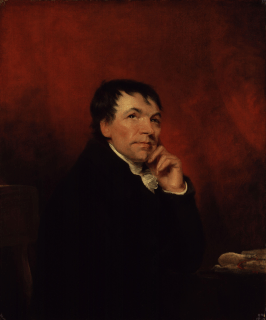
John Philpot Curran, Irish orator, politician, wit, lawyer and judge, who holds the office of Master of the Rolls in Ireland, is born in Newmarket, County Cork, on July 24, 1750.

Curran is the eldest of five children of James Curran, seneschal of the Newmarket manor court, and Sarah, née Philpot. The Curran family are said to have originally been named Curwen, their ancestor having come from Cumberland as a soldier under Oliver Cromwell during the Cromwellian conquest of Ireland, originally settling in County Londonderry.

Curran is educated at Midleton College, County Cork, before studing law at Trinity College Dublin. He continues his legal studies at King’s Inns and the Middle Temple. He is called to the Irish Bar in 1775. Upon his first trial, his nerves get the better of him and he cannot proceed. His short stature, boyish features, shrill voice and a stutter are said to have impacted his career, and earn him the nickname “Stuttering Jack Curran.”

However, Curran can speak passionately in court on subjects close to his heart. He eventually overcomes his nerves and gets rid of his speech impediment by constantly reciting Shakespeare and Henry St. John, 1st Viscount Bolingbroke, in front of a mirror, becoming a noted orator and wit. His championing of popular Irish causes such as Catholic emancipation make him one of the most popular lawyers in Ireland. He is also fluent in the Irish language which is still the language of the majority at the time. He writes a large amount of humorous and romantic poetry.

The case which cements Curran’s popularity is that of Father Neale and St. Leger St. Leger, 1st Viscount Doneraile at the County Cork Assizes in 1780. Having a passion for lost causes, he represents the priest and wins over the jury by setting aside the issue of religion.

A liberal Protestant whose politics are similar to Henry Grattan, Curran employs all his eloquence to oppose the illiberal policy of the Government, and also the Union with Britain. He stands as Member of Parliament (MP) for Kilbeggan in 1783. He subsequently represents Rathcormack (1790-98) and Banagher from 1800 until the Act of Union in 1801, which bitterly disappoints him, forcing him to contemplate emigrating to the United States.

In 1798, Ireland rebels against the British House of Commons and lack of reforms on Catholic emancipation. The British defeat the Irish rebels in numerous battles and soon establish their control over the country by 1799. Many of the Irish ring leaders are charged with treason and are facing death sentences. Curran plays an important role in court defending the leaders of the United Irishmen.

Curran’s youngest daughter Sarah‘s romance with United Irishmen leader Robert Emmet scandalises Curran, who had tried to split them up. He is arrested and agrees to pass their correspondence on to Standish O’Grady, 1st Viscount Guillamore, the Attorney-General for Ireland. In the circumstances he cannot defend Emmet. He is suspected of involvement in Emmet’s Rebellion, but is completely exonerated. However, his friend Arthur Wolfe, 1st Viscount Kilwarden, is killed by the rebels, and he loses any faith in the beliefs of the United Irishmen. Emmet is found guilty of rebelling against the Crown and the union between Great Britain and Ireland and is hanged in 1803. Curran disowns Sarah, who dies of tuberculosis five years later.

Curran is appointed Master of the Rolls in Ireland in 1806, following William Pitt the Younger‘s replacement by a more liberal cabinet.

Curran retires in 1814 and spends his last three years in London. He dies in his home in Brompton on October 14, 1817. In 1837, his remains are transferred from Paddington Cemetery, London to Glasnevin Cemetery in Dublin, where they are laid in an 8-foot-high classical-style sarcophagus. In 1845 a white marble memorial to him, with a carved bust by Christopher Moore, is placed near the west door of St. Patrick’s Cathedral, Dublin.


Leave a comment

Rev. Canon Paul Colton Elected Bishop of Cork, Cloyne and Ross

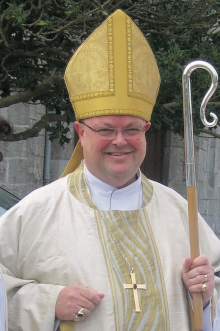
One of the youngest members of the Church of Ireland, Rev. Canon William Paul Colton is elected Bishop of Cork, Cloyne and Ross on January 29, 1999. He succeeds the Rt. Rev. Robert Warke.

Colton, born March 13, 1960, and known as Paul Colton, is perhaps best known for being the bishop who officiates the wedding of footballer David Beckham and Spice Girl Victoria Adams on July 4, 1999, at the medieval Luttrellstown Castle on the outskirts of Dublin.

Colton attends St. Luke’s National School, Douglas, Cork, Cork Grammar School and Ashton Comprehensive School, Cork before being awarded a scholarship to the Lester B. Pearson United World College of the Pacific, Victoria, British Columbia, Canada where he completes the International Baccalaureate in 1978. He studies law at University College Cork, part of the National University of Ireland, and is the first graduate of the university to be elected to a bishopric in the Church of Ireland. He studies theology at Trinity College Dublin. In 1987 he completes the degree of Master in Philosophy (Ecumenics) at Trinity College, Dublin and a Master of Laws at Cardiff University in 2006. His LL.M thesis is on the subject of legal definitions of church membership.

In 2013 Colton completes, and is conferred with, a PhD in Law also at Cardiff University. His academic areas of interest are church law, the law of the Church of Ireland, law within Anglicanism, the interface between the laws of religious communities and the laws of States (particularly in Ireland and Europe), human rights, education law, and charity law. In 2014 he is appointed as an honorary research fellow at the Cardiff School of Law and Politics of Cardiff University, and its Centre for Law and Religion.

Colton is elected Bishop of Cork, Cloyne and Ross by an Electoral College on January 29, 1999, and consecrated on the Feast of the Annunciation, March 25, 1999, in Christ Church Cathedral, Dublin. He is enthroned in Saint Fin Barre’s Cathedral, Cork on April 24, 1999, in St. Colman’s Cathedral, Cloyne on May 13, 1999, and in St. Fachtna’s Cathedral, Ross on May 28, 1999.

Colton is married to Susan Colton, who is deputy principal of a primary school, and they have two adult sons. He is the first Church of Ireland bishop to openly support same-sex marriage. He is involved in education debates and in charity work. He chairs the board of directors of Saint Luke’s Charity, Cork, which focuses on the elderly and dementia sufferers. He is also chairman of the board of governors of Midleton College.

At the episcopal ordination of Bishop Fintan Gavin as Catholic bishop of Cork and Ross in June 2019, Colton presents the crosier at Bishop Gavin’s own request.

As of June 2020, Colton is the longest-serving bishop of Cork, Cloyne and Ross since bishop William Lyon in 1617 and also the longest serving bishop still in office in the Anglican churches of Ireland, England, Scotland and Wales. He is the author of almost a dozen book chapters, mostly in the area of the interface between religion and law.


Leave a comment

Birth of Isaac Butt, Barrister & Politician

File source: http://commons.wikimedia.org/wiki/File:Portrait_of_Isaac_Butt.jpg

Isaac Butt, barrister and politician, is born in Glenfin, County Donegal on September 6, 1813. If not the originator of the term Home Rule, he is the first to make it an effective political slogan. He is the founder (1870) and first chief of the Home Government Association and president (1873–77) of the Home Rule League of Great Britain, but he is superseded in 1878 as head of the Home Rule movement by the younger and more forceful Charles Stewart Parnell.

Butt is the son of a Church of Ireland rector and is descended from the O’Donnells of Tyrconnell, through the Ramsays. He receives his secondary school education at The Royal School in Raphoe, County Donegal, and at Midleton College in County Cork, before going to Trinity College Dublin at the age of fifteen, where he is elected a Scholar. While there he co-founds the Dublin University Magazine and edits it for four years. For much of his life he is a member of the Irish Conservative Party. He becomes Whately Chair of Political Economy at Trinity in 1836 and holds that position until 1841.

Butt is called to the Irish bar in 1838 and the English bar in 1859. Intermittently from 1852 he represents, successively, one English and two Irish constituencies in the House of Commons. In 1848 he undertakes the defense of the Young Ireland leaders, who are charged with high treason for their abortive insurrection that year. From 1865 to 1869 he is the principal defense counsel for the imprisoned leaders of the Fenians (Irish Republican, or Revolutionary, Brotherhood).

Despite his legal work for the Fenians, Butt, who is basically a conservative, fears the consequences of a successful Fenian revolt. Disillusioned, however, by the British government’s failure to relieve the Irish Great Famine of the late 1840s, he becomes convinced that a native parliament is required for Irish land reform and other needs. In May 1870 he calls for an Irish Parliament subordinate to the imperial Parliament at Westminster, and later that year he forms the Home Government Association. From 1871 he quickens the Irish nationalist agitation in the House of Commons but gradually loses his leadership, partly because he disapproves of Parnell’s tactics of obstructing routine parliamentary business.

Butt amasses debts and pursues romances. It is said that at meetings he is occasionally heckled by women with whom he had fathered children. He is also involved in a financial scandal when it is revealed that he had taken money from several Indian princes to represent their interests in parliament.

Isaac Butt dies on May 5, 1879, in Clonskeagh in Dublin. His remains are brought by train to Stranorlar, County Donegal, where he is buried in a corner of the Church of Ireland cemetery beneath a tree by which he used to sit and dream as a boy. His grave has been restored and the memorial now includes a wreath.

Despite his chaotic lifestyle and political limitations, Butt is capable of inspiring deep personal loyalty. Some of his friends, such as John Butler Yeats and the future Catholic Bishop of Limerick, Edward Thomas O’Dwyer, retain a lasting hostility towards Parnell for his role in Butt’s downfall.

In May 2010 the Church of Ireland parishes of Stranorlar, Meenglass and Kilteevogue instigate an annual memorial Service and Lecture in Butt’s honour, inviting members of the professions of law, politics and journalism to reflect aspects of his life. Speakers have included Dr. Joe Mulholland, Senator David Norris, Dr. Chris McGimpsey and Prof. Brian Walker.

(Pictured: Isaac Butt, portrait by John Butler Yeats)


Leave a comment

Birth of The Reverend Edward Hincks

edward-hincks

The Reverend Edward Hincks, Anglo-Irish clergyman best remembered as an Assyriologist and one of the decipherers of Mesopotamian cuneiform, is born in Cork, County Cork on August 19, 1792. He is one of the three men known as the “holy trinity of cuneiform,” with Sir Henry Creswicke Rawlinson and Jules Oppert.

Hincks is the eldest son of the Rev. Thomas Dix Hincks, a distinguished Protestant minister, orientalist and naturalist. He is an elder brother of Sir Francis Hincks, a prominent Canadian politician who is also sometime Governor of Barbados, and William Hincks, the first Professor of Natural History at Queen’s College, Cork and afterwards University College, Toronto.

Hincks is educated at home by his father and at Midleton College before entering Trinity College Dublin. He is elected a Scholar of the College in 1810, and in 1812 wins the Gold Medal and Bishop Law‘s Prize for Mathematics. He is elected a Fellow of the College in 1813 and four years later takes his M.A. In 1819, following the death of Thomas Meredith, he is presented to the Rectory of Ardtrea in County Tyrone. Though Ardtrea is a valuable and highly prized Rectory, it is also isolated for a young bachelor, and he resigns the position in 1826, taking up the Rectory in nearby Killyleagh, County Down, an office he holds for the remainder of his life.

The undemanding nature of his clerical duties leave him with more than enough time to pursue his interest in ancient languages. His first love is for the hieroglyphic writing of ancient Egypt. His greatest achievement is the decipherment of the ancient language and writing of Babylon and Assyria: Akkadian cuneiform.

Hincks deduces correctly that cuneiform writing had been invented by one of the earliest civilisations of Mesopotamia, who then bequeathed it to later states such as Babylon, Assyria and Elam. In 1848 he is awarded the Cunningham Medal of the Royal Irish Academy for his achievements.

By 1850 Hincks comes to a number of important conclusions regarding the nature of Assyro-Babylonian cuneiform. He also discovers that cuneiform characters are “polyphonic,” by which he means that a single sign can have several different readings depending on the context in which it occurs. However, not everyone is convinced by the claims being made by the Irishman and his distinguished colleagues. Some philologists even suggest that they are simply inventing multiple readings of the signs to suit their own translations.

In 1857 the versatile English Orientalist William Henry Fox Talbot suggests that an undeciphered cuneiform text be given to several different Assyriologists to translate. If, working independently of one another, they come up with reasonably similar translations, it will surely dispel the doubts surrounding their claims.

As it happens, Talbot, Hincks, Rawlinson and Oppert, are in London in 1857. Edwin Norris, secretary of the Royal Asiatic Society, gives each of them a copy of a recently discovered inscription from the reign of the Assyrian emperor Tiglath-Pileser I. A jury of experts is impaneled to examine the resulting translations and assess their accuracy.

In all essential points the translations produced by the four scholars are found to be in close agreement with one another. There are of course some slight discrepancies. The inexperienced Talbot makes a number of mistakes, and Oppert’s translation contains a few doubtful passages due to his unfamiliarity with the English language. But Hincks’ and Rawlinson’s versions are virtually identical. The jury declares itself satisfied, and the decipherment of cuneiform is adjudged a fait accompli.

Hincks devotes the remaining years of his life to the study of cuneiform and makes further significant contributions to its decipherment. He dies at his rectory in Killyleagh on December 3, 1866, at the age of 74. He is survived by a wife and four daughters.