seamus dubhghaill

Promoting Irish Culture and History from Little Rock, Arkansas, USA


Leave a comment

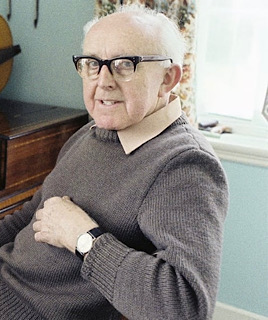
Death of Cathal Gannon, Harpsichord Maher & Fortepiano Restorer

Cathal Gannonharpsichord maker, a fortepiano restorer and an amateur horologist, dies on May 23, 1999.

Gannon is born on August 1, 1910, in Harold’s Cross, Dublin, into a craftsmen family of carpenters, many of whom worked in the famous Guinness Brewery. His education, in two local schools, is rudimentary and at the age of fifteen he starts working as an apprentice carpenter in the Guinness Brewery. His apprenticeship involves learning to make office furniture and attending evening classes in nearby colleges, where he is able to improve his education in a more congenial atmosphere. A love of music and the arts had been encouraged by two maiden aunts. His parents subsequently purchase an upright piano and he learns to play it at the Read Pianoforte School. When his apprenticeship is completed and he is on the dole for some years, he spends much of his spare time buying pictures, books, antiques and old clocks and watches in the various auction rooms and antique shops in Dublin.

During the mid-1930s, Gannon becomes a member of several Dublin-based societies, most notably the Old Dublin Society, and there befriends well-known people such as Grace Plunkett (née Gifford), the widow of Joseph Mary Plunkett, who had been executed following the Easter Rising of 1916. At around this time, he is also introduced to Carl Hardebeck, an arranger of Irish traditional music. At a later stage in his life, he meets Desmond Guinness and his wife Mariga, founders of the Irish Georgian Society, which he subsequently joins.

While reading a series of articles about Tibet in a magazine, Gannon stumbles across an article, which, he believes, is by Violet Gordon-Woodhouse, a British harpsichordist and clavichord player of the period. The article is about the revival of the harpsichord, which interests him. He asks permission to examine the harpsichords on display in the National Museum of Ireland, Dublin, but is given no encouragement by the staff. He is finally allowed to see the instruments when he is in his early twenties. Dismayed, he concludes that they are too expensive to buy and too complicated to make.

While on holidays in Glengarriff in the Beara Peninsula of County Cork during August 1936, Gannon meets his future wife, Margaret Key from Harrow, London. They marry in 1942.

In London with Margaret, who is visiting her parents, Gannon goes to the Benton Fletcher collection of keyboard instruments, which is then in Chelsea, and measures a harpsichord by Jacob and Abraham Kirckman. Back home, he makes a copy of the instrument in a tiny conservatory at the back of his house in the Dublin suburb of Rialto. The harpsichord is played by John S. Beckett for the first time in public in 1959 as the continuo for Johann Sebastian Bach‘s St. Matthew Passion and is praised in the national press. Beckett subsequently persuades the authorities in the Guinness Brewery to provide Gannon with a special workshop, in which he makes five harpsichords and restores several antique pianos. The first harpsichord made in the Brewery is donated to the Royal Irish Academy of Music in Dublin. The second is sold to Harrods of London, and the third is sold to Ireland’s national radio and television station RTÉ. This third instrument is used regularly by the RTÉ Symphony and Concert orchestras and also by the well-known composer and performer of Irish traditional music, Seán Ó Riada.

Gannon continues to make many more harpsichords and restore more pianos during the years to come. In all, he completes twenty harpsichords during his lifetime – the final four are completed by a friend, Patrick Horsley, in England. One of the harpsichords made by Gannon-Horsley returns to Ireland and is presented to NUI Maynooth. A piano of note that he restores is a Broadwood square piano owned by the poet and composer, Thomas Moore, which belonged to Lord and Lady Elveden (later Iveagh).

Gannon is the subject of several RTÉ radio programmes, three RTÉ television programmes (including The Late Late Show) and a television programme, Gallery, made by BBC Northern Ireland. He befriends a great many people, including the artist, writer and conservationist Peter Pearson, and regular musical evenings are held at the family home in Bryan Guinness‘s grounds in the suburbs of Dublin. Because of his interest in antique clocks and watches, he becomes a member of the Irish branch of the Antiquarian Horological Society, founded by his friend William Stuart.

In 1978, Trinity College Dublin (TCD) gives Gannon an honorary MA degree for his contribution to the authentic performance of early music in Ireland. Two years later, he is invited to travel with the New Irish Chamber Orchestra to China, where he tunes and maintains one of his harpsichords and celebrates his seventieth birthday. In 1989, a second honorary MA is given to him, this time by NUI Maynooth.

Following Gannon’s 80th birthday, which is attended by fifty people, he finally settles down to retirement. A series of minor strokes follow, which eventually lead to dementia and ultimately to his death, aged 88, on May 23, 1999.

The Cathal Gannon Early Music Room is opened in the Royal Irish Academy of Music in May 2003. It contains a harpsichord and clavichord made by Gannon, a Broadwood grand piano restored by him, and a square piano.

Part of a transmitted RTÉ programme, Nationwide (January 17, 2007), features archive footage of Gannon and his instruments. Three RTÉ radio programmes, Bowman: Sunday Morning, broadcast in November 2006, feature a 1983 interview with Gannon.


Leave a comment

Death of Carl Hardebeck, Traditional Music Composer & Arranger

Carl Gilbert Hardebeck, or Carl G. Hardebec, British-born Irish composer and arranger of traditional music, dies in Dublin on February 10, 1945.

Hardebeck is born on December 10, 1869, in Clerkenwell, London, to a German father and Welsh mother. He loses his sight when he is a baby. He attends the Royal Normal School for the Blind in London (1880–92) where, under his teacher Frederick Corder, a professor from the Royal Academy of Music, he shows a marked aptitude for music.

In 1893, at the age of twenty-four, Hardebeck moves to Belfast, where he opens a music store, but the venture fails, and he becomes the organist of a small parish in the city, the Holy Family Church, Wellington Place. He enters an anthem, O God of My Salvation, for contralto and chorus, for the 1897 Dublin Feis Ceoil and wins. On this occasion he hears folk song arrangements of Charles Villiers Stanford and others for the first time. At the 1901 Feis Ceoil, he again wins a prize, this time for a large cantata, The Red Hand of Ulster. In 1914, his wife, Mary Reavy, dies.

In 1919, Hardebeck becomes the director of the music school in Cork and becomes the first professor of Irish music at University College Cork (UCC) in 1922. Ill-suited for administrative tasks, he relinquishes the post after one year and returns to Belfast, which after the Irish Civil War has become the capital of Northern Ireland. In 1932, he finally settles in Dublin, where he works for An Gúm, the Irish government publisher, as arranger of Irish traditional songs for piano and choirs, many of which become teaching material at schools in the nascent Republic of Ireland. He also teaches Irish and traditional music in the Dublin Municipal School of Music for two years. On many occasions he acts as adjudicator in singing and musical competitions across Ireland.

Despite Hardebeck’s mixed German/Welsh/English background, the events of the 1913 Dublin lock-out, the outbreak of World War I, and the 1916 Easter Rising radicalise him, turning him into an Irish nationalist. He is quoted as saying, “I believe in God, Beethoven and Patrick Pearse.” He studies the Irish language and collects folk songs from around the country, making some unique arrangements that bridge the gap between traditional and art song.

At home in Dublin, Hardebeck plays his excellent arrangements of Irish melodies on a Schiedmayer harmonium. The instrument has a “percussion” stop, which he uses to great effect. He also owns a Knauss piano but plays the harmonium by choice. He is quite an authority on plainchant. The noted Irish harpsichord maker Cathal Gannon is a close friend of his for many years. Hardebeck teaches him how to appreciate the structure of the classical symphony and concerto and passes on his enthusiasm and love of Irish melodies.

Following Hardebeck’s death at his home, 14 St. Vincent Street, Berkeley Road, Dublin, on February 10, 1945, a Radio Éireann-sponsored symphony concert, held in the Capitol Theatre in Dublin, begins with a sympathetic performance of his orchestral variations upon Seoithín Seó. A state funeral is held in Saint Joseph’s Church, Berkeley Road, Dublin. The church is packed; various government ministers, the Lord Mayor and representatives of President Douglas Hyde and of Éamon de Valera are there. Hardebeck’s own Kyrie and Agnus Dei are performed at the Requiem Mass. He is interred in Glasnevin Cemetery, where a Benedictus is chanted by the clergy present. A vote of sympathy is issued by the Irish National League of the Blind to Hardebeck’s widow and relatives, in which the hope is expressed “that the nation as a whole would not be unmindful of the important contribution which the late Dr. Hardebeck had made to Irish culture, music and art.”

Unfortunately, very little attention has been given to Hardebeck, who is one of the instigators in the revival of Irish music. Indeed, he is largely forgotten after his death. This is possibly due to his mixed origins and place of birth. His arrangement for orchestra of The Lark in the Clear Air is a fine piece of music, but he is content to sell it to the music publishers Boosey & Hawkes for just six guineas.

In June 2013, a plaque to Hardebeck’s memory is installed at Holy Family Church, Belfast.

(Pictured: “Carl Hardebeck (1869-1945),” oil on canvas, National Museums NI)


Leave a comment

Birth of Grace Gifford Plunkett, Artist & Irish Republican

grace-gifford-plunkett

Grace Evelyn Gifford Plunkett, artist and cartoonist who is active in the Republican movement, is born in Rathmines, Dublin on March 4, 1888. She marries her fiancé, Joseph Plunkett, in Kilmainham Gaol only a few hours before he is executed for his part in the 1916 Easter Rising.

Gifford is the second youngest of 12 children born to Frederick Gifford, a solicitor and a Roman Catholic, and Isabella Julia Burton Gifford, a Protestant. The boys are baptised as Catholics and the girls as Protestant, but effectively the children are all raised as Protestants with the girls attending Alexandra College in Earlsfort Terrace.

At the age of 16, Gifford goes to the Dublin Metropolitan School of Art, where she studies under the Irish artist William Orpen. Orpen regards her as one of his most talented pupils. Around this time, her talent for caricature is discovered and developed. In 1907 she attends the course in Fine Art at the Slade School of Fine Art, London.

Gifford returns to Dublin in 1908 and, with great difficulty, tries to earn a living as a caricaturist, publishing her cartoons in The Shanachie, Irish Life, Meadowstreet and The Irish Review, which is edited from 1913 by Joseph Plunkett. She considers emigrating but gives up the idea. Nora Dryhurst, a journalist from London, brings her to the opening of the new bilingual school Scoil Éanna in Ranelagh, Dublin. It is here that she meets Plunkett for the first time. He is a friend of her brother-in-law, another of the future leaders of the 1916 Easter Rising, Thomas MacDonagh, who is married to her sister Muriel.

Gifford’s growing interest in the Roman Catholic religion leads to the deepening of Gifford and Plunkett’s relationship as she begins to discuss Catholic mystical ideas with him. Plunkett proposes to her in 1915, and she accepts and takes formal instruction in Catholic doctrine. She is received into the Catholic Church in April 1916. The couple plans to marry on Easter Sunday that year, in a double wedding with his sister and her fiancé.

After the Rising, Gifford’s brother-in-law Thomas MacDonagh is shot with Patrick Pearse and Thomas Clarke by firing squad on May 3. That day, she hears that Plunkett is to be shot at dawn. She purchases a ring in a jeweler’s shop in Dublin and, with the help of a priest, persuades the military authorities to allow them to marry. She and Joseph are married on the night of May 3 in the chapel of Kilmainham Gaol, a few hours before he is executed.

Grace Plunkett decides to devote herself through her art to the promotion of Sinn Féin policies and resumes her commercial work to earn a living. She is elected to the Sinn Féin executive in 1917.

During the Irish Civil War, Plunkett is arrested with many others in February 1923 and interned at Kilmainham Gaol for three months. She paints pictures on the walls of her cell, including one of the Blessed Virgin and the Christ Child. She is released in May 1923.

When the Civil War ends, Plunkett has no home of her own and little money. Like many Anti-Treaty Republicans, she is the target of social ostracism and has difficulty finding work. Her talent as an artist is her only real asset and her cartoons are published in various newspapers and magazines. She moves from one apartment to another and eats in the city-centre restaurants but has no wish to remarry. Her material circumstances improve in 1932 when she receives a Civil List pension from Éamon de Valera‘s Fianna Fáil government. She lives for many years in a flat in Nassau Street with a balcony overlooking the sports ground of Trinity College.

Plunkett’s in-laws refuse to honour her husband’s will, in which he leaves everything to his widow. Legally, the will is invalid because there is only one witness, rather than the required two, and the marriage takes place after the will is made, automatically revoking it. For years she receives nothing, so she begins legal proceedings against her in-laws in 1934. The Count and Countess Plunkett settle out of court, and she is paid £700, plus costs.

At around this time Plunkett joins the Old Dublin Society, where she meets the noted Irish harpsichord maker Cathal Gannon. When Cathal marries, she gives him and his wife Margaret a present of two single beds and a picture. From the late 1940s onwards, her health declines. In 1950 she is brought to St. Vincent’s Hospital. She convalesces in a nursing home, which she does not like, mainly because it restricts her freedom.

Grace Gifford Plunkett dies suddenly on December 13, 1955, in her apartment in South Richmond Street, Portobello. Her body is removed to St. Kevin’s Church, Harrington Street and among the attendees at her funeral is President Seán T. O’Kelly. She is buried with full military honours close to the republican plot in Glasnevin Cemetery.