seamus dubhghaill

Promoting Irish Culture and History from Little Rock, Arkansas, USA


Leave a comment

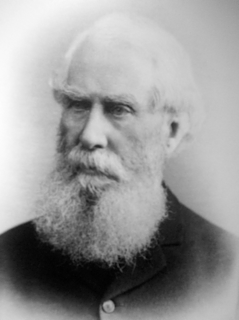
Birth of Bindon Blood Stoney, Civil Engineer

Bindon Blood Stoney FRS, a civil engineer who also makes some significant contributions to astronomy, is born on June 13, 1828, at Oakley Park, King’s County (now County Offaly).

Stoney is the younger son of George Stoney and Anne Blood, second daughter of Bindon Blood of Cranagher and Rockforest, County Clare. His brother is the physicist George Johnstone Stoney, known for coining the term electron for the fundamental unit of electricity. He is also the uncle of another Irish physicist George Francis FitzGerald, the son of his sister Anne Frances. His nieces are Edith Anne Stoney, a pioneer medical physicist, and Florence Stoney, the first female radiologist in the United Kingdom. Both serve in hospitals near the front line during World War I.

Stoney is privately educated at home while his father’s properties lose value in the post-Napoleonic depression and are sold during the famine of 1845–49. He then attends Trinity College Dublin (TCD), where in 1850 he obtains his BA and a diploma in civil engineering with distinction. He marries Susannah Frances Walker on October 7, 1879; they have four children.

In 1850–52, prior to beginning his engineering work, Stoney assists William Parsons, 3rd Earl of Rosse at Parsonstown. There he accurately maps the spiral form of the Andromeda Galaxy and observes 105 New General Catalogue (NGC) objects and 8 Index Catalogues (IC) objects. Ninety-one of the NGC objects and all of the IC objects are new. On March 1, 1851, he discovers the spiral galaxy NGC 5609, which is the most distant visually observed galaxy in the NGC catalogue.

Bindon’s career in engineering commences when he works on surveys for the Aranjuez to Almansa railway in Spain from 1852 to 1853. Upon returning to Ireland in 1854, he is appointed as resident engineer under James Barton on the Boyne railway viaduct until its completion in 1855. This viaduct claims to have the longest span in the world and has the world’s longest girders at the time.

Bindon’s groundbreaking work building a metal bridge with a span of such dimensions using shock-absorbent wrought-iron latticed bars instead of a continuity of plate with Barton is possibly the first of its kind. It is the basis for his later two-volume publication The theory of strains in girders and similar structures, with observations on the strength and other properties of materials (1866), nicknamed “Stoney on strains” and reproduced in two further editions.

Bindon becomes an associate of the Institution of Civil Engineers (ICE) in January 1858 and a full member in November 1863.

In 1856, Bindon is appointed as assistant engineer to George Halpin, Jr. at the Ballast Board on Westmoreland Street and in 1859 he is appointed as Executive Engineer. He is ambitious and an engineering innovator who comes up with a cheap way to develop the Dublin Port – something appreciated by the board but they also do not want to upset Halpin. When Halpin retires, Stoney becomes the new inspector of works and in 1868, becomes the first chief engineer of the newly constituted Dublin Port and Docks Board.

Bindon designs a large dredging plant and rebuilds nearly 7,000 feet of quay walls along both north and south banks of the River Liffey, replacing the tidal berths by deep water berths. Additionally, the northern quays are lengthened eastward and the formation of Alexandra Basin begins in 1871 and is partially completed by 1885. In addition to harbour works, he is in charge of the design and construction of two major bridges that cross the River Liffey. In 1872–1875 he largely rebuilds Essex Bridge, designed in the 1750s by George Semple to his own flamboyant design. It is renamed Grattan Bridge after Henry Grattan. In 1877–80 he redesigns the 1790s Carlisle Bridge of James Gandon, renamed O’Connell Bridge after Daniel O’Connell, to provide a crossing linking Sackville (later O’Connell) Street with the converging streets to the south. He builds a new iron swing bridge in 1877–1879, just west of The Custom House named Beresford Bridge.

Stoney invents a diving bell, and means to use precast concrete. Toward the end of his career, he erects the North Bull Lighthouse (1877–80) to replace the inadequate light on the Bull Wall marking the northern side of the Dublin port channel entrance opposite Poolbeg Lighthouse before finally retiring in 1898.

Stoney is admitted to the Royal Irish Academy (RIA) in 1857. He is given an honorary degree by University College Dublin (UCD) in recognition of his achievements and is later elected President of the Institution of Engineers of Ireland in 1871. In 1874, he is awarded the Telford Medal and Telford premium of the Institution of Civil Engineers for a paper documenting his work on the northern quays. He is elected Fellow of the Royal Society on June 2, 1881.

Stoney dies in Dublin on May 5, 1909, and he is buried in Mount Jerome Cemetery. Stoney Road in East Wall is named after him.

Leave a comment

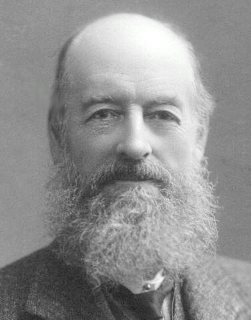
Birth of Lawrence Parsons, 4th Earl of Rosse

Lawrence Parsons, 4th Earl of Rosse, KP, FRS, a member of the Irish peerage and an amateur astronomer, is born at Birr Castle, Parsonstown, King’s County (now County Offaly), on November 17, 1840. His name is often given as Laurence Parsons.

Parsons is the son and heir of the astronomer William Parsons, 3rd Earl of Rosse, who built the “Leviathan of Parsonstownreflecting telescope, largest of its day, and his wife, the Countess of Rosse (née Mary Field), an amateur astronomer and pioneering photographer. He succeeds his father in 1867 and is educated first at home by tutors, like John Purser, and after at Trinity College Dublin (TCD) and the University of Oxford. He is the brother of Charles Algernon Parsons, inventor of the steam turbine.

Parsons serves as the eighteenth Chancellor of Trinity College Dublin between 1885 and 1908. His father serves as the sixteenth Chancellor. He is Lord Lieutenant of King’s County and Custos Rotulorum of King’s County from 1892 until his death. He is also a Justice of the Peace for the county and is appointed High Sheriff of King’s County for 1867–68. He is knighted KP in 1890.

Parsons also performs some preliminary work in association with the practices of the electrodeposition of copper sulfate upon silver films circa 1865 while in search of the design for a truly flat mirror to use in a telescope. However, he finds it impossible to properly electroplate copper upon these silver films, as the copper contracts and detaches from the underlying glass substrate. His note has been cited as one of the earliest confirmations in literature that thin films on glass substrates experience residual stresses. He revives discussion in his work Nature’s August 1908 edition after witnessing similar techniques used to present newly devised searchlights before the Royal Society.

Although overshadowed by his father (when astronomers speak of “Lord Rosse”, it is almost always the father that they refer to), Parsons nonetheless pursues some astronomical observations of his own, particularly of the Moon. Most notably, he discovers NGC 2, a spiral galaxy in the constellation Pegasus.

Parsons is elected a Fellow of the Royal Society in December 1867 and delivers the Bakerian lecture there in 1873. He is vice-president of the society in 1881 and 1887. From 1896 he is President of the Royal Irish Academy. In May 1902 he is at Caernarfon to receive the honorary degree LL.D. (Legum Doctor) from the University of Wales during the ceremony to install the Prince of Wales (later King George V) as Chancellor of that university.

After some years of ill-health, Parsons dies on August 30, 1908, at Birr Castle and is buried in the local churchyard. He leaves a bequest to the Royal Society to establish the “Rosse Fund,” and a further £1,000 to the science school fund at TCD.


Leave a comment

Death of Lawrence Parsons, 4th Earl of Rosse

Lawrence Parsons, 4th Earl of Rosse, KP, FRS, a member of the Irish peerage and an amateur astronomer, dies on August 29, 1908. His name is often given as Laurence Parsons.

Parsons is born at Birr Castle, Parsonstown, King’s County (now County Offaly), the son and heir of the astronomer William Parsons, 3rd Earl of Rosse, who built the “Leviathan of Parsonstownreflecting telescope, largest of its day, and his wife, the Countess of Rosse (née Mary Field), an amateur astronomer and pioneering photographer. He succeeds his father in 1867 and is educated first at home by tutors, like John Purser, and after at Trinity College, Dublin and the University of Oxford. He is the brother of Charles Algernon Parsons, inventor of the steam turbine.

Parsons serves as the eighteenth Chancellor of Trinity College, Dublin between 1885 and 1908. His father serves as the sixteenth Chancellor. He is Lord Lieutenant of King’s County and Custos Rotulorum of King’s County from 1892 until his death. He is also a Justice of the Peace for the county and is appointed High Sheriff of King’s County for 1867–68. He is knighted KP in 1890.

Parsons also performs some preliminary work in association with the practices of the electrodeposition of copper sulfate upon silver films circa 1865 while in search of the design for a truly flat mirror to use in a telescope. However, he finds it impossible to properly electroplate copper upon these silver films, as the copper contracts and detaches from the underlying glass substrate. His note has been cited as one of the earliest confirmations in literature that thin films on glass substrates experience residual stresses. He revives discussion in his work Nature’s August 1908 edition after witnessing similar techniques used to present newly devised searchlights before the Royal Society.

Although overshadowed by his father (when astronomers speak of “Lord Rosse”, it is almost always the father that they refer to), Parsons nonetheless pursues some astronomical observations of his own, particularly of the Moon. Most notably, he discovers NGC 2, a spiral galaxy in the constellation Pegasus.

Parsons is elected a Fellow of the Royal Society in December 1867 and delivers the Bakerian lecture there in 1873. He is vice-president of the society in 1881 and 1887. From 1896 he is President of the Royal Irish Academy. In May 1902 he is at Caernarfon to receive the honorary degree LL.D. (Legum Doctor) from the University of Wales during the ceremony to install the Prince of Wales (later King George V) as Chancellor of that university.