seamus dubhghaill

Promoting Irish Culture and History from Little Rock, Arkansas, USA


Leave a comment

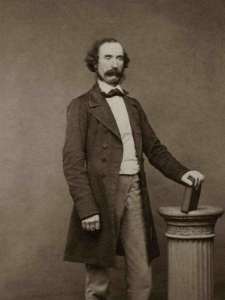
Birth of Bindon Blood Stoney, Civil Engineer

Bindon Blood Stoney FRS, a civil engineer who also makes some significant contributions to astronomy, is born on June 13, 1828, at Oakley Park, King’s County (now County Offaly).

Stoney is the younger son of George Stoney and Anne Blood, second daughter of Bindon Blood of Cranagher and Rockforest, County Clare. His brother is the physicist George Johnstone Stoney, known for coining the term electron for the fundamental unit of electricity. He is also the uncle of another Irish physicist George Francis FitzGerald, the son of his sister Anne Frances. His nieces are Edith Anne Stoney, a pioneer medical physicist, and Florence Stoney, the first female radiologist in the United Kingdom. Both serve in hospitals near the front line during World War I.

Stoney is privately educated at home while his father’s properties lose value in the post-Napoleonic depression and are sold during the famine of 1845–49. He then attends Trinity College Dublin (TCD), where in 1850 he obtains his BA and a diploma in civil engineering with distinction. He marries Susannah Frances Walker on October 7, 1879; they have four children.

In 1850–52, prior to beginning his engineering work, Stoney assists William Parsons, 3rd Earl of Rosse at Parsonstown. There he accurately maps the spiral form of the Andromeda Galaxy and observes 105 New General Catalogue (NGC) objects and 8 Index Catalogues (IC) objects. Ninety-one of the NGC objects and all of the IC objects are new. On March 1, 1851, he discovers the spiral galaxy NGC 5609, which is the most distant visually observed galaxy in the NGC catalogue.

Bindon’s career in engineering commences when he works on surveys for the Aranjuez to Almansa railway in Spain from 1852 to 1853. Upon returning to Ireland in 1854, he is appointed as resident engineer under James Barton on the Boyne railway viaduct until its completion in 1855. This viaduct claims to have the longest span in the world and has the world’s longest girders at the time.

Bindon’s groundbreaking work building a metal bridge with a span of such dimensions using shock-absorbent wrought-iron latticed bars instead of a continuity of plate with Barton is possibly the first of its kind. It is the basis for his later two-volume publication The theory of strains in girders and similar structures, with observations on the strength and other properties of materials (1866), nicknamed “Stoney on strains” and reproduced in two further editions.

Bindon becomes an associate of the Institution of Civil Engineers (ICE) in January 1858 and a full member in November 1863.

In 1856, Bindon is appointed as assistant engineer to George Halpin, Jr. at the Ballast Board on Westmoreland Street and in 1859 he is appointed as Executive Engineer. He is ambitious and an engineering innovator who comes up with a cheap way to develop the Dublin Port – something appreciated by the board but they also do not want to upset Halpin. When Halpin retires, Stoney becomes the new inspector of works and in 1868, becomes the first chief engineer of the newly constituted Dublin Port and Docks Board.

Bindon designs a large dredging plant and rebuilds nearly 7,000 feet of quay walls along both north and south banks of the River Liffey, replacing the tidal berths by deep water berths. Additionally, the northern quays are lengthened eastward and the formation of Alexandra Basin begins in 1871 and is partially completed by 1885. In addition to harbour works, he is in charge of the design and construction of two major bridges that cross the River Liffey. In 1872–1875 he largely rebuilds Essex Bridge, designed in the 1750s by George Semple to his own flamboyant design. It is renamed Grattan Bridge after Henry Grattan. In 1877–80 he redesigns the 1790s Carlisle Bridge of James Gandon, renamed O’Connell Bridge after Daniel O’Connell, to provide a crossing linking Sackville (later O’Connell) Street with the converging streets to the south. He builds a new iron swing bridge in 1877–1879, just west of The Custom House named Beresford Bridge.

Stoney invents a diving bell, and means to use precast concrete. Toward the end of his career, he erects the North Bull Lighthouse (1877–80) to replace the inadequate light on the Bull Wall marking the northern side of the Dublin port channel entrance opposite Poolbeg Lighthouse before finally retiring in 1898.

Stoney is admitted to the Royal Irish Academy (RIA) in 1857. He is given an honorary degree by University College Dublin (UCD) in recognition of his achievements and is later elected President of the Institution of Engineers of Ireland in 1871. In 1874, he is awarded the Telford Medal and Telford premium of the Institution of Civil Engineers for a paper documenting his work on the northern quays. He is elected Fellow of the Royal Society on June 2, 1881.

Stoney dies in Dublin on May 5, 1909, and he is buried in Mount Jerome Cemetery. Stoney Road in East Wall is named after him.


Leave a comment

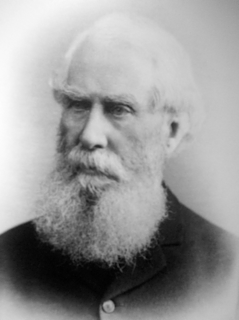
Birth of Robert Mallet, the Father of Seismology

Robert Mallet, geophysicist, civil engineer, and inventor who distinguishes himself in research on earthquakes and is sometimes called the Father of Seismology, is born in Dublin on June 3, 1810.

Mallet is the son of factory owner John Mallet. He is educated at Trinity College, Dublin, entering it at the age of 16 and graduating in science and mathematics in 1830 at the age of 20.

Following his graduation, Mallet joins his father’s iron foundry business and helps build the firm into one of the most important engineering works in Ireland, supplying ironwork for railway companies, the Fastnet Rock lighthouse, and a swing bridge over the River Shannon at Athlone. He also helps manufacture the characteristic iron railings that surround Trinity College, and which bear his family name at the base.

Mallet is elected to the Royal Irish Academy in 1832 at the early age of 22. He also enrolls in the British Association for the Advancement of Science in 1835 which helps finance much of his research in seismology.

In 1838 Mallet becomes a life member of the Royal Geological Society of Ireland and serves as its President from 1846–1848. From 1848–1849 he constructs the Fastnet Rock lighthouse, southwest of Cape Clear.

On February 9, 1846, Mallet presents to the Royal Irish Academy his paper On the Dynamics of Earthquakes, which is considered to be one of the foundations of modern seismology. He is also credited with coining the word “seismology” and other related words which he uses in his research. He also coins the term epicentre.

From 1852 to 1858, Mallet is engaged in the preparation of his work, The Earthquake Catalogue of the British Association (1858) and carries out blasting experiments to determine the speed of seismic propagation in sand and solid rock.

On December 16, 1857, the area around Padula, Italy is devastated by the Great Neapolitan earthquake which causes 11,000 deaths. At the time it is the third largest known earthquake in the world and has been estimated to have been of magnitude 6.9 on the Richter Scale. Mallet, with letters of support from Charles Lyell and Charles Darwin, petitions the Royal Society of London and receives a grant of £150 to go to Padula and record at first hand the devastation. The resulting report is presented to the Royal Society as the Report on the Great Neapolitan Earthquake of 1857. It is a major scientific work and makes great use of the then new research tool of photography to record the devastation caused by the earthquake. In 1862, he publishes the Great Neapolitan Earthquake of 1857: The First Principles of Observational Seismology in two volumes. He brings forward evidence to show that the depth below the Earth’s surface, from where the impulse of the Neapolitan earthquake originated, is about 8–9 geographical miles.

One of Mallet’s papers is Volcanic Energy: An Attempt to develop its True Origin and Cosmical Relations, in which he seeks to show that volcanic heat may be attributed to the effects of crushing, contortion, and other disturbances in the crust of the earth. The disturbances leading to the formation of lines of fracture, more or less vertical, down which water would find its way, and if the temperature generated be sufficient volcanic eruptions of steam or lava would follow.

Mallet is elected Fellow of the Royal Society in 1854, and in 1861 moves to London, where he becomes a consulting engineer and edits The Practical Mechanic’s Journal. He is awarded the Telford Medal by the Institution of Civil Engineers in 1859, followed by the Cunningham Medal of the Royal Irish Academy for his research into the theory of earthquakes in 1862, and the Wollaston Medal of the Geological Society of London in 1877, the Geological Society’s highest award.

Blind for the last seven years of his life, Robert Mallet dies at Stockwell, London, on November 5, 1881, and is buried at West Norwood Cemetery.


Leave a comment

Death of Robert Mallet, the Father of Seismology

robert-mallet

Robert Mallet, geophysicist, civil engineer, and inventor who distinguishes himself in research on earthquakes and is sometimes called the Father of Seismology, dies on November 5, 1881.

Mallet is born in Dublin on June 3, 1810, the son of factory owner John Mallet. He is educated at Trinity College, Dublin, entering it at the age of 16 and graduating in science and mathematics in 1830 at the age of 20.

Following his graduation, he joins his father’s iron foundry business and helps build the firm into one of the most important engineering works in Ireland, supplying ironwork for railway companies, the Fastnet Rock lighthouse, and a swing bridge over the River Shannon at Athlone. He also helps manufacture the characteristic iron railings that surround Trinity College, and which bear his family name at the base.

Mallet is elected to the Royal Irish Academy in 1832 at the early age of 22. He also enrolls in the British Association for the Advancement of Science in 1835 which helps finance much of his research in seismology.

In 1838 he becomes a life member of the Royal Geological Society of Ireland and serves as its President from 1846–1848. From 1848–1849 he constructs the Fastnet Rock lighthouse, southwest of Cape Clear.

On February 9, 1846, he presents to the Royal Irish Academy his paper On the Dynamics of Earthquakes, which is considered to be one of the foundations of modern seismology. He is also credited with coining the word “seismology” and other related words which he uses in his research. He also coins the term epicentre.

From 1852 to 1858, he is engaged in the preparation of his work, The Earthquake Catalogue of the British Association (1858) and carries out blasting experiments to determine the speed of seismic propagation in sand and solid rock.

On December 16, 1857, the area around Padula, Italy is devastated by the Great Neapolitan earthquake which causes 11,000 deaths. At the time it is the third largest known earthquake in the world and has been estimated to have been of magnitude 6.9 on the Richter Scale. Mallet, with letters of support from Charles Lyell and Charles Darwin, petitions the Royal Society of London and receives a grant of £150 to go to Padula and record at first hand the devastation. The resulting report is presented to the Royal Society as the Report on the Great Neapolitan Earthquake of 1857. It is a major scientific work and makes great use of the then new research tool of photography to record the devastation caused by the earthquake. In 1862, he publishes the Great Neapolitan Earthquake of 1857: The First Principles of Observational Seismology in two volumes. He brings forward evidence to show that the depth below the Earth’s surface, from where the impulse of the Neapolitan earthquake originated, is about 8–9 geographical miles.

One of Mallet’s papers is Volcanic Energy: An Attempt to develop its True Origin and Cosmical Relations, in which he seeks to show that volcanic heat may be attributed to the effects of crushing, contortion, and other disturbances in the crust of the earth. The disturbances leading to the formation of lines of fracture, more or less vertical, down which water would find its way, and if the temperature generated be sufficient volcanic eruptions of steam or lava would follow.

Mallet is elected Fellow of the Royal Society in 1854, and in 1861 moves to London, where he becomes a consulting engineer and edits The Practical Mechanic’s Journal. He is awarded the Telford Medal by the Institution of Civil Engineers in 1859, followed by the Cunningham Medal of the Royal Irish Academy for his research into the theory of earthquakes in 1862, and the Wollaston Medal of the Geological Society of London in 1877, the Geological Society’s highest award.

Blind for the last seven years of his life, Robert Mallet dies at Stockwell, London, on November 5, 1881, and is buried at West Norwood Cemetery.