seamus dubhghaill

Promoting Irish Culture and History from Little Rock, Arkansas, USA


Leave a comment

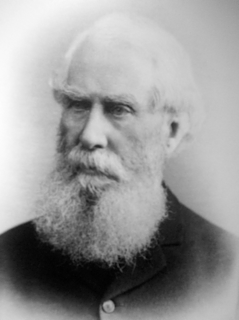
Birth of Bindon Blood Stoney, Civil Engineer

Bindon Blood Stoney FRS, a civil engineer who also makes some significant contributions to astronomy, is born on June 13, 1828, at Oakley Park, King’s County (now County Offaly).

Stoney is the younger son of George Stoney and Anne Blood, second daughter of Bindon Blood of Cranagher and Rockforest, County Clare. His brother is the physicist George Johnstone Stoney, known for coining the term electron for the fundamental unit of electricity. He is also the uncle of another Irish physicist George Francis FitzGerald, the son of his sister Anne Frances. His nieces are Edith Anne Stoney, a pioneer medical physicist, and Florence Stoney, the first female radiologist in the United Kingdom. Both serve in hospitals near the front line during World War I.

Stoney is privately educated at home while his father’s properties lose value in the post-Napoleonic depression and are sold during the famine of 1845–49. He then attends Trinity College Dublin (TCD), where in 1850 he obtains his BA and a diploma in civil engineering with distinction. He marries Susannah Frances Walker on October 7, 1879; they have four children.

In 1850–52, prior to beginning his engineering work, Stoney assists William Parsons, 3rd Earl of Rosse at Parsonstown. There he accurately maps the spiral form of the Andromeda Galaxy and observes 105 New General Catalogue (NGC) objects and 8 Index Catalogues (IC) objects. Ninety-one of the NGC objects and all of the IC objects are new. On March 1, 1851, he discovers the spiral galaxy NGC 5609, which is the most distant visually observed galaxy in the NGC catalogue.

Bindon’s career in engineering commences when he works on surveys for the Aranjuez to Almansa railway in Spain from 1852 to 1853. Upon returning to Ireland in 1854, he is appointed as resident engineer under James Barton on the Boyne railway viaduct until its completion in 1855. This viaduct claims to have the longest span in the world and has the world’s longest girders at the time.

Bindon’s groundbreaking work building a metal bridge with a span of such dimensions using shock-absorbent wrought-iron latticed bars instead of a continuity of plate with Barton is possibly the first of its kind. It is the basis for his later two-volume publication The theory of strains in girders and similar structures, with observations on the strength and other properties of materials (1866), nicknamed “Stoney on strains” and reproduced in two further editions.

Bindon becomes an associate of the Institution of Civil Engineers (ICE) in January 1858 and a full member in November 1863.

In 1856, Bindon is appointed as assistant engineer to George Halpin, Jr. at the Ballast Board on Westmoreland Street and in 1859 he is appointed as Executive Engineer. He is ambitious and an engineering innovator who comes up with a cheap way to develop the Dublin Port – something appreciated by the board but they also do not want to upset Halpin. When Halpin retires, Stoney becomes the new inspector of works and in 1868, becomes the first chief engineer of the newly constituted Dublin Port and Docks Board.

Bindon designs a large dredging plant and rebuilds nearly 7,000 feet of quay walls along both north and south banks of the River Liffey, replacing the tidal berths by deep water berths. Additionally, the northern quays are lengthened eastward and the formation of Alexandra Basin begins in 1871 and is partially completed by 1885. In addition to harbour works, he is in charge of the design and construction of two major bridges that cross the River Liffey. In 1872–1875 he largely rebuilds Essex Bridge, designed in the 1750s by George Semple to his own flamboyant design. It is renamed Grattan Bridge after Henry Grattan. In 1877–80 he redesigns the 1790s Carlisle Bridge of James Gandon, renamed O’Connell Bridge after Daniel O’Connell, to provide a crossing linking Sackville (later O’Connell) Street with the converging streets to the south. He builds a new iron swing bridge in 1877–1879, just west of The Custom House named Beresford Bridge.

Stoney invents a diving bell, and means to use precast concrete. Toward the end of his career, he erects the North Bull Lighthouse (1877–80) to replace the inadequate light on the Bull Wall marking the northern side of the Dublin port channel entrance opposite Poolbeg Lighthouse before finally retiring in 1898.

Stoney is admitted to the Royal Irish Academy (RIA) in 1857. He is given an honorary degree by University College Dublin (UCD) in recognition of his achievements and is later elected President of the Institution of Engineers of Ireland in 1871. In 1874, he is awarded the Telford Medal and Telford premium of the Institution of Civil Engineers for a paper documenting his work on the northern quays. He is elected Fellow of the Royal Society on June 2, 1881.

Stoney dies in Dublin on May 5, 1909, and he is buried in Mount Jerome Cemetery. Stoney Road in East Wall is named after him.

Leave a comment

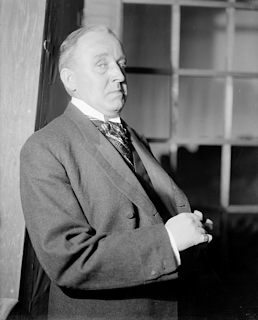
Birth of Dudley Digges, Irish Stage Actor, Director & Producer

John Dudley Digges, Irish stage actor, director, and producer as well as a film actor, is born in Ranelagh, Dublin, on June 9, 1879. Although he gains his initial theatre training and acting experience in Ireland, the vast majority of his career is spent in the United States, where over the span of 43 years he works in hundreds of stage productions and performs in over 50 films.

Digges is the child of James Digges and Catherine Forsythe. He becomes acquainted with theatre directors William and Frank Fay and takes an interest in acting. He joins W. G. Fay’s Irish National Dramatic Company, along with others including Máire Nic ShiubhlaighJames H. CousinsFrederick Ryan and Maire Quinn (who becomes his wife). Their first production, Cathleen Ni Houlihan, with Maud Gonne in the lead role, and Déirdre, is on April 2, 1902. The company, which has no funds to speak of, acquires a couple of bare rooms at 34 Lower Camden Street, which with the help of friends from Irish-revival societies they turn into a small theatre. However, this proves too small for the plays they are planning to stage. They rehearse at the Coffee Palace in Westmoreland Street and also use the Molesworth Hall for productions.

In 1903, the playwrights and most of the actors and staff from these productions go on to form the Irish National Theatre Society, which has its registered offices in Camden Street. The society founds the Abbey Theatre.

Digges goes to the United States with a group of fellow-actors in 1904, and becomes successful as both actor and producer. He is stage manager for a time to both Charles Frohman and George Arliss, and by the 1920s he has become a notable performer on Broadway. One of his best-known roles there is as Ficsur in the original 1921 production of Ferenc Molnár‘s Liliom (later adapted into the musical Carousel by Rodgers and Hammerstein). In 1924, in Woodstock, New York, he founds the Maverick Theater with the assistance of Hervey White, who had established the Maverick Arts Colony. He is also artistic director of a company that includes Helen Hayes and Edward G. Robinson.

Digges expands his career into films by 1929, and over nearly two decades he performs in more than 50 films, including the original pre-Hays Code adaptation of The Maltese Falcon (1931). He Is cast in that feature as Casper Gutman, the character later portrayed by Sydney Greenstreet in the 1941 version. In The Invisible Man (1933) he plays the Chief Detective who plots to capture the title character, opposite the unseen Claude Rains. He plays the role of the Heavenly Examiner in both the original Broadway production and the 1930 screen version of Sutton Vane‘s Outward Bound. He also works as a director on Broadway.

Digges marries only once, to Irish actress Maire Quinn. The couple wed on August 27, 1907, in New York City and remain together until Maire’s death in August 1947. On October 24, 1947, just two months after his wife’s death, he dies of a stroke in his Manhattan apartment at 1 West 64th Street. He is survived by three siblings, all living in Ireland: a sister, Mrs. Mai Gannen, and two brothers, James and Ernst. Following a requiem mass at Blessed Sacrament Roman Catholic Church on October 28, he is buried next to his wife at Gate of Heaven Cemetery in Hawthorne, New York.

(Pictured: Digges as Boss Mangan in the 1920 Broadway production Heartbreak House, which he also directs)


Leave a comment

Death of Alexander McCabe, Teacher, Revolutionary & Politician

Alexander McCabe (Irish: Alasdar Mac Cába), teacher, revolutionary, Sinn Féin politician, and founder of the Educational Building Society (EBS), dies in Dublin on May 31, 1972.

McCabe is born in Keash, County Sligo, on June 5, 1886. He is educated at Summerhill College, Sligo. He wins a scholarship to St. Patrick’s College of Education, Drumcondra, Dublin, and later obtains a diploma from University College Dublin (UCD). He is appointed headmaster of Drumnagranchy national school, County Sligo, in 1907. He joins the Irish Republican Brotherhood (IRB) in 1913.

McCabe is elected as a Sinn Féin MP for the South Sligo constituency at the 1918 Irish general election. In January 1919, Sinn Féin MPs refuse to recognise the Parliament of the United Kingdom and instead assemble at the Mansion House in Dublin as a revolutionary parliament called Dáil Éireann, though McCabe does not attend as he is in prison in Lincoln Gaol.

At the 1921 Irish elections, McCabe is re-elected for Sligo–Mayo East. He supports the Anglo-Irish Treaty and votes in favour of it. He is again re-elected for Sligo–Mayo East at the 1922 Irish general election, this time as pro-Treaty Sinn Féin Teachta Dála (TD). During the Treaty debate, he asserts that the counties of Ulster which comprise “Northern Ireland” can never be incorporated into an Irish Republic while the British Empire is what it is.

At the 1923 Irish general election, McCabe is elected as a Cumann na nGaedheal TD for Leitrim–Sligo. He resigns from Cumann na nGaedheal in 1924 because of dissatisfaction with government attitude to certain army officers and joins the National Party led by Joseph McGrath.

McCabe resigns his Dáil seat on October 30, 1924, along with several other TDs, and the resulting by-election on March 11, 1925, is won by the Cumann na nGaedheal candidate Martin Roddy. He does not stand for public office again and returns to his post as a schoolteacher.

In the 1930s McCabe is involved with the short-lived but widely followed Irish Christian Front (ICF), serving as the organisation’s secretary and announcing its creation to the public on August 22, 1936. He is also a member of the Blueshirts during this period and later the Irish Friends of Germany (later known as the “National Club”) during World War II, a would-be Nazi Collaborator group in the event Germany were to invade Ireland. He chairs their meetings, denies the group is a fifth column and expresses the belief that a German victory will lead to a United Ireland. He is interned in 1940–41 because of his pro-German sympathies, which he claims resulted from the desire to “see the very lifeblood squeezed out of England.”

In 1935, McCabe co-founds the Educational Building Society with Thomas J. O’Connell. He retires from teaching in the 1940s and becomes the full-time managing director of the EBS.

McCabe dies in Dublin on May 31, 1972, leaving his wife, son, and three daughters. There is a bronze bust of him in the headquarters of the Educational Building Society, Westmoreland Street, Dublin.


Leave a comment

“The Irish Times” Is Launched In Dublin

The Irish Times is launched at 4 Lower Abbey Street in Dublin on March 29, 1859. The first appearance of a newspaper using the name occurs in 1823 but it closes in 1825. The title is revived as a thrice weekly publication by Major Lawrence E. Knox. It is originally founded as a moderate Protestant newspaper, reflecting the politics of Knox, who stands unsuccessfully as a parliamentary candidate for Isaac Butt’s Home Rule League. In its early days, its main competitor is the Dublin Daily Express.

After Knox’s death in 1873, the paper is sold to the widow of Sir John Arnott, MP, a former Lord Mayor of Cork and owner of Arnotts, one of Dublin’s major department stores. The sale, for £35,000, leads to two major changes. Its headquarters is shifted to 31 Westmoreland Street, remaining in buildings on or near that site until 2005. Its politics also shifts dramatically, becoming predominantly Unionist in outlook, and it is closely associated with the Irish Unionist Alliance. The paper, along with the Irish Independent and various regional papers, calls for the execution of the leaders of the failed 1916 Easter Rising.

Though the paper becomes a publicly listed company in 1900, the family continues to hold a majority shareholding until the 1960s. The last member of the Arnott family to sit on the paper’s board is Sir Lauriston Arnott, who dies in 1958.

The editor during the 1930s, R. M. “Bertie” Smyllie, has strong anti-fascist views: he angers the Irish Catholic hierarchy by opposing General Francisco Franco during the Spanish Civil War. Later, The Irish Times, like other national newspapers, has problems with Irish Government censorship during World War II. The newspaper is largely pro-Allied and is opposed to the Éamon de Valera government’s policy of neutrality.

In 1974, ownership is transferred to a non-charitable trust, The Irish Times Trust. The Trust is set up as “a company limited by guarantee” to purchase The Irish Times Limited and to ensure that The Irish Times will be published as an independent newspaper with specific editorial objectives. The former owner, Major Thomas Bleakley McDowell, is made “president for life” of the trust which runs the paper and is paid a large dividend. However several years later the articles of the Trust are adjusted, giving Major McDowell ten preference shares and one more vote than the combined votes of all the other directors should any move be made to remove him. Major McDowell dies in 2009.

The Trust is regulated by a legal document, the Memorandum and Articles of Association, and controlled by a maximum of eleven Governors under company law. It is not a charity and does not have charitable status. It has no beneficial shareholders and it cannot pay dividends. Any profits made by The Irish Times cannot be distributed to the Trust but must be used to strengthen the newspaper, directly or indirectly.

In 1994, The Irish Times establishes a website called Irish-times.ie, the first newspaper in Ireland and one of the first 30 newspapers in the world to do so. The company acquires the domain name Ireland.com in 1997, and from 1999 to 2008, uses it to publish its online edition. On June 30, 2008, the company relaunches Ireland.com as a separate lifestyle portal and the online edition of the newspaper is now published at irishtimes.com. It is supplied free of charge, but a subscription is charged to view its archives.

On October 15, 2012, John O’Shea, Head of Online, The Irish Times, announces that the ireland.com domain name has been sold to Tourism Ireland, and that the ireland.com email service will end on November 7, 2012, affecting about 15,000 subscribers. The newspaper announces on February 17, 2015 the reintroduction of a paywall for its website, irishtimes.com, beginning on February 23.

In December 2017, it is reported that The Irish Times has reached an agreement to purchase the newspaper, radio and website interests of Landmark Media Investments which include the Irish Examiner. Initially subject to regulatory approval, this sale is completed in July 2018. In September 2018, following the Landmark Media Investments acquisition, The Irish Times starts a voluntary redundancy scheme.

Average print circulation is approximately 100,000 copies per issue in 2011, dropping to approximately 62,000 by 2017. The circulation of the newspaper is no longer audited.