seamus dubhghaill

Promoting Irish Culture and History from Little Rock, Arkansas, USA


Leave a comment

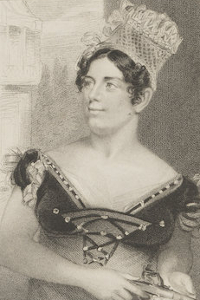
Birth of Shakespearean Actress Harriet Smithson

Harriet Constance Smithson, Anglo-Irish Shakespearean actress of the 19th century and best known as the first wife and muse of Hector Berlioz, is born at Ennis, County Clare on March 18, 1800.

Her father, William Joseph Smithson, is an actor and theatrical manager from Gloucestershire, England, and her mother is an actress whose full name is unknown. She also has a brother, Joseph Smithson, and a sister, name also unknown. In October 1801, she is left in the care of Reverend James Barrett, a priest of the Church of Ireland, parish of Drumcliffe. Barrett becomes her guardian and raises her as though she were his own daughter. He instructs her “in the precepts of religion,” and keeps everything connected with the stage from her view. After his death on February 16, 1808, the Smithsons send Harriet to a boarding school in Waterford.

On May 27, 1814, Smithson makes her first stage appearance at the Theatre Royal, Dublin, as Albina Mandevill in Frederick Reynolds‘s The Will. Her performance is well received. In 1815, she takes her parents’ place in Montague Talbot’s company in Belfast after they return to Dublin. The season opens on January 1, 1816, where she extends her range in roles, performing in multiple comedies. She then travels to Newry, Limerick, Dublin, and Birmingham, where she joins Robert Elliston‘s company. She spends the next two months playing over forty roles in various genres.

Four years later, January 20, 1818, Smithson makes her first London appearance at Drury Lane as Letitia Hardy in The Belle’s Stratagem. Her first performance receives mixed reviews from critics, but she quickly gains some favour of critics and performers as she obtains more experience. She joins the permanent company at the Royal Coburg Theatre later that year. However, she rejoins Drury Lane Company in the autumn of 1820. On February 20, 1821, she takes the lead female role in Thérèse by John Howard Payne, when the cast actress falls ill. Overall, the London public remembers her as The Times put it, “a face and features well adapted to her profession; but [an actress] not likely to make a great impression on a London audience, or to figure among stars of the first magnitude.”

In 1827, Smithson makes her Paris début as Lydia Languish in The Rivals at the Théâtre de l’Impératrice. Though she receives negative reviews for this role, she is highly praised for her beauty and ability in the subsequent performance of She Stoops to Conquer. On September 11, 1827, she is given the small part of Ophelia next to Charles Kemble in Shakespeare’s Hamlet. She leaves a long-lasting impression on the French through her interpretation of Ophelia’s madness, utilizing pantomime and natural presentation.

The tremendous success of Hamlet leads to the announcement of Romeo and Juliet, for September 15. Smithson is cast as Juliet, where she revolutionizes the women’s role in theatre by becoming as important as her male counterpart. Until this point, women’s lines in theatre are heavily cut and censored to reduce the role for the company’s “restricted talent.” Again, the production is widely well received. On September 18, Shakespeare’s Othello becomes the third Shakespeare tragedy to be performed by The English theatre. Her performance as Desdemona is less effective, but the production is popular enough to be repeated the following week. She is cast as Jane Shore in the renowned tragedy The Tragedy of Jane Shore, a role in which she moves her audience to tears. The production soon becomes the most performed play in the English season. At the end of her time in France, she had acted in several productions with famous actors such as William Charles Macready, Edmund Kean, and Charles Kemble.

As opportunities to continue her work in Paris dwindle, Smithson returns to London to perform Jane Shore again. The production opens at Covent Garden on May 11, 1829, under unfavorable circumstances. Some audience members, who had read her reviews before she went to Paris, feel reluctant to attend the show. However, just seven days after her next performance as Juliet, in Shakespeare’s Romeo and Juliet, the press gives her glowing reviews.

After Covent Garden closes for the summer in 1832, Smithson tours England to minor theatres performing almost exclusively in tragedies. In June 1832, she joins the Theatre Royal Haymarket, where she has limited success and receives criticism about her weight.

In 1830, Smithson goes back to Paris to set up an English theatre under her own management. She obtains permission to perform at the Theatre-Italien where she performs several unsuccessful plays. A year later, she breaks her leg and is forced to put her career on hold until her leg heals, leaving her in great debt. She gives her last performance, as Ophelia, on December 15, 1836, before her health deteriorates.

Toward the end of her life, Smithson suffers from paralysis, which leaves her barely able to move or speak. She dies on March 3, 1854, at her home on the rue Saint-Vincent, and is buried at the Cimetière Saint-Vincent. Berlioz has her body is later reinterred at the Montmartre Cemetery when Cimetière Saint-Vincent undergoes redevelopment.

(Pictured: Oil on canvas portrait of Harriet Smithson by Claude-Marie-Paul Dubufe, located at the Musee Magnin, Dijon, France)

Leave a comment

Birth of Actor Charles John Kean

charles-john-kean

Charles John Kean, Irish actor and son of actor Edmund Kean, is born in Waterford, County Waterford on January 18, 1811.

After preparatory education at Worplesdon and at Greenford, near Harrow, Kean is sent to Eton College, where he remains for three years. In 1827, he is offered a cadetship in the East India Company‘s service, which he is prepared to accept if his father would settle an income of £400 on his mother. The elder Kean refuses to do this, so he determines to become an actor. He makes his first appearance at Drury Lane on October 1, 1827 as Norval in John Home‘s Douglas, but his continued failure to achieve popularity leads him to leave London in the spring of 1828 for the provinces. In Glasgow, on October 1 of that year, father and son act together in Arnold Payne’s Brutus, the elder Kean in the title role and his son as Titus.

After a visit to the United States in 1830, where he is received with much favour, Kean appears in 1833 at Covent Garden as “Sir Edmund Mortimer” in George Colman‘s The Iron Chest, but his success is not pronounced enough to encourage him to remain in London, especially as he has already won a high position in the provinces. In January 1838, however, he returns to Drury Lane, and plays Hamlet with a success which gives him a place among the principal tragedians of his time. He marries the actress Ellen Tree (1805-1880) on January 25, 1842, and pays a second visit to the United States with her from 1845 to 1847.

Returning to England, Kean enters on a successful engagement at the Haymarket Theatre, and in 1850, with Robert Keeley, becomes lessee of the Princess’s Theatre, London. The most noteworthy feature of his management is a series of gorgeous Shakespearean revivals that aim for “authenticity.” He also mentors the young Ellen Terry in juvenile roles. In melodramatic parts such as the king in Dion Boucicault‘s adaptation of Casimir Delavigne‘s Louis XI, and Louis and Fabian dei Franchi in Boucicault’s adaptation of Alexandre Dumas‘s The Corsican Brothers, his success is complete. In 1854 the writer Charles Reade creates a play The Courier of Lyons for Kean to appear in, which becomes one of the most popular plays of the Victorian era.

From his “tour round the world” Kean returns to England in 1866 in broken health, and dies at the age of 57 in London on January 22, 1868. He is buried in All Saints Churchyard, Catherington, East Hampshire district, Hampshire.


Leave a comment

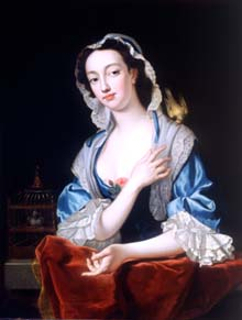
Birth of Actress Margaret “Peg” Woffington

peg-woffington

Margaret “Peg” Woffington, well-known Irish actress in Georgian London, is born of humble origins in Dublin on October 18, 1720.

Woffington’s father is believed to have been a bricklayer, and, after his death, the family becomes impoverished. Her mother is obliged to take in washing while Peg sells watercress door to door. It is said that she is walking through a marketplace as a pre-teen and happens upon Madame Signora Violante, a famous tightrope walker. Violante is so immediately enthralled by Peg’s beautiful face that she accompanies her home and asks her mother permission to take her in as her apprentice.

Around 1730, Violante features Woffington as Polly Peachum in a production of John Gay’s The Beggar’s Opera. This serves as a springboard for her fame in Dublin, and she continues dancing and acting in the area playing Dorinda in an adaptation of The Tempest at the Theatre Royal, Dublin in 1735 and joining the Smock Alley Theatre to perform with well-known actor David Garrick.

Woffington dances and acts at various Dublin theaters until her success as Sir Harry Wildair in The Constant Couple leads to her being given her London debut at Covent Garden. She becomes well known as an actress thereafter.

Woffington enjoys success in the role of Sylvia in The Recruiting Officer. She performs at Drury Lane for several years and later returns to Dublin, appearing in a variety of plays. Her most well-received performances are in comic roles, such as elegant women of fashion like Lady Betty Modish and Lady Townley, and breeches roles. She is impeded in the performance of tragedy by a harsh tone in her voice that she strives to eliminate.

Woffington lives openly with David Garrick, the foremost actor of the day, and her other love affairs are numerous and notorious. She becomes friend and mentor to the socialite/actress sisters, Elizabeth and Maria Gunning, and also shares the stage with the likes of Charles Macklin, Kitty Clive, and the tragedienne Susannah Maria Arne.

Though Woffington is popular with society figures, she is not always favored by her competition. She tends to create rivalries with similar-type actresses at Drury Lane and Covent Garden. Her fiercest rivalry is with “equally peppery” actress Kitty Clive. According to Garrick biographer Thomas Davies, “No two women in high life ever hated each other more unreservedly than these two great dames of the stage.” When she returns to Covent Garden, rivalries with these women and with the manager, John Rich, eventually send her back to Dublin, where she is unrivaled and celebrated at the Smock Alley Theatre.

Rich decides to start a Beefsteak Club in 1749, also known as the Sublime Society of Steaks or “the Club.” Some of its members include Garrick and William Hogarth, as well as many other London celebrities. Not only is Woffington the first female member of the all-male dining club, in 1750 she becomes president of the club by election. She also educates and supports her sister and cares for and pensions her mother.

For whatever reason, Woffington leaves Garrick in about 1744 and moves to Teddington, into a house called Teddington Place. In 1754 she becomes the beneficiary of the will of the Irish impresario Owen Swiny. In 1756, she performs the part of Lady Randolph in Douglas, a part which finds a later exponent in Sarah Siddons.

On May 3, 1757, Woffington is playing the part of Rosalind in As You Like It when she collapses on stage. She rallies but would never act again, lingering with a wasting illness. She dies in Queen Square, Westminster on March 28, 1760. She is buried in St. Mary with St. Alban, the parish church in Teddington.


Leave a comment

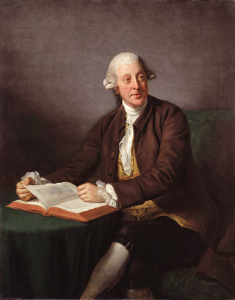
Birth of Irish Writer Arthur Murphy

arthur-murphy

Arthur Murphy, Irish writer also known by the pseudonym Charles Ranger, is born at Cloonyquin, County Roscommon, on December 27, 1727, the son of Richard Murphy and Jane French.

Murphy studies at Saint-Omer in France, and is a gifted student of the Latin and Greek classics. He works as an actor in the theatre, becomes a barrister, a journalist and finally a playwright. He edits Gray’s Inn Journal between 1752 and 1754. As Henry Thrale‘s oldest and dearest friend, he introduces Samuel Johnson to the Thrales in January 1765. He is appointed Commissioner of Bankruptcy in 1803.

Murphy is known for his translations of Tacitus in 1753, which are still published as late as 1922. He also writes three biographies – Fielding‘s Works (1762), An Essay on the Life and Genius of Samuel Johnson (1792), and Life of David Garrick (1801).

An example of Murphy’s theatrical writings is The Citizen, a farce, first produced at Drury Lane in 1761. Philpot, a wealthy skinflint, has bargained with Sir Jasper Wilding for his son Young Philpot to marry Maria Wilding, and for his daughter Sally to marry Wilding’s son, for settlements and twenty thousand pounds paid to Sir Jasper. Young Philpot has lost a fortune, but borrows money from his father and embarks on an insurance fraud involving shipwrecked goods. Maria plans to marry Beaufort, who loves her. As Young Philpot tries to propose, she convinces him she is half-witted, and he spurns her. In the second act, Philpot senior is visiting Corinna, a lady of loose virtue, but hides under the table when his son calls upon her. He overhears as Young Philpot tells her how he has cajoled the money out of his father. Maria’s brother surprises them, and old Philpot is also discovered, to their mutual shame. In the final scene Sir Jasper with a lawyer obtains Philpot’s signature to the agreements, but meanwhile Maria, an educated girl, shows her strong character to Young Philpot and he again refuses to propose. Having signed away his rights old Philpot offers to marry her, but the lawyer reveals himself as Beaufort, and explains that he has swapped the deeds, so that Philpot has unwittingly signed his agreement for Maria to marry Beaufort.

Murphy is thought to have coined the legal term “wilful misconstruction” whilst representing the Donaldson v. Becket appeal to the House of Lords in 1774 against the perpetual possession of copyright.

Arthur Murphy dies at Knightsbridge, London, on June 18, 1805, and is buried at Hammersmith, London. A biography is written in 1811 by Dr. Jesse Foot. Nathaniel Dance-Holland paints Murphy’s portrait which is thought to now be in the Irish National Portrait Collection.

(Pictured: 1777 portrait of Arthur Murphy by Nathaniel Dance-Holland)


Leave a comment

Death of Richard Brinsley Sheridan, Playwright & Satirist

Richard Brinsley Butler Sheridan, Irish satirist, playwright, poet, and long-term owner of London‘s Theatre Royal, Drury Lane, dies on July 7, 1816, at 14 Savile Row, London.

Sheridan is born on October 30, 1751, in Dublin, where his family has a house on then fashionable Dorset Street. While in Dublin Sheridan attends the English Grammar School in Grafton Street. The family moves permanently to England in 1758 where he is a pupil at Harrow School from 1762 to 1768. After his period in Harrow School, his father employs a private tutor to directs his studies.

In 1775, Sheridan’s first play, The Rivals, is produced at London’s Covent Garden Theatre. It is a failure on its first night. He casts a more capable actor in the lead for its second performance, and it is a smash which immediately establishes the young playwright’s reputation and the favour of fashionable London. It has gone on to become a standard of English literature.

Shortly after the success of The Rivals, Sheridan and his father-in-law, Thomas Linley the Elder, a successful composer, produce the opera, The Duenna. This piece is accorded such a warm reception that it plays for seventy-five performances.

The following year, Sheridan, his father-in-law, and one other partner purchase a half-interest in the Drury Lane theatre and, two years later, buy out the other half. Sheridan is the manager of the theatre for many years and later becomes sole owner with no managerial role.

His most famous play, The School for Scandal (Drury Lane, May 8, 1777), is considered one of the greatest comedies of manners in English. It is followed by The Critic (1779), an updating of the satirical Restoration comedy The Rehearsal. He has a rivalry with his fellow playwright Richard Cumberland and includes a parody of Cumberland in The Critic. In 1778, Sheridan writes The Camp, which comments on the ongoing threat of a French invasion of Britain.

In 1780, Sheridan entered Parliament as the ally of Charles James Fox on the side of the American Colonials in the political debate of that year. He remains in Parliament for 32 years.

On February 24, 1809, despite the much-vaunted fire safety precautions of 1794, the theatre burns down. On being encountered drinking a glass of wine in the street while watching the fire, Sheridan is famously reported to have said, “A man may surely be allowed to take a glass of wine by his own fireside.”

When he fails to be re-elected to Parliament in 1812, his creditors close in on him and his last years are harassed by debt and disappointment. On hearing of his debts, the United States Congress offers Sheridan £20,000 in recognition of his efforts to prevent the American Revolutionary War. The offer is refused.

In December 1815 Sheridan becomes ill and is largely confined to bed. He dies in poverty on July 7, 1816, and is buried in the Poets’ Corner of Westminster Abbey. His funeral is attended by dukes, earls, lords, viscounts, the Lord Mayor of London, and other notables.


Leave a comment

Birth of Sir Richard Steele, Writer & Politician

sir-richard-steele

Sir Richard Steele, Irish writer and politician, remembered as co-founder, with his friend Joseph Addison, of the magazine Tatler, is born in Dublin on March 12, 1672.

Steele is born to Richard Steele, an attorney, and Elinor Symes (née Sheyles). He is largely raised by his uncle and aunt, Henry Gascoigne and Lady Katherine Mildmay. A member of the Protestant gentry, he is educated at Charterhouse School, where he first meets Addison. After starting at Christ Church, Oxford, he goes on to Merton College, Oxford, then joins the Life Guards of the Household Cavalry in order to support King William’s wars against France. He is commissioned in 1697 and rises to the rank of captain within two years. Steele leaves the army in 1705, perhaps due to the death of the 34th Foot’s commanding officer, Robert Lucas, which limits his opportunities of promotion.

Steele’s first published work, The Christian Hero (1701), attempts to point out the differences between perceived and actual masculinity. Written while he serves in the army, it expresses his idea of a pamphlet of moral instruction. The Christian Hero is ultimately ridiculed for what some thought was hypocrisy because Steele did not necessarily follow his own preaching.

Steele writes a comedy that same year entitled The Funeral. This play meets with wide success and is performed at the Theatre Royal, Drury Lane, London, bringing him to the attention of the King and the Whig party. Next, Steele writes The Lying Lover, one of the first sentimental comedies, but a failure on stage. In 1705, he writes The Tender Husband, and later that year writes the prologue to The Mistake, by John Vanbrugh.

In 1706 Steele is appointed to a position in the household of Prince George of Denmark, consort of Anne, Queen of Great Britain. He also gains the favour of Robert Harley, Earl of Oxford.

The Tatler, Steele’s first journal, is first published on April 12, 1709, and appears three times a week. Steele writes this periodical under the pseudonym Isaac Bickerstaff and gives Bickerstaff an entire, fully developed personality. Steele describes his motive in writing Tatler as “to expose the false arts of life, to pull off the disguises of cunning, vanity, and affectation, and to recommend a general simplicity in our dress, our discourse, and our behavior.”

The Tatler is closed down to avoid the complications of running a Whig publication that has come under Tory attack. Addison and Steele then found The Spectator in 1711 and also The Guardian in 1713.

Steele becomes a Whig Member of Parliament in 1713, for Stockbridge. He is soon expelled for issuing a pamphlet in favour of the Hanoverian succession. When George I of Great Britain comes to the throne in the following year, Steele is knighted and given responsibility for the Theatre Royal, Drury Lane, London. He returns to parliament in 1715, for Boroughbridge.

While at Drury Lane, Steele writes and directs the sentimental comedy The Conscious Lovers, which is an immediate hit. However, he falls out with Addison and with the administration over the Peerage Bill (1719), and in 1724 he retires to his wife’s homeland of Wales, where he spends the remainder of his life.

Steele remains in Carmarthen after his wife Mary’s death, and is buried there, at St. Peter’s Church. During restoration of the church in 2000, his skull is discovered in a lead casket, having previously been accidentally disinterred during the 1870s.


3 Comments

Birth of Stage Actress Julia Betterton Glover

julia-betterton-glover

Julia Betterton Glover, Irish-born stage actress well known for her comic roles in the late 18th and 19th centuries, is born on January 8, 1779, in Newry, in what is now Northern Ireland.

“Betterton” is not her real name, despite her father`s promotion of the fiction. She is born Julianna Butterton, the daughter of the Newry`s theatre manager William Butterton. His venture fails and he decides there will be financial benefit to him if her name is changed to “Betterton,” claiming links to a famous actor and long dead Thomas Betterton. With this deception he and his family travel round the theatres and the young Julia is acclaimed as an infant acting prodigy in York, the West Country, Bath, and elsewhere.

In 1787, she joins the York Circuit under manager Tate Wilkinson and appears as the Page in Thomas Otway‘s The Orphan, as well as the Duke of York with George Frederick Cooke in Richard III. When Cooke is cast as Glumdalca, the Queen of the Giants, in Henry Fielding‘s burlesque play Tom Thumb, Cooke chooses Julia to play the title role.

In 1790, at age nine, she makes her debut in Scotland at the Dumfries Theatre Royal. In 1795 she goes to Bath and plays the parts of Juliet, Imogen, Desdemona, Lady Macbeth, and Lydia Languish. She becomes well known, particularly praised for her comic role as Languish, and news of her success reaches London. A number of job offers are made, but they are declined by her father. He eventually accepts a lucrative offer, taking her salary for himself, for which she makes her London début in 1797 as Percy by Hannah More.

In 1800, her father sells her in marriage to Samuel Glover, the son of an industrial family from Birmingham, for £1, 000, although the money is never paid. Unhappily married, she has eight children, four of whom survive childhood. In 1820, she plays Hamlet at the Lyceum Theatre to critical acclaim. In 1822, she appears as Nurse in Romeo and Juliet at the Theatre Royal, Drury Lane. Her daughter Phyllis plays Juliet. On February 8, 1837, her father, with whom she has had an unhappy relationship, dies.

One of her sons is Edmund Glover and another is William Howard Glover. In 1850, Glover announces her retirement from the stage. After two weeks confined to her bed, she appears at Drury Lane for her farewell benefit performance on July 12, 1850, as Mrs. Malaprop in The Rivals. She is noticeably ill and weak during her performance and is unable to stand to receive her applause at the end of the play. Instead, the curtain rises to reveal Glover seated, surrounded by the rest of the cast. She dies in London four days later on July 16, 1850. She is buried in St. George’s Churchyard Gardens in London.