seamus dubhghaill

Promoting Irish Culture and History from Little Rock, Arkansas, USA


Leave a comment

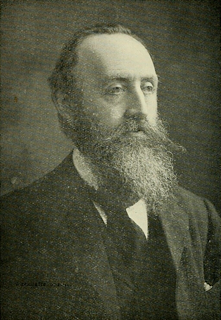
Birth of George Noble Plunkett, Scholar & Revolutionary

George Noble Plunkett, scholar and revolutionary, is born on December 3, 1851, at 1 Aungier Street, Dublin, the youngest and only survivor from infancy of the three children of Patrick Joseph Plunkett (1817–1918), builder and politician, and his wife, Elizabeth (née Noble). The Plunketts are Catholic, claiming collateral descent from Archbishop of Armagh Oliver Plunkett, and nationalist: the two drummers from the republican army at Vinegar Hill in 1798 visit George’s cradle.

Plunkett is educated expensively: at a primary school in Nice, making him fluent in French and Italian, then at Clongowes Wood College, and, from 1872, at Trinity College Dublin (TCD), where his generous allowance allows him to study renaissance and medieval art. He enrolls at King’s Inns in 1870 and the Middle Temple in 1874, but is not called to the bar until 1886. While there he befriends Oscar Wilde and Jeremiah O’Donovan Rossa. In 1877, he endows a university gold medal for Irish speakers and publishes a book of poems, God’s Chosen Festival, and the following year he issues a pamphlet, The Early Life of Henry Grattan. He also writes articles for magazines, editing a short-lived one, Hibernia, for eighteen months from 1882. In 1883, he donates funds and property to the nursing order of the Little Company of Mary (Blue Sisters), and on April 4, 1884, Pope Leo XIII makes him a count.

On June 26, 1884, Plunkett marries Mary Josephine Cranny (1858–1944). The couple has seven children: Philomena (Mimi) (b. 1886), Joseph (b. 1887), Mary Josephine (Moya) (b. 1889), Geraldine (b. 1891), George Oliver (b. 1894), Fiona (b. 1896), and Eoin (Jack) (b. 1897).

Plunkett surprises many in 1890 by declaring for Charles Stewart Parnell against the Catholic hierarchy. In the 1892 United Kingdom general election in Ireland he is a Parnellite candidate for Mid Tyrone but withdraws from a potential three-cornered fight lest he let in the unionist. He is sole nationalist candidate for Dublin St. Stephen’s Green in the 1895 United Kingdom general election in Ireland, and at an 1898 by-election there he cuts the unionist majority to 138 votes. The reunited Irish Party wins the seat in 1900.

In 1894, Plunkett part-edits Charles O’Kelly‘s memoir The Jacobite War in Ireland. By 1900, when he publishes the standard biography Sandro Botticelli, he is supplementing his income by renewed artistic studies, which until 1923 finances his lease of Kilternan Abbey, County Dublin. His Pinelli (1908) is followed by Architecture of Dublin, and, in 1911, by his revised edition of Margaret McNair Stokes‘s Early Christian Art in Ireland. In 1907, he becomes director of the National Museum of Ireland, where he increases annual visits from 100 to 3,000.

Joseph Plunkett swears his father into the Irish Republican Brotherhood (IRB) in April 1916, sending him secretly to seek German aid and a papal blessing for the projected Easter rising. After its defeat, Plunkett is sacked by the National Museum of Ireland and deported with the countess to Oxford, and the following January he is expelled by the Royal Dublin Society (RDS). This earns him nomination as the surviving rebels’ candidate in the North Roscommon by-election. He returns to Ireland illegally on January 31, 1917, and wins the seat easily three days later. Pledging abstention from attendance at Westminster in accordance with Sinn Féin policy, he initiates a Republican Liberty League, which coalesces with similar groups such as Sinn Féin. In October this front becomes the new Sinn Féin, committed to Plunkett’s republic rather than to the “king, lords and commons“ of Arthur Griffith. Plunkett and Griffith become the new party’s vice-presidents, under Éamon de Valera.

On May 18, 1918, Plunkett is interned again. Released after Sinn Féin’s general election landslide (in which he is returned unopposed), he presides, Sinn Féin’s oldest MP, at the planning meeting for Dáil Éireann on January 17, 1919, and at its opening session on January 21. On the 22nd he is made foreign affairs minister by Cathal Brugha, an appointment reaffirmed by de Valera on April 10. He criticises his president for advocating a continuing Irish external relationship with Britain, and fails to organise an Irish foreign service. In February 1921, de Valera makes Robert Brennan his departmental secretary and a ministry takes shape, while Plunkett publishes a book of poems, Ariel. After uncontested “southern Irish“ elections to the Second Dáil, de Valera moves his implacable foreign minister from the cabinet to a tailor-made portfolio of fine arts. Plunkett’s Dante sexcentenary commemoration is overshadowed by news of the Anglo–Irish Treaty. Opposing this, Plunkett cites his oath to the republic and its martyrs including his son. He leaves his ministry on January 9, 1922.

Plunkett chairs the anti-treaty Cumann na Poblachta, which loses the June general election, though he is returned again unopposed. In the Irish Civil War the treatyites intern him and the republicans appoint him to their council of state. In the August 1923 Irish general election, his first electoral contest since 1917, the interned count tops the poll in County Roscommon. He is released in December.

When de Valera forms Fianna Fáil in 1926, Plunkett stays with Sinn Féin, and loses his deposit in the June 1927 Irish general election. A year later he publishes his last poetry collection, Eros. He runs for a new Cumann Poblachta na hÉireann in a County Galway by-election in 1936, but loses his deposit again. On December 8, 1938, with the other six surviving abstentionist Second Dáil TDs, he transfers republican sovereignty to the IRA Army Council.

Plunkett is a big man with a black beard which whitens steadily after his fiftieth birthday. He is always formally pleasant and courteous. His oratory is described by M. J. MacManus as “level, cultured tones . . . [more] used to addressing the members of a learned society than to the rough and tumble of the hustings” (The Irish Press, March 15, 1948). Theoretically and practically, he is more scholar than politician. His portrait is on display at the Royal Society of Antiquaries of Ireland (RSAI).

Plunkett dies from cancer on March 12, 1948, and is buried in Glasnevin Cemetery, survived by his children Geraldine (wife of Thomas Dillon), Fiona, and Jack. His grandson Joseph (1928–66), son of George Oliver Plunkett, inherits the title.

(From: “Plunkett, Count George Noble” by D. R. O’Connor Lysaght, Dictionary of Irish Biography, http://www.dib.ie, October 2009)


Leave a comment

Birth of Edmund Dwyer Gray, Journalist & Politician

Edmund William Dwyer Gray, Irish newspaper proprietor, politician and MP in the House of Commons of the United Kingdom of Great Britain and Ireland, is born on December 29, 1845, in Dublin. He is also Lord Mayor of Dublin and later Sheriff of Dublin City and becomes a strong supporter of Charles Stewart Parnell.

Gray is the second son of Sir John Gray and his wife, Anna Dwyer. He has three brothers and two sisters. After receiving his education, he joins his father in managing the Freeman’s Journal, the oldest nationalist newspaper in Ireland. When his father dies in 1875, he takes over proprietorship of the Journal, and his family’s other newspaper properties such as the Belfast Morning News and the Dublin Evening Telegraph.

In 1868, Gray saves five people from drowning in a wrecked schooner at Killiney Bay, an action for which he receives the Tayleur Fund Gold Medal for bravery from the Royal Humane Society. By coincidence, the rescue is witnessed by his future wife, Caroline Agnes Gray, whom he meets shortly afterwards. Agnes is the daughter of Caroline Chisholm, an English humanitarian renowned for her work in female immigrant welfare in Australia, and although Gray is descended from a Protestant family, he converts to Catholicism to marry her. The wedding in London on July 17, 1869, is conducted by the Bishop of Northampton, Francis Amherst. The couple has one son, Edmund Dwyer-Gray, who eventually takes over from his father as proprietor of his newspapers and goes on to become Premier of Tasmania.

From 1875 to 1883, Gray serves as a member of the Dublin Corporation, and in 1880 serves a term as Lord Mayor of Dublin. Unusual for an Irish nationalist politician, he is very much focused on urban rather than rural affairs, and like his father is heavily involved in public health and water provision for Dublin. He also promotes reform in the municipal health system.

Gray unsuccessfully runs for his father’s seat of Kilkenny City at Westminster in the 1875 by-election that follows Sir John Gray’s death. He wins a later by-election in 1877, becoming a Member of Parliament representing Tipperary for the Home Rule League. At the 1880 United Kingdom general election, he is elected for County Carlow. At the 1885 United Kingdom general election, as a member of the Irish Parliamentary Party (IPP), he wins representation of both County Carlow and the new constituency of Dublin St. Stephen’s Green and chooses to represent the latter.

Gray is imprisoned for six weeks in 1882 for remarks made in the Freeman’s Journal with regard to the composition of the jury in the case of a murder trial. He is actually Sheriff of Dublin City at the time of his imprisonment and, because of the conflict of office, is taken into custody by the city coroner. The defendant in the case in question is later hanged.

A heavy drinker and asthma sufferer, Gray dies at his home, Pembroke House, Upper Mount Street, Dublin, on March 27, 1888, at the age of 42 following a short illness. He is buried at Glasnevin Cemetery in Dublin.


Leave a comment

Birth of John Gray, Physician, Journalist & Politician

Sir John Gray JP, Irish physician, surgeon, newspaper proprietor, journalist and politician, is born in Claremorris, County Mayo, on July 13, 1815. He is active both in municipal and national government for much of his life and has nationalist ideals, which he expresses as owner of the Freeman’s Journal, chairman of the Dublin Corporation Water Works Committee between 1863 and 1875, and Member of Parliament in the House of Commons of the United Kingdom of Great Britain and Ireland for Kilkenny City from 1865 until his death.

Gray is the third son of John and Elizabeth Gray of Mount Street. He is educated at Trinity College Dublin and obtains the degree of M.D. and Master of Surgery at the University of Glasgow in 1839. Shortly before his marriage in the same year, he settles in Dublin and takes up a post at a hospital in North Cumberland Street. He is admitted as a licentiate of the Royal College of Physicians in due course.

Gray is publicly minded and contributes to periodicals and the newspaper press. In 1841, he becomes joint proprietor of the Freeman’s Journal, a nationalist paper which is then published daily and weekly. He acts as political editor of the Journal for a time, before becoming sole proprietor in 1850. As owner, he increases the newspaper’s size, reduces its price and extends its circulation.

Gray enters politics at a relatively young age and attaches himself to Daniel O’Connell‘s Repeal Association. As a Protestant Nationalist, he supports the movement for the repeal of the Acts of Union with Britain. In October 1843, he is indicted with O’Connell and others in the Court of the Queen’s Bench in Dublin on a charge of sedition and “conspiracy against the queen.” The following February, he, together with O’Connell, is condemned to nine months imprisonment, but in early September 1844 the sentence is remitted on appeal. The trial has a strong element of farce, as the hot-tempered Attorney-General for Ireland, Sir Thomas Cusack-Smith, challenges Gray’s counsel, Gerald Fitzgibbon, to a duel, for which he is sternly reprimanded by the judges. From then on Gray is careful to distance himself from the advocacy of violence in the national cause, though he is sympathetic to the Young Ireland movement without being involved in its 1848 rebellion. Through the growing influence of the Freeman’s Journal, he becomes a significant figure in Dublin municipal politics. He is also active in national politics during an otherwise quiet period of Irish politics up until 1860. With the resurgence of nationalism after the famine, he helps to organise the Tenant’s League founding conference in 1850, standing unsuccessfully as the League’s candidate for Monaghan in the 1852 United Kingdom general election.

Later Gray originates and organises the “courts of arbitration” which O’Connell endeavours to substitute for the existing legal tribunals of the country. Following O’Connell’s death, in 1862 he inaugurates an appeal for subscriptions to build a monument to O’Connell on Sackville Street (now O’Connell Street). Independent from O’Connell, he continues to take a prominent part in Irish politics and in local affairs.

In municipal politics, Gray is elected councillor in 1852 and alderman of Dublin Corporation and takes an interest in the improvement of the city. As chairman of the committee for a new water supply to Dublin, he actively promotes what becomes the “Vartry scheme.” The Vartry Reservoir scheme involves the partial redirection and damming of the River Vartry in County Wicklow, and the building of a series of water piping and filtering systems (and related public works) to carry fresh water to the city. This work is particularly important in the improvement of conditions in the city, and to public health, as it improves sanitation and helps reduce outbreaks of cholera, typhus and other diseases associated with contaminated water. On the opening of the works on June 30, 1863, he is knighted by the Earl of Carlisle, then Lord Lieutenant of Ireland. Partially in recognition of these efforts, he is later be nominated for the position of Lord Mayor of Dublin for the years 1868–69, but he declines to serve.

In national politics, the Liberal government at the time is keen to conciliate an influential representative of the moderate nationalists to support British Liberalism and who will resume O’Connell’s constitutional agitation. In an unusual alliance with the Catholic Archbishop of Dublin, Paul Cullen, a man devoted to O’Connell’s memory, Gray’s newspaper exploits this shift in government policy. It supports the archbishop’s creation, the National Association of Ireland, established in 1864 with the intention of providing a moderate alternative to the revolutionary nationalism of the Fenians. The Freeman’s Journal adopts the aims of the Association as its own: it advocates the disestablishment of the Anglican Church of Ireland, reform of the land laws, educational aspirations of Irish Catholicism and free denominal education.

In the 1865 United Kingdom general election Gray is elected MP for Kilkenny City as a Liberal candidate. In this capacity he campaigns successfully at Westminster and in Ireland for the reforms also advocated in his paper. His newspaper’s inquiry into the anomalous wealth of the established church amidst a predominately Catholic population contributes considerably to William Ewert Gladstone‘s Irish Church Act 1869. He helps to furnish the proof that Irish demands are not to be satisfied by anything other than by radical legislation. He fights for the provision in the new Landlord & Tenant (Ireland) Act 1870 for fixity of tenure, which Gladstone eventually concedes. The Act’s other weaknesses, however, result in its failure to resolve the “land question,” the accompanying coercion, the disappointment with Gladstone’s handling of the university question and national education, causing Gray to deflect from the Liberals and become mistrusted in Britain. In the 1874 United Kingdom general election he is re-elected as a Home Rule League MP for Kilkenny, joining its Home Rule majority in the House of Commons, and holds his seat until his death the following year.

Gray dies at Bath, Somerset, England, on April 9, 1875. His remains are returned to Ireland, and he is honoured with a public funeral at Glasnevin Cemetery. Almost immediately afterwards public subscriptions are sought for the erection in O’Connell Street, of a monument to Gray. The monument is completed in 1879 and is dedicated to the “appreciation of his many services to his country, and of the splendid supply of pure water which he secured for Dublin.” His legacy also includes his contributions to the passage of the Irish Church and Land Bills, his advocacy for tenant’s rights and his support of the Home Rule movement.

Gray marries Mary Anna Dwyer of Limerick in 1839, and they have five children, three sons and two daughters. One of his sons, Edmund Dwyer Gray, takes over the management of the Freeman’s Journal. Edmund also follows his father into politics, eventually becoming MP for Dublin St. Stephen’s Green, Lord Mayor of Dublin (1880–1881), and a supporter of Charles Stewart Parnell. Edmund John Chisholm Dwyer-Gray, Edmund Dwyer Gray’s son and John Gray’s grandson, becomes Premier of Tasmania.

(Pictured: Statue to Sir John Gray on Dublin’s O’Connell Street, designed by Thomas Farrell and unveiled on June 24, 1879. Photo credit: Graham Hickey)