

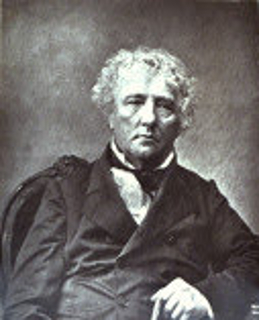
Sir William Robert Wills Wilde, Irish oto–ophthalmologic surgeon and the author of significant works on medicine, archaeology and folklore, particularly concerning his native Ireland dies on April 19, 1876. He is the father of poet and playwright Oscar Wilde.
Wilde is born in March 1815 at Kilkeevin, near Castlerea, County Roscommon, the youngest of the three sons and two daughters of a prominent local medical practitioner, Thomas Wills Wilde, and his wife, Amelia Flynne. His family are members of the Church of Ireland, and he is descended from a Dutchman, Colonel de Wilde, who came to Ireland with King William of Orange‘s invading army in 1690, and numerous Anglo-Irish ancestors. He receives his initial education at the Elphin Diocesan School in Elphin, County Roscommon. In 1832, he is bound as an apprentice to Abraham Colles, the pre-eminent Irish surgeon of the day, at Dr. Steevens’ Hospital in Dublin. He is also taught by the surgeons James Cusack and Sir Philip Crampton and the physician Sir Henry Marsh. He also studies at the private and highly respected school of anatomy, medicine, and surgery in Park Street (later Lincoln Place), Dublin. In 1837, he earns his medical degree from the Royal College of Surgeons in Ireland. In the same year, he embarks on an eight-month-cruise to the Holy Land with a recovering patient, visiting various cities and islands throughout the Mediterranean. Porpoises are flung on board the ship, Crusader, and Wilde dissects them. Taking notes, he eventually composes a two-volume book on the nursing habits of the creatures. Among the places he visits on this tour is Egypt. In a tomb he finds the mummified remains of a dwarf and salvages the torso to bring back to Ireland. He also collects embalmed ibises.
Once back in Ireland, Wilde publishes an article in the Dublin University Magazine suggesting that one of the “Cleopatra’s Needles” be transported to England. In 1878, one of the Needles is transported to London, and in 1880 the other one is brought to New York City‘s Central Park. In 1873 he is awarded the Cunningham Gold Medal by the Royal Irish Academy.
Wilde runs his own hospital, St. Mark’s Ophthalmic Hospital for Diseases of the Eye and Ear, in Dublin and is appointed to serve as Oculist-in-ordinary to Queen Victoria. At one point, he performs surgery on the father of another famous Irish dramatist, George Bernard Shaw.
Wilde had a very successful medical practice and is assisted in it by his natural son, Henry Wilson, who had been trained in Dublin, Vienna, Heidelberg, Berlin, and Paris. Wilson’s presence enables him to travel, and he visits Scandinavia, where he receives an honorary degree from Uppsala University, and is welcomed in Stockholm by Anders Retzius, among others. King Charles XV of Sweden confers on him the Nordstjärneorden (Order of the Polar Star). In 1853, he is appointed Surgeon Occulist in Ordinary to the Queen in Ireland, the first position of its kind, probably created for him.
Wilde is awarded a knighthood in a ceremony at Dublin Castle on January 28, 1864, more for his involvement with the Irish census than for his medical contributions, although he had been appointed medical commissioner to the Irish census in 1841. In 1845, he becomes editor of the Dublin Journal of Medical & Chemical Science, to which he contributes many articles.
Wilde marries the poet Jane Francesca Agnes Elgee on November 12, 1851, who writes and publishes under the pen name of Speranza. The couple has two sons, William (Willie) and Oscar, and a daughter, Isola Francesca, who dies in childhood.
In addition to his children with his wife, Wilde is the father of three children born out of wedlock before his marriage: Henry Wilson, born in 1838, and Emily and Mary Wilde, born in 1847 and 1849, respectively, of different parentage to Henry. He acknowledges paternity of his illegitimate children and provides for their education, but they are reared by his relatives rather than with his wife and legitimate children. Emily and Mary both die in 1871 following a Halloween party at which their dresses accidentally catch fire.
From 1855 until his death in 1876, Wilde lives at 1 Merrion Square, now the headquarters of American College Dublin. The building is named Oscar Wilde House after William Wilde’s son, who also lives at the address from 1855 until 1878. There is a plaque at 1 Merrion Square dedicated to him.
Wilde’s reputation suffers when Mary Travers, a long-term patient of his and the daughter of a colleague, claims that he had seduced her two years earlier. She writes a pamphlet crudely parodying Wilde and Lady Wilde as Dr. and Mrs. Quilp, and portraying Dr. Quilp as the rapist of a female patient anaesthetised under chloroform. She distributes the pamphlets outside the building where Wilde is about to give a public lecture. Lady Wilde complains to Mary’s father, Robert Travers, which results in Mary bringing a libel case against her. Mary Travers wins her case but is awarded a mere farthing in damages by the jury. Legal costs of £2,000 are awarded against Lady Wilde. The case is the talk of all Dublin, and Wilde’s refusal to enter the witness box during the trial is widely held against him as ungentlemanly behaviour.
From this time onwards, Wilde begins to withdraw from Dublin to the west of Ireland, where he had started in 1864 to build what becomes Moytura, his house overlooking Lough Corrib in Connemara, County Galway. His health deteriorates in 1875. He dies, likely of cancer, at the age of 61 on April 19, 1876. He is buried in Mount Jerome Cemetery in Dublin.
(Pictured: Sketch of William Wilde by J.H. Maguire, 1847)

 seamus dubhghaill