seamus dubhghaill

Promoting Irish Culture and History from Little Rock, Arkansas, USA


Leave a comment

Occupation of the Four Courts in Dublin

occupation-of-four-courts

About 200 Anti-Treaty Irish Republican Army militants led by Rory O’Connor occupy the Four Courts in the centre of Dublin on April 14, 1922 in defiance of the Provisional Government. They intend to provoke the British troops, who are still in the country, to attack them, which they believe will restart the war with Britain and re-unite the Irish Republican Army against their common enemy. They also occupy other smaller buildings regarded as being associated with the former British administration, such as the Ballast Office and the Freemasons’ Hall in Molesworth Street, but the Four Courts remains the focus of interest. On June 15, O’Connor sends out men to collect the rifles that belong to the mutineers of the Civic Guards.

Winston Churchill and the Cabinet of the United Kingdom apply pressure on the Provisional Government to dislodge the rebels in Four Courts, considering their presence there as a violation of the Anglo-Irish Treaty. Michael Collins, President of the Provisional Government Cabinet, tries desperately to persuade O’Connor and his men to leave the building over the next three months. At the Third IRA Convention, the executive is split over whether the Irish Government should demand that all British troops leave within 72 hours. The motion is defeated, but the IRA splits into two factions opposed to the government, one conciliatory, led by Liam Lynch, Sean Moylan, and Liam Deasy, and the other less moderate, led by Tom Barry and Joe McKelvey.

During the month of June 1922, the Provisional Government engages in intense negotiations with the British Cabinet, seeking to diffuse the threat of imminent civil war. However, the conservative British Cabinet refuses to cooperate.

On June 22, 1922, arch-Unionist Sir Henry Wilson is assassinated by two IRA men, both former British soldiers, Reginald Dunne and Joseph O’Sullivan. It is considered by some that this is done on the orders of Michael Collins, who has been a close friend of Dunne in the London Irish Republican Brotherhood. David Lloyd George writes an angry letter to Collins which includes the line “…still less can Mr. Rory O’Connor be permitted to remain his followers and his arsenal in open rebellion in the heart of Dublin… organizing and sending out from this centre enterprises of murder not only in the area of your Government…”

On June 28, 1922, after the Four Courts garrison has kidnapped J.J. “Ginger” O’Connell, a general in the new Free State Army, Collins begins shelling the Four Courts with borrowed British artillery. O’Connor and 130 men surrender on July 3 and are arrested and imprisoned at Mountjoy Prison. This incident sparks the Irish Civil War as fighting breaks out around the country between pro and anti-treaty factions.


Leave a comment

The Founding of Cumann na mBan

cumann-na-mban

Cumann na mBan, an Irish republican women’s paramilitary organisation, is formed in Dublin on April 2, 1914.

In 1913, a number of women decide to hold a meeting in Wynn’s Hotel, Dublin, for the purpose of discussing the possibility of forming an organisation for women who would work in conjunction with the recently formed Irish Volunteers. A meeting led by Kathleen Lane-O’Kelly on April 2, 1914, marks the foundation of Cumann na mBan. Branches, which pledge to the Constitution of the organisation, are formed throughout the country and are directed by the Provisional Committee.

The primary aims of Cumann na mBan, as stated in its constitution, are to “advance the cause of Irish liberty and to organize Irishwomen in the furtherance of this object,” to “assist in arming and equipping a body of Irish men for the defence of Ireland” and to “form a fund for these purposes, to be called ‘The Defence of Ireland Fund.'”

Recruits come from diverse backgrounds, mainly white-collar workers and professional women, but with a significant proportion also from the working class. In September 1914, the Irish Volunteers split over John Redmond‘s appeal for its members to enlist in the British Army. The majority of Cumann na mBan members support the 10,000 to 14,000 volunteers who rejected this call and who retain the original name, the Irish Volunteers.

On April 23, 1916, when the Military Council of the Irish Republican Brotherhood finalises arrangements for the Easter Rising, it integrates Cumann na mBan, along with the Irish Volunteers and Irish Citizen Army, into the “Army of the Irish Republic.”

On the day of the Rising, Cumann na mBan members arrive armed with both a Webley revolver and a typewriter, entering the General Post Office (GPO) on O’Connell Street in Dublin with their male counterparts. By nightfall, women insurgents are established in all the major rebel strongholds throughout the city. The majority of the women work as Red Cross workers, are couriers, or procure rations for the men. Members also gather intelligence on scouting expeditions, carry despatches, and transfer arms from dumps across the city to insurgent strongholds. A number of Cumann na mBan members die during the Rising.

At the Four Courts, they help to organise the evacuation of buildings at the time of surrender and destroy incriminating papers. On April 29, the leaders at the GPO decide to negotiate surrender. Patrick Pearse, the overall Commandant-General, asks Cumann na mBan member Elizabeth O’Farrell to act as a go-between. Under British military supervision she brings Pearse’s surrender order to the rebel units still fighting in Dublin. Over 70 women, including many of the leading figures in Cumann na mBan, are arrested after the insurrection, and many of the women who are captured fighting are imprisoned in Kilmainham Gaol. All but twelve are released by May 8, 1916.

Revitalized after the Rising and led by Countess Markievicz, Cumann na mBan takes a leading role in popularising the memory of the 1916 leaders, organising prisoner relief agencies, opposing conscription, and canvassing for Sinn Féin in the 1918 general election, in which Markievicz is elected Teachta Dála.

Cumann na mBan supports the Provisional wing in the 1969-1970 split in the Irish Republican Army (IRA) and Sinn Féin. In Northern Ireland, Cumann na mBan is integrated into the mainstream IRA during the conflict, although they continue to exist as a separate organisation in the Republic of Ireland. In 1986, Cumann na mBan opposes the decision by the IRA and Sinn Féin to drop the policy of abstentionism and aligns itself with Republican Sinn Féin and the Continuity IRA.

In 2014, Cumann na mBan celebrates the Centenary of its foundation in Wynn’s Hotel, Dublin, the site of their founding in 1914. The U.K. Home Office in March 2015 lists Cumann na mBan as a group linked to Northern Ireland related terrorism. However, it is not so listed in 2008 by the U.S. State Department.


Leave a comment

Birth of Edward “Ned” Daly in Limerick

edward-ned-daly

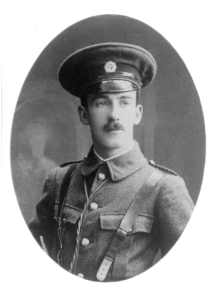
Edward “Ned” Daly, commandant of Dublin’s 1st battalion during the Easter Rising of 1916, is born on February 25, 1891, at 26 Frederick Street in Limerick.

Daly is the only son among the ten children born to Edward and Catherine Daly (née O’Mara). He is the younger brother of Kathleen Clarke whose husband, Tom Clarke, an active member of the Irish Republican Brotherhood. Daly’s father, Edward, a Fenian, dies five months before his son’s birth at the age of forty-one. His uncle, John Daly, is a prominent republican who had taken part in the Fenian Rising. It is through John Daly that Clarke meets his future wife.

Daly is educated by the Presentation Sisters at Sexton Street, the Congregation of Christian Brothers at Roxboro Road, and at Leamy’s commercial college. He spends a short time as an apprentice baker in Glasgow before returning to Limerick to work in Spaight’s timber yard. He later moves to Dublin where he eventually takes up a position with a wholesale chemist. He lives in Fairview with Kathleen and Tom Clarke.

Daly joins the membership of the Irish Republican Brotherhood, although the exact date is not known. In November 1913, Daly joins the newly founded Irish Volunteers and soon reaches the rank of captain. He is assiduous in his study of military manuals and the professionalism of his company gains the admiration of senior officers in actions such as the Howth gun-running of 1914. In March 1915, he is promoted to the rank of commandant of the 1st Battalion.

During the Easter Rising of 1916, Daly’s battalion is stationed in the Four Courts and areas to the west and north of the centre of Dublin. His battalion sees the most intense fighting of the rising. He surrenders his battalion on Saturday, April 29 after Patrick Pearse orders the surrender. He is held at Kilmainham Gaol.

Daly is given the same quick sham court-martial at Richmond Barracks as the other leaders of the Rising. In his trial, he claims that he was just following orders. Daly is convicted and is executed by firing squad on May 4, 1916, at the age of 25.

Bray railway station was renamed Bray Daly railway station in his honour in 1966.


Leave a comment

Birth of James Gandon, Influential Irish Architect

james-gandon

James Gandon, possibly the most influential architect in Irish history, is born in New Bond Street, London, on February 20, 1743. His better known works include The Custom House, the Four Courts, King’s Inns in Dublin, and Emo Court in County Laois.

Gandon is the only son of Peter Gandon, a gunmaker, and Jane Burchall. He is educated at Shipley’s Drawing Academy where he studies the classics, mathematics, arts, and architecture. Upon leaving the drawing academy he is articled to study architecture in the office of Sir William Chambers. Chambers’s palladian and neoclassical concepts greatly influence the young Gandon.

In 1765, Gandon leaves William Chambers to begin practice on his own. His practice always remains small but is successful. His first commission is on Sir Samuel Hellier’s estate at The Wodehouse, near Wombourne. Around 1769 he enters an architectural competition to design the new Royal Exchange in Dublin. The plan submitted by Thomas Cooley is eventually chosen but Gandon’s design comes in second and brings him to the attention of the politicians who are overseeing the large-scale redevelopment of Dublin.

During the following years in England, Gandon is responsible for the design of the County Hall in Nottingham. Between 1769 and 1771, he collaborates with John Woolfe on two additional volumes of Vitruvius Britannicus, a book of plans and drawings of Palladian revival buildings by such architects as Inigo Jones and Colen Campbell. During his English career he is awarded the Gold medal for architecture by the Royal Academy, London in 1768.

In 1781, at the age of 38, Gandon accepts an invitation to Ireland from Lord Carlow and John Beresford, the Revenue Commissioner for Ireland, to supervise the construction of the new Custom House in Dublin. The original architect on that project, Thomas Cooley, had died and Gandon is chosen to assume complete control. The Irish people are so opposed to the Custom House and its associated taxes that Beresford has to smuggle Gandon into the country and keeps him hidden in his own home for the first three months. The project is eventually completed at a cost of £200,000, an enormous sum at the time.

This commission proves to be the turning point in Gandon’s career and Dublin is to become Gandon’s home for the remainder of his life. The newly formed Wide Streets Commission employs Gandon to design a new aristocratic enclave in the vicinity of Mountjoy Square and Gardiner Street. Gandon also designs Carlisle Bridge, now O’Connell Bridge, over the River Liffey to join the north and south areas of the city. In 1786, he is charged with completing the Four Courts in 1786, which is also originally a Thomas Cooley project.

The success of Gandon’s designs and commissions are not reflected in personal popularity as he attracts huge criticism from his enemies. The taxation symbolised by the Custom House is to taint the appreciation of his work throughout his lifetime. It is even claimed that Gandon designs buildings to boost his self-esteem.

In 1798, revolution breaks out on the streets of Ireland and Gandon, an unpopular figure, hurriedly flees to London. Upon returning to Dublin he finds a much changed city. James Gandon dies in 1823 at his home in Lucan, County Dublin, having spent forty-two years in the city. He is buried in the church-yard of Drumcondra Church.