seamus dubhghaill

Promoting Irish Culture and History from Little Rock, Arkansas, USA


Leave a comment

Death of Isaac Corry, Lawyer & Member of Parliament

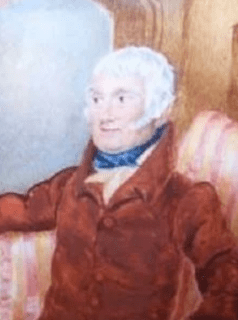
Isaac Corry FRS, PC (I), PC, an Irish and British Member of Parliament and lawyer, dies in Merrion Square, Dublin, on May 15, 1813, his 60th birthday.

Corry is born on May 15, 1753, in Newry, County Down, the son of Edward Corry, sometime Member of Parliament, and Catharine Bristow. His cousin is the writer Catherine Dorothea Burdett. He is educated at The Royal School, Armagh, where his contemporaries include Robert Stewart, Viscount Castlereagh, and later at Trinity College, Dublin, from which he graduates in 1773. On October 18, 1771, he is admitted to the Middle Temple and called to the bar at King’s Inns in 1779.

Corry succeeds his father as Member of Parliament for Newry in 1776, sitting in the Irish House of Commons until the Acts of Union 1800. From 1782 to 1789 he serves as equerry to Prince Henry, Duke of Cumberland, being described in 1794 by Rt. Hon. Sylvester Douglas as “a well-bred man…He has no brogue…He once acted as a sort of groom of the bedchamber to the late Duke of Cumberland.” In 1798, he is also elected for Randalstown, but chooses not to sit and, in 1802, he is returned to the British House of Commons for Newry. He serves as a Whig at Westminster until 1806. It is written in 1783 that he would expect to enter high office, given that “he lives expensively and does not pursue his profession, which is the law.” In 1788 he becomes Clerk of the Irish Board of Ordnance. The following year he is appointed a commissioner of the revenue. Finally in 1799 he is appointed Chancellor of the Exchequer of Ireland and a Lord High Treasurer of Ireland in place of Sir John Parnell, who quarreled violently with William Pitt the Younger over the projected union, which he categorically refuses to support. In 1795 he becomes a Privy Councillor.

In 1802 Corry is dismissed from the Exchequer and replaced by John Foster (later Lord Oriel), he is awarded, however, £2,000 p.a. in compensation. In 1806 the changes in ownership of the Newry estates alters his position. The lands pass to a senior line of the Needham family and they support General Francis Needham, 1st Earl of Kilmorey, at the general election. Corry does not have the funds needed, in excess of £5000, to purchase a seat elsewhere. However, Lady Downshire is inclined to support the Grenville ministry and comes to a formal agreement with Corry to give him £1000 towards his expenses should he be successful in Newry, and, if not, to bring him in for another borough. He fails against the Needham interest in Newry, but a seat at Newport, Isle of Wight, is purchased for him, with £4000 from Lady Downshire, and he is appointed to the Board of Trade. Six months later Grenville’s ministry has fallen and there is another general election. Corry stands, again unsuccessfully, for Newry.

Corry is unmarried but has a long-term relationship with Jane Symms. They have three sons and three daughters. His daughter Ann marries Lt. Col. Henry Westenra, the brother of Robert Cuninghame, 1st Baron Rossmore. His residence in Newry is the Abbey Yard, now a school, and Derrymore House, Bessbrook, County Armagh, which he had inherited from his father and sold in 1810. It is now the property of the National Trust. During his life, a road is constructed from near the main entrance of Derrymore House around Newry and links up with the Dublin Road on the southern side of the town primarily for his use. This road subsequently becomes known as “The Chancellor’s Road,” as a result of his term as the Irish Chancellor of the Exchequer. A local legend has it that the road is constructed after an incident in which Corry’s stagecoach is stoned while passing through Newry by people angry at an unpopular window tax he had introduced. The road has retained this name, but it is cut in half by the Newry by-pass in the mid-1990s, however, as a result of works associated with the new A1 dual carriageway, the two-halves of the road are now reconnected.

Corry dies at his house in Merrion Square, Dublin, on May 15, 1813, his 60th birthday. He is buried in St. Patrick’s Cathedral, Dublin.

Leave a comment

Death of Francis Jack Needham, 1st Earl of Kilmorey

Francis Jack Needham, 1st Earl of Kilmorey, Anglo-Irish soldier and Member of Parliament, dies on November 21, 1832, at Shavington Hall, Shropshire, England.

Needham is born April 15, 1748, in County Down, third and youngest son of John Needham, 10th Viscount Kilmorey, and his wife Anne, daughter of John Hurleston of Newton, Cheshire, and widow of Geoffrey Shakerley of Cheshire. He enters the British Army as a cornet in the 18th Dragoons in 1762, exchanging into the 1st Dragoons in 1763. In 1773, he is promoted to lieutenant and, exchanging into the 17th Dragoons, is made captain in 1774. He serves throughout the American Revolutionary War and is engaged in the blockade of Boston and the New Jersey and Yorktown campaigns. Exchanging into the 76th Foot as a major, he is taken prisoner at the Siege of Yorktown, and at the peace of 1783 is placed on half-pay.

Returning to England, Needham purchases a majority in the 80th Foot and then in February 1783 a lieutenant-colonelcy in the 104th Foot. In April 1783, he exchanges into the 1st Foot Guards. Promoted to full colonel in 1793, he is appointed aide-de-camp to King George III and in 1794 serves with Francis Rawdon-Hastings, 2nd Earl of Moira, on the expedition to the Netherlands. He also serves with General Sir John Doyle in the expedition to Quiberon Bay and the Isle Dieu (1795). In February 1795, he is appointed third major of the 1st Foot Guards and promoted to major general, taking an appointment on the home staff in April 1795.

Needham then holds a staff appointment in Ireland, and during the Irish Rebellion of 1798 commands the crown forces at the Battle of Arklow on June 9, 1798. He places his approximately 1,600 troops in strong positions at the eastern and western ends of the town, where they can sweep the Arklow Rock Road and the Coolgreany Road with fire if the rebels approach along them. Ultimately, this is what the United Irish force, estimated at 5,000–9,000 strong, does, repeatedly attacking Needham’s right flank, which is in fact his strongest position. Estimates of the United Irish dead range from 200 to 1,000, and the failure of the attack ensures that the rebels lose the military initiative. He is also present at the Battle of Vinegar Hill on June 21, 1798, but his force arrives late, leaving a gap in the British line through which many rebels escape. This is later christened “Needham’s gap,” earning him the nickname of “the late General Needham” among his fellow officers.

Promoted to lieutenant-general in 1802, Needham is made colonel of the 5th Royal Veteran Battalion in 1804, entering House of Commons as MP for Newry in 1806. He is made full general in 1812, and, following the death of his two older brothers, succeeds as 12th Viscount Kilmorey in November 1818, resigning his parliamentary seat. On January 12, 1822, he is created 1st Earl of Kilmorey (Queen’s County) and Viscount Newry and Mourne. He dies on November 21, 1832, at the family seat, Shavington Hall, Shropshire, and is buried in St. Peter’s Church, Adderley.

Needham marries Anne Fisher, daughter of Thomas Fisher of Acton, Middlesex, on February 20, 1787. They have two sons, Francis Jack Needham, who succeeds as 2nd Earl, and the Hon. Francis Henry William Needham, lieutenant-colonel in the Grenadier Guards, and seven daughters. There are Needham letters in the Public Record Office (PRO), Kew, and in the Rebellion Papers in the National Archives of Ireland in Dublin.


Leave a comment

Birth of Isaac Corry, Lawyer & Member of Parliament

Isaac Corry FRS, PC (I), PC, an Irish and British Member of Parliament and lawyer, is born on May 15, 1753, in Newry, County Down.

Corry is the son of Edward Corry, sometime Member of Parliament, and Catharine Bristow. His cousin is the writer Catherine Dorothea Burdett. He is educated at the Royal School, Armagh, where his contemporaries include Robert Stewart, Viscount Castlereagh, and later at Trinity College, Dublin, from which he graduates in 1773. On October 18, 1771, he is admitted to the Middle Temple and called to the bar at King’s Inns in 1779.

Corry succeeds his father as Member of Parliament for Newry in 1776, sitting in the Irish House of Commons until the Acts of Union 1800. From 1782 to 1789 he serves as equerry to Prince Henry, Duke of Cumberland, being described in 1794 by Rt. Hon. Sylvester Douglas as “a well-bred man…He has no brogue…He once acted as a sort of groom of the bedchamber to the late Duke of Cumberland.” In 1798, he is also elected for Randalstown, but chooses not to sit and, in 1802, he is returned to the British House of Commons for Newry. He serves as a Whig at Westminster until 1806. It is written in 1783 that he would expect to enter high office, given that “he lives expensively and does not pursue his profession, which is the law.” In 1788 he becomes Clerk of the Irish Board of Ordnance. The following year he is appointed a commissioner of the revenue. Finally in 1799 he is appointed Chancellor of the Exchequer of Ireland and a Lord High Treasurer of Ireland in place of Sir John Parnell, who quarreled violently with William Pitt the Younger over the projected union, which he categorically refuses to support. In 1795 he becomes a Privy Councillor.

In 1802 Corry is dismissed from the Exchequer and replaced by John Foster (later Lord Oriel), he is awarded, however, £2,000 p.a. in compensation. In 1806 the changes in ownership of the Newry estates alters his position. The lands pass to a senior line of the Needham family and they support General Francis Needham, 1st Earl of Kilmorey, at the general election. Corry does not have the funds needed, in excess of £5000, to purchase a seat elsewhere. However, Lady Downshire is inclined to support the Grenville ministry and comes to a formal agreement with Corry to give him £1000 towards his expenses should he be successful in Newry, and, if not, to bring him in for another borough. He fails against the Needham interest in Newry, but a seat at Newport, Isle of Wight, is purchased for him, with £4000 from Lady Downshire, and he is appointed to the Board of Trade. Six months later Grenville’s ministry has fallen and there is another general election. Corry stands, again unsuccessfully, for Newry.

Corry is unmarried but has a long-term relationship with Jane Symms. They have three sons and three daughters. His daughter Ann marries Lt. Col. Henry Westenra, the brother of Robert Cuninghame, 1st Baron Rossmore. His residence in Newry is the Abbey Yard, now a school, and Derrymore House, Bessbrook, County Armagh, which he had inherited from his father and sold in 1810. It is now the property of the National Trust. During his life, a road is constructed from near the main entrance of Derrymore House around Newry and links up with the Dublin Road on the southern side of the town primarily for his use. This road subsequently becomes known as “The Chancellor’s Road,” as a result of his term as the Irish Chancellor of the Exchequer. A local legend has it that the road is constructed after an incident in which Corry’s stagecoach is stoned while passing through Newry by people angry at an unpopular window tax he had introduced. The road has retained this name, but it is cut in half by the Newry by-pass in the mid-1990s, however, as a result of works associated with the new A1 dual carriageway, the two-halves of the road are now reconnected.

Corry dies at his house in Merrion Square, Dublin, on May 15, 1813, his 60th birthday. He is buried in St. Patrick’s Cathedral, Dublin.


2 Comments

The Battle of Vinegar Hill

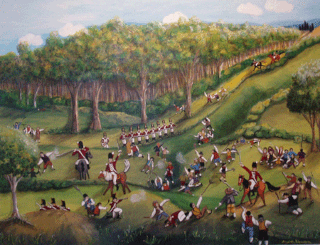
The Battle of Vinegar Hill, an engagement during the Irish Rebellion of 1798, takes place on June 21, 1798 when over 13,000 British soldiers launch an attack on Vinegar Hill outside Enniscorthy, County Wexford, the largest camp and headquarters of the Wexford United Irishmen. It marks a turning point in the rebellion, as it is the last attempt by the United Irishmen to hold and defend ground against the British military. The battle is actually fought in two locations: on Vinegar Hill itself and in the streets of nearby Enniscorthy.

By June 18, the British have surrounded County Wexford with between 13,000 and 18,000 troops and are ready to pour into Wexford to crush the insurgency. The United Irishmen leadership issues a call to all its fighters to gather at Vinegar Hill to meet the army in one great, decisive battle. The number assembled is estimated at between 16,000 and 20,000, but the majority lack firearms and have to rely on pikes as their main weapon. The camp also includes many thousands of women and children who are staying there for protection against the rampaging military.

The British plan, as formulated by General Gerard Lake, envisages the complete annihilation of the United Irishmen, women and children by encircling the hill and seizing the only escape route to the west, the bridge over the River Slaney. Lake divides his force into four columns to accomplish this. Three columns, under Generals David Dundas, James Duff and Francis Needham are to assault Vinegar Hill, while the fourth column, under General Johnson, is to storm Enniscorthy and its bridge.

The battle begins shortly before dawn with an artillery bombardment of Irish positions on the hill. Advance units quickly move against the United Irishmen outposts under cover of the bombardment and move artillery closer as forward positions are secured. The tightening ring forces the United Irishmen into an ever-shrinking area and increases exposure to the constant bombardment, including new experimental delayed-fuse shells resulting in hundreds of dead and injured. At least two mass charges are launched by the United Irishmen which fail to break the lines of the military and the situation on Vinegar Hill soon becomes desperate for the United Irishmen.

Meanwhile, a detachment of light infantry under the command of General Johnson attacks the town of Enniscorthy but meets with fierce resistance. Buildings in the town have been fortified and the initial attack is driven back with the loss of munitions and men. A second attack commences with reinforcements including cavalry, which retake the lost cannon and ammunition while also incurring considerable casualties. The United Irishmen are slowly driven out of the town but manage to hold the Slaney bridge and prevent the British from crossing.

When British troops crest the eastern summit of Vinegar Hill, the rebels begin to slowly withdraw through a gap in the British lines later known as “Needham’s Gap”, so-named because the late arrival of General Needham’s troops prevented a total encirclement of the hill. Although the bulk of the United Irishmen army escape, many are left behind and killed in the routing phase of the battle from both cavalry and infantry attack, but also from the advanced field guns which are switched to grapeshot to maximize casualties.

In addition to conventional casualties, there are also instances of British troops raping the women accompanying the United Irishmen and in Enniscorthy, United Irishmen wounded are burned to death when soldiers set fire to a building used as a casualty station. These atrocities may have been perpetrated in revenge for the execution by the United Irishmen of numbers of mostly Protestant loyalist prisoners of war in the preceding weeks. The United Irishmen abandon much of the supplies they had taken from surrounding areas, and thirteen cannons are captured by the British, a number of which had been taken from the British forces previously.

Meanwhile, the bulk of the United Irishmen force streams uninterrupted towards the Three Rocks camp outside Wexford and, following the decision to abandon the town, split into two separate columns in a new campaign to spread the rebellion beyond Wexford. One immediately sets out to the west, the other northwards towards the Wicklow Mountains to link up with General Joseph Holt‘s forces.

The defeat is therefore not the immediate crushing blow to the Wexford United Irishmen that it has falsely been depicted as, but it does alter the course of the fighting as continued resistance now takes the form of mobile warfare, raids, and large scale, guerilla-type operations.

Casualties for the United Irishmen have been variously reported, with estimates ranging from 400 to around 1,200. Kevin Whelan estimates a figure of between 500 and 1,000 including camp followers, while Archibald McLaren, a British soldier eyewitness, writes that the United Irishmen casualties total about 1,200 men. British casualties are around one hundred.


Leave a comment

The Second Battle of Arklow

The second Battle of Arklow takes place on June 9, 1798 during the Irish Rebellion of 1798 when a force of United Irishmen from Wexford, estimated at 10,000 strong, launch an assault on the British-held town of Arklow, County Wicklow, in an attempt to spread the rebellion into Wicklow and to threaten the capital of Dublin.

A British advance force of 400 is defeated at Tuberneering on June 4. This rebel victory punches a hole in the dragnet the military has attempted to throw around County Wexford and also yields them three artillery pieces. The town of Arklow has been evacuated in the ensuing panic but the rebels content themselves with taking the town of Gorey and staying within the Wexford border. On June 5 the rebels attempt to break out of County Wexford across the River Barrow and to spread the rebellion but are halted by a major British victory at the Battle of New Ross. When the rebels finally move against Arklow, the town has been reoccupied by a force of 1,700 men sent from Dublin under Francis Needham, 1st Earl of Kilmorey, who quickly fortifies the town with barricades and has artillery positioned on all the approaches to the town.

The rebel army that forms for attack on the afternoon of June 9 is a combined force of Wexford and Wicklow rebels led by Billy Byrne, Anthony Perry, Conor McEvoy, Edward Fitzgerald, and Fr. Michael Murphy. The British in Arklow consist of approximately 1,000 militia from counties Antrim and Cavan and 150 regular cavalry supported by 250 Yeomanry. They are joined by 315 Durham Fencibles (Princess of Wales’s Fencible Dragoons) arriving an hour before the rebels.

The area surrounding the town and the approaches is covered by scrub and the rebel strategy adopted is to advance under cover attacking the town simultaneously from several points. Before the action begins, the rebels under Esmonde Kyan open fire upon the town with some of the artillery captured at Tuberneering and have some success by scoring a direct hit on a British artillery position, destroying the cannon and killing the attendant crew. The main assault is quickly launched but at all entry points the Irish are thrown back by the musket fire of the well-trained and disciplined militia and volunteers, and canister shot from the 3 pounder battalion gun brought by the fencibles. An attempt by the British to turn the Irish failure into a rout is defeated when pikemen and sharpshooters drive a cavalry charge back across the River Avoca, but an attempt to force a way into the town through the outlying fishing port is bloodily repulsed.

As Irish casualties mount, the lack of ammunition and proper leadership begin to work against them, and after Fr. Murphy is killed leading a charge, their attacks start to fade. As nightfall comes, the rebels begin to withdraw under cover of darkness and collect their wounded. They are not pursued or molested by the garrison who are, unknown to the rebels, down to their last three or four rounds per man and are themselves at the brink of defeat.

While rebel casualties are estimated at about 1,000 no full casualty list seems to exist on the British side, but are probably in the region of 100 dead and wounded. The defeat at Arklow marks the third failure to extend the fight for Irish independence beyond the borders of County Wexford following the other bloody repulses at New Ross and Bunclody. The Irish strategy now changes to a policy of static defence against the encroaching British armies.